
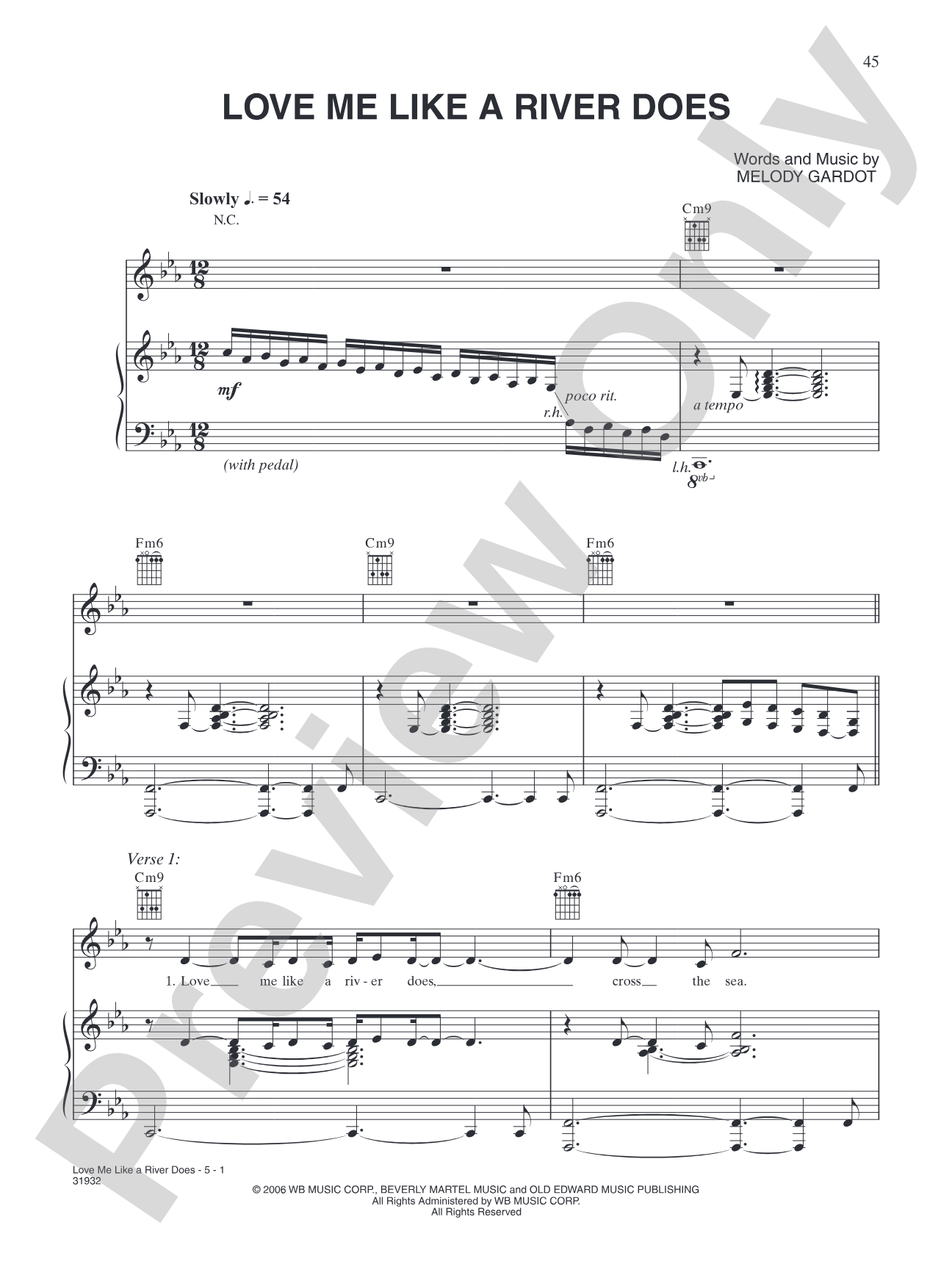

Love Me Like a River Does: Piano/Vocal/Chords
Melody Gardot
Item: 00-PS-0011055
$4.99
One moment…
Related Items
Sweet Memory: Piano/Vocal/Chords |
$4.99
|
View | |
All That I Need is Love: Piano/Vocal/Chords |
$5.99
|
View | |
Some Lessons: Piano/Vocal/Chords |
$5.99
|
View | |
Gone: Piano/Vocal/Chords |
$5.99
|
View | |
Quiet Fire: Piano/Vocal/Chords |
$5.99
|
View | |
One Day: Piano/Vocal/Chords |
$4.99
|
View | |
Worrisome Heart: Piano/Vocal/Chords |
$4.99
|
View | |
Goodnite: Piano/Vocal/Chords |
$5.99
|
View |
Description
American jazz singer and musician, Melody Gardot's soulful and insightful debut album Worrisome Heart was released to roaring reviews. This album-matching folio features professional arrangements for Piano/Vocal/Chords.
Titles: All That I Need Is Love * Gone * Goodnite * Love Me Like A River Does * One Day * Quiet Fire * Some Lessons * Sweet Memory * Twilight * Worrisome Heart.


Titles: All That I Need Is Love * Gone * Goodnite * Love Me Like A River Does * One Day * Quiet Fire * Some Lessons * Sweet Memory * Twilight * Worrisome Heart.
Love Me Like a River Does: Piano/Vocal/Chords isn't in MakeMusic Cloud just yet...but it could be. Let us know you'd like to see it, and you'll help shape what comes next. In the meantime, start a free trial and dive into thousands of interactive titles your students can play along with today.
Request This Title
Tell us you want it.
Start Your Free Trial
Explore everything that's ready to play right now.
Sample Audio
No sample audio found.
Sample Video
No sample videos found.
Additional Details
Publisher:
Alfred Music
Page Count:
56
SKU:
00-PS-0011055
More about this title
About the Composer: Melody Gardot
Melody Gardot emerged as a distinctive voice in contemporary jazz with her 2008 debut album Worrisome Heart, which showcased her sophisticated compositional sensibility alongside her smoky, introspective vocal style. A pianist and singer who blends jazz tradition with modern songwriting, Gardot has become known for her ability to craft intimate arrangements that prioritize emotional clarity and harmonic depth.
Her work demonstrates what jazz education values most: melodic integrity paired with harmonic adventurousness, and an understanding of how voice and piano can dialogue as equals in a song.
Why we love this
This folio captures Gardot's gift for writing jazz songs that feel both accessible and sophisticated. Every arrangement here respects the singer's needs while giving pianists genuinely interesting voicings and comping patterns to sink into—exactly the kind of repertoire that reminds singers and pianists why they love playing jazz together.
What to expect
Melancholic yet grounded, with an emotional directness that comes from lived experience rather than artifice. These songs have the intimacy of late-night conversations, with piano lines that support without overwhelming and harmonies that surprise without showing off.
Who it's for
Jazz singers preparing auditions or recital repertoire will find contemporary songs that sit comfortably and authentically. Pianists expanding their jazz comping vocabulary will appreciate Gardot's harmonic choices and arrangement textures. Duet partners looking for modern jazz literature that rewards genuine collaboration will find exactly that here.
How to get the most out of it
- Listen closely to the recorded versions before rehearsing. Gardot's interpretive choices (rubato, phrasing, dynamic shaping) are integral to these songs, not ornamental.
- Treat the chord symbols as suggestions, not restrictions. The arrangements printed here are professional settings, but jazz musicians must know when to stay within them and when to reharmonize.
- Balance transparency with intimacy. These songs live in quieter spaces than many jazz standards; resist the urge to fill every silence or push the tempo when the music asks for restraint.
- Communicate constantly between voice and piano. The dialogue between them is where the artistry happens, so rehearse as a collaborative pair, not as vocalist-with-accompaniment.
How to use it
Feature this album as a complete suite in an evening of contemporary jazz, or select individual songs to complement more traditional standards in a mixed recital. The cohesive mood across the ten pieces makes them work equally well as a thematic program or as individual anchor pieces in a diverse set.
Skills your students will build
- Interpretation of jazz piano voicings and reharmonization techniques
- Phrasing and rubato in contemporary jazz singing
- Collaboration and dialogue between voice and piano
- Understanding harmonic movement beyond basic ii-V-I patterns
- Expressive dynamics and emotional communication within restrained tempos