
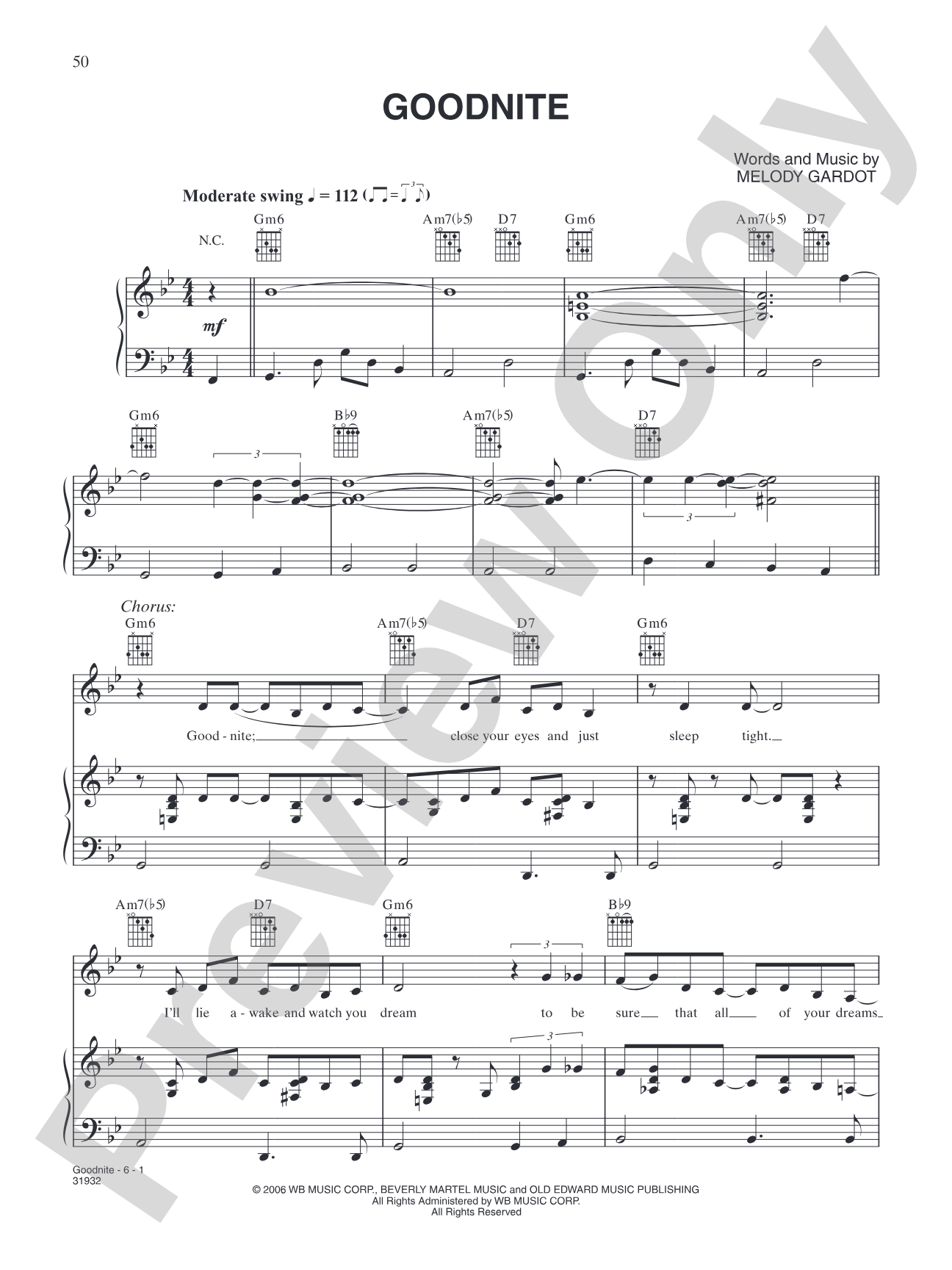
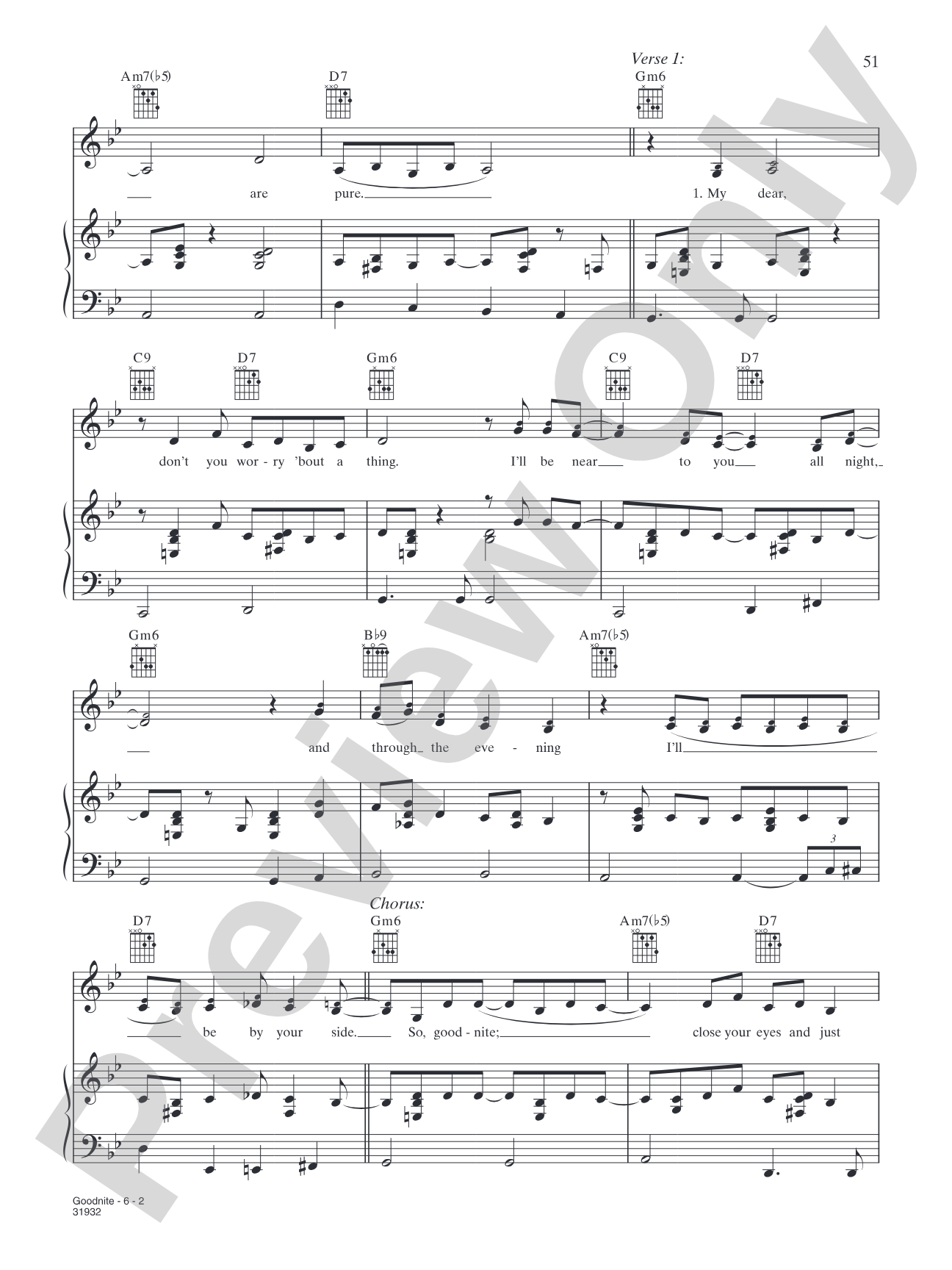

Goodnite: Piano/Vocal/Chords
Melody Gardot
Item: 00-PS-0011056
$5.99
One moment…
Related Items
Sweet Memory: Piano/Vocal/Chords |
$4.99
|
View | |
All That I Need is Love: Piano/Vocal/Chords |
$5.99
|
View | |
Some Lessons: Piano/Vocal/Chords |
$5.99
|
View | |
Gone: Piano/Vocal/Chords |
$5.99
|
View | |
Quiet Fire: Piano/Vocal/Chords |
$5.99
|
View | |
One Day: Piano/Vocal/Chords |
$4.99
|
View | |
Worrisome Heart: Piano/Vocal/Chords |
$4.99
|
View | |
Love Me Like a River Does: Piano/Vocal/Chords |
$4.99
|
View |
Description
American jazz singer and musician, Melody Gardot's soulful and insightful debut album Worrisome Heart was released to roaring reviews. This album-matching folio features professional arrangements for Piano/Vocal/Chords.
Titles: All That I Need Is Love * Gone * Goodnite * Love Me Like A River Does * One Day * Quiet Fire * Some Lessons * Sweet Memory * Twilight * Worrisome Heart.


Titles: All That I Need Is Love * Gone * Goodnite * Love Me Like A River Does * One Day * Quiet Fire * Some Lessons * Sweet Memory * Twilight * Worrisome Heart.
Goodnite: Piano/Vocal/Chords isn't in MakeMusic Cloud just yet...but it could be. Let us know you'd like to see it, and you'll help shape what comes next. In the meantime, start a free trial and dive into thousands of interactive titles your students can play along with today.
Request This Title
Tell us you want it.
Start Your Free Trial
Explore everything that's ready to play right now.
Sample Audio
No sample audio found.
Sample Video
No sample videos found.
Additional Details
Publisher:
Alfred Music
Page Count:
56
SKU:
00-PS-0011056
More about this title
About the Composer: Melody Gardot
Melody Gardot is a jazz vocalist and pianist whose career took shape during a pivotal recovery period following a serious accident in 2003. Drawing on classical training, jazz influence, and deeply personal songwriting, she built a reputation for sophisticated arrangements and introspective vocal performances that blend standards sensibility with contemporary compositional voice.
Her debut album Worrisome Heart established her as a distinctive artist within the jazz tradition, earning critical acclaim for its maturity and emotional depth. As both composer and performer, Gardot demonstrates the kind of deliberate musicianship that resonates with singers and pianists seeking material with real substance.
Why we love this
This folio gives singers and pianists access to ten jazz arrangements that sit comfortably in the sweet spot between accessibility and sophistication. Rather than relying on overstuffed voicings or needless complexity, these charts prioritize clarity and emotional communication, making them rewarding for collaborative pairs working toward a cohesive sound.
What to expect
These songs carry the quiet confidence of late-night jazz clubs and intimate settings. The arrangements favor clarity over flash, letting thoughtful melodies and honest lyrics take center stage while the piano provides harmonic color and rhythmic grounding. There's a reflective quality throughout, marked by Gardot's characteristic blend of vulnerability and poise.
Who it's for
Singer-pianist duos and vocalists working with an accompanist who want to learn material rooted in contemporary jazz with genuine melodic and harmonic substance. This folio also serves solo pianists who want to expand their repertoire with accessible jazz arrangements that retain artistic credibility.
How to get the most out of it
- Treat the chord symbols as a foundation for interpretation, not a limitation. Jazz piano benefits from understanding the underlying harmonic motion before deciding which specific voicings serve the arrangement and your touch.
- Balance the vocal line with your comping. These songs ask for sensitive accompaniment; listen for when the voice needs space and when it needs harmonic support.
- Explore the relationship between the piano part and the vocal melody in the opening phrases of each piece. Several of these songs establish their character through how the two voices interact from the start.
- Attend to dynamics carefully. Jazz singing thrives on dynamic nuance, and your piano part should respond to subtle shifts in vocal intensity rather than playing at one consistent level.
How to use it
Program individual songs from this folio as recital selections or concert features, especially for jazz-focused programs where contemporary voice and piano are highlighted. The collection also serves private studio teachers whose students are building jazz credibility and want to explore material beyond standards.
Skills your students will build
- Reading jazz chord symbols and interpreting voicings in context
- Coordinating vocal phrasing with piano comping in a jazz setting
- Balancing rubato and swing feel across piano and voice parts
- Understanding harmonic movement in contemporary jazz composition