
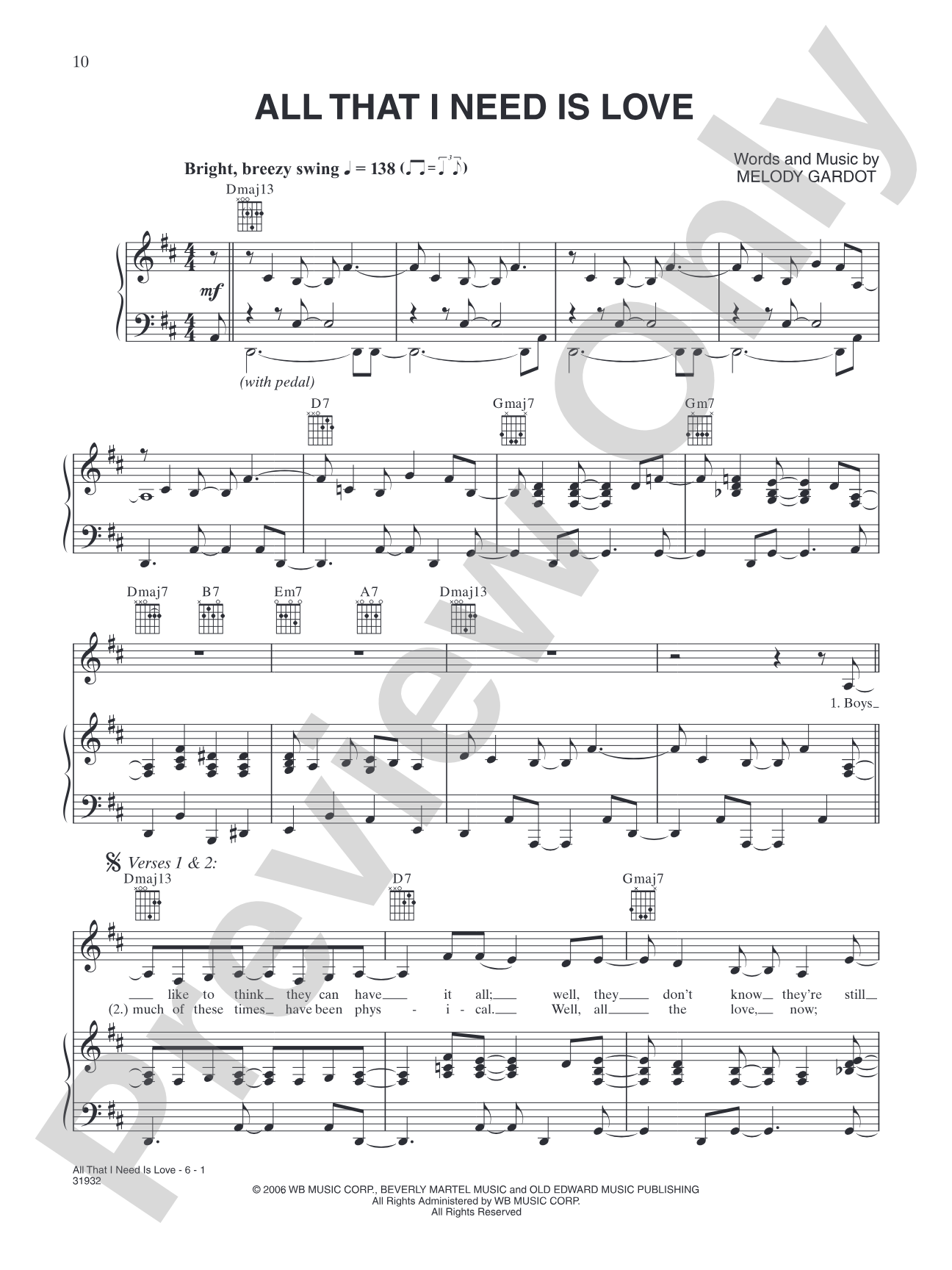
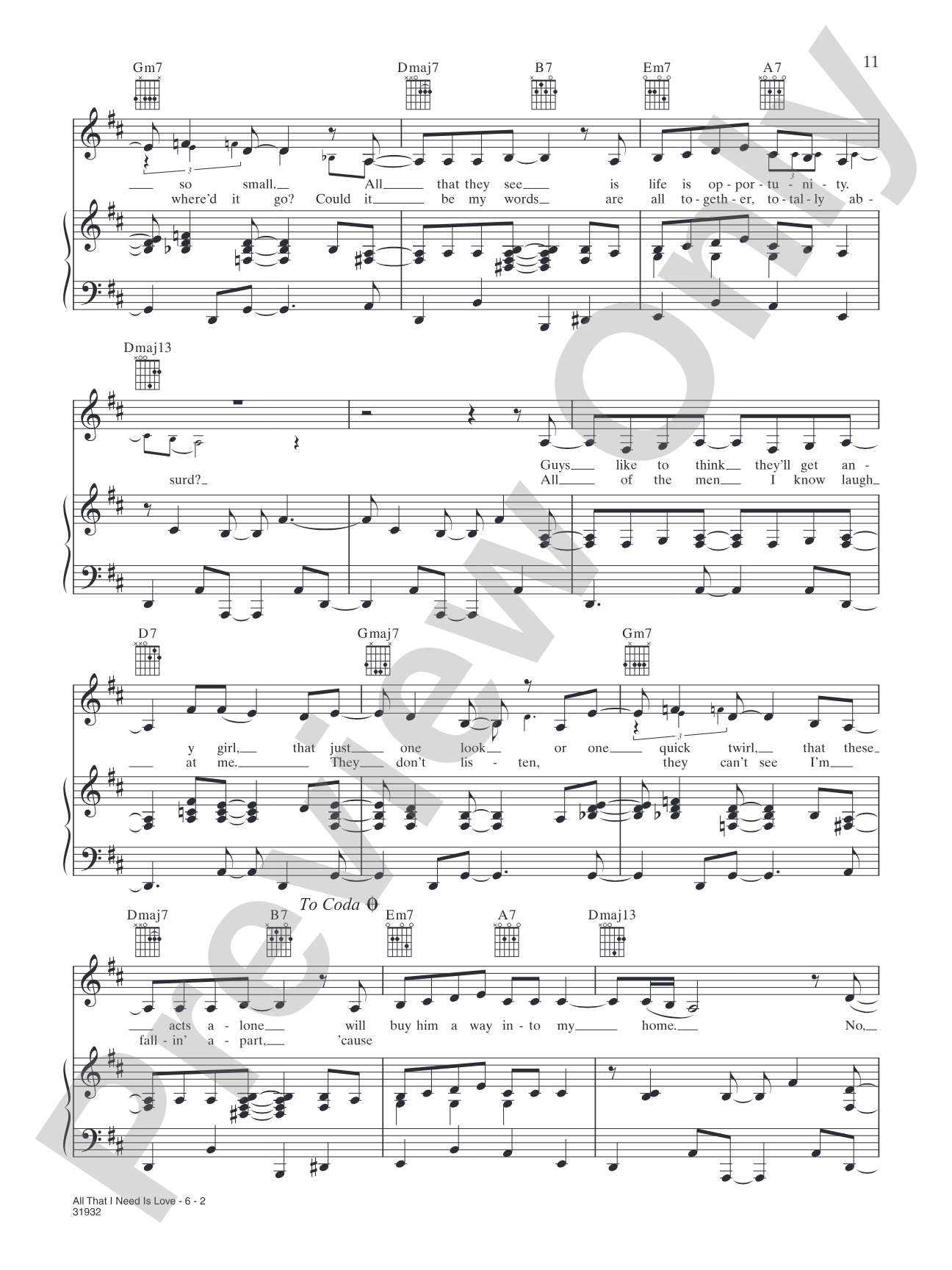

All That I Need is Love: Piano/Vocal/Chords
Melody Gardot
Item: 00-PS-0011049
$5.99
One moment…
Related Items
Sweet Memory: Piano/Vocal/Chords |
$4.99
|
View | |
Some Lessons: Piano/Vocal/Chords |
$5.99
|
View | |
Gone: Piano/Vocal/Chords |
$5.99
|
View | |
Quiet Fire: Piano/Vocal/Chords |
$5.99
|
View | |
One Day: Piano/Vocal/Chords |
$4.99
|
View | |
Worrisome Heart: Piano/Vocal/Chords |
$4.99
|
View | |
Love Me Like a River Does: Piano/Vocal/Chords |
$4.99
|
View | |
Goodnite: Piano/Vocal/Chords |
$5.99
|
View |
Description
American jazz singer and musician, Melody Gardot's soulful and insightful debut album Worrisome Heart was released to roaring reviews. This album-matching folio features professional arrangements for Piano/Vocal/Chords.
Titles: All That I Need Is Love * Gone * Goodnite * Love Me Like A River Does * One Day * Quiet Fire * Some Lessons * Sweet Memory * Twilight * Worrisome Heart.


Titles: All That I Need Is Love * Gone * Goodnite * Love Me Like A River Does * One Day * Quiet Fire * Some Lessons * Sweet Memory * Twilight * Worrisome Heart.
All That I Need is Love: Piano/Vocal/Chords isn't in MakeMusic Cloud just yet...but it could be. Let us know you'd like to see it, and you'll help shape what comes next. In the meantime, start a free trial and dive into thousands of interactive titles your students can play along with today.
Request This Title
Tell us you want it.
Start Your Free Trial
Explore everything that's ready to play right now.
Sample Audio
No sample audio found.
Sample Video
No sample videos found.
Additional Details
Publisher:
Alfred Music
Page Count:
56
SKU:
00-PS-0011049
More about this title
About the Composer: Melody Gardot
Melody Gardot is a jazz vocalist and pianist whose artistry emerged from a deeply personal place. After a near-fatal accident in 2003, she channeled her recovery through music, developing a signature sound that blends introspective lyricism with sophisticated harmonic awareness. Her debut album Worrisome Heart established her as a distinct voice in contemporary jazz, drawing critical acclaim for its emotional depth and musical craftsmanship.
Why we love this
These arrangements capture the intimate, conversational quality of Gardot's original recordings while remaining accessible for singers and pianists at intermediate to advanced levels. The piano writing supports the vocal line without overwhelming it, leaving room for interpretive nuance. Programming this folio lets you explore contemporary jazz songwriting that honors both vocal expression and instrumental sophistication.
What to expect
These songs unfold like intimate conversations overheard in late-night settings. The piano writing creates an atmosphere of careful listening and thoughtful response, while the melodies rest in a conversational register where vulnerability and composure sit side by side. Harmonic sophistication runs throughout, with chord movements that feel both natural and surprising.
Who it's for
This folio serves singers and pianists who have moved beyond lead sheet reading and want to develop interpretive skill in contemporary jazz. It works equally well for a vocalist preparing art song recitals, a pianist building a jazz repertoire, and collaborative duos seeking substantial material that rewards repeated performance and exploration.
How to get the most out of it
- Balance the vocal line against the piano accompaniment by keeping the right-hand voicings light and rhythmically conversational rather than punctuated or percussive.
- Study Gardot's recorded versions for phrasing and rhythmic placement; her vocal lines often fall slightly ahead of or behind the beat in ways that create emotional breathing room.
- Let the chord symbols guide harmonic exploration rather than playing them literally; jazz comping benefits from space and restraint.
- Pay attention to dynamic shifts within songs, particularly the quieter moments where lyrical content carries more weight than volume.
How to use it
Include individual selections in recitals focused on contemporary vocal jazz or art song programming. The emotional coherence across the album also makes it suitable for thematic concert presentations exploring introspection, resilience, or relationships. This folio serves equally well as material for advanced jazz voice students or pianists seeking repertoire that develops harmonic and interpretive maturity.
Skills your students will build
- Reading jazz chord symbols and understanding tritone substitutions and extended harmony
- Balancing vocal expression with pianistic accompaniment in collaborative performance
- Interpreting contemporary jazz phrasing and rhythmic placement (anticipation and delay)
- Developing interpretive choices within structured arrangements
- Understanding lyric-driven melody and emotional subtext in songwriting