
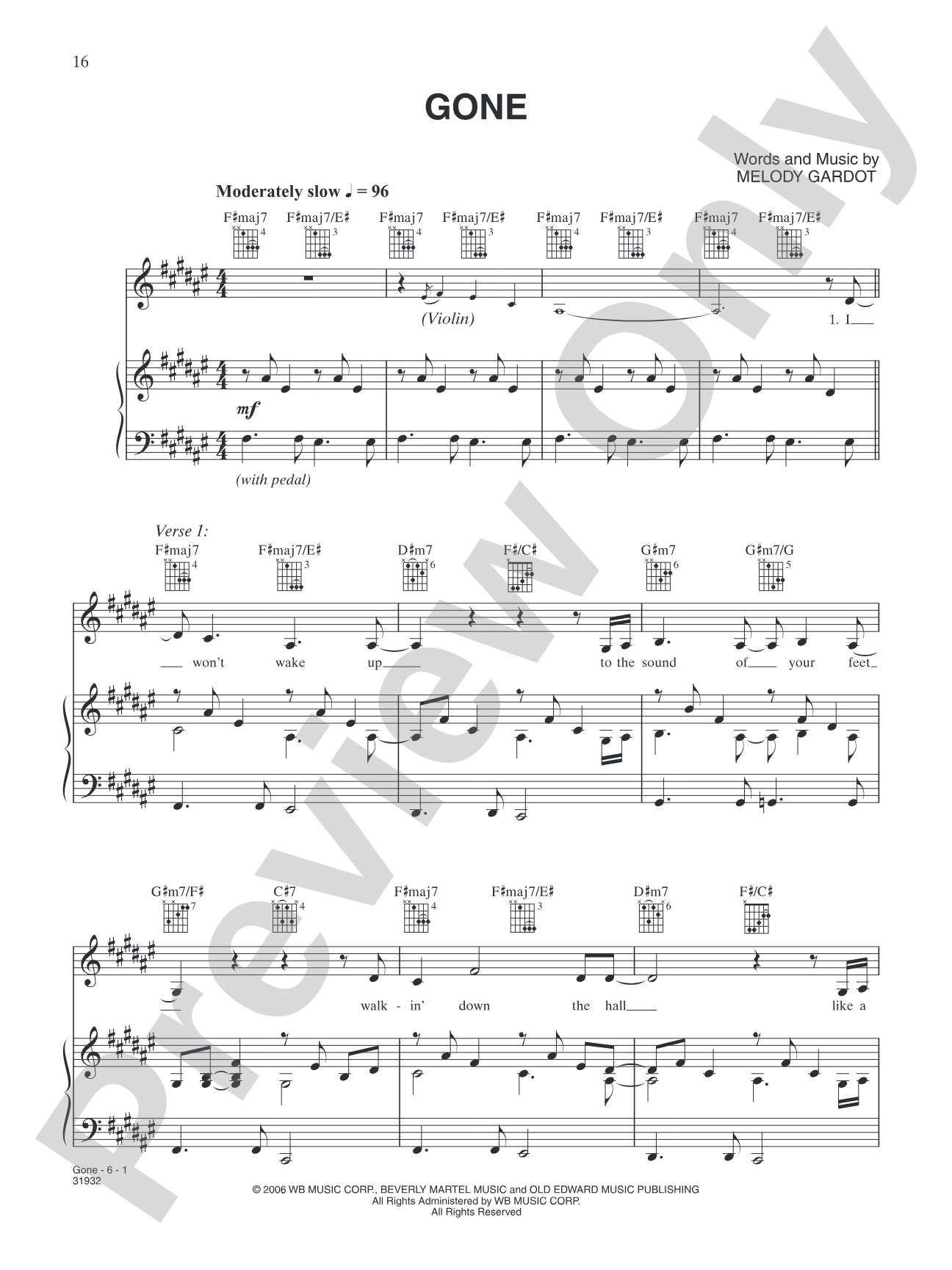
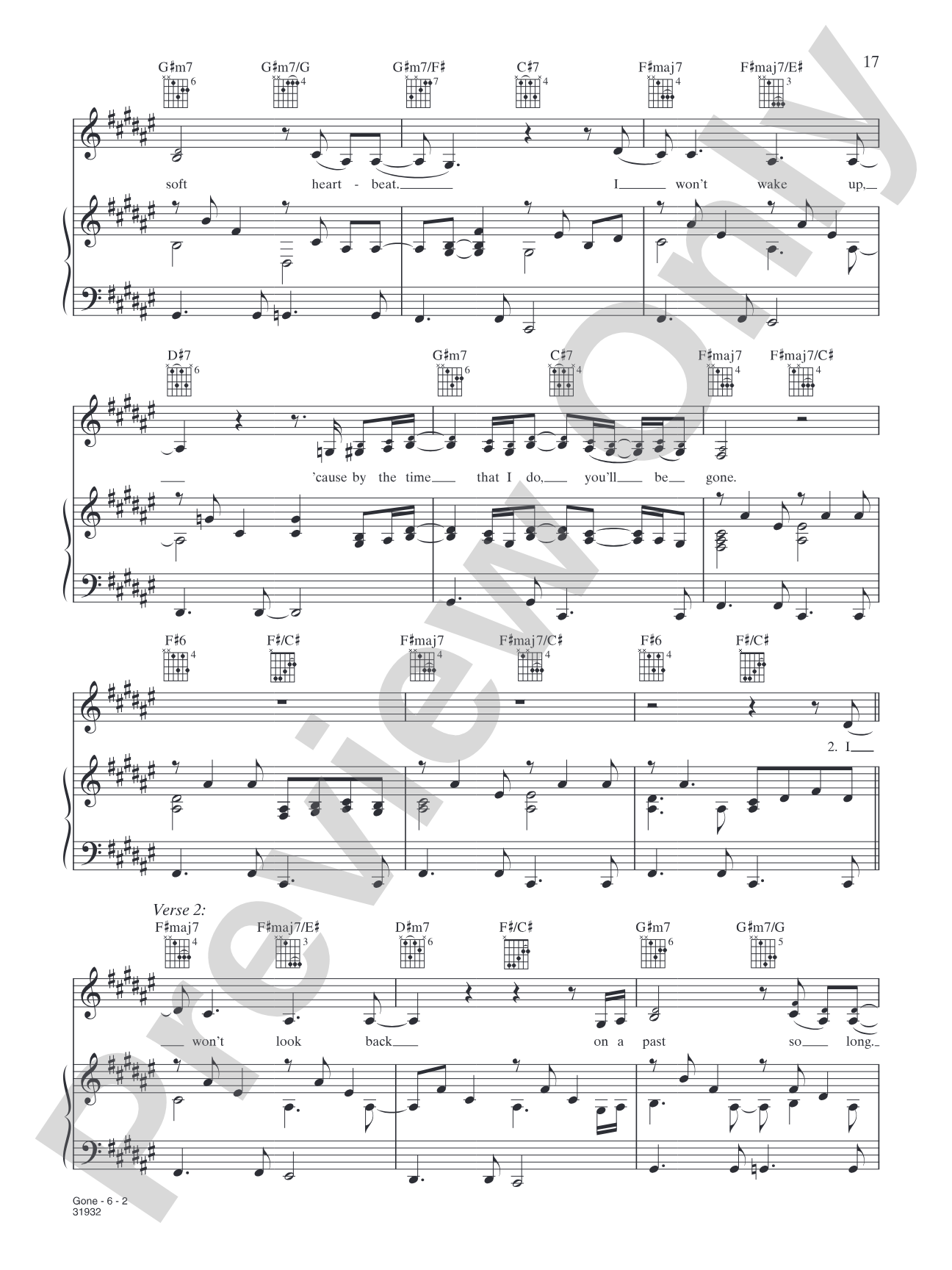

Gone: Piano/Vocal/Chords
Melody Gardot
Item: 00-PS-0011051
$5.99
One moment…
Related Items
Sweet Memory: Piano/Vocal/Chords |
$4.99
|
View | |
All That I Need is Love: Piano/Vocal/Chords |
$5.99
|
View | |
Some Lessons: Piano/Vocal/Chords |
$5.99
|
View | |
Quiet Fire: Piano/Vocal/Chords |
$5.99
|
View | |
One Day: Piano/Vocal/Chords |
$4.99
|
View | |
Worrisome Heart: Piano/Vocal/Chords |
$4.99
|
View | |
Love Me Like a River Does: Piano/Vocal/Chords |
$4.99
|
View | |
Goodnite: Piano/Vocal/Chords |
$5.99
|
View |
Description
American jazz singer and musician, Melody Gardot's soulful and insightful debut album Worrisome Heart was released to roaring reviews. This album-matching folio features professional arrangements for Piano/Vocal/Chords.
Titles: All That I Need Is Love * Gone * Goodnite * Love Me Like A River Does * One Day * Quiet Fire * Some Lessons * Sweet Memory * Twilight * Worrisome Heart.


Titles: All That I Need Is Love * Gone * Goodnite * Love Me Like A River Does * One Day * Quiet Fire * Some Lessons * Sweet Memory * Twilight * Worrisome Heart.
Gone: Piano/Vocal/Chords isn't in MakeMusic Cloud just yet...but it could be. Let us know you'd like to see it, and you'll help shape what comes next. In the meantime, start a free trial and dive into thousands of interactive titles your students can play along with today.
Request This Title
Tell us you want it.
Start Your Free Trial
Explore everything that's ready to play right now.
Sample Audio
No sample audio found.
Sample Video
No sample videos found.
Additional Details
Publisher:
Alfred Music
Page Count:
56
SKU:
00-PS-0011051
More about this title
About the Composer: Melody Gardot
Melody Gardot emerged as a distinctive voice in contemporary jazz following the release of her debut album Worrisome Heart in 2008. Her sophisticated harmonic sensibility and introspective songwriting draw from jazz standards, soul, and art song traditions, creating arrangements that reward both careful listening and expressive interpretation.
Gardot's compositions balance accessibility with harmonic depth, making her work valuable for singers and pianists seeking material that bridges jazz idiom and broader vocal repertoire. Her arrangements prioritize clarity of lyric and emotional directness, qualities that translate well to educational and performance settings.
Why we love this
These arrangements maintain the intimate, conversational quality of Gardot's originals while remaining practical for piano and voice study. The collection showcases jazz voicings that are sophisticated enough to challenge intermediate pianists without becoming unwieldy, and the vocal lines sit naturally for singers exploring jazz repertoire beyond the standards canon.
What to expect
These songs inhabit a reflective, mature emotional space. The arrangements create an atmosphere of intimate revelation, with rich harmonic colors that invite close listening. Each piece feels like a conversation between piano and voice, unhurried and deeply present.
Who it's for
This collection serves singers and pianists at the intermediate to advanced level who want to expand beyond standard jazz repertoire into contemporary material. It's ideal for vocalists developing their interpretive voice and pianists strengthening their jazz comping and collaboration skills.
How to get the most out of it
- Attend to the chord substitutions and reharmonizations throughout; they're integral to Gardot's compositional voice, not optional variations. Play them as written to access the full harmonic landscape.
- Shape the vocal line with careful attention to lyrical phrasing rather than strict metric pulse. These songs benefit from rubato and breathing space that follows the text rather than the bar line.
- Balance transparency in the piano part with support for the voice. The accompaniments work best when they recede slightly during intense vocal moments, then bloom again during instrumental passages.
- Explore the dynamic range within individual songs. Gardot's melodies often sit in a narrow tessitura, so subtle shifts in accompaniment texture create dimension without relying on broad vocal leaps.
How to use it
Consider programming selections from this folio in recitals that pair contemporary jazz composition with art song or musical theater contexts. The collection works particularly well as a thematic program around love, loss, and introspection, or as a vehicle for showcasing a vocalist's interpretive range across a full evening.
Skills your students will build
- Reading jazz chord changes and slash chords
- Comping with left-hand voicings that complement the vocal line
- Interpreting harmonic reharmonizations and understanding voice-leading choices
- Phrasing lyrics with jazz inflection while maintaining harmonic integrity
- Collaborating between voice and piano through dynamic balance and textural support