
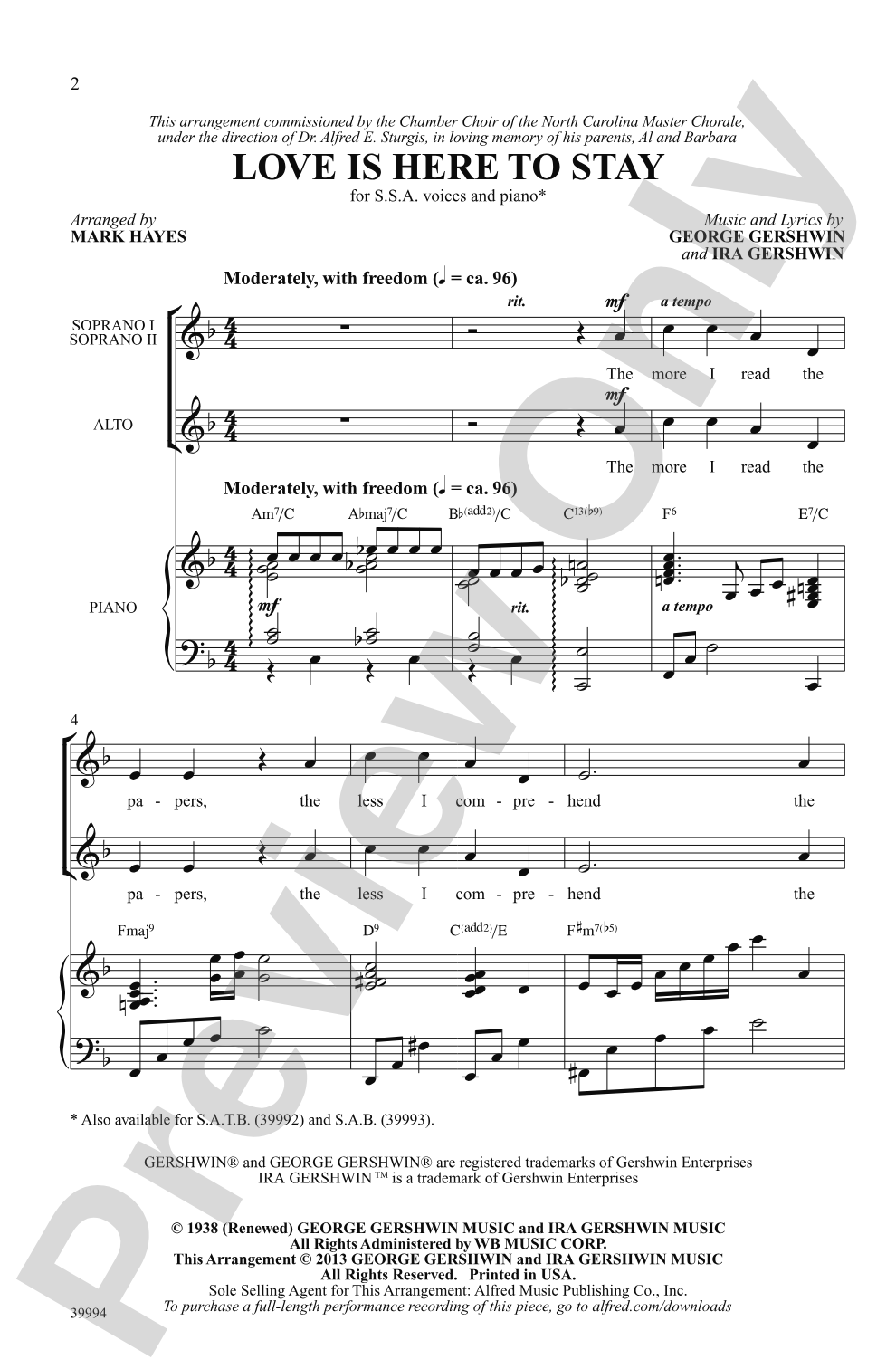
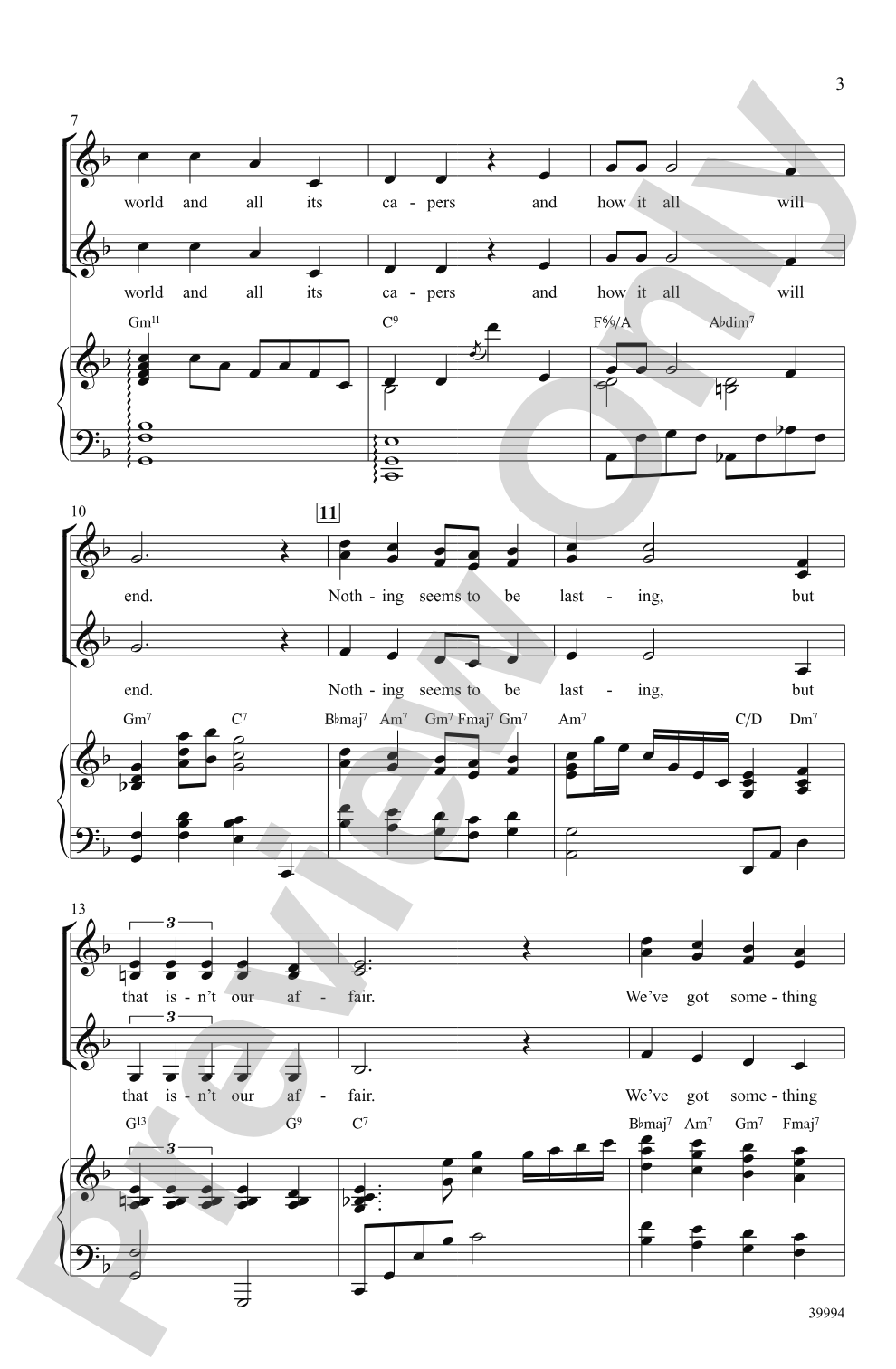
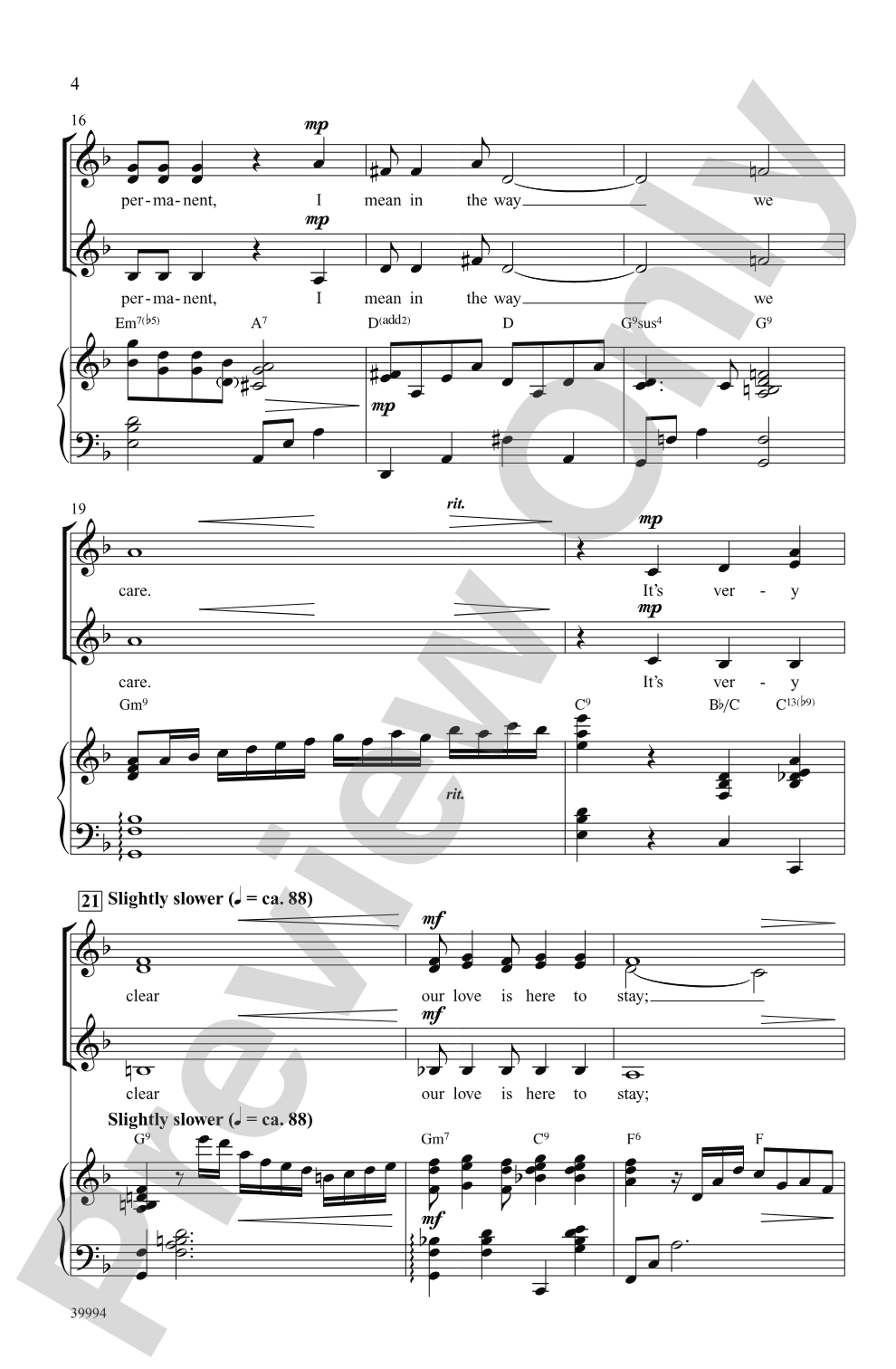

Love Is Here to Stay: SSA Choral Octavo
Music and lyrics by George Gershwin and Ira Gershwin / arr. Mark Hayes
Item: 00-PO-0001733
$1.90
Minimum order quantity: 20 copies
One moment…
Description
A developed piano accompaniment carries the voices on a sentimental journey from the lush opening to the light swing ending. This is Mark Hayes at his best!


Love Is Here to Stay: SSA Choral Octavo isn't in MakeMusic Cloud just yet...but it could be. Let us know you'd like to see it, and you'll help shape what comes next. In the meantime, start a free trial and dive into thousands of interactive titles your students can play along with today.
Request This Title
Tell us you want it.
Start Your Free Trial
Explore everything that's ready to play right now.
Sample Audio
1
Audio File
--:--
0:00
0:00
Sample Video
No sample videos found.
Additional Details
Series:
Alfred Pop Choral Series
Publisher:
Alfred Music
Page Count:
12
SKU:
00-PO-0001733
More about this title
About the Composer: George Gershwin
George Gershwin (1898-1937) revolutionized American music by fusing jazz idioms with classical forms, creating a sound that felt entirely new. His gift for melody and harmonic sophistication made him a dominant force in both Broadway and concert halls, and his influence on subsequent generations of composers remains profound.
Why we love this
Mark Hayes captures the emotional arc of this standard with remarkable restraint. The piano writing does the heavy lifting, which means your singers stay focused on phrasing and blend rather than fighting through orchestral density. The light swing ending provides a refreshing contrast to the opening warmth, giving directors a genuine dynamic shape to work with.
What to expect
The opening unfolds with genuine tenderness, anchored by the piano's rich harmonies. As the piece progresses, it gradually lightens and swings, creating an arc that moves from romantic reflection to playful warmth.
Who it's for
This octavo works well for choirs with solid musicianship who can sustain control through legit singing and then pivot to a swing feel without losing cohesion. It suits groups looking to program a sophisticated pop standard that audiences recognize without feeling trivial.
How to get the most out of it
- Shape the opening section with careful dynamic control through the accompaniment; let the piano's lushness set the emotional tone while voices remain balanced and transparent.
- Approach the text with conversational phrasing rather than formal diction; this is intimate storytelling, not proclamation.
- Prepare the transition to swing by establishing a clear rhythmic feel in rehearsal early, so the style shift lands naturally rather than jarring.
- Balance SSA voicing by ensuring alto and second soprano lines have clarity in their own right, particularly where they carry harmonic interest.
How to use it
Pair this with other Gershwin-era standards to anchor a program section, or use it as a graceful counterpoint to more contemporary pop arrangements. The emotional maturity and piano sophistication make it particularly effective as a closer before an upbeat finale.
Skills your students will build
- Sustaining legit vocal tone while executing a swing style transition
- Balancing SSA voicing with attention to alto melodic independence
- Shaping phrase contours based on text meaning rather than melodic peaks
- Listening for and responding to harmonic movement in an active piano accompaniment