
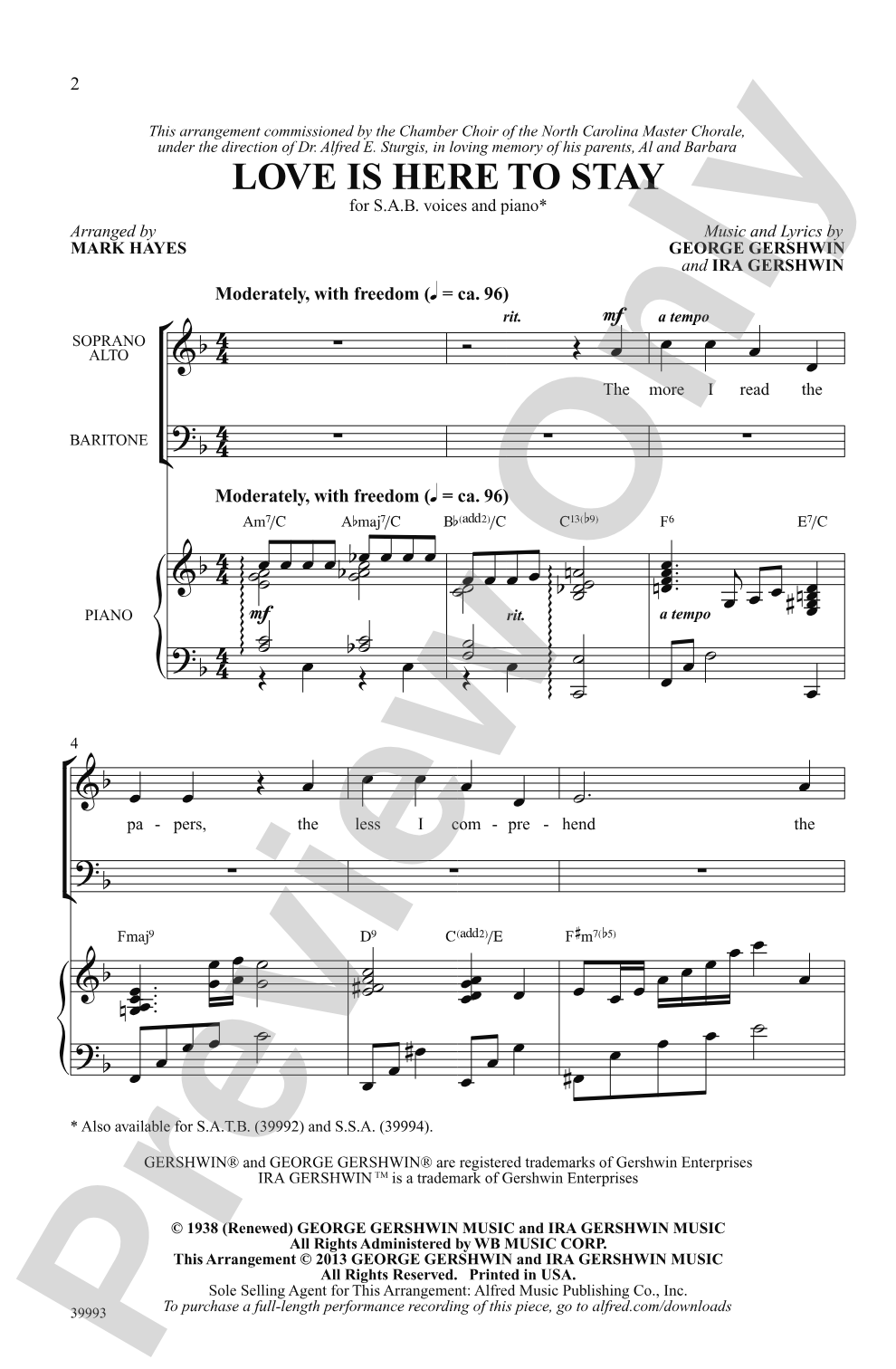
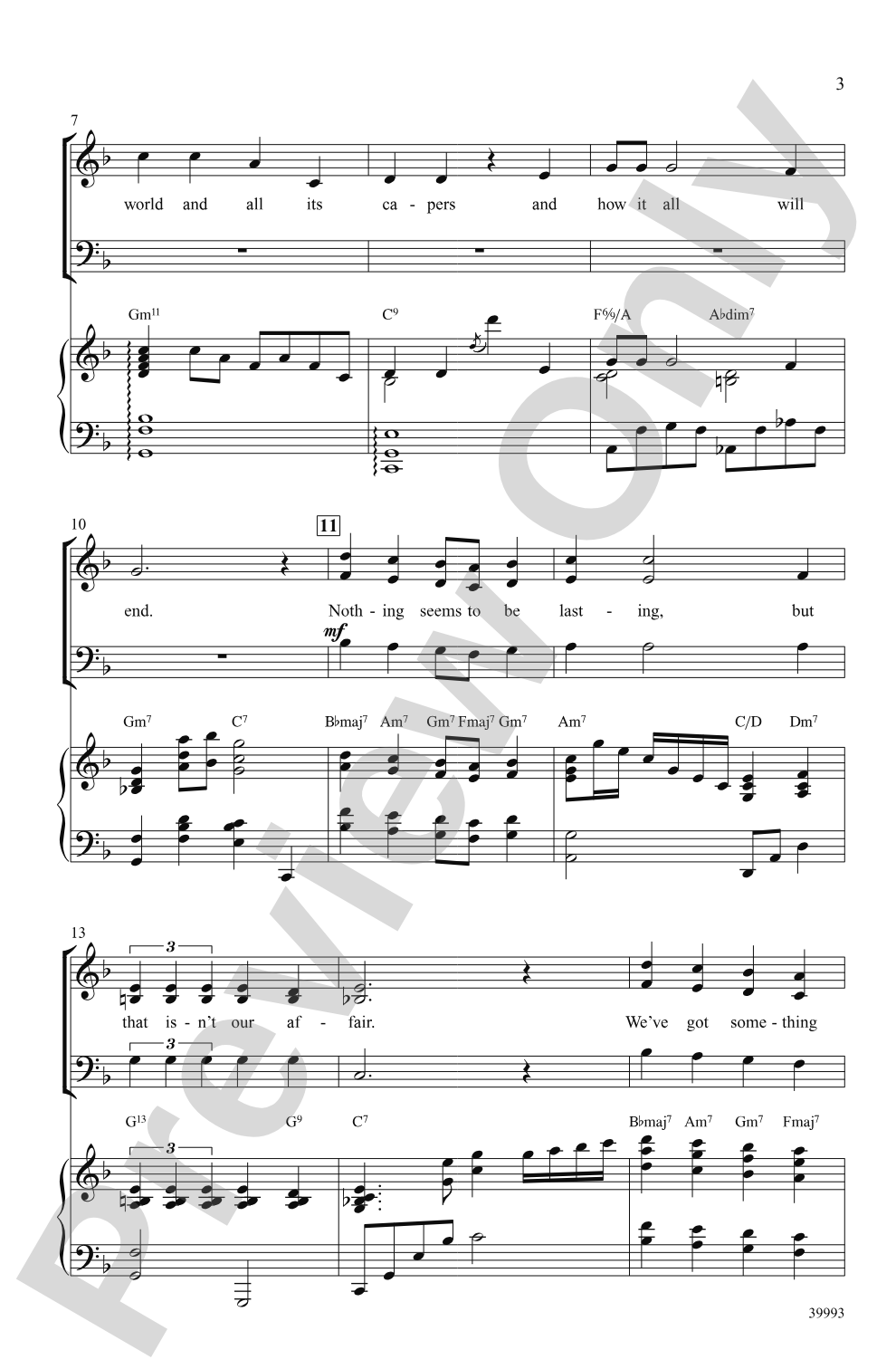
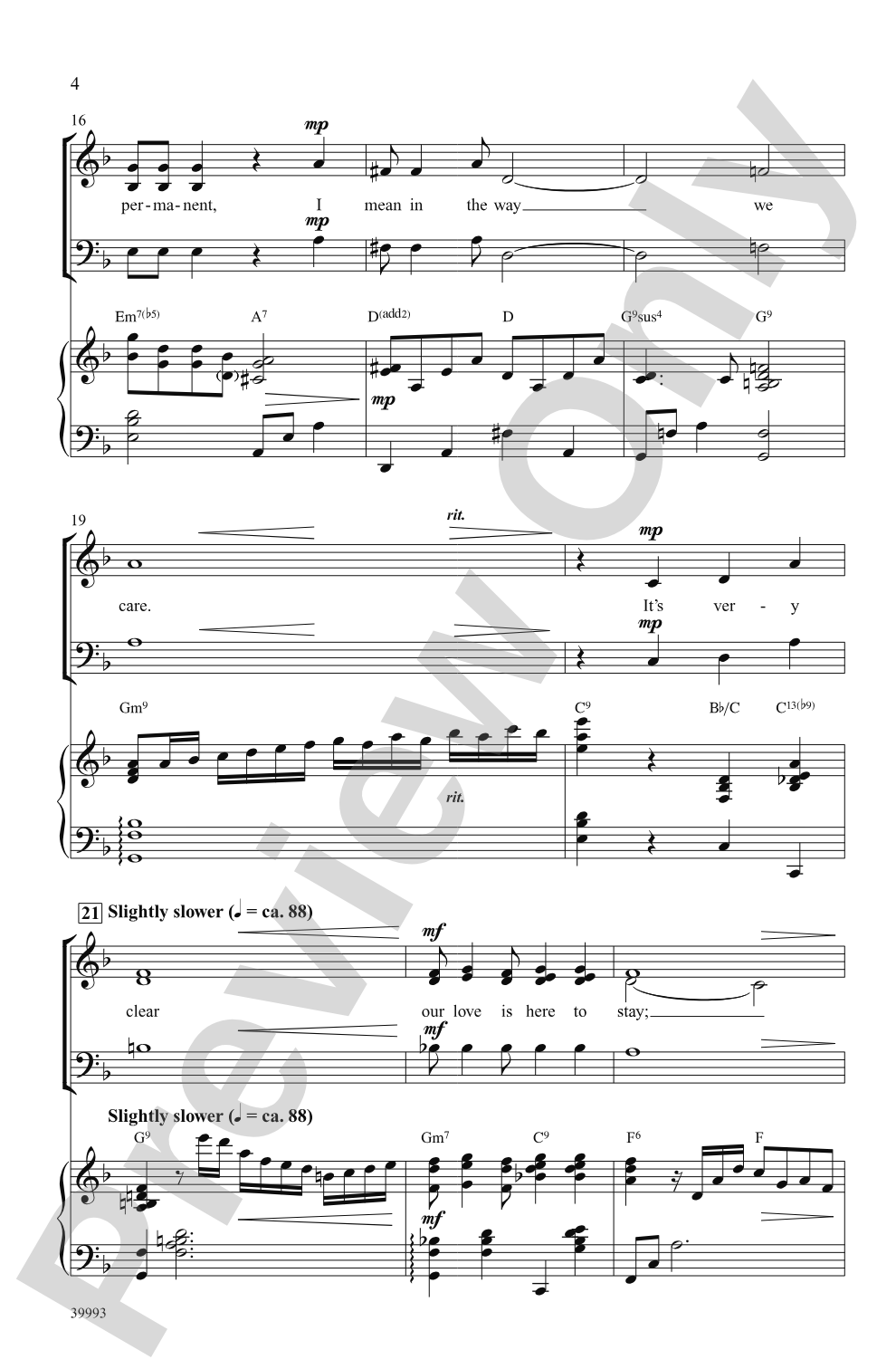

Love Is Here to Stay: SAB Choral Octavo
Music and lyrics by George Gershwin and Ira Gershwin / arr. Mark Hayes
Item: 00-PO-0001732
$1.90
Minimum order quantity: 20 copies
One moment…
Description
A developed piano accompaniment carries the voices on a sentimental journey from the lush opening to the light swing ending. This is Mark Hayes at his best!


Love Is Here to Stay: SAB Choral Octavo isn't in MakeMusic Cloud just yet...but it could be. Let us know you'd like to see it, and you'll help shape what comes next. In the meantime, start a free trial and dive into thousands of interactive titles your students can play along with today.
Request This Title
Tell us you want it.
Start Your Free Trial
Explore everything that's ready to play right now.
Sample Audio
1
Audio File
--:--
0:00
0:00
Sample Video
No sample videos found.
Additional Details
Series:
Alfred Pop Choral Series
Publisher:
Alfred Music
Page Count:
12
SKU:
00-PO-0001732
More about this title
About the Composer: George Gershwin
George Gershwin (1898-1937) brought jazz vocabulary and American popular song into concert music at a moment when those worlds rarely mixed. His gift for melody was matched by his structural sophistication; he understood how to build emotional weight without abandoning accessibility. For choral directors, Gershwin's standards offer the rare opportunity to teach singers that popular song and artistic ambition are not opposites.
Why we love this
Mark Hayes delivers an arrangement that honors the song's sentimental core while giving the ending room to swing. The piano writing is characterful enough to hold attention but never competes with the voices; instead, it shapes the emotional arc the choir is singing. This is what a standard arrangement should do: make a familiar song feel fresh without asking singers to do anything beyond their musical reach.
What to expect
Warm and introspective in the opening, with Hayes's piano accompaniment creating a sense of nostalgic comfort. The swing ending brings unexpected lightness, shifting the emotional register without losing the song's essential tenderness. There's sophistication here, but it never calls attention to itself; the focus stays on the lyrical beauty of Gershwin's melody.
Who it's for
Any mixed choir with strong enough musicianship to sustain a three-part texture across a full 12-page arrangement. SAB voicing works well for choirs with limited baritone depth or for groups building toward more complex literature. This piece rewards singers who already have solid fundamentals in blend and intonation.
How to get the most out of it
- Balance the three parts so that the melody line (soprano) sits naturally on top without the altos and baritones fading into backdrop. The accompaniment is lush enough that ensemble clarity requires intentional voice leading, not just volume.
- Shape the phrasing across the lush opening section with a sense of rubato. This is not a metronomic piece; allow the text and melody to breathe, especially in the early measures where Hayes sets the sentimental mood.
- Approach the transition to the swing ending as a tempo shift, not just a style shift. The lift into lighter articulation will feel natural once the rhythmic energy of the swing section is established.
- Let the piano part anchor the harmonic sophistication. Gershwin's changes are warm and occasionally unexpected; if your singers hear the accompaniment's voice leading, they'll lock into the harmonic intention more securely.
How to use it
Program this in a set of American standards or as a palate-cleanser between heavier repertoire. The piece works equally well as a concert opener (the familiar melody draws in listeners) or as a second-half anchor in a mixed program. It pairs naturally with other Gershwin arrangements or with mid-century popular song literature.
Skills your students will build
- Sustaining legit vocal tone across a full-length arrangement without losing energy
- Reading three-part mixed voicing with independent melodic lines in each section
- Responding to piano accompaniment as a guide for phrasing and harmonic direction
- Executing a style shift from ballad to swing while maintaining musical continuity
- Balancing text clarity with the lyrical demands of a developed vocal line