
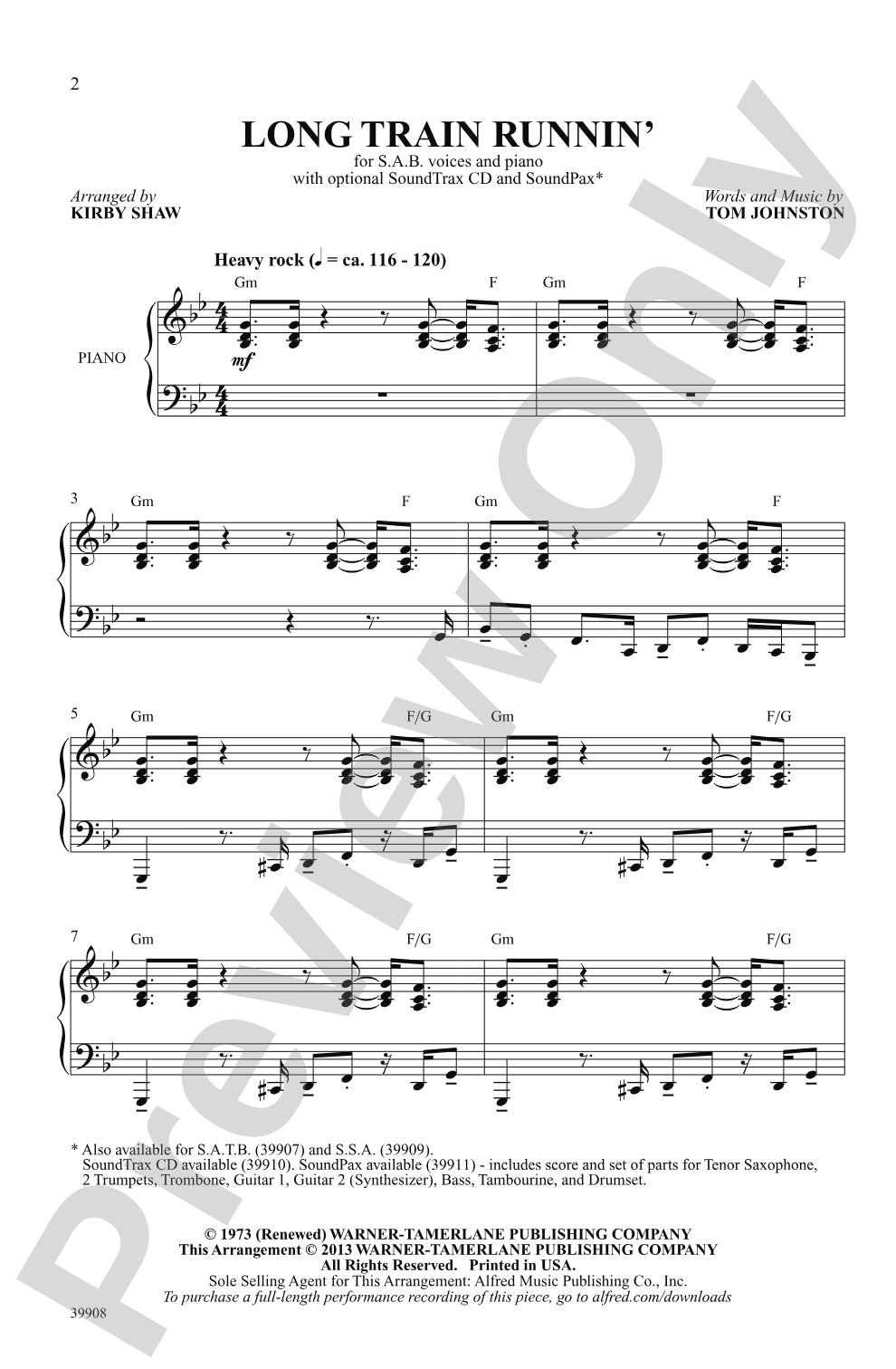
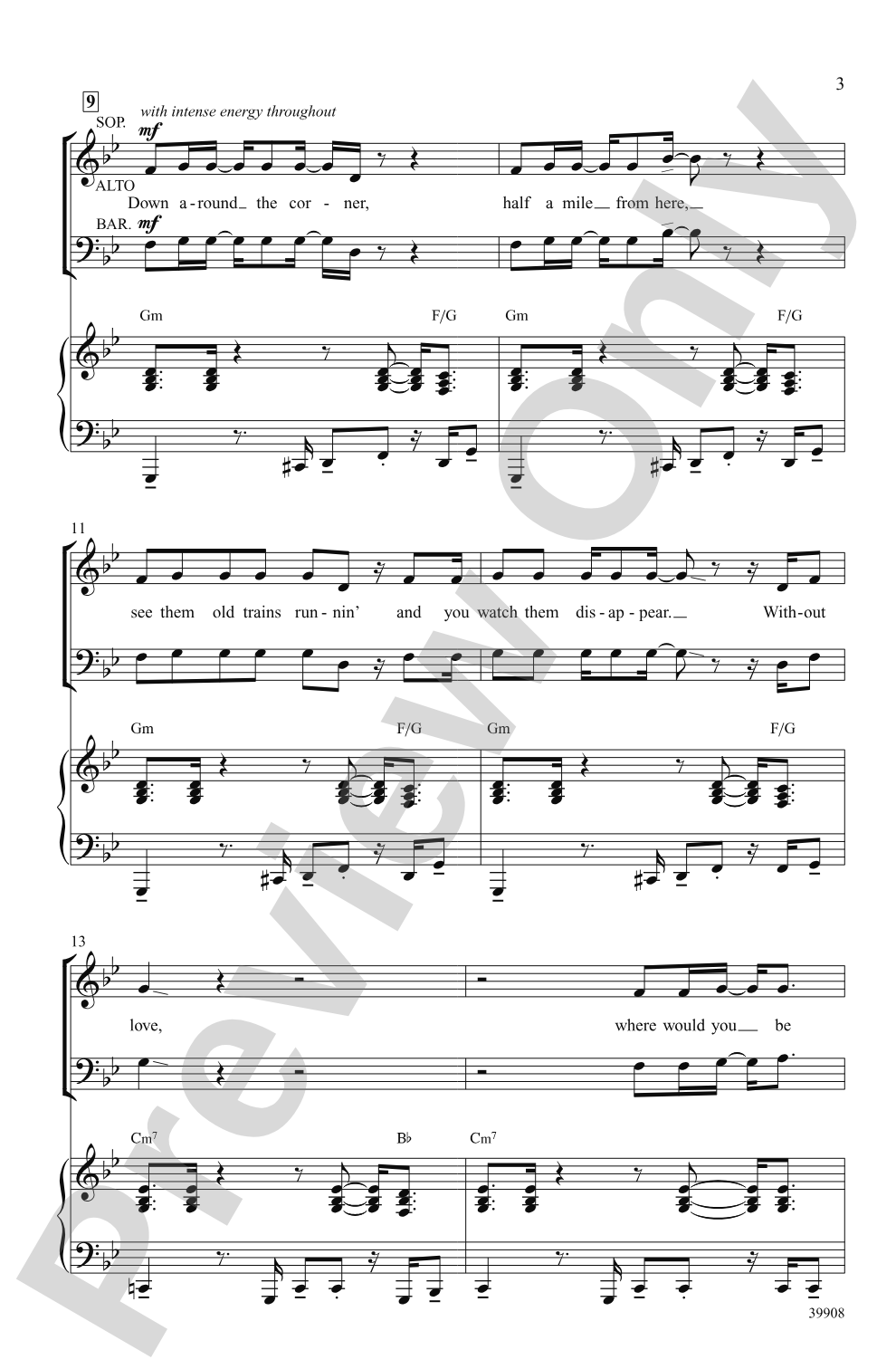
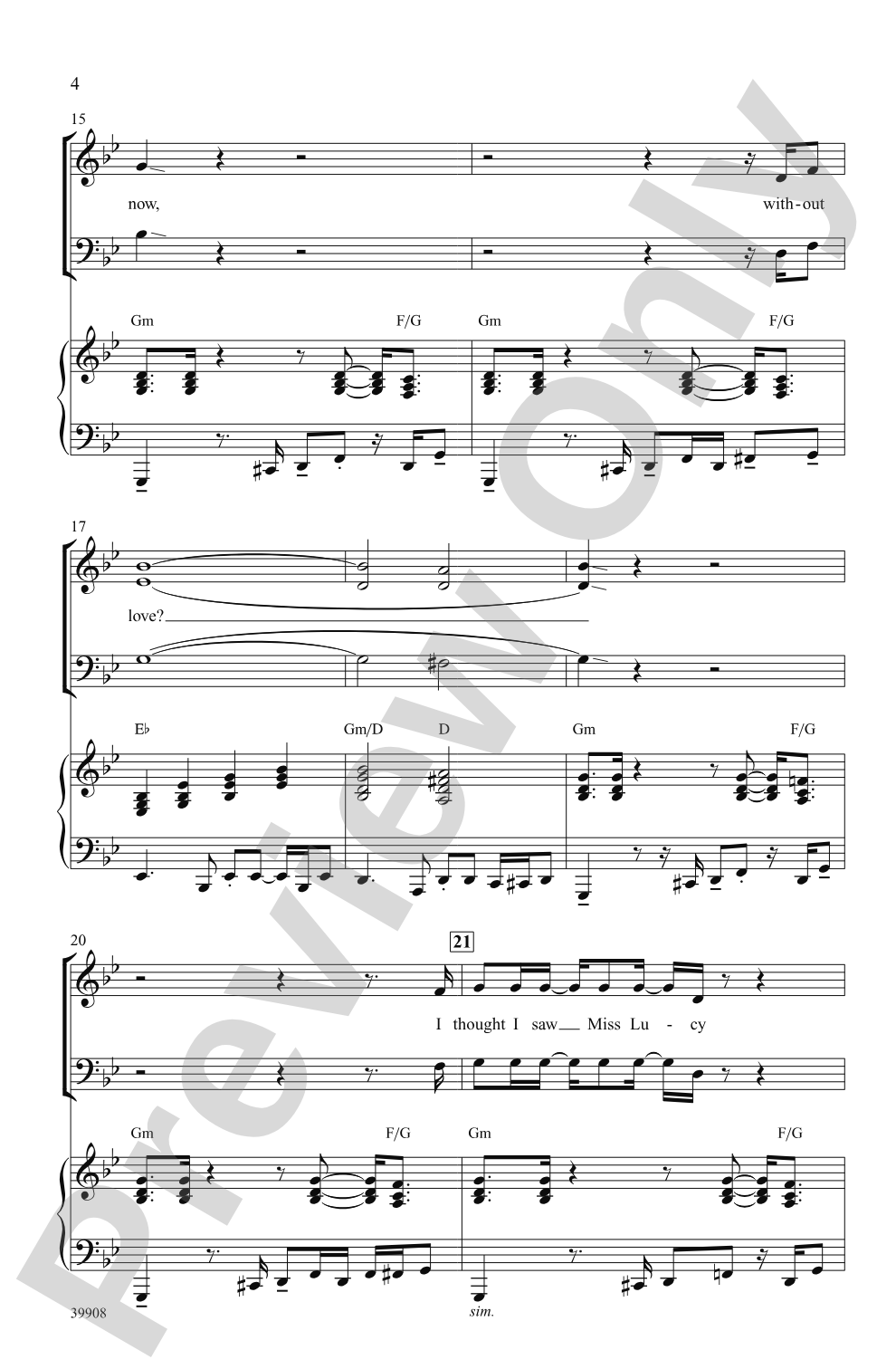

Long Train Runnin': SAB Choral Octavo
Words and music by Tom Johnston [The Doobie Brothers] / arr. Kirby Shaw
Item: 00-PO-0001694
$2.00
Minimum order quantity: 20 copies
One moment…
Related Items
Long Train Runnin': SoundTrax Digital Audio Download |
$27.99
|
View | |
Long Train Runnin': SATB Choral Octavo |
$2.00
|
View | |
Long Train Runnin': SSA Choral Octavo |
$2.00
|
View | |
Long Train Runnin': Choral SoundPax |
$10.00
|
View | |
Long Train Runnin': SATB Choral Octavo |
$2.00
|
View | |
Long Train Runnin': SAB Choral Octavo |
$2.00
|
View | |
Long Train Runnin': SSA Choral Octavo |
$2.00
|
View | |
Long Train Runnin': Choral Octavo SoundTrax CD |
$27.99
|
View | |
Long Train Runnin': Choral SoundPax |
$10.00
|
View |
Description
Who can forget this infectious Doobie Brothers classic, which hit the Billboard Top Ten in 1973? From the familiar opening guitar lick to the final chord, this arrangement really cooks!


Long Train Runnin': SAB Choral Octavo isn't in MakeMusic Cloud just yet...but it could be. Let us know you'd like to see it, and you'll help shape what comes next. In the meantime, start a free trial and dive into thousands of interactive titles your students can play along with today.
Request This Title
Tell us you want it.
Start Your Free Trial
Explore everything that's ready to play right now.
Sample Audio
1
Audio File
--:--
0:00
0:00
Sample Video
No sample videos found.
Additional Details
Series:
Alfred Pop Choral Series
Publisher:
Alfred Music
Page Count:
16
SKU:
00-PO-0001694
More about this title
About the Composer: Tom Johnston
Tom Johnston co-founded The Doobie Brothers in 1970 and became one of the band's primary songwriters and guitarists. His gift for crafting accessible, groove-driven rock songs with memorable melodies made him central to the band's commercial success throughout the 1970s. Johnston's compositions balanced radio appeal with genuine musicianship, establishing him as a significant figure in classic rock songwriting.
Beyond his work with The Doobie Brothers, Johnston's songwriting demonstrates the kind of structural clarity and rhythmic precision that translates well to choral arrangement. His ability to write hooks that stick with listeners for decades reveals a deep understanding of what makes a song resonate, a quality that makes his compositions particularly rewarding for choral musicians to explore.
Why we love this
Kirby Shaw's arrangement captures the swagger and drive of the original while making it genuinely singable across three parts. SAB voicings of rock standards can feel thin, but this one maintains the song's infectious energy and harmonic richness. It's a rare pop arrangement that feels like real music rather than a simplified knockoff.
What to expect
The chart captures that irresistible rolling momentum the Doobie Brothers locked into on the original. There's swagger in the harmony, a relaxed confidence in the groove, and enough space between the parts that the arrangement feels spacious rather than cluttered.
Who it's for
Choirs seeking contemporary repertoire that connects with singers and audiences alike will find an immediate winner here. This octavo works for concert choirs building confidence in pop and rock idioms, as well as show choirs or chamber ensembles wanting to program a recognizable crowd pleaser that still demands musical maturity.
How to get the most out of it
- Nail the rhythmic pocket from the first measure. The groove carries this tune, so lock your part entries with precision even if the overall tempo feels relaxed.
- Balance the soprano line over the bass and alto parts. Shaw's arrangement layers the melody clearly, but sopranos need to resist oversinging through the verse.
- Shape the familiar hook melodically rather than just hitting the notes. These phrases deserve the same care you'd give to a jazz standard.
- Use the recorded accompaniment to internalize how the parts sit against the groove. A click track alone won't capture the pocket of this rock classic.
How to use it
Program this as a closer on a concert pairing it with other 1970s rock standards to create a fun, cohesive set. It also works beautifully as a bridge between more classical fare and contemporary music, signaling to your audience that excellence matters regardless of genre.
Skills your students will build
- Maintaining rhythmic precision in a groove-based context
- Singing rock idioms with stylistic authenticity
- Balancing independent lines in a three-part texture
- Internalizing phrasing and dynamics from recorded accompaniment