
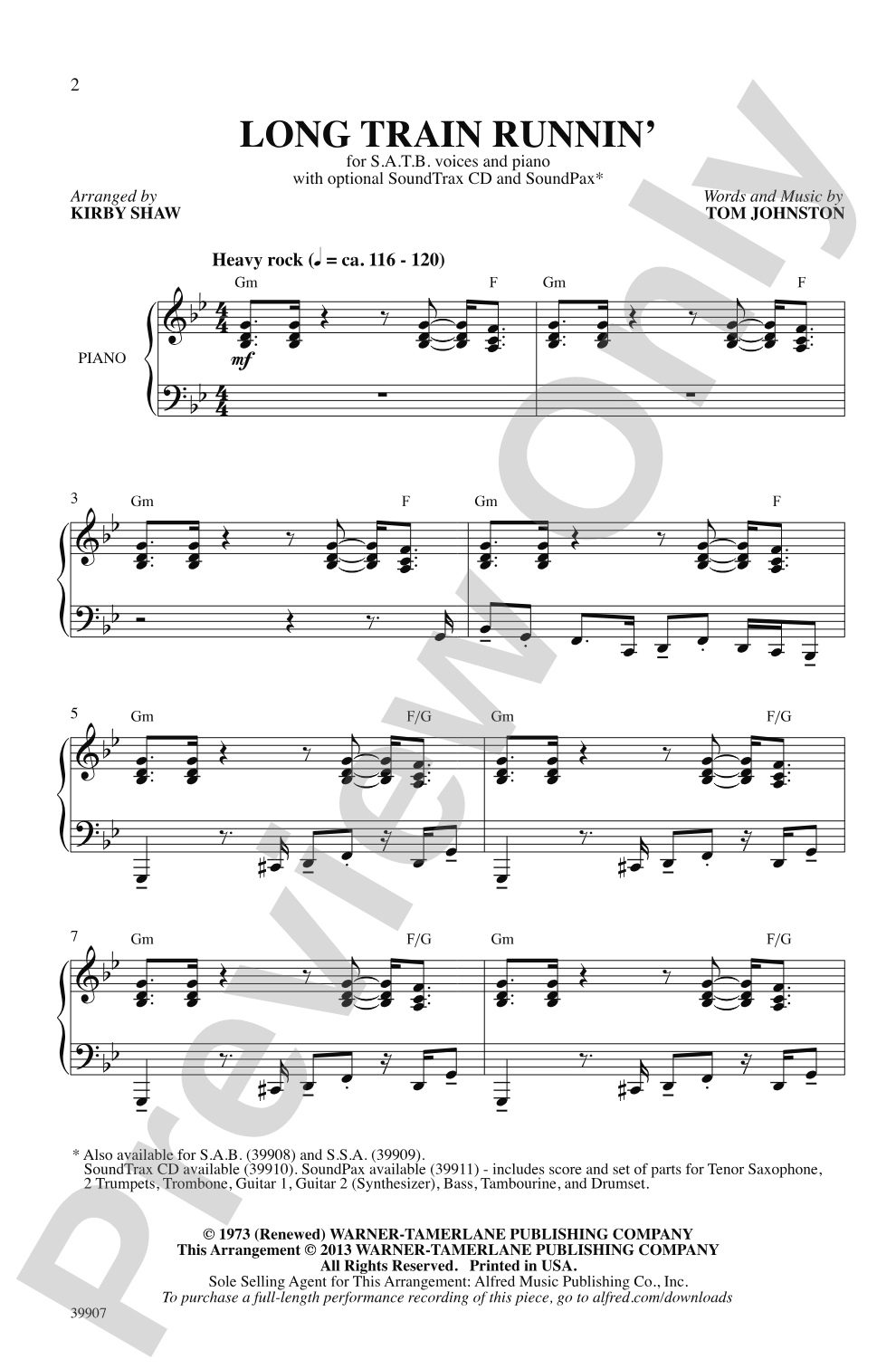
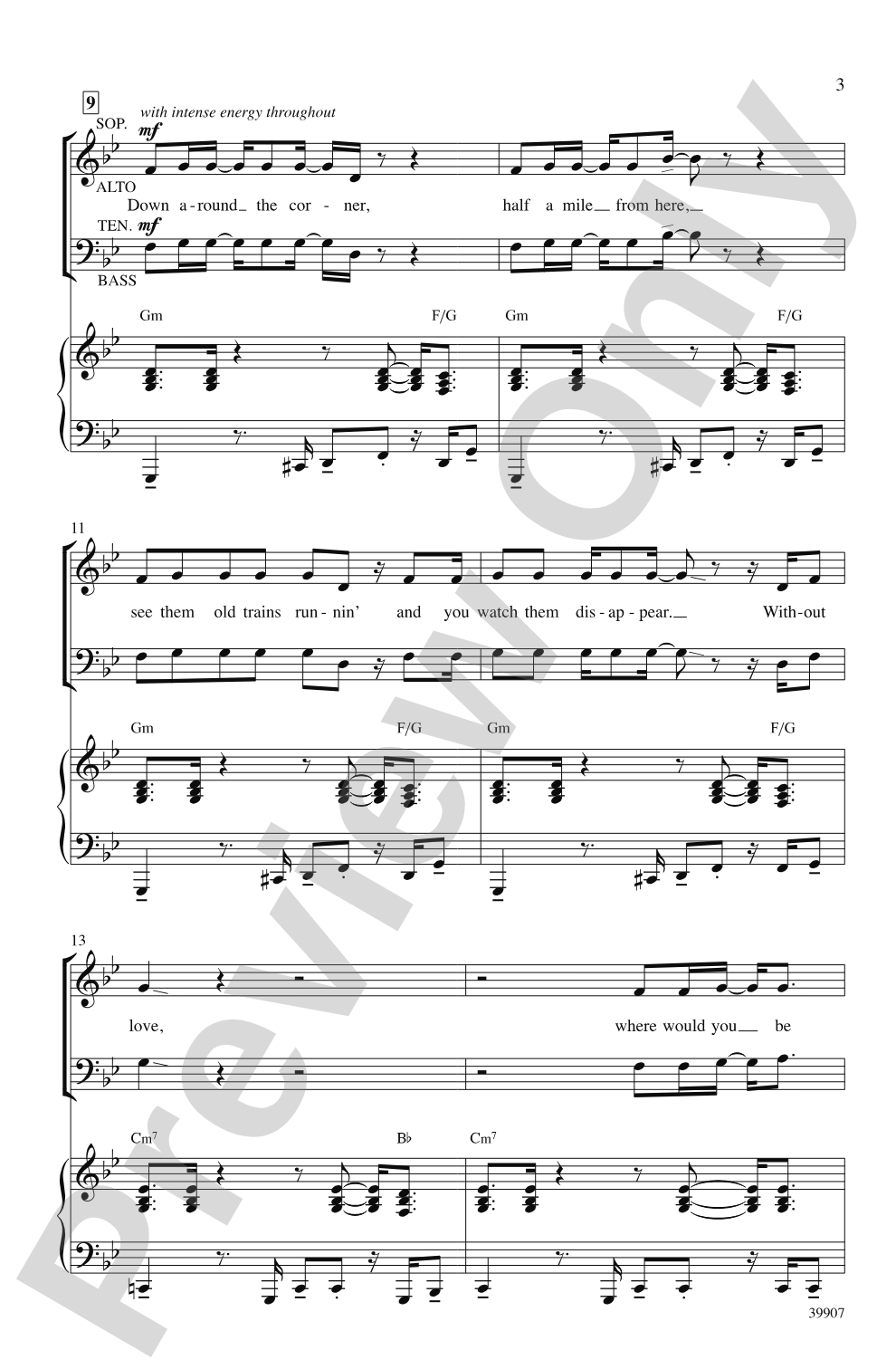
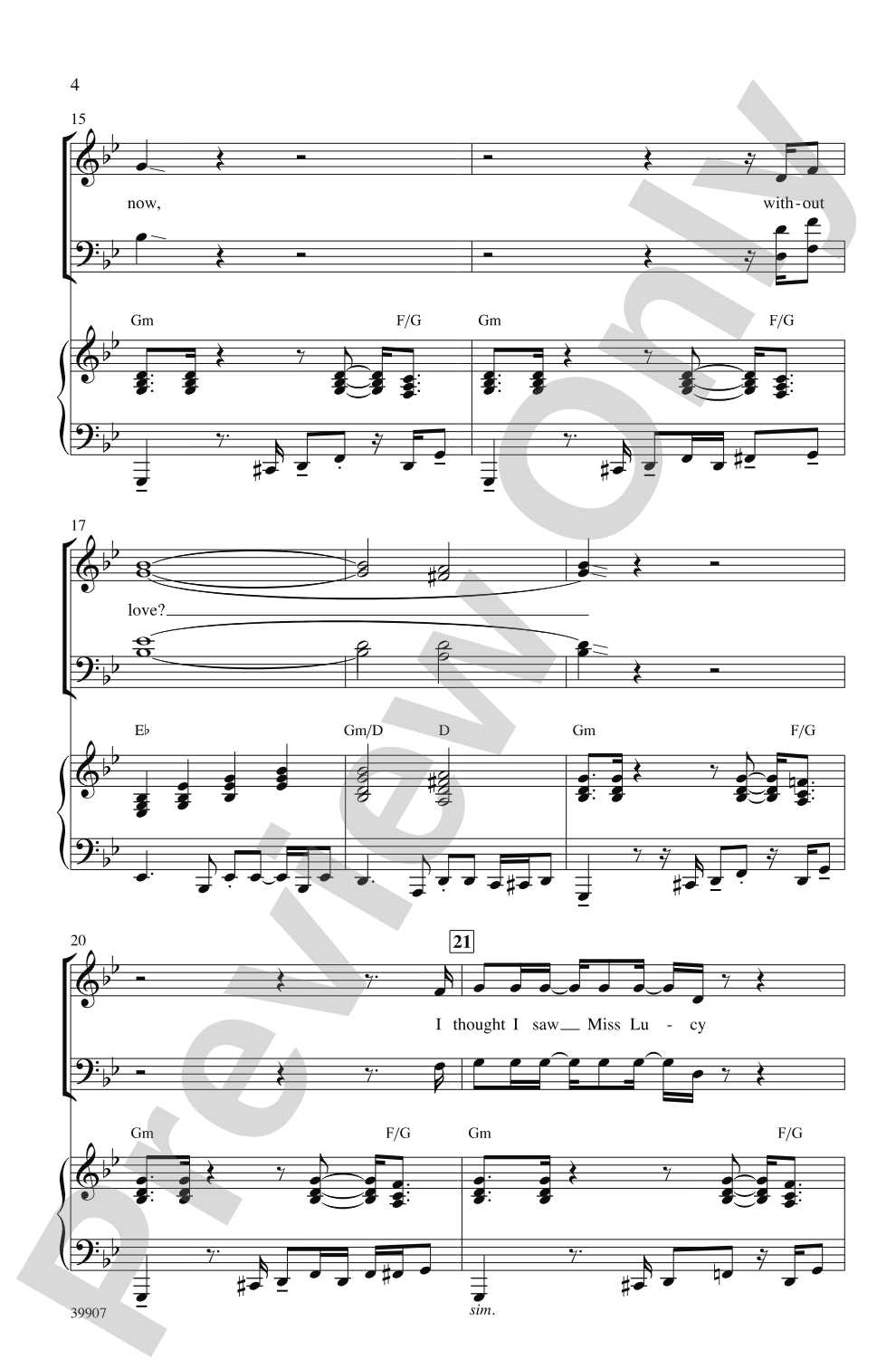

Long Train Runnin': SATB Choral Octavo
Words and music by Tom Johnston [The Doobie Brothers] / arr. Kirby Shaw
Item: 00-PO-0001693
$2.00
Minimum order quantity: 20 copies
One moment…
Related Items
Long Train Runnin': SoundTrax Digital Audio Download |
$27.99
|
View | |
Long Train Runnin': SAB Choral Octavo |
$2.00
|
View | |
Long Train Runnin': SSA Choral Octavo |
$2.00
|
View | |
Long Train Runnin': Choral SoundPax |
$10.00
|
View | |
Long Train Runnin': SATB Choral Octavo |
$2.00
|
View | |
Long Train Runnin': SAB Choral Octavo |
$2.00
|
View | |
Long Train Runnin': SSA Choral Octavo |
$2.00
|
View | |
Long Train Runnin': Choral Octavo SoundTrax CD |
$27.99
|
View | |
Long Train Runnin': Choral SoundPax |
$10.00
|
View |
Description
Who can forget this infectious Doobie Brothers classic, which hit the Billboard Top Ten in 1973? From the familiar opening guitar lick to the final chord, this arrangement really cooks!


Long Train Runnin': SATB Choral Octavo isn't in MakeMusic Cloud just yet...but it could be. Let us know you'd like to see it, and you'll help shape what comes next. In the meantime, start a free trial and dive into thousands of interactive titles your students can play along with today.
Request This Title
Tell us you want it.
Start Your Free Trial
Explore everything that's ready to play right now.
Sample Audio
1
Audio File
--:--
0:00
0:00
Sample Video
No sample videos found.
Additional Details
Series:
Alfred Pop Choral Series
Publisher:
Alfred Music
Page Count:
16
SKU:
00-PO-0001693
More about this title
About the Composer: Tom Johnston
Tom Johnston co-founded The Doobie Brothers in 1970 and served as the band's primary songwriter and guitarist throughout their most commercially successful period. His gift for crafting memorable melodies and infectious grooves made him central to the band's signature sound, particularly during the early 1970s when they dominated rock radio. Johnston's compositions, including "Long Train Runnin'," combined blues-rock energy with pop sensibility, creating songs that appealed to both radio programmers and concert audiences.
Why we love this
Kirby Shaw's arrangement captures every ounce of the original's swagger and drive without oversimplifying the harmonic content or losing the groove that made this song a radio staple. Your choir gets to experience a legitimate 1970s rock hit that students actually know and want to sing, which translates immediately into engagement and energy. The combination of accessible voicing with genuine stylistic authenticity makes this a rare find in the pop choral world.
What to expect
The arrangement pulses with the laid-back confidence of early 1970s rock radio, complete with syncopated rhythms and blues-inflected harmonies that feel natural under the voice rather than forced. From the first measure, there's a sense of momentum and groove that pulls the ensemble forward, creating the sensation of playing in a real band rather than singing a chorale.
Who it's for
Intermediate to advanced secondary choirs and college-level ensembles who want to program something contemporary and stylistically authentic without sacrificing musical substance. Singers who grew up on classic rock or have heard this song on the radio will recognize it immediately, making rehearsals genuinely fun rather than obligatory.
How to get the most out of it
- Keep the eighth-note pulse locked and consistent throughout; this song's power depends entirely on a steady, confident backbeat that never wavers or rushes.
- Balance the familiar melodic hook with the supporting harmonies so that all four parts remain audible and contribute equally to the overall texture.
- Use the recorded accompaniment to internalize the groove before rehearsing unplugged, then gradually pull away from it so your choir owns the rhythmic feel independently.
- Shape the final section with building intensity; resist the urge to rush as dynamics increase, instead letting the energy come from articulation and precision rather than tempo.
How to use it
Feature this as part of a concert exploring the evolution of American popular music, pairing it with other pop or rock selections to showcase your choir's stylistic range. It works particularly well as an upbeat second-half opener that immediately reconnects the audience with a song they recognize, refreshing energy after a more introspective first half.
Skills your students will build
- Maintaining a steady eighth-note pulse against syncopated melodic lines
- Balancing lead melody with supporting harmonic parts in a four-part arrangement
- Interpreting blues-rock inflection and rhythmic interpretation in a choral context
- Sustaining ensemble cohesion while singing with groove and forward motion