

Lift Your Voice and Rejoice!: 2-Part Choral Octavo
Words and music by Victor C. Johnson
Item: 00-PO-0006689
$2.05
Minimum order quantity: 20 copies
Pickup currently not available
Related Items
Lift Your Voice and Rejoice!: PianoTrax Digital Audio Download |
$9.99
|
View | |
Lift Your Voice and Rejoice!: SATB Choral Octavo |
$2.05
|
View | |
Lift Your Voice and Rejoice!: 3-Part Mixed Choral Octavo |
$2.05
|
View | |
Lift Your Voice and Rejoice!: SATB Choral Octavo |
$2.05
|
View | |
Lift Your Voice and Rejoice!: 3-Part Mixed Choral Octavo |
$2.05
|
View | |
Lift Your Voice and Rejoice!: 2-Part Choral Octavo |
$2.05
|
View |
Description
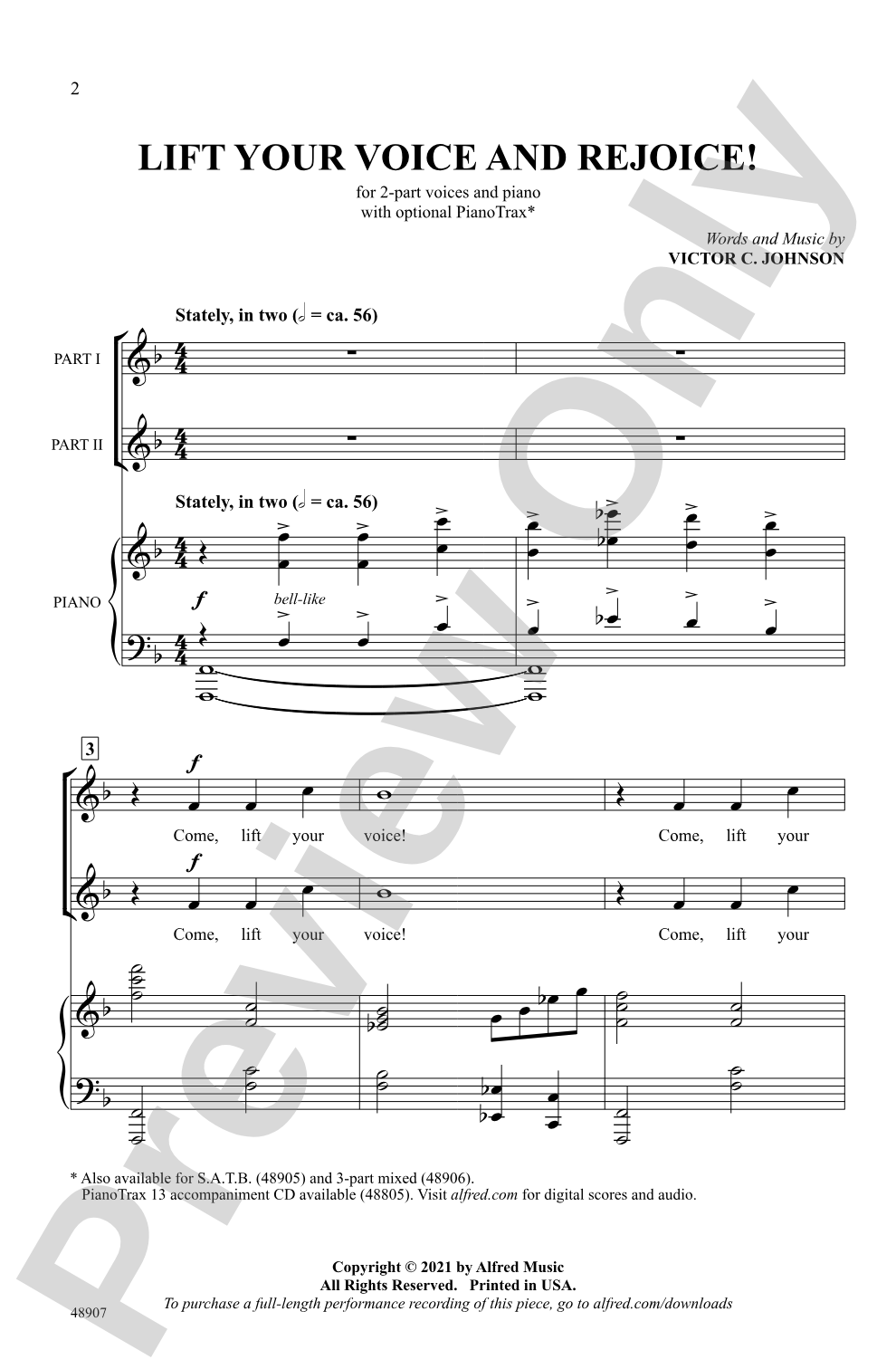
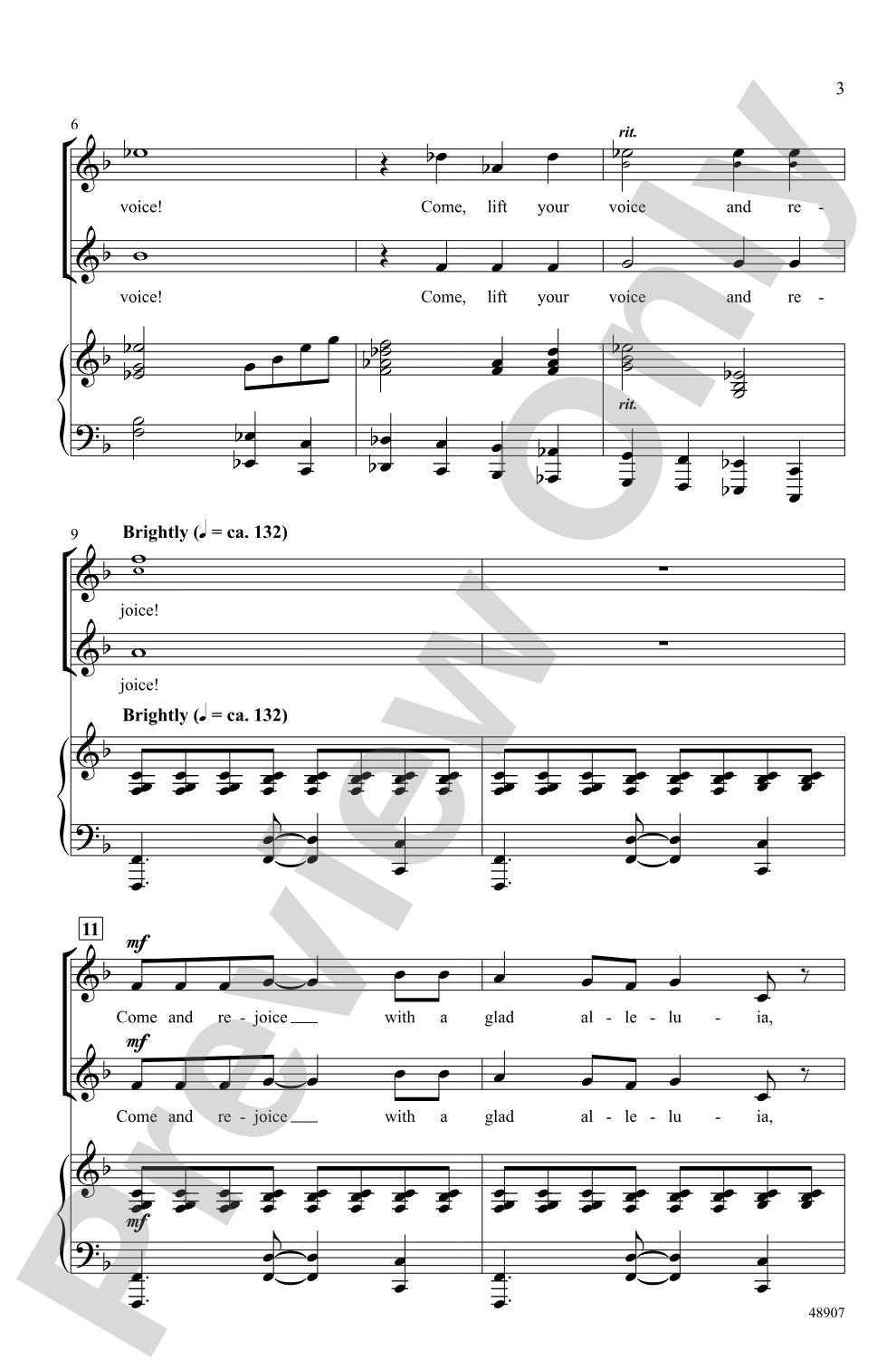
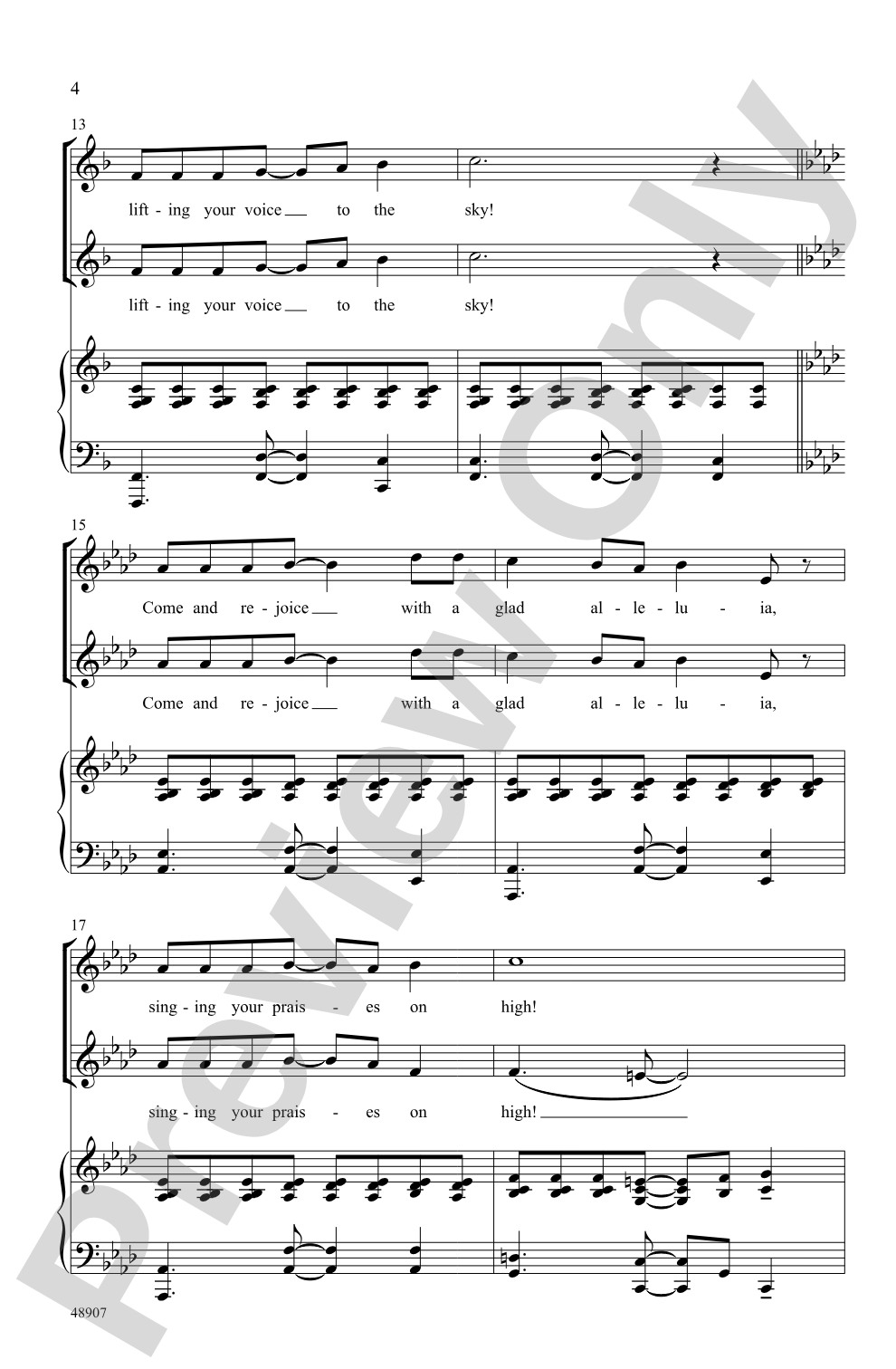
Let's gather together, let's celebrate, let's sing! The action-packed main theme of this glorious original work organizes rhythmic accents into 332 subdivisions and seamlessly pivots from key to key, before opening up to full choral harmony. A reverent "Gaudeamus Hodie" passage assembles lyrical lines section by section in smooth choral counterpoint, leading to a triumphant fanfare that bookends this jubilant song of exaltation. Ideal for school and/or church. This title is available in MakeMusic Cloud.


Lift Your Voice and Rejoice!: 2-Part Choral Octavo isn't in MakeMusic Cloud just yet...but it could be. Let us know you'd like to see it, and you'll help shape what comes next. In the meantime, start a free trial and dive into thousands of interactive titles your students can play along with today.
Request This Title
Tell us you want it.
Start Your Free Trial
Explore everything that's ready to play right now.
Sample Audio
1
Audio File
--:--
0:00
0:00
Sample Video
Additional Details
Series:
Alfred Choral Designs
Publisher:
Alfred Music
Page Count:
12
SKU:
00-PO-0006689
More about this title
About the Composer: Victor C. Johnson

Victor C. Johnson brings decades of hands-on choral experience to his work as School Choral Editor for Sing!, the educational division of Choristers Guild. Based in Dallas, Texas, he spent 18 years directing choirs at Fort Worth Academy of Fine Arts, where he led the Academy Singers and Academy Men's Choir while serving as artistic director for both the Singing Girls of Texas and Children's Choir of Texas.
With more than 500 published choral works, vocal solos, and keyboard collections in print, Johnson has established himself as a prolific voice in sacred and educational music. In 2022, he became conductor of the Dallas Symphony Children's Chorus Mixed Ensemble (grades 9-12), the resident children's choir for the Dallas Symphony Orchestra. His involvement with the American Choral Directors Association, Texas Choral Directors Association, and ASCAP reflects his commitment to the choral art at every level.
Why we love this
Johnson crafts a piece that understands what energizes young singers. The rhythmic sophistication of the main theme gives students something genuinely interesting to solve, while the "Gaudeamus Hodie" section offers the lyrical satisfaction they crave. The arc from complexity to triumph feels earned rather than imposed, making this work equally rewarding to prepare and to perform.
What to expect
There's infectious joy threaded through this piece, anchored by muscular rhythmic energy that never feels random. When the texture opens into full harmony and builds toward that closing fanfare, singers feel the weight of something genuinely celebratory, not manufactured.
Who it's for
This octavo works beautifully for middle school and high school choirs seeking a showcase piece with both technical substance and emotional impact. The 2-part voicing also makes it accessible for community choirs, church ensembles, or elementary choirs with strong singers.
How to get the most out of it
- Bring the rhythmic subdivisions into sharp focus during early rehearsals by tapping the accents as a separate layer before adding pitch. This trains ears and prevents the rhythm from feeling choppy.
- Shape the key changes as genuine harmonic moments rather than abrupt shifts. Slight breath placement and slight dynamic cushioning help listeners hear the pivots as intentional.
- Let the counterpoint in the "Gaudeamus Hodie" section breathe by keeping individual lines transparent. Encourage singers to listen across parts rather than lock onto their own line.
- Reserve full dynamic energy for the final fanfare. Build incrementally through the earlier sections so that climax feels inevitable and hard-earned.
How to use it
Program this as a concert opener or an anthem-style closer to energize your audience and send singers home buzzing. The piece also works as a festival selection where you need something that stands out rhythmically without requiring unusual vocal ranges or extended rehearsal time.
Skills your students will build
- Executing syncopated rhythmic patterns with precision and confidence
- Reading and performing modulations across multiple key centers
- Balancing individual lines within four-part counterpoint
- Managing dynamic shape across sectional changes and building climaxes
- Singing with rhythmic independence while maintaining ensemble cohesion