

Lift Your Voice and Rejoice!: 3-Part Mixed Choral Octavo
Words and music by Victor C. Johnson
Item: 00-PO-0006688
$2.05
Minimum order quantity: 20 copies
Pickup currently not available
Related Items
Lift Your Voice and Rejoice!: PianoTrax Digital Audio Download |
$9.99
|
View | |
Lift Your Voice and Rejoice!: SATB Choral Octavo |
$2.05
|
View | |
Lift Your Voice and Rejoice!: 2-Part Choral Octavo |
$2.05
|
View | |
Lift Your Voice and Rejoice!: SATB Choral Octavo |
$2.05
|
View | |
Lift Your Voice and Rejoice!: 3-Part Mixed Choral Octavo |
$2.05
|
View | |
Lift Your Voice and Rejoice!: 2-Part Choral Octavo |
$2.05
|
View |
Description
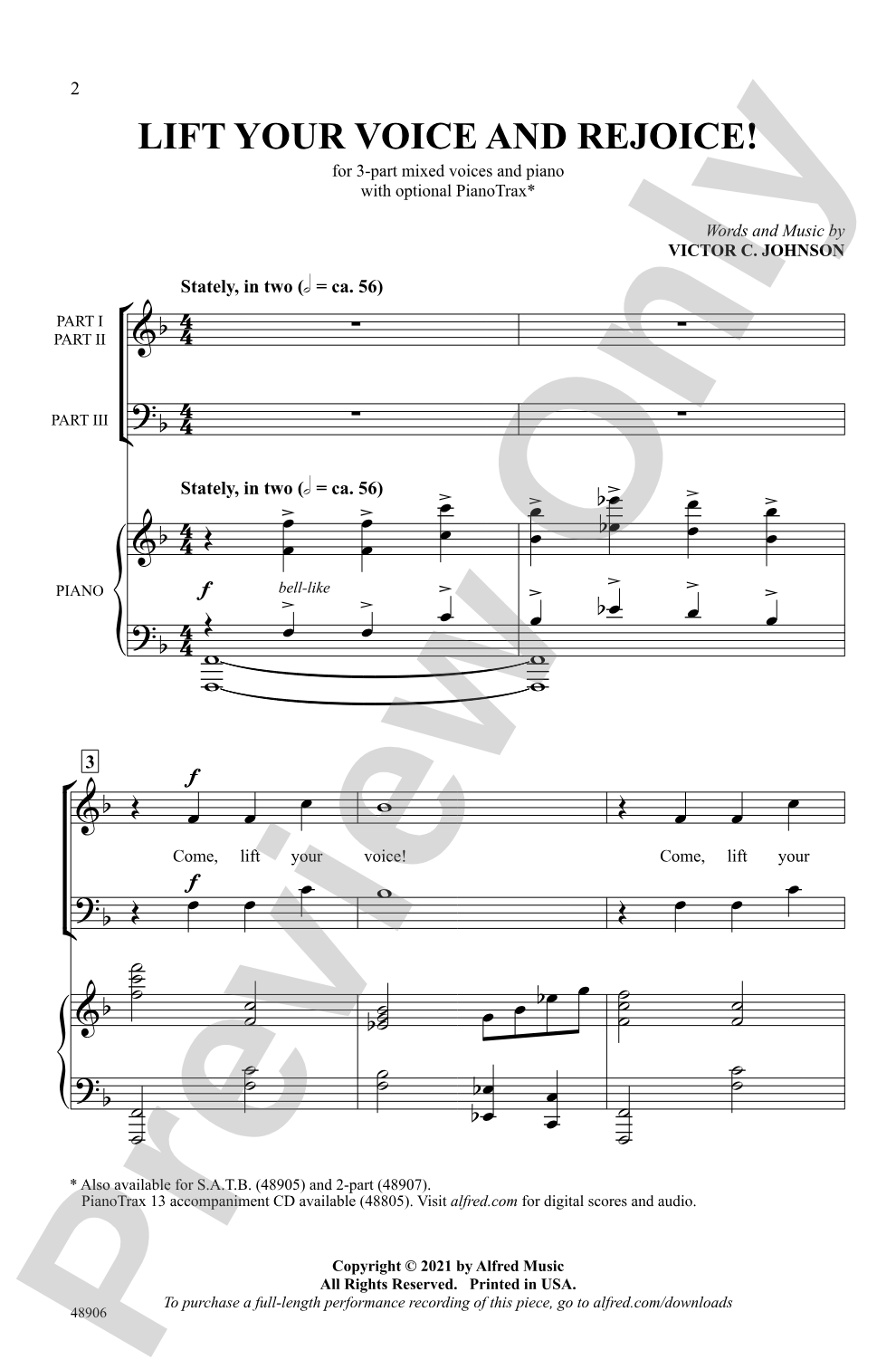
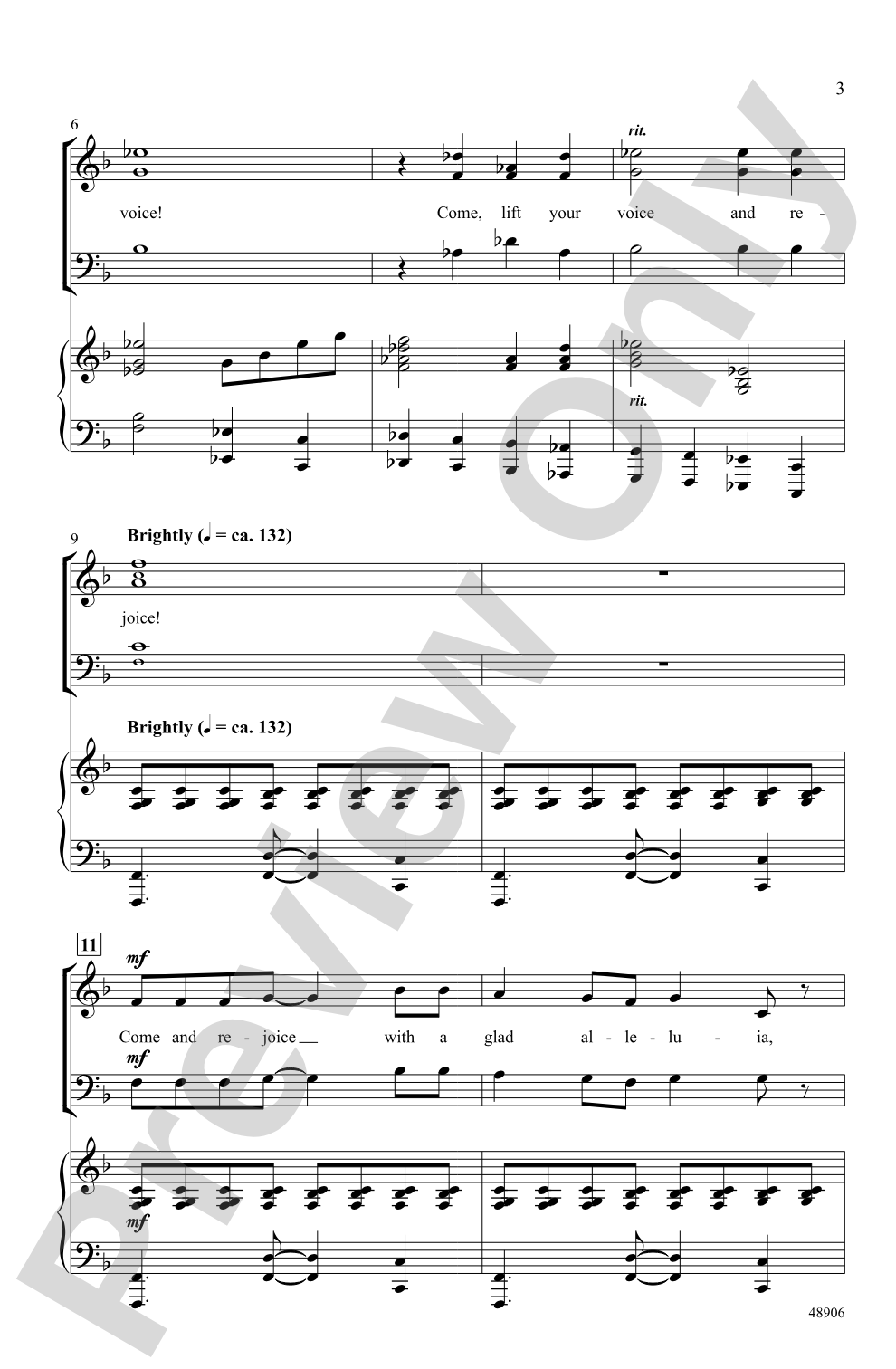
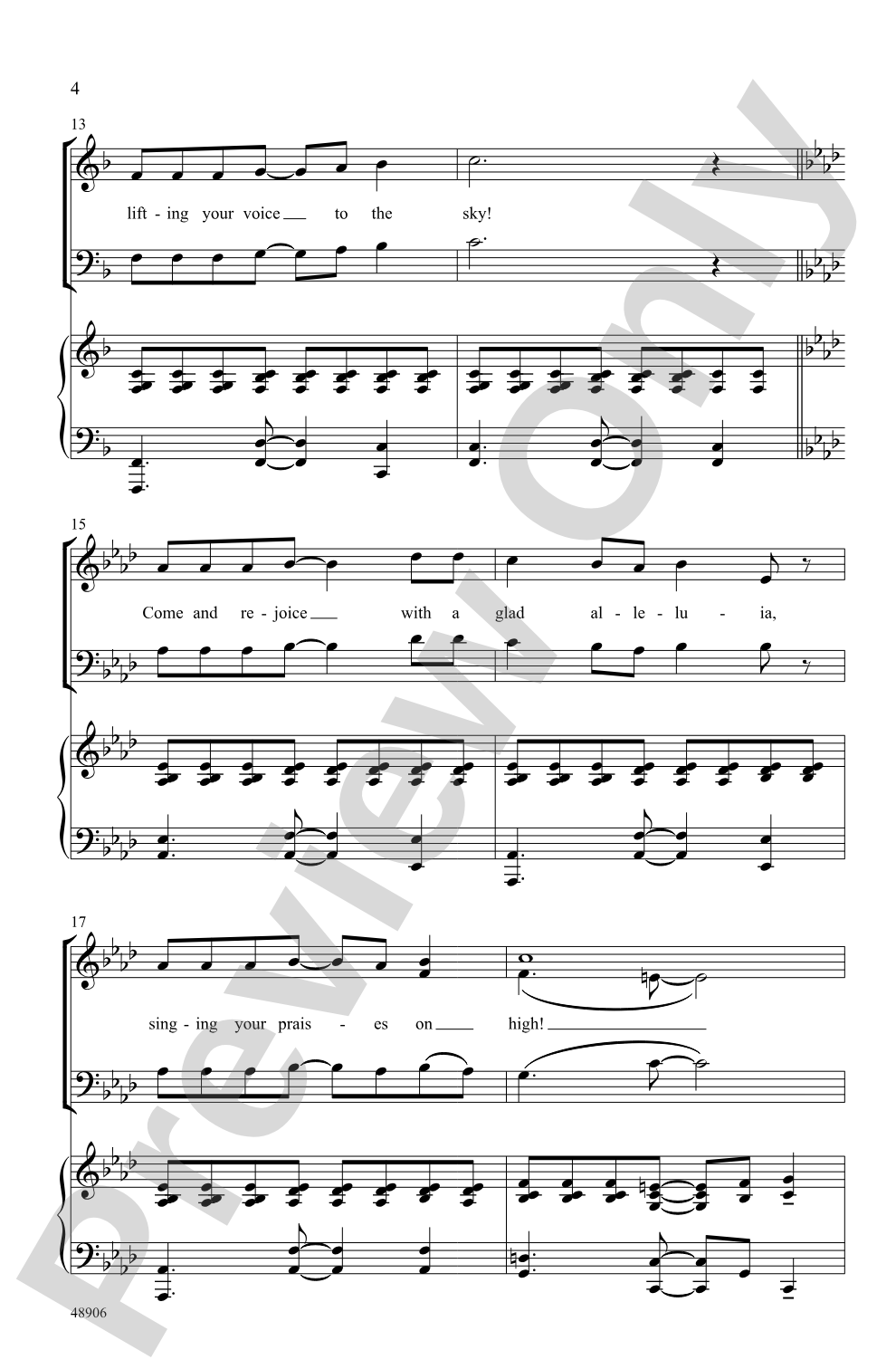
Let's gather together, let's celebrate, let's sing! The action-packed main theme of this glorious original work organizes rhythmic accents into 332 subdivisions and seamlessly pivots from key to key, before opening up to full choral harmony. A reverent "Gaudeamus Hodie" passage assembles lyrical lines section by section in smooth choral counterpoint, leading to a triumphant fanfare that bookends this jubilant song of exaltation. Ideal for school and/or church. This title is available in MakeMusic Cloud.


Lift Your Voice and Rejoice!: 3-Part Mixed Choral Octavo isn't in MakeMusic Cloud just yet...but it could be. Let us know you'd like to see it, and you'll help shape what comes next. In the meantime, start a free trial and dive into thousands of interactive titles your students can play along with today.
Request This Title
Tell us you want it.
Start Your Free Trial
Explore everything that's ready to play right now.
Sample Audio
1
Audio File
--:--
0:00
0:00
Sample Video
Additional Details
Series:
Alfred Choral Designs
Publisher:
Alfred Music
Page Count:
12
SKU:
00-PO-0006688
More about this title
About the Composer: Victor C. Johnson

Victor C. Johnson brings two decades of hands-on choral direction into every piece he writes. As School Choral Editor for Sing! (the educational publishing division of Choristers Guild), he continues to shape choral literature for young singers while drawing on his years directing at Ft. Worth Academy of Fine Arts, where he led multiple ensembles including the Academy Singers and the Singing Girls of Texas.
With over 500 published choral works, vocal collections, and keyboard pieces, Johnson remains active in the choral education field through memberships in the American Choral Directors Association, Texas Choral Directors Association, and National Association for Music Education. He currently serves as conductor of the Dallas Symphony Children's Chorus Mixed Ensemble, working with high school vocalists in the Dallas area.
Why we love this
Johnson knows how to build momentum in a three-part piece without overcomplying the voicing. The rhythmic architecture of the main theme feels current and driving, while the "Gaudeamus Hodie" section offers singers a genuine counterpoint experience that sounds elegant rather than effortful. A piece this well-balanced between structural sophistication and accessibility doesn't come along often.
What to expect
Energy meets purpose from the first downbeat. The piece alternates between driving rhythmic passages that propel the narrative forward and moments of radiant harmonic stillness, all building toward a bright, affirmative conclusion. Singers feel the arc of celebration as they move through contrasting textures.
Who it's for
This octavo works equally well in school choral programs and church music settings. Three-part mixed voicing opens the piece to younger high school groups or mixed ensembles with limited bass section, while the compositional sophistication rewards more experienced choirs.
How to get the most out of it
- Prepare the rhythmic accents in the main theme before adding harmonic complexity. Mark the accent pattern clearly in rehearsal so singers can feel the metric drive even as they move through keys.
- Take time with the "Gaudeamus Hodie" section to build each vocal line independently, then layer them. This counterpoint rewards the ear when each voice is secure and poised.
- Shape the final fanfare with full dynamic support. This is where all three parts converge into unison moments and need the weight to match the jubilant text.
How to use it
Place this on a concert where you need a centerpiece that balances celebration with musical substance. It works beautifully as the opening statement for a mixed choral concert or as a climactic moment before a softer closing piece. Contest and festival programs benefit from its strong identity and approachable ensemble demands.
Skills your students will build
- Managing rhythmic accents across subdivisions while maintaining ensemble precision
- Navigating smooth key modulations within three-part texture
- Building independent vocal lines in counterpoint and then blending them into unified sound
- Interpreting dynamic contrast between rhythmic-driven and lyrical sections
- Sustaining legato phrasing in a jubilant context without sacrificing energy