

Lift Up Your Voice!: SSA Choral Octavo
Words and music by Victor C. Johnson
Item: 00-PO-0003340
$1.90
Minimum order quantity: 20 copies
Pickup currently not available
Related Items
Lift Up Your Voice!: SoundTrax Digital Audio Download |
$27.99
|
View | |
Lift Up Your Voice!: SATB Choral Octavo |
$1.90
|
View | |
Lift Up Your Voice!: SAB Choral Octavo |
$2.05
|
View | |
Lift Up Your Voice!: SATB Choral Octavo |
$1.90
|
View | |
Lift Up Your Voice!: SAB Choral Octavo |
$2.05
|
View | |
Lift Up Your Voice!: SSA Choral Octavo |
$1.90
|
View |
Description
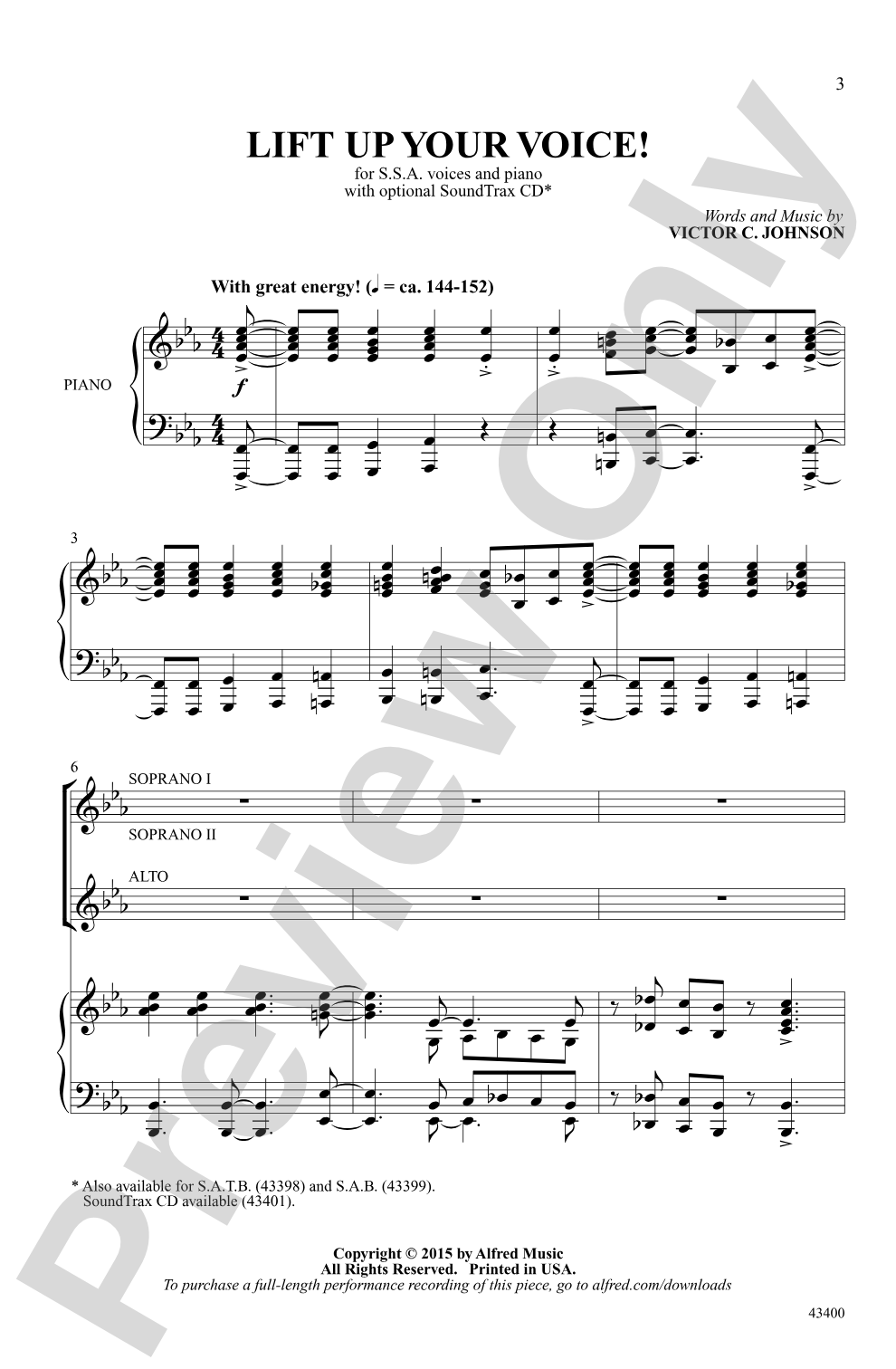
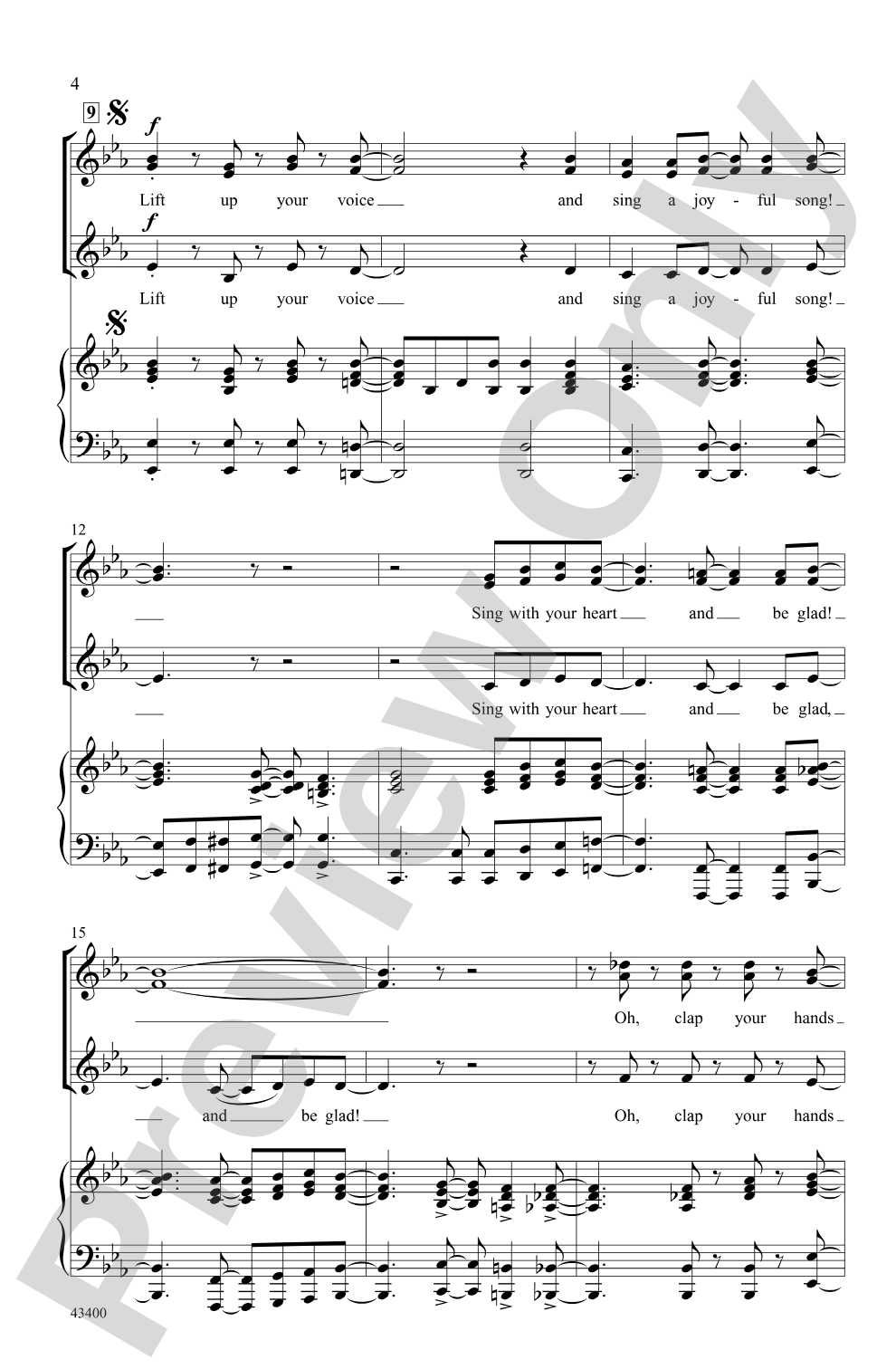
Here's a kickin' gospel original with energy to spare. Spirited syncopations and intricate chord changes authenticate the style, and a short piano solo paves the way for a funky vocal stack that drives to the end and brings it all home!


Lift Up Your Voice!: SSA Choral Octavo isn't in MakeMusic Cloud just yet...but it could be. Let us know you'd like to see it, and you'll help shape what comes next. In the meantime, start a free trial and dive into thousands of interactive titles your students can play along with today.
Request This Title
Tell us you want it.
Start Your Free Trial
Explore everything that's ready to play right now.
Sample Audio
1
Audio File
--:--
0:00
0:00
Sample Video
No sample videos found.
Additional Details
Series:
Alfred Choral Designs
Publisher:
Alfred Music
Page Count:
12
SKU:
00-PO-0003340
More about this title
About the Composer: Victor C. Johnson

Victor C. Johnson brings two decades of hands-on choral direction to his prolific composing and arranging work. As School Choral Editor for Sing! at Choristers Guild, he shapes educational choral literature while maintaining deep roots in ensemble training; from 2000 to 2018, he led multiple choirs at Ft. Worth Academy of Fine Arts, including the Academy Singers and the Singing Girls of Texas.
With over 500 published choral works, vocal collections, and keyboard pieces, Johnson demonstrates mastery across styles and voicings. His engagement with professional organizations including the American Choral Directors Association, Texas Music Educators Association, and ASCAP reflects his commitment to the field. Since 2022, he has served as conductor of the Dallas Symphony Children's Chorus Mixed Ensemble, working with advanced high school singers.
Why we love this
Johnson writes gospel arrangements that sound authentic without requiring singers to stretch beyond reasonable ranges or harmonic literacy. The syncopated rhythms and chord movement here feel genuinely funky rather than manufactured, and the brief piano solo gives you a natural breath point while maintaining momentum into the final vocal section.
What to expect
Propulsive and celebratory, with the kind of syncopated drive that makes singers want to move. The chord changes add harmonic color and sophistication while the piano solo and final vocal layering create a satisfying arc that lands with conviction.
Who it's for
Directors leading treble or mixed choirs who want repertoire with contemporary energy and authentic gospel character. This works well for groups comfortable with syncopated rhythms and willing to embrace a more stylized approach to vocal production than classical literature demands.
How to get the most out of it
- Lock the syncopations early in rehearsal. Mark the syncopated figures in the vocal parts, then isolate them without the piano part so the singers understand the rhythm independently before layering it back in.
- Balance the vocal stack in the final section by having singers mark their dynamic level in pencil. The upper voices should sit underneath the harmonic movement rather than cutting through it.
- Let the piano solo breathe. Resist the temptation to keep the tempo rigid during those measures; a slight relaxation makes the transition back to vocals feel organic.
- If using the recorded accompaniment, rehearse with it early and often. Gospel grooves require internalized feel, and singers need time to lock into the accompaniment's pocket.
How to use it
Use this as a closing piece on a concert featuring sacred or contemporary choral music. The gospel energy provides a natural contrast to more formal repertoire earlier in the program, and it leaves audiences energized. It also works well for spring pops concerts or youth choir showcases where style variety and accessibility matter.
Skills your students will build
- Reading and executing syncopated rhythms in gospel style
- Singing upper harmony parts within rich chord structures
- Understanding gospel performance practice and vocal styling
- Balancing individual vocal lines within a harmonic texture
- Responding to accompaniment while maintaining ensemble cohesion