
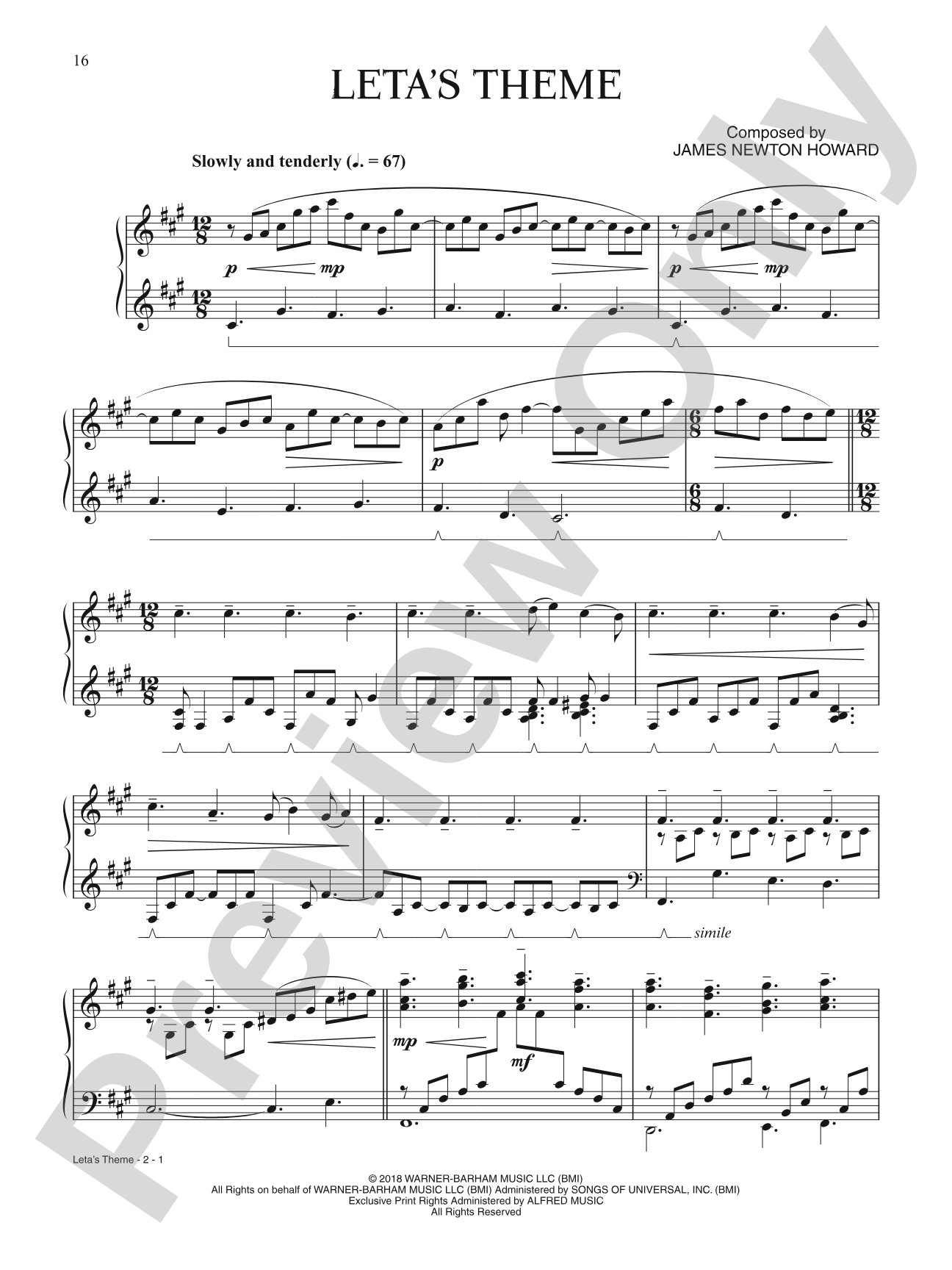

Leta's Theme (from Fantastic Beasts: The Crimes of Grindelwald): Piano
James Newton Howard
Item: 00-PS-0016120
$4.99
Pickup currently not available
Related Items
Dumbeldore's Theme (from Fantastic Beasts: The Crimes of Grindelwald): Piano |
$4.99
|
View | |
Fantastic Beasts: The Crimes of Grindelwald: Piano |
$4.99
|
View | |
Fantastic Beasts Theme (from Fantastic Beasts: The Crimes of Grindelwald): Piano |
$4.99
|
View | |
Salamander Eyes (from Fantastic Beasts: The Crimes of Grindelwald): Piano |
$4.99
|
View | |
Selections from Fantastic Beasts: The Crimes of Grindelwald: Piano Book |
$12.99
|
View |
Description
This remarkable collection features piano solo arrangements of selections from composer James Newton Howard's brilliant film score to Fantastic Beasts: The Crimes of Grindelwald. Presenting the major musical themes within this second Harry Potter series prequel about J. K. Rowling's Wizarding World, the hauntingly beautiful pieces are packaged with full-color artwork from the movie. Titles: Salamander Eyes * Fantastic Beasts: The Crimes of Grindelwald * Dumbledore's Theme * Fantastic Beasts Theme * Leta's Theme


Leta's Theme (from Fantastic Beasts: The Crimes of Grindelwald): Piano isn't in MakeMusic Cloud just yet...but it could be. Let us know you'd like to see it, and you'll help shape what comes next. In the meantime, start a free trial and dive into thousands of interactive titles your students can play along with today.
Request This Title
Tell us you want it.
Start Your Free Trial
Explore everything that's ready to play right now.
Sample Audio
No sample audio found.
Sample Video
No sample videos found.
Additional Details
Publisher:
Alfred Music
Page Count:
20
SKU:
00-PS-0016120
More about this title
About the Composer: James Newton Howard
James Newton Howard stands among Hollywood's most prolific and respected film composers, with a career spanning four decades and encompassing work across virtually every genre. His gift for creating emotionally resonant themes that enhance narrative without overwhelming it has made him a fixture in prestige cinema, from intimate character dramas to massive fantasy blockbusters. Howard's training in classical composition gives his film scores the harmonic sophistication and orchestral depth that allows them to translate beautifully to solo piano arrangements.
His work on the Fantastic Beasts series demonstrates his particular strength in world-building through music. Rather than recycling existing themes from the Harry Potter films, Howard crafted entirely new musical signatures for Newt Scamander and his companions, creating a sonic identity distinct from but complementary to John Williams's beloved original scores. This commitment to specificity and character makes his thematic material ideal for student pianists learning to convey story and emotion through instrumental music.
Why we love this
A pianist working through Leta's Theme encounters genuinely sophisticated harmonic writing that rewards attention to rubato and dynamic shaping without demanding virtuosic technique. The arrangement preserves Howard's gift for melody without becoming saccharine, giving students material that feels contemporary and cinematically dramatic while remaining within intermediate reach. Programming this alongside classical standards or other film music creates natural conversation about how composers construct leitmotifs and establish emotional atmosphere.
What to expect
Leta's Theme carries the weight of a character caught between loyalty and ambition, reflecting the protagonist's internal conflict through a melody that shifts between moments of vulnerability and determination. The harmonic language sits comfortably in the upper-intermediate range, with rich but not overly complex chord progressions that create a sense of poignancy without becoming heavy. Performing it requires the kind of nuanced control and storytelling sensibility that elevates piano playing from technical execution to musical communication.
Who it's for
Intermediate pianists and students of film music looking for material that connects classical training to contemporary composition. Teachers seeking repertoire that engages student interest through popular culture while developing musicianship in rubato, harmonic analysis, and interpretive decision-making.
How to get the most out of it
- Treat the melody line with the restraint of a film composer rather than a concert pianist. Howard's themes work through subtlety and space, so resist the urge to add extra ornaments or push the phrasing too far.
- Shape each phrase around the harmonic movement beneath it. Notice where the accompaniment shifts color and let those changes guide your dynamic arc, particularly in the more introspective sections.
- Record yourself and listen back with the original film score. Hearing how Howard orchestrates these themes in context will inform your pedal choices and tempo flexibility.
- Balance transparency in the accompaniment with warmth in the melody. This is not Romantic-era piano writing, so clarity of texture matters as much as emotional resonance.
How to use it
This works beautifully in a student recital that celebrates film and popular music, whether paired with other Howard arrangements from this collection or contrasted with themes from classical film scores. It also serves as an accessible entry point for students interested in exploring how composers create thematic material for character development, making it valuable in a class focused on analysis or composition studies.
Skills your students will build
- Shaping melody with rubato while maintaining harmonic clarity
- Analyzing and playing embedded leitmotifs and their variations
- Creating dramatic arc through dynamic control and pedal management
- Interpreting film music notation and understanding cinematic phrasing conventions