
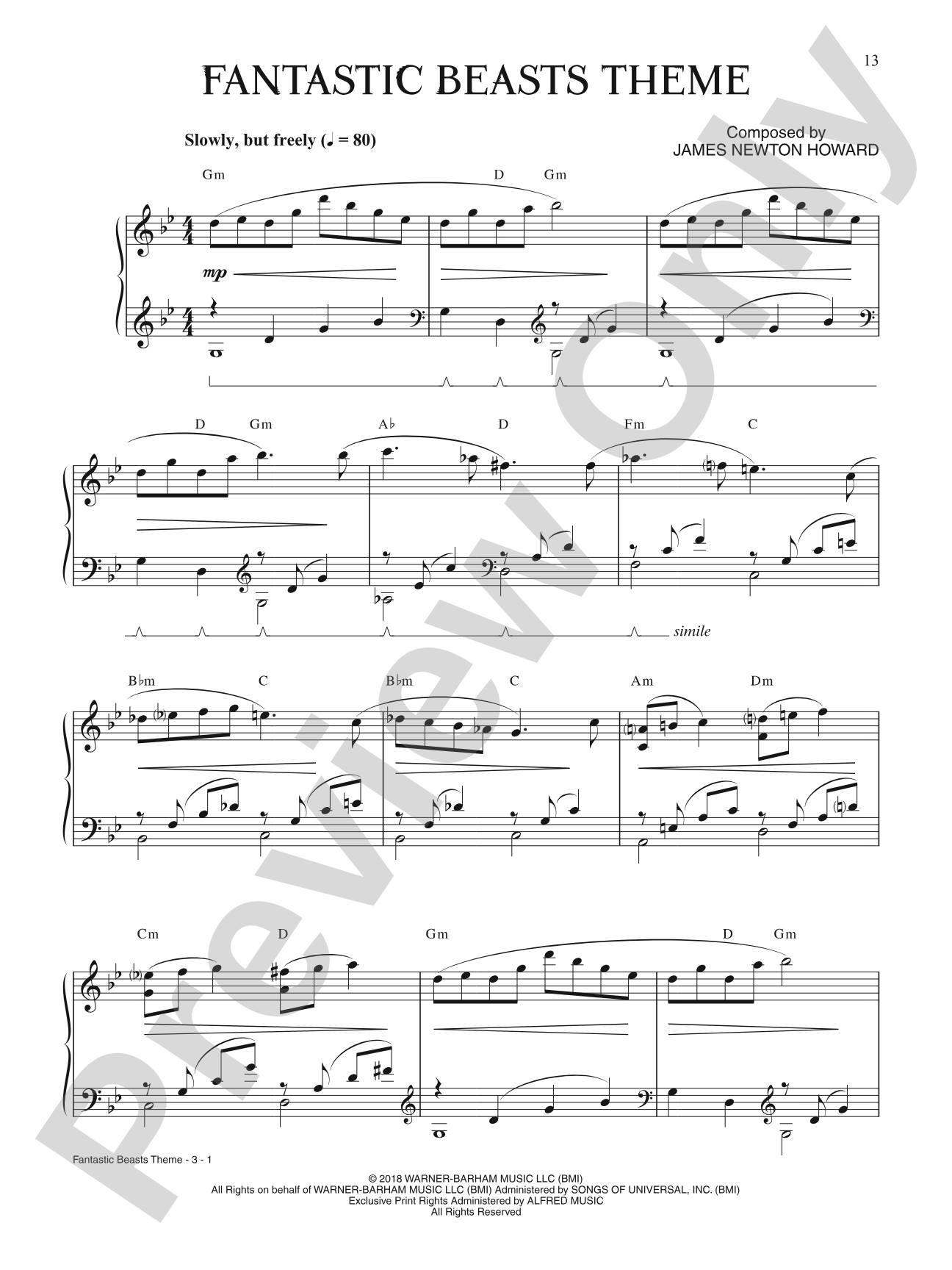

Fantastic Beasts Theme (from Fantastic Beasts: The Crimes of Grindelwald): Piano
James Newton Howard
Item: 00-PS-0016119
$4.99
Pickup currently not available
Related Items
Dumbeldore's Theme (from Fantastic Beasts: The Crimes of Grindelwald): Piano |
$4.99
|
View | |
Fantastic Beasts: The Crimes of Grindelwald: Piano |
$4.99
|
View | |
Leta's Theme (from Fantastic Beasts: The Crimes of Grindelwald): Piano |
$4.99
|
View | |
Salamander Eyes (from Fantastic Beasts: The Crimes of Grindelwald): Piano |
$4.99
|
View | |
Selections from Fantastic Beasts: The Crimes of Grindelwald: Piano Book |
$12.99
|
View |
Description
This remarkable collection features piano solo arrangements of selections from composer James Newton Howard's brilliant film score to Fantastic Beasts: The Crimes of Grindelwald. Presenting the major musical themes within this second Harry Potter series prequel about J. K. Rowling's Wizarding World, the hauntingly beautiful pieces are packaged with full-color artwork from the movie. Titles: Salamander Eyes * Fantastic Beasts: The Crimes of Grindelwald * Dumbledore's Theme * Fantastic Beasts Theme * Leta's Theme


Fantastic Beasts Theme (from Fantastic Beasts: The Crimes of Grindelwald): Piano isn't in MakeMusic Cloud just yet...but it could be. Let us know you'd like to see it, and you'll help shape what comes next. In the meantime, start a free trial and dive into thousands of interactive titles your students can play along with today.
Request This Title
Tell us you want it.
Start Your Free Trial
Explore everything that's ready to play right now.
Sample Audio
No sample audio found.
Sample Video
No sample videos found.
Additional Details
Publisher:
Alfred Music
Page Count:
20
SKU:
00-PS-0016119
More about this title
About the Composer: James Newton Howard
James Newton Howard is one of film's most prolific and accomplished composers, with a career spanning over four decades and more than 100 film scores to his name. His work across genres—from intimate dramas to massive blockbusters—demonstrates a gift for crafting memorable, emotionally resonant themes that elevate storytelling. Howard's collaborations with major studios and directors have earned him multiple Academy Award nominations and established him as a cornerstone voice in contemporary film music.
For the Fantastic Beasts series, Howard created a magical sonic landscape that captures the wonder, mystery, and darker undertones of J.K. Rowling's Wizarding World. His themes are remarkably singable and pianistically idiomatic, making them ideal for students seeking to explore film composition through accessible yet substantive arrangements.
Why we love this
These arrangements distill Howard's cinematic orchestrations into clean, playable piano writing that preserves the themes' emotional depth and memorable melodic content. Each piece balances accessibility with sophistication; students gain exposure to the compositional techniques that define modern film scoring without drowning in unnecessary technical demands. The collection offers a refreshing alternative to classical recital fare while maintaining genuine artistic substance.
What to expect
Atmospheric and cinematic, these pieces transport you into Rowling's wizarding universe with themes that range from the ethereal and mysterious to the dramatic and tense. Howard's melodies have a warmth and elegance that feels distinctly magical, supported by harmonic language that is modern yet never alienating. Each theme carries emotional weight without relying on technical pyrotechnics.
Who it's for
Intermediate to advanced pianists who want to explore contemporary film composition and expand beyond traditional classical repertoire. Students preparing recitals, solo competitions, or casual performance occasions will find these pieces both musically rewarding and audience-friendly. This collection also serves educators seeking engaging material that bridges classical training and popular music interests.
How to get the most out of it
- Honor the orchestral origins by shaping phrases with long, singing lines rather than playing mechanically through harmonic progressions. Think of the strings and woodwinds from the original score.
- Pay close attention to the suggested tempo markings and any performance indications in the score; Howard's film themes often depend on specific pacing to achieve their emotional impact.
- Balance treble and bass equally in passages where thematic material moves between hands. These themes often shift between upper and lower registers, and clarity matters more than individual hand prominence.
- Use the pedal sparingly to maintain harmonic clarity, especially in passages with chromatic movement or close voicings typical of film scoring.
How to use it
This collection works beautifully as a solo recital piece or as part of a concert exploring film music across styles and eras. Consider programming a single theme as an encore, or group several pieces together to create a thematic concert segment. The visual appeal of the included full-color artwork makes these pieces excellent choices for student recitals where presentation matters.
Skills your students will build
- Pedal control in harmonic contexts with sustained chords and chromatic movement
- Phrase shaping and lyrical playing in music written for orchestral ensemble
- Reading and interpreting film music notation conventions
- Balance between melodic and accompaniment material across both hands
- Understanding how orchestral texture translates to solo piano writing