
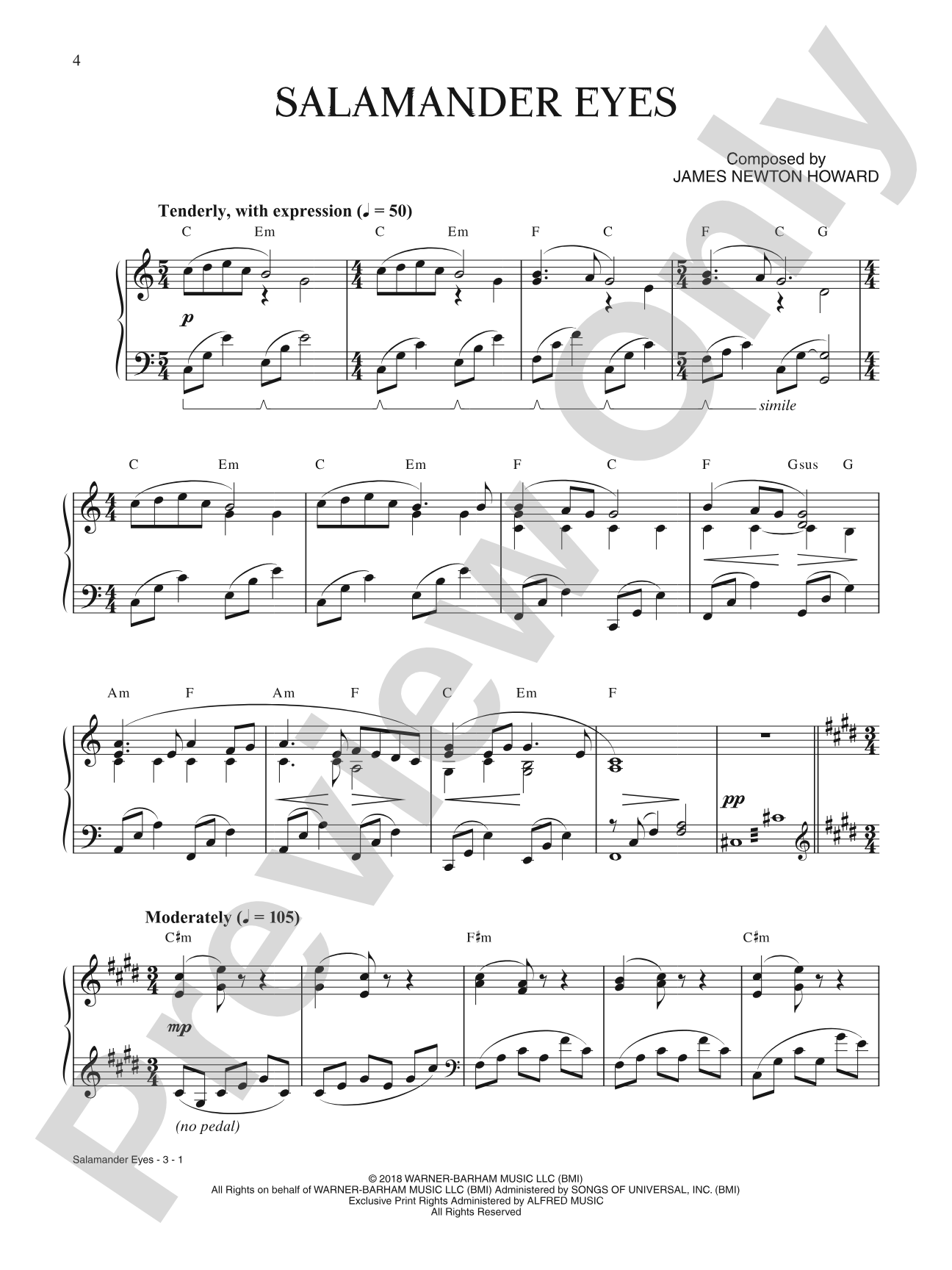

Salamander Eyes (from Fantastic Beasts: The Crimes of Grindelwald): Piano
James Newton Howard
Item: 00-PS-0016121
$4.99
Pickup currently not available
Related Items
Dumbeldore's Theme (from Fantastic Beasts: The Crimes of Grindelwald): Piano |
$4.99
|
View | |
Fantastic Beasts: The Crimes of Grindelwald: Piano |
$4.99
|
View | |
Fantastic Beasts Theme (from Fantastic Beasts: The Crimes of Grindelwald): Piano |
$4.99
|
View | |
Leta's Theme (from Fantastic Beasts: The Crimes of Grindelwald): Piano |
$4.99
|
View | |
Selections from Fantastic Beasts: The Crimes of Grindelwald: Piano Book |
$12.99
|
View |
Description
This remarkable collection features piano solo arrangements of selections from composer James Newton Howard's brilliant film score to Fantastic Beasts: The Crimes of Grindelwald. Presenting the major musical themes within this second Harry Potter series prequel about J. K. Rowling's Wizarding World, the hauntingly beautiful pieces are packaged with full-color artwork from the movie. Titles: Salamander Eyes * Fantastic Beasts: The Crimes of Grindelwald * Dumbledore's Theme * Fantastic Beasts Theme * Leta's Theme


Salamander Eyes (from Fantastic Beasts: The Crimes of Grindelwald): Piano isn't in MakeMusic Cloud just yet...but it could be. Let us know you'd like to see it, and you'll help shape what comes next. In the meantime, start a free trial and dive into thousands of interactive titles your students can play along with today.
Request This Title
Tell us you want it.
Start Your Free Trial
Explore everything that's ready to play right now.
Sample Audio
No sample audio found.
Sample Video
No sample videos found.
Additional Details
Publisher:
Alfred Music
Page Count:
20
SKU:
00-PS-0016121
More about this title
About the Composer: James Newton Howard
James Newton Howard is a prolific film composer whose work spans over four decades of cinema. His scores combine orchestral sophistication with emotional directness, making his themes accessible to performers across skill levels while maintaining the dramatic weight of the original compositions.
Why we love this
These arrangements capture the cinematic magic of Howard's score in a format pianists can actually play. The collection balances recognizable melodic material with idiomatic piano writing that rewards careful attention to tone and phrasing, giving students real insight into how film music functions dramatically.
What to expect
These pieces evoke the magical, melancholic atmosphere of the Wizarding World. Howard's harmonies lean into modal colors and extended chords that create an otherworldly quality, while the melodic lines sing with the kind of emotional clarity that makes film themes memorable. There's drama in the quiet moments as much as in the climactic ones.
Who it's for
Piano students working at the late intermediate to early advanced level who love film music and want to explore accessible arrangements of professional orchestral composition. This collection appeals to performers interested in popular music from the Harry Potter universe and those seeking repertoire that maintains musical integrity while drawing on recognizable material.
How to get the most out of it
- Honor the movie's visual pacing by treating tempo shifts as dramatic moments rather than technical challenges. Howard's themes breathe; resist the urge to rush passages just because they sit comfortably under the fingers.
- Layer the dynamic palette. Film scores live on contrast, so the difference between pp and p matters as much as the jump to forte. Use the full range of the keyboard to create space between melody and accompaniment.
- Listen to the original film score to internalize how these themes function in context. Knowing which scenes these melodies underscore will shape your interpretive choices about rubato and tone color.
How to use it
Program selections from this collection as part of a concert celebrating film music or contemporary composition. The full-color artwork from the movie makes this an engaging visual element for program notes or pre-concert displays. Individual pieces work well as recital program openers or closers, or group them together to create a thematic set within a longer student or faculty recital.
Skills your students will build
- Phrasing and storytelling through dynamic shaping and tempo flexibility
- Reading and executing extended harmonies (modal harmony, chromaticism, seventh and ninth chords)
- Pedal management to sustain atmospheric textures without muddying harmonic clarity
- Translating orchestral articulation and color into pianistic technique
- Performance under pressure with familiar, emotionally resonant material