
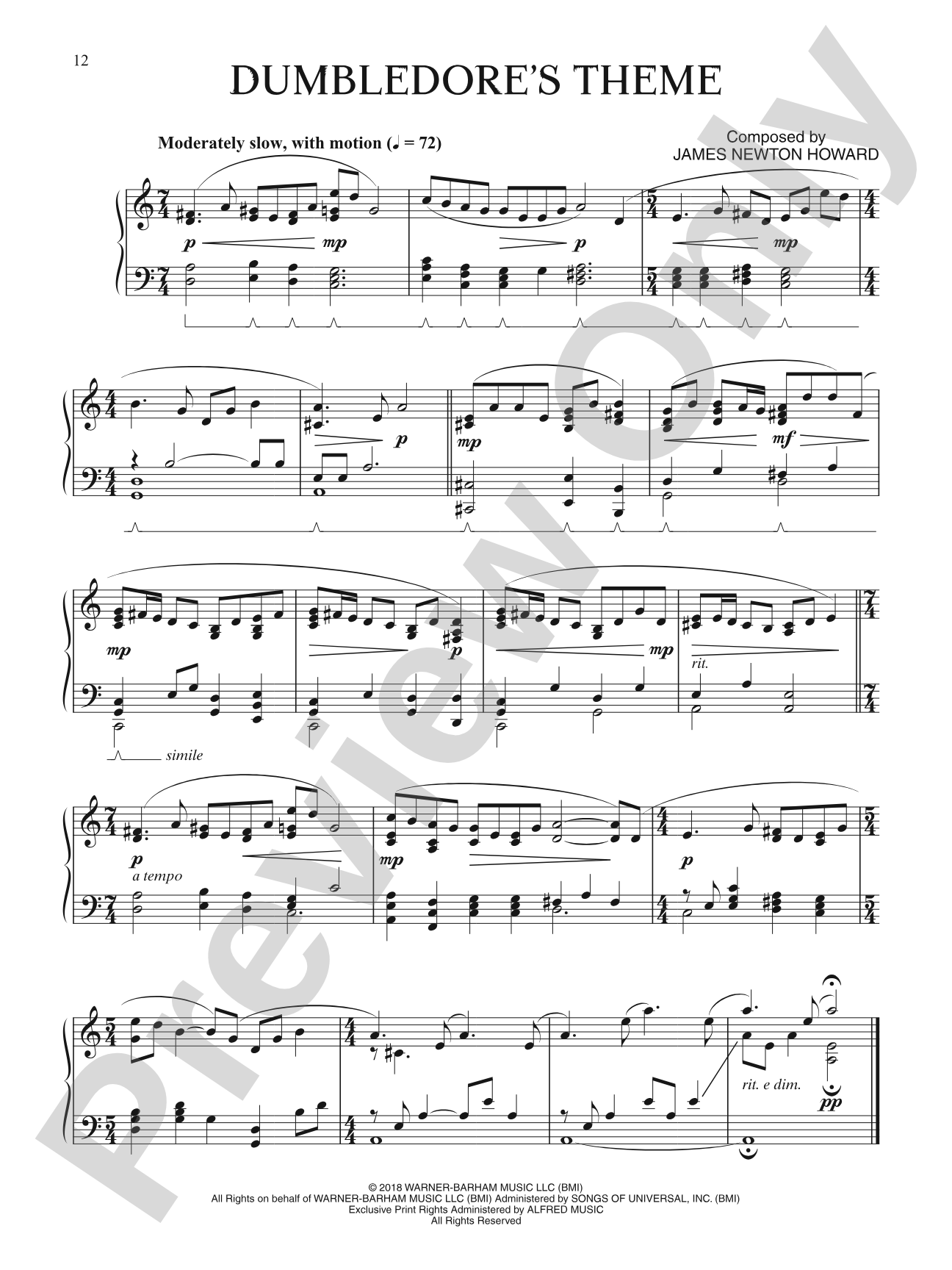

Dumbeldore's Theme (from Fantastic Beasts: The Crimes of Grindelwald): Piano
James Newton Howard
Item: 00-PS-0016117
$4.99
Pickup currently not available
Related Items
Fantastic Beasts: The Crimes of Grindelwald: Piano |
$4.99
|
View | |
Fantastic Beasts Theme (from Fantastic Beasts: The Crimes of Grindelwald): Piano |
$4.99
|
View | |
Leta's Theme (from Fantastic Beasts: The Crimes of Grindelwald): Piano |
$4.99
|
View | |
Salamander Eyes (from Fantastic Beasts: The Crimes of Grindelwald): Piano |
$4.99
|
View | |
Selections from Fantastic Beasts: The Crimes of Grindelwald: Piano Book |
$12.99
|
View |
Description
This remarkable collection features piano solo arrangements of selections from composer James Newton Howard's brilliant film score to Fantastic Beasts: The Crimes of Grindelwald. Presenting the major musical themes within this second Harry Potter series prequel about J. K. Rowling's Wizarding World, the hauntingly beautiful pieces are packaged with full-color artwork from the movie. Titles: Salamander Eyes * Fantastic Beasts: The Crimes of Grindelwald * Dumbledore's Theme * Fantastic Beasts Theme * Leta's Theme


Dumbeldore's Theme (from Fantastic Beasts: The Crimes of Grindelwald): Piano isn't in MakeMusic Cloud just yet...but it could be. Let us know you'd like to see it, and you'll help shape what comes next. In the meantime, start a free trial and dive into thousands of interactive titles your students can play along with today.
Request This Title
Tell us you want it.
Start Your Free Trial
Explore everything that's ready to play right now.
Sample Audio
No sample audio found.
Sample Video
No sample videos found.
Additional Details
Publisher:
Alfred Music
Page Count:
20
SKU:
00-PS-0016117
More about this title
About the Composer: James Newton Howard
James Newton Howard is a prolific film composer whose orchestral sensibilities and gift for memorable thematic writing have shaped some of cinema's most beloved franchises. His work on the Fantastic Beasts series demonstrates his ability to create sophisticated, character-driven themes that enhance narrative while remaining accessible to performers across skill levels.
Howard's compositions for film require clarity and emotional directness, qualities that translate beautifully to piano arrangements. His understanding of how themes function dramatically makes these pieces rewarding for students who want to explore film music composition and orchestral thinking at the keyboard.
Why we love this
These arrangements capture the cinematic sweep of Howard's orchestral writing while remaining genuinely playable on solo piano. Students get to inhabit themes they already know from the films, which creates immediate engagement and motivation to develop the control and expressivity these pieces demand.
What to expect
These pieces inhabit the hushed, introspective world of the Fantastic Beasts films. Expect atmospheric textures, carefully placed silences, and themes that seem to unfold with magical restraint rather than bombast. The writing rewards nuanced control and an ear for color within a limited dynamic range.
Who it's for
Piano students and teachers who want to explore film scoring through performance and arrangement. This collection appeals to intermediate to advanced players seeking contemporary material with emotional depth and cinematic resonance.
How to get the most out of it
- Dumbledore's Theme carries weight through sparse, deliberate phrasing rather than speed. Give each phrase space to breathe and let silence become part of your storytelling.
- Watch for the balance between melody and accompaniment patterns. The film's orchestration often features muted, introspective textures; mirror that restraint in your left hand even when it's supporting complex harmonies.
- These pieces benefit from listening to the original film score repeatedly. Absorb the string articulations, the emotional pacing, and the way themes interact with other musical elements in context.
- Pedal use becomes crucial in pieces like Dumbledore's Theme. Experiment with half-pedaling to maintain harmonic wash without muddying the melodic line.
How to use it
String these themes together for a recital segment devoted to film music, or use individual pieces as interlude music between classical program sections. They work particularly well in concert contexts where you want to acknowledge popular culture without abandoning musical substance.
Skills your students will build
- Pedal control and half-pedaling technique
- Balancing accompaniment patterns with melodic expression
- Translating orchestral textures to a single instrument
- Phrasing longer melodic lines with emotional direction
- Managing sparse textures and silence as compositional elements