

Let Me Sing My Song: 3-Part Mixed Choral Octavo
Words and music by Jay Althouse
Item: 00-PO-0006620
$2.05
Minimum order quantity: 20 copies
Pickup currently not available
Related Items
Let Me Sing My Song: SoundTrax Digital Audio Download |
$29.99
|
View | |
Let Me Sing My Song: SATB Choral Octavo |
$2.05
|
View | |
Let Me Sing My Song: 2-Part Choral Octavo |
$2.05
|
View | |
Let Me Sing My Song: 3-Part Mixed Choral Octavo |
$2.05
|
View | |
Let Me Sing My Song: 2-Part Choral Octavo |
$2.05
|
View | |
Let Me Sing My Song: Choral SoundTrax CD |
$29.99
|
View |
Description
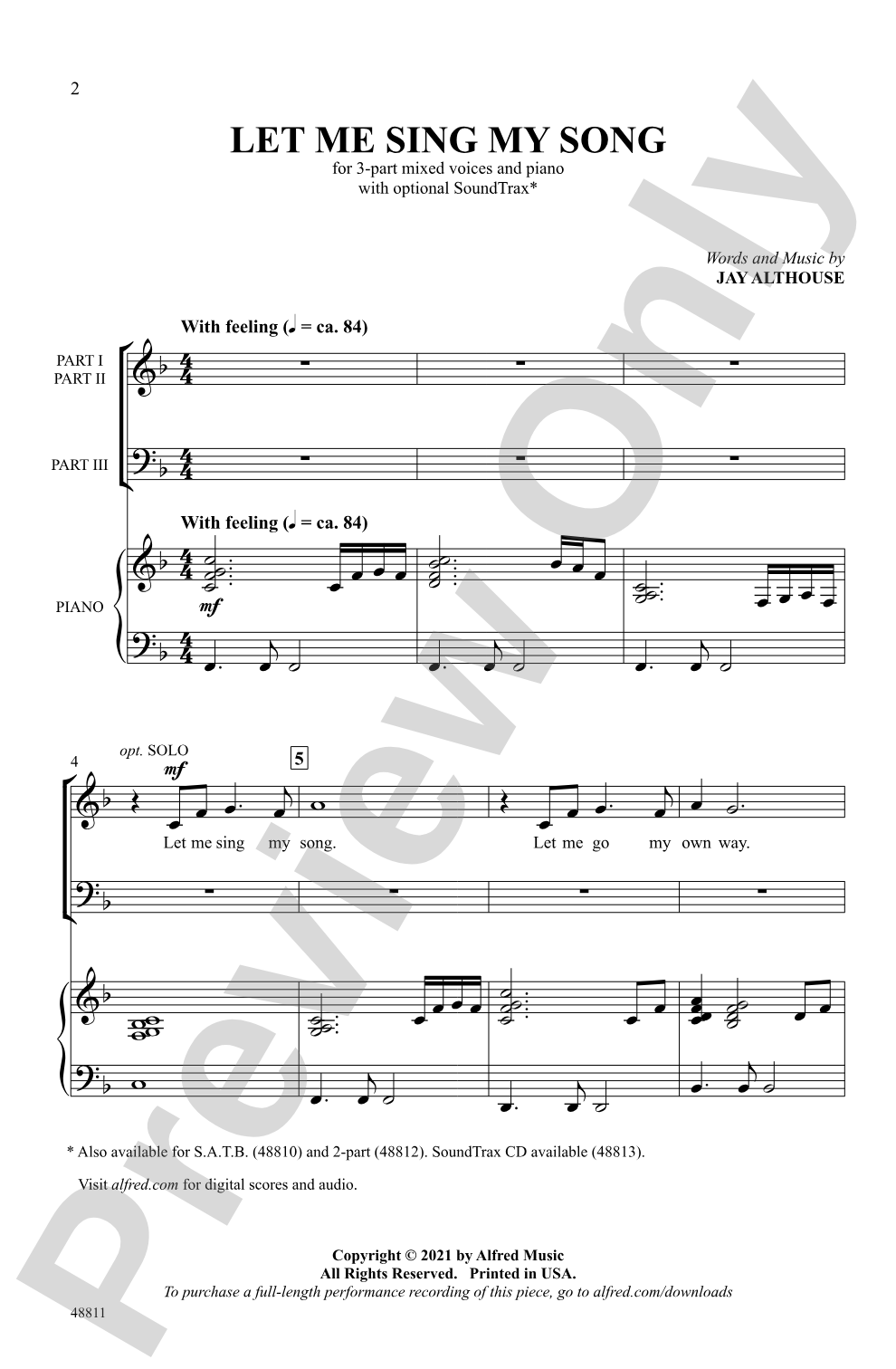
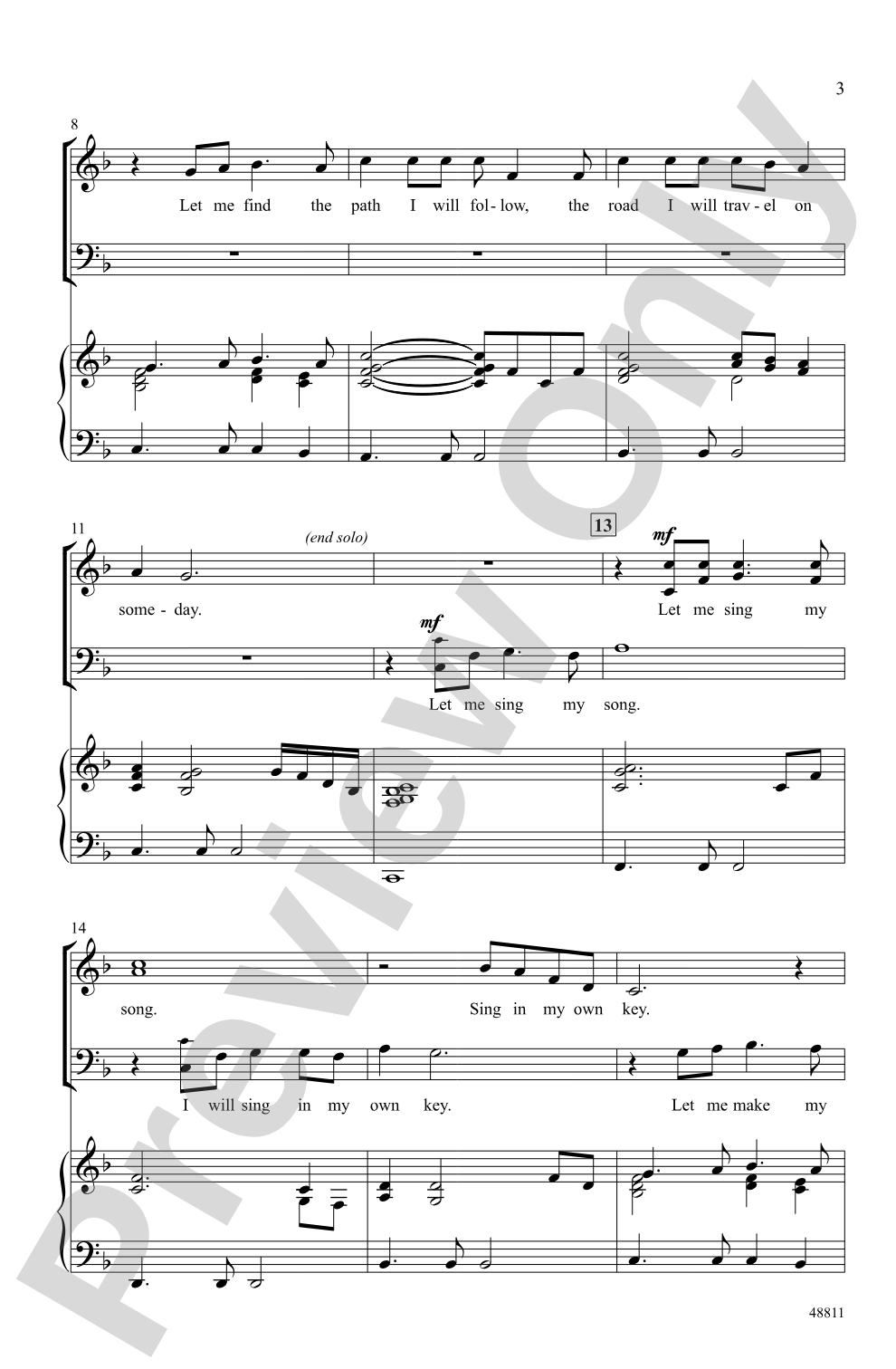
A solo voice opens this moving anthem of individuality that doubles as a celebration of music. When all the voices join, singers echo warm phrases from part to part and build to an important realization at the bridge: "If we all sing together, our songs will become like a symphony." You'll feel a firm tug of the heartstrings as the fully harmonized final verse builds to an impressive cadence and a momentous fermata. An awesome opener or closer in any voicing, and one you won't soon forget.


Let Me Sing My Song: 3-Part Mixed Choral Octavo isn't in MakeMusic Cloud just yet...but it could be. Let us know you'd like to see it, and you'll help shape what comes next. In the meantime, start a free trial and dive into thousands of interactive titles your students can play along with today.
Request This Title
Tell us you want it.
Start Your Free Trial
Explore everything that's ready to play right now.
Sample Audio
1
Audio File
--:--
0:00
0:00
Sample Video
Additional Details
Series:
Alfred Choral Designs
Publisher:
Alfred Music
Page Count:
8
SKU:
00-PO-0006620
More about this title
About the Composer: Jay Althouse

Jay Althouse holds degrees in Music Education and Music from Indiana University of Pennsylvania, where he later received the Distinguished Alumni award. His eight-year tenure in rights and licenses administration at a major educational publisher gave him deep insight into what schools actually need, and he served on the Executive Board of the Music Publishers Association of America during that time.
With over 800 choral compositions in print, Althouse has built a catalog that spans all choir levels and reaches performers across the English-speaking world. He holds membership in ASCAP and is a regular recipient of the ASCAP Special Award. Beyond composing, he has co-written children's musicals with Sally K. Albrecht, compiled vocal solo collections, co-authored The Complete Choral Warm-up Book and Accent on Composers, and written classroom resources including Ready to Read Music and One-Page Composer Bios. He co-wrote I Hear America Singing, performed by the San Francisco Girls and Boys Choirs at President Obama's 2009 inauguration, and currently serves on the National Advisory Board of the Folk Art Society of America.
Why we love this
Althouse writes for the moment when individual voices matter as much as the collective sound. This piece opens with a solo line that catches attention, then gradually expands into harmony while keeping that sense of personal identity alive. The bridge message about symphonic unity feels earned rather than preached, and the final cadence with fermata gives your singers a real moment to land something meaningful.
What to expect
The piece carries an intimate warmth from its solo beginning, then gradually expands into something larger and more affirmative without losing that personal thread. By the final verse, singers experience the satisfaction of harmonized lines building toward something genuinely moving, a moment where the act of singing together becomes the message itself.
Who it's for
This piece works beautifully for mixed choirs at the intermediate level who are developing sensitivity to blend and part independence. It's equally fitting for concert choirs seeking a program opener or closer that lands with emotional substance, and it resonates especially well at graduations or events celebrating achievement and transition.
How to get the most out of it
- Feature a confident soloist in the opening section. This voice carries the entire emotional premise of the piece, so choose someone whose tone will draw the room in from the first phrase.
- Shape the echo phrases carefully as voices enter. These are not rhythmic patterns to lock in; they're moments of conversation between parts, so give singers space to listen and respond.
- Build gradually toward the bridge statement. Resist the urge to sing at full volume before the choir reaches 'If we all sing together.' The power lands harder when it arrives naturally.
- Honor the fermata in the final cadence. This is not a hold to stretch out; it's an architectural moment that lets the harmony settle and resonate. Give the room a beat of silence to absorb the sound.
How to use it
Open a concert with this piece to set a reflective, purposeful tone that primes the audience for listening. It also serves powerfully as a closing number, especially for graduation events or year-end celebrations where the message of individual voices joining into something greater lands with real resonance. The eight-page score makes it substantial enough to stand alone as a meaningful selection without demanding excessive rehearsal time.
Skills your students will build
- Balancing solo and ensemble passages
- Listening for part independence while maintaining blend
- Shaping phrases that echo between vocal lines
- Building dynamic intensity through harmonic expansion
- Sustaining resonance through fermatas and held cadences