

Let Me Sing My Song: SATB Choral Octavo
Words and music by Jay Althouse
Item: 00-PO-0006619
$2.05
Minimum order quantity: 20 copies
Pickup currently not available
Related Items
Let Me Sing My Song: SoundTrax Digital Audio Download |
$29.99
|
View | |
Let Me Sing My Song: 3-Part Mixed Choral Octavo |
$2.05
|
View | |
Let Me Sing My Song: 2-Part Choral Octavo |
$2.05
|
View | |
Let Me Sing My Song: 3-Part Mixed Choral Octavo |
$2.05
|
View | |
Let Me Sing My Song: 2-Part Choral Octavo |
$2.05
|
View | |
Let Me Sing My Song: Choral SoundTrax CD |
$29.99
|
View |
Description
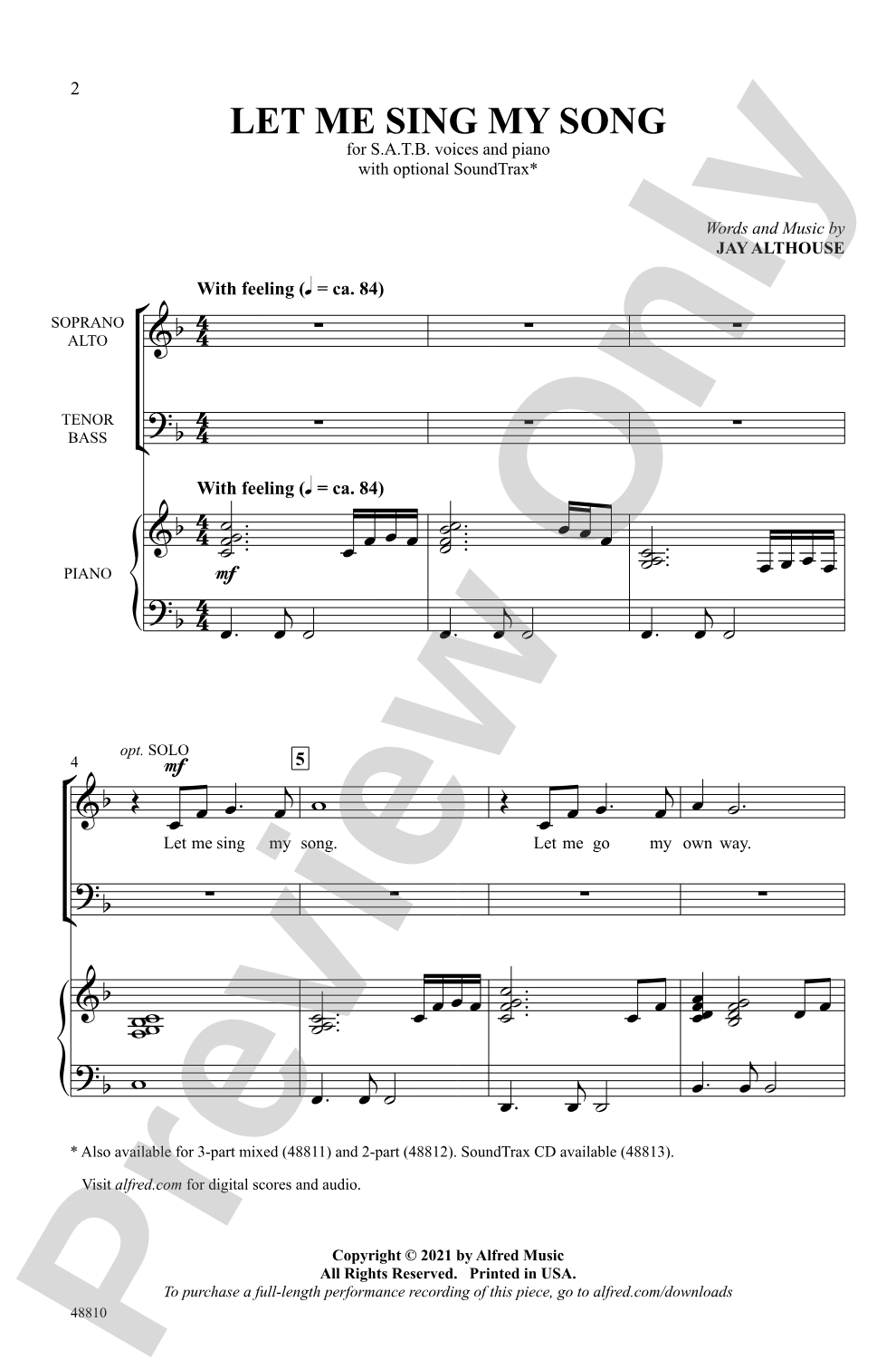
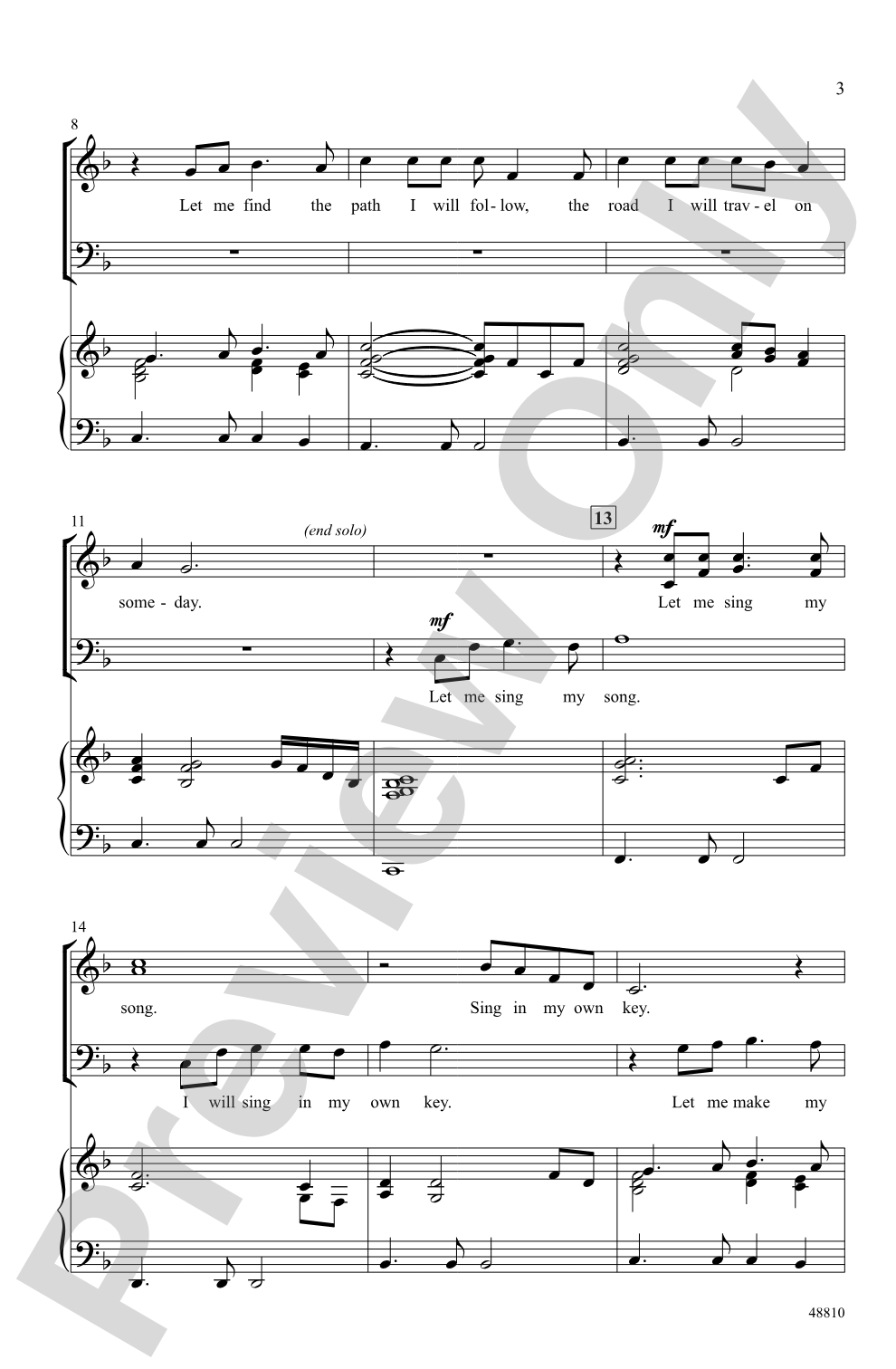
A solo voice opens this moving anthem of individuality that doubles as a celebration of music. When all the voices join, singers echo warm phrases from part to part and build to an important realization at the bridge: "If we all sing together, our songs will become like a symphony." You'll feel a firm tug of the heartstrings as the fully harmonized final verse builds to an impressive cadence and a momentous fermata. An awesome opener or closer in any voicing, and one you won't soon forget.


Let Me Sing My Song: SATB Choral Octavo isn't in MakeMusic Cloud just yet...but it could be. Let us know you'd like to see it, and you'll help shape what comes next. In the meantime, start a free trial and dive into thousands of interactive titles your students can play along with today.
Request This Title
Tell us you want it.
Start Your Free Trial
Explore everything that's ready to play right now.
Sample Audio
1
Audio File
--:--
0:00
0:00
Sample Video
Additional Details
Series:
Alfred Choral Designs
Publisher:
Alfred Music
Page Count:
8
SKU:
00-PO-0006619
More about this title
About the Composer: Jay Althouse

Jay Althouse holds degrees in Music Education and Music from Indiana University of Pennsylvania, where he was honored with the Distinguished Alumni award. His compositional output spans more than 800 choral works performed across the English-speaking world, and he serves as a writer member of ASCAP with multiple Special Award recognitions for his contributions to standard music repertoire.
Beyond composing, Althouse has shaped music education through numerous publications. He co-authored The Complete Choral Warm-up Book and Accent on Composers, edited respected vocal solo collections including Folk Songs for Solo Singers, and created classroom resources such as Ready to Read Music and One-Page Composer Bios. His collaborative work with Sally K. Albrecht includes children's musicals and I Hear America Singing, performed by the San Francisco Girls and Boys Choirs at President Obama's 2009 inauguration. He has served on the boards of the North Carolina Master Chorale and the Folk Art Society of America.
Why we love this
The architecture of this piece is what makes it memorable. A solo entrance creates intimacy and draws listeners in; when the full choir arrives, the harmonic language shifts from introspection to collective power. The bridge's realization about singing together provides both text and musical logic for the climactic final verse, making the journey feel earned rather than imposed.
What to expect
The piece moves from quiet self-discovery into something transcendent. That bridge moment, where the text names what the music has been building toward, creates a shift in perspective that singers feel in their bodies. The final cadence and fermata leave everyone suspended in a moment of collective achievement.
Who it's for
Directors seeking an anthem that engages audiences emotionally without sacrificing musical substance. This works for choirs with solid reading skills and an interest in contemporary sacred or secular repertoire that speaks to themes of unity and individual voice.
How to get the most out of it
- Shape the opening solo with restraint. Let the vulnerability of a single voice carry the weight before the ensemble enters; this contrast will amplify the impact when harmony blooms.
- Balance the echo phrases carefully in the middle section so each voice part remains distinct. The warmth comes from clarity, not from blending into a single mass of sound.
- Prepare singers for the fermata at the final cadence by establishing its exact duration in rehearsal. This moment deserves space and silence afterward to let the message land.
How to use it
Open a concert with this piece to set a reflective, hopeful tone for the program. Its eight pages and SATB voicing make it accessible for standard choral forces, and the graduation occasion tagging suggests it fits perfectly into spring concerts, commencement events, or any program centered on transitions and new beginnings.
Skills your students will build
- Sustaining phrases through dynamic shifts and harmonic changes
- Balancing solo and ensemble textures without losing blend
- Interpreting text-driven harmonic gesture (the bridge as a musical turning point)
- Precision at fermata holds and final cadential moments