

Let Beauty Awake: SATB Choral Octavo
Words and music by Andy Beck
Item: 00-PO-0007499
$2.30
Minimum order quantity: 20 copies
Pickup currently not available
Related Items
Let Beauty Awake: SAB Choral Octavo |
$2.30
|
View | |
Let Beauty Awake: 2-Part Choral Octavo |
$2.30
|
View | |
Let Beauty Awake: SoundTrax Digital Audio Download |
$29.99
|
View | |
Let Beauty Awake: SATB Choral Octavo |
$2.30
|
View | |
Let Beauty Awake: SAB Choral Octavo |
$2.30
|
View | |
Let Beauty Awake: 2-Part Choral Octavo |
$2.30
|
View | |
Let Beauty Awake: Choral SoundTrax CD |
$29.99
|
View |
Description
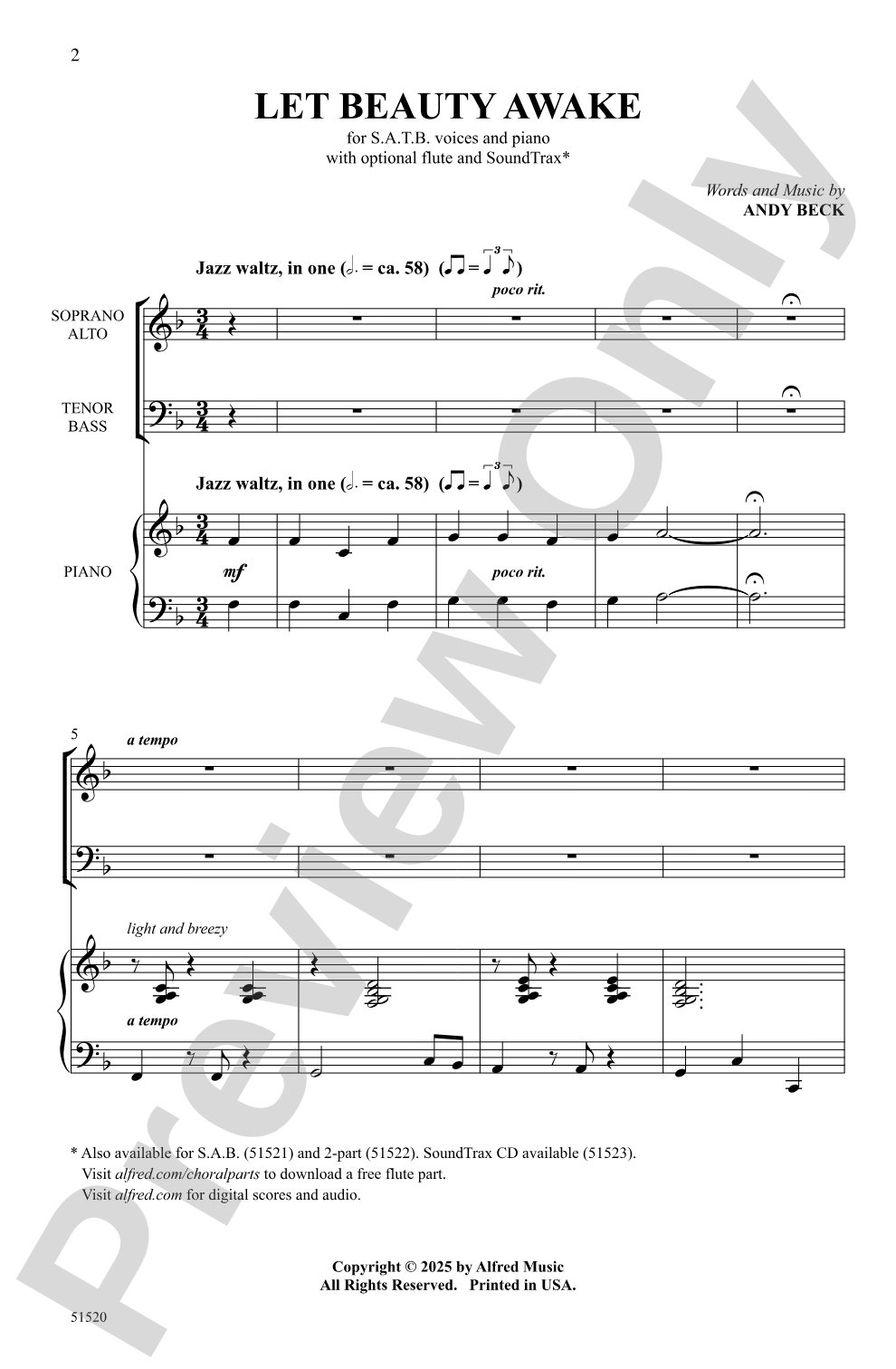
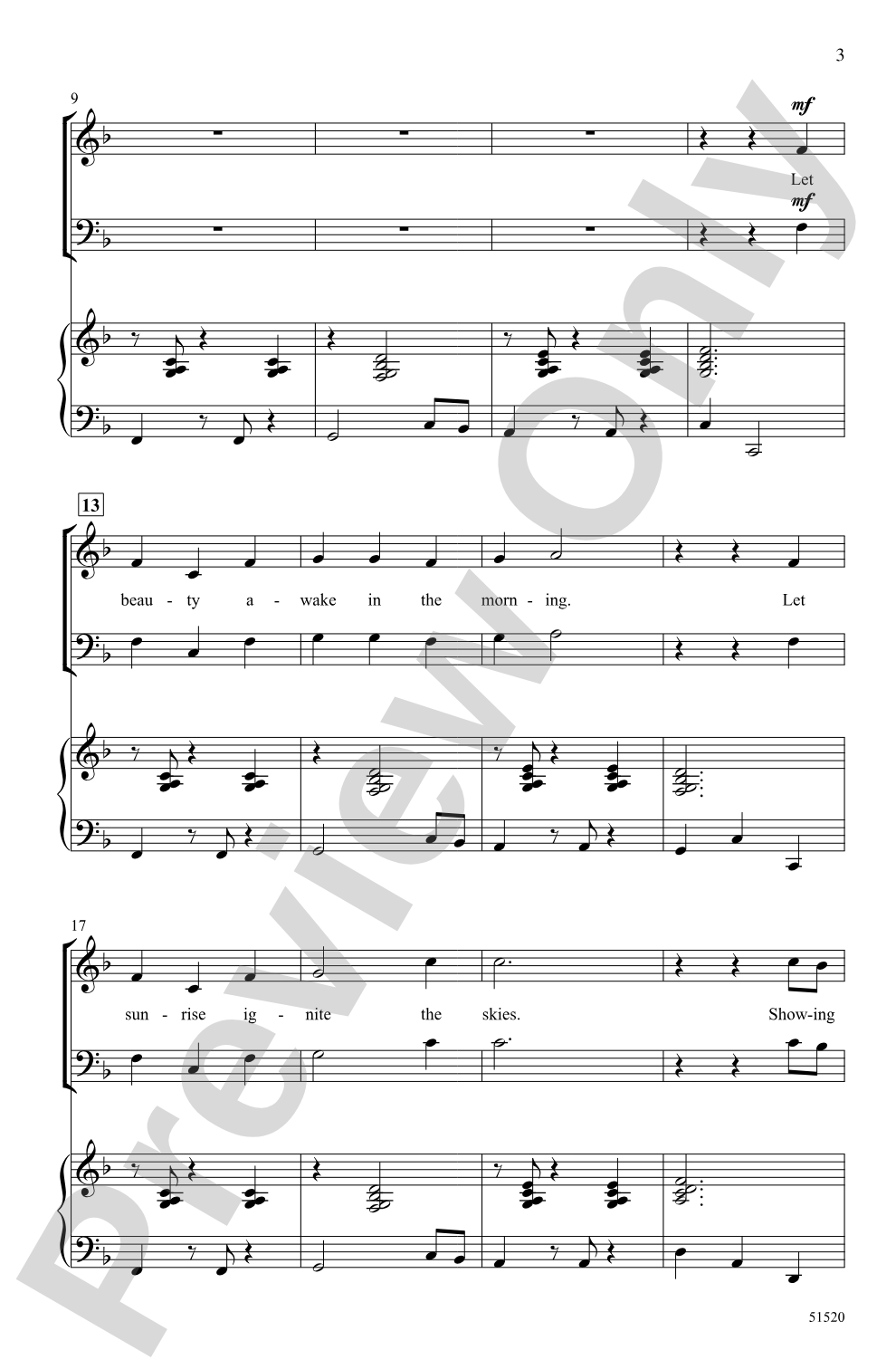
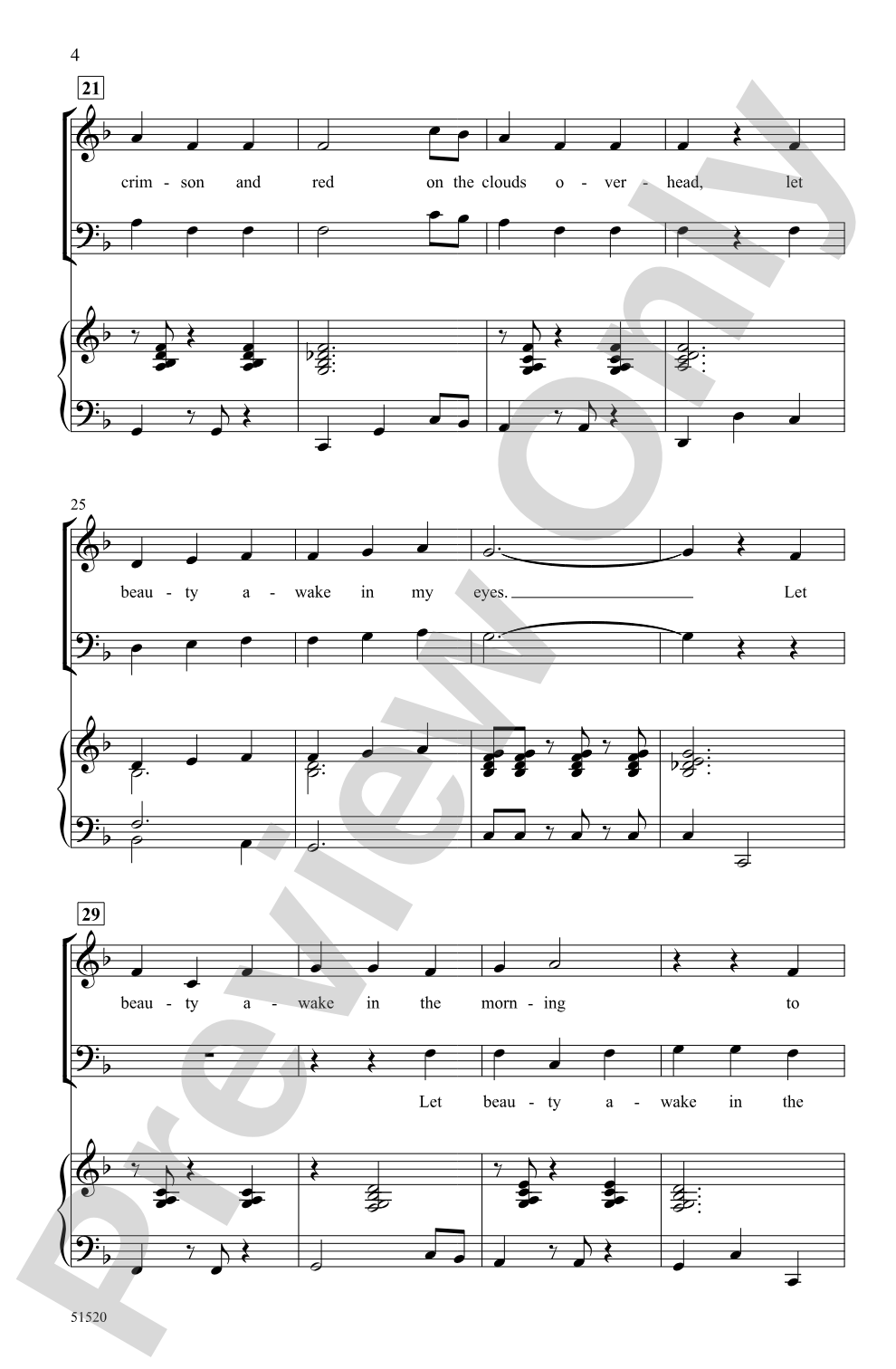
There's beauty all around in this lighthearted jazz waltz by Andy Beck. A tuneful melodic hook, chromatic counterlines, and colorful harmonies celebrate the many joys found in nature. An optional flute flutters above, adding to the bright, breezy vibe. "Let beauty awake and take flight!"


Let Beauty Awake: SATB Choral Octavo isn't in MakeMusic Cloud just yet...but it could be. Let us know you'd like to see it, and you'll help shape what comes next. In the meantime, start a free trial and dive into thousands of interactive titles your students can play along with today.
Request This Title
Tell us you want it.
Start Your Free Trial
Explore everything that's ready to play right now.
Sample Audio
1
Audio File
--:--
0:00
0:00
Sample Video
Additional Details
Series:
Alfred Choral Designs
Publisher:
Alfred Music
Page Count:
12
SKU:
00-PO-0007499
More about this title
About the Composer: Andy Beck

Andy Beck directs choral publications at Alfred Music and has composed and arranged more than 450 choral works, vocal resources, and children's musicals now in active repertoire. His pedagogical resources, including Sing at First Sight, Foundations in Choral Sight Singing, and Vocalize! 45 Vocal Warm-Ups That Teach Technique, are widely adopted in classrooms and rehearsal halls. A tenor vocalist and musical theatre director, Beck performs with the North Carolina Master Chorale Chamber Choir and has served as a studio singer for Alfred Music since 1992.
Beck holds a Bachelor's degree in Music Education from Ithaca College and a Master's degree in Music Education from Northwest Missouri State University. He regularly appears as a guest conductor, clinician, and adjudicator at honor choirs and all-state festivals throughout the Southeast and beyond. His work reflects a deep commitment to choral artistry, music literacy, and music education.
Why we love this
Beck crafts jazz waltz idioms with genuine harmonic sophistication here, layering chromatic inner voices beneath a memorable melody that singers will find immediately singable. The optional flute part adds textural interest without creating extra rehearsal logistics, and the whole piece runs just long enough to make an impact without overstaying its welcome in a concert.
What to expect
Sunlit and buoyant, with the gentle sway of a jazz waltz and melodies that sparkle thanks to the chromatic inner voices and rich harmonies. The whole effect is breezy and joyful without saccharine warmth; there's real musical sophistication underneath the lighthearted surface.
Who it's for
Choirs seeking accessible yet musically substantial secular repertoire for concert or festival programming. This piece suits intermediate to advanced high school choirs and adult community ensembles who enjoy jazz idioms and want to add brightness to their spring concerts.
How to get the most out of it
- Establish the waltz swing early in rehearsal by having the rhythm section (or piano if using the accompaniment track) land the characteristic three-beat lilt; ask singers to feel the gentle push-pull rather than tap the beat.
- Balance the chromatic counterlines carefully in the inner voices so they color the harmony without overshadowing the primary melody; record sectionals and playback during full rehearsals to hear the blend.
- If you're using the optional flute, have that player listen to the recorded accompaniment first to lock the rhythmic pocket before full ensemble rehearsals begin.
- Shape phrase endings with a slight ritardando to let the jazz harmonies breathe and to frame each musical thought before the next section arrives.
How to use it
Program this as a palate-cleanser between heavier works, or pair it with other contemporary secular pieces to showcase your choir's versatility and command of jazz idioms. The recorded accompaniment makes it practical for festivals or concerts where rehearsal time is limited.
Skills your students will build
- Reading jazz harmonies and understanding chromatic voice leading
- Performing in swing style with proper rhythmic feel and articulation
- Balancing inner voices while maintaining melodic prominence
- Ensemble blend and intonation in contemporary harmonic contexts