

Kuna Karamu (Let's Celebrate - Swahili): SATB Choral Octavo
(Let's Celebrate -- Swahili)
By Sally K. Albrecht
Item: 00-PO-0000098
$1.65
Minimum order quantity: 20 copies
Pickup currently not available
Related Items
Kuna Karamu: SoundTrax Digital Audio Download |
$22.95
|
View | |
Kuna Karamu (Let's Celebrate - Swahili): 3-Part Mixed Choral Octavo |
$1.65
|
View | |
Kuna Karamu (Let's Celebrate - Swahili): 2-Part Choral Octavo |
$1.65
|
View | |
Kuna Karamu: SATB Choral Octavo |
$1.65
|
View | |
Kuna Karamu: 3-Part Mixed Choral Octavo |
$1.65
|
View | |
Kuna Karamu: Choral Octavo SoundTrax CD |
$22.95
|
View |
Description
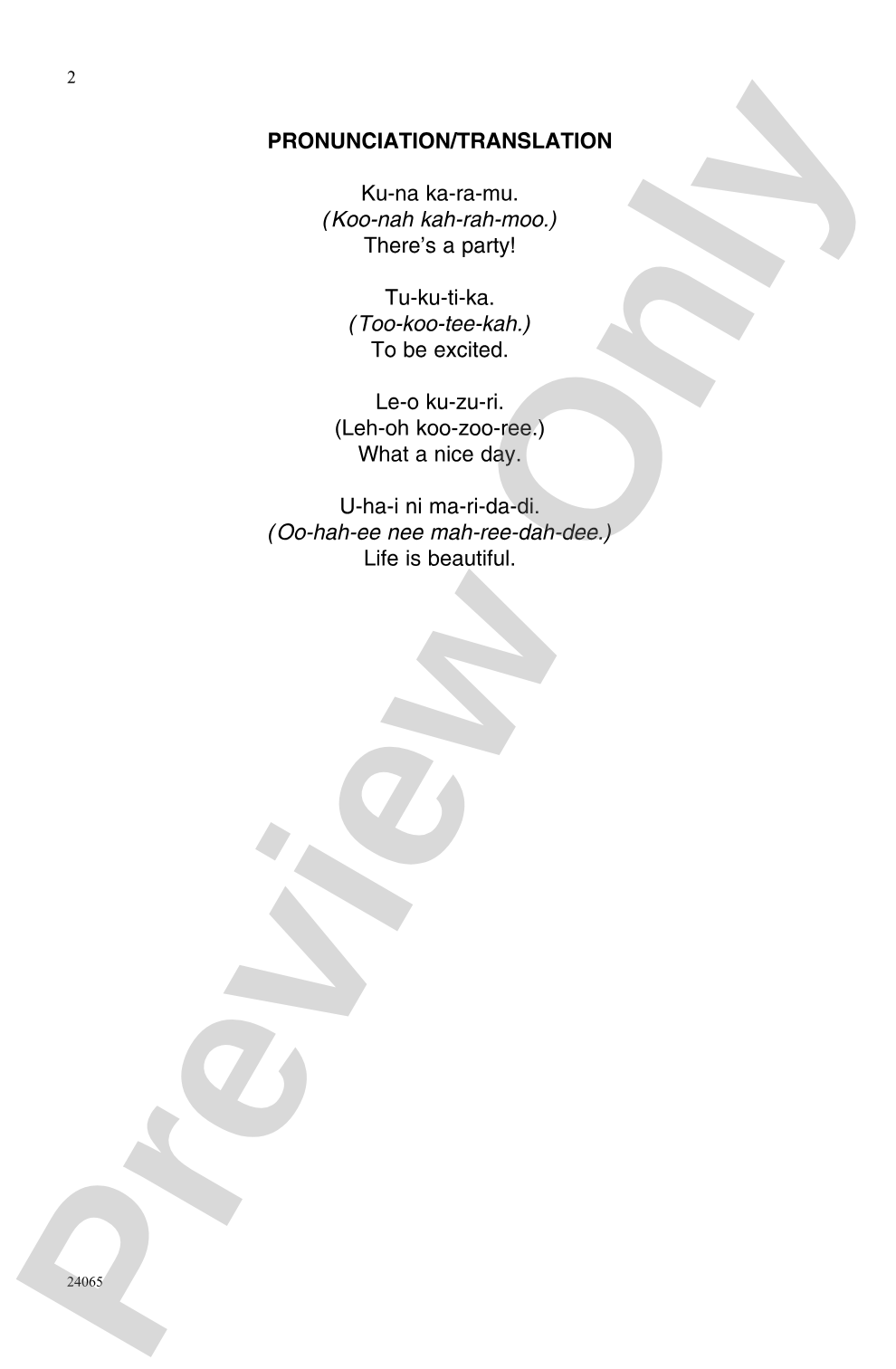
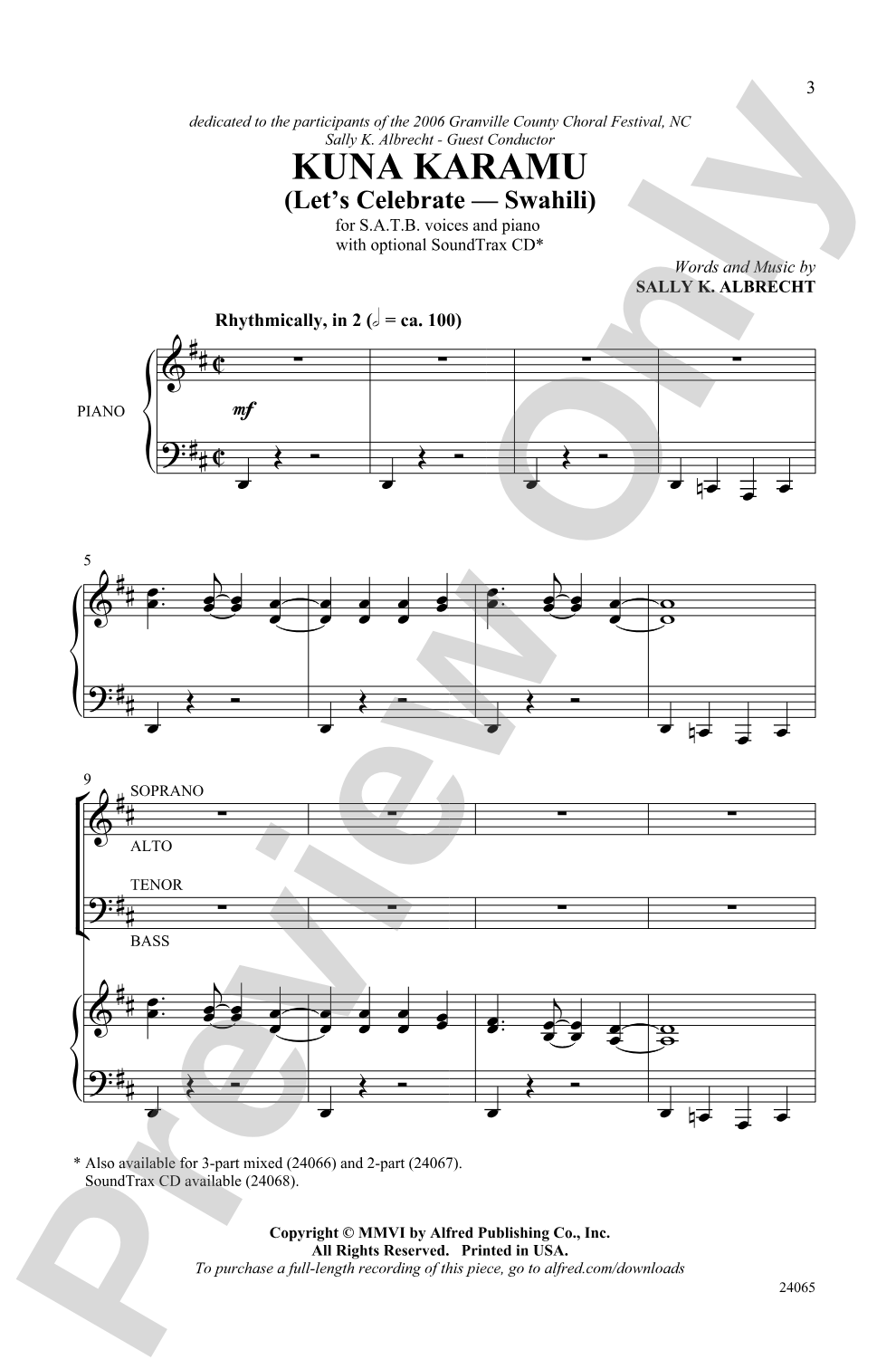
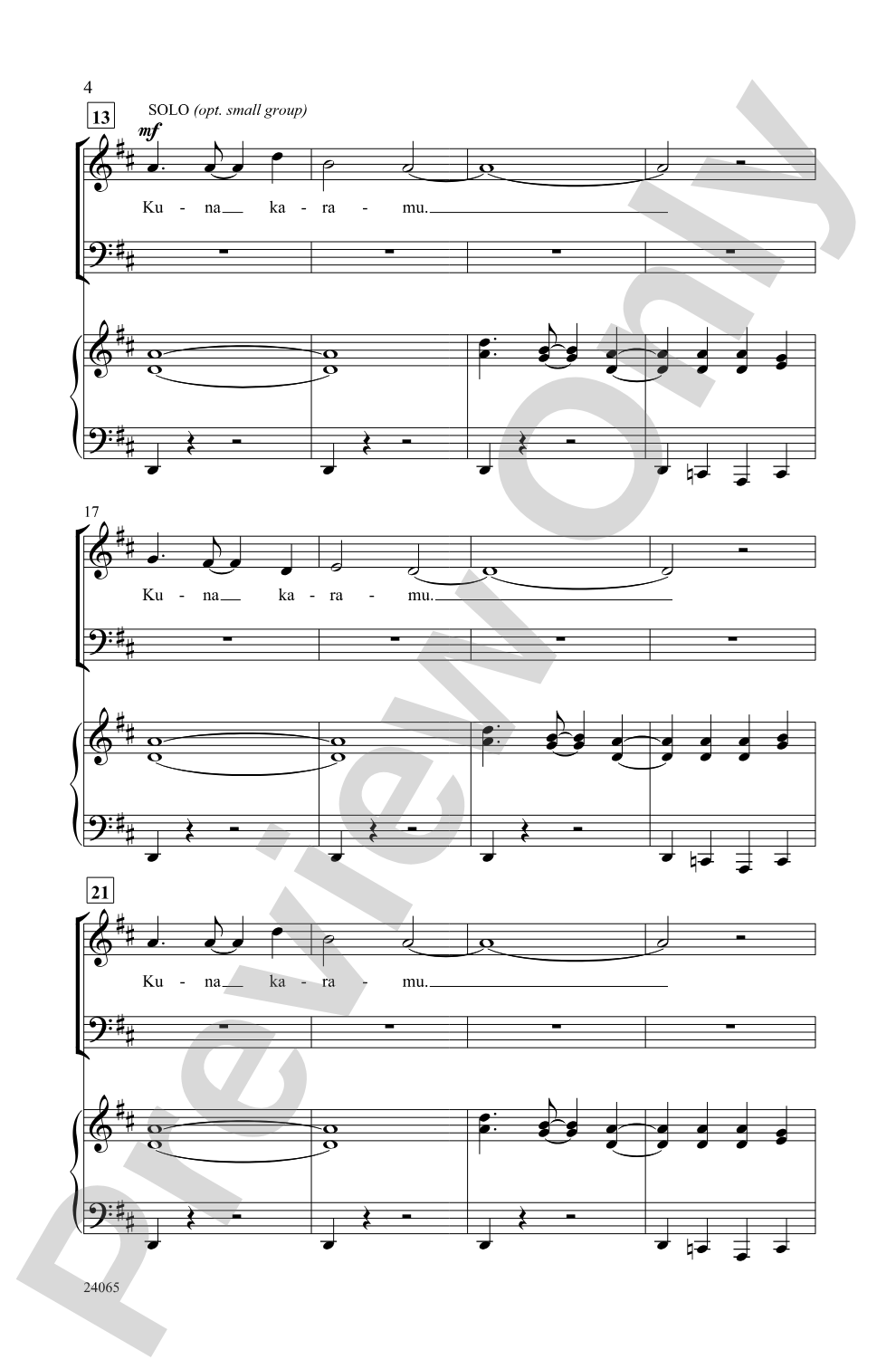
"Kuna Karamu" means "let's celebrate" in Swahili. The African rhythms add excitement, and the combination English/Swahili text is a celebration of the beauty of life. Add your choice of rhythm instruments, or use the lively SoundTrax CD.


Kuna Karamu (Let's Celebrate - Swahili): SATB Choral Octavo isn't in MakeMusic Cloud just yet...but it could be. Let us know you'd like to see it, and you'll help shape what comes next. In the meantime, start a free trial and dive into thousands of interactive titles your students can play along with today.
Request This Title
Tell us you want it.
Start Your Free Trial
Explore everything that's ready to play right now.
Sample Audio
1
Audio File
--:--
0:00
0:00
Sample Video
No sample videos found.
Additional Details
Series:
Alfred Choral Designs
Publisher:
Alfred Music
Page Count:
12
SKU:
00-PO-0000098
More about this title
About the Composer: Sally K. Albrecht
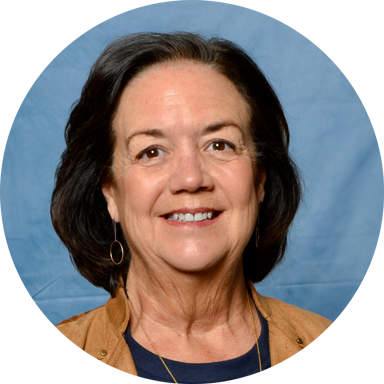
Sally K. Albrecht stands among the most prolific choral composers in American music education, with over 600 publications and 75 larger works for choir in active circulation. Since 1987, she has been a consistent recipient of the ASCAP Special Music Award, and her work as a conductor has taken her to honor choirs and festivals at Lincoln Center, Carnegie Hall, and The Kennedy Center. For more than thirty years, she shaped the choral catalog at major educational publishers, most recently as Director of School Choral, Vocal, and Elementary Publications at Alfred Music.
Albrecht holds degrees from Rollins College (B.A. in Music and Theater, 1976), the University of Miami (M.A. in Drama, 1977, and M.M. in Accompanying, 1979). Her dual expertise in music and theater deeply influences her approach to choral composition, particularly her signature integration of movement and physicality into ensemble singing. She is recognized as a national clinician and educator, and in 2021 received the Distinguished Alumna Award from both the University of Miami Frost School of Music and Rollins College, where she serves on the Board of Trustees.
Why we love this
Albrecht writes multicultural repertoire that energizes choirs without compromising musicality or accessibility. The pairing of Swahili and English text creates an authentic celebration of world music while remaining singable for developing ensembles, and the rhythmic vitality of this piece makes it the kind of selection that leaves audiences smiling and singers eager to perform again.
What to expect
Infectious and warm, with the bounce of traditional African rhythms underneath accessible four-part harmony. The text shifts between English and Swahili create moments of discovery, and the overall mood is one of genuine festivity, the kind that naturally spills energy into the room.
Who it's for
This octavo works for intermediate to advancing SATB choirs seeking repertoire that builds confidence and joy. Directors who want to introduce multicultural music without stepping outside accessible harmonic and rhythmic territory will find this piece both musically sound and genuinely celebratory.
How to get the most out of it
- Keep the African rhythms crisp and forward; these percussion patterns drive the whole arrangement, so establish them clearly in early rehearsals and maintain steady pulse even as text and harmony layer in.
- If adding rhythm instruments as suggested, assign them early and rehearse percussion parts separately at least twice so ensemble and accompaniment lock together without competing for attention.
- Shape the English and Swahili sections with contrasting energy; the language switch is a musical moment, not just a textual one, so let your diction and articulation shift slightly to honor each language's character.
- The recorded accompaniment captures the infectious groove of the arrangement; use it strategically in later rehearsals after singers know their parts, since learning by ear from a full track can obscure individual voice lines early on.
How to use it
Program this at the end of a concert or as a finale to your holiday season, where its uplifting character and rhythmic brightness provide a satisfying send-off. It also serves well on spring or community celebration concerts where the multicultural theme resonates with your audience and the piece's accessibility means your singers can deliver it with confidence and authenticity rather than technical strain.
Skills your students will build
- Reading and sustaining rhythmic patterns in African musical idioms
- Singing in two languages with idiomatic phrasing and diction
- Balancing percussion accompaniment with choral texture
- Part independence in four-part harmony with rhythmic complexity
- Building musicality through cultural context and text meaning