

Jubilate Deo: 2-Part Choral Octavo
Words and music by Sally K. Albrecht
Item: 00-PO-0000319
$1.65
Minimum order quantity: 20 copies
Pickup currently not available
Related Items
Jubilate Deo: SoundTrax Digital Audio Download |
$22.95
|
View | |
Jubilate Deo: SATB Choral Octavo |
$1.75
|
View | |
Jubilate Deo: 3-Part Mixed Choral Octavo |
$1.75
|
View | |
Jubilate Deo: Choral SoundPax |
$25.00
|
View | |
Jubilate Deo: SATB Choral Octavo |
$1.75
|
View | |
Jubilate Deo: 3-Part Mixed Choral Octavo |
$1.75
|
View | |
Jubilate Deo: 2-Part Choral Octavo |
$1.65
|
View | |
Jubilate Deo: Choral Octavo SoundTrax CD |
$22.95
|
View | |
Jubilate Deo: Choral SoundPax |
$25.00
|
View |
Description
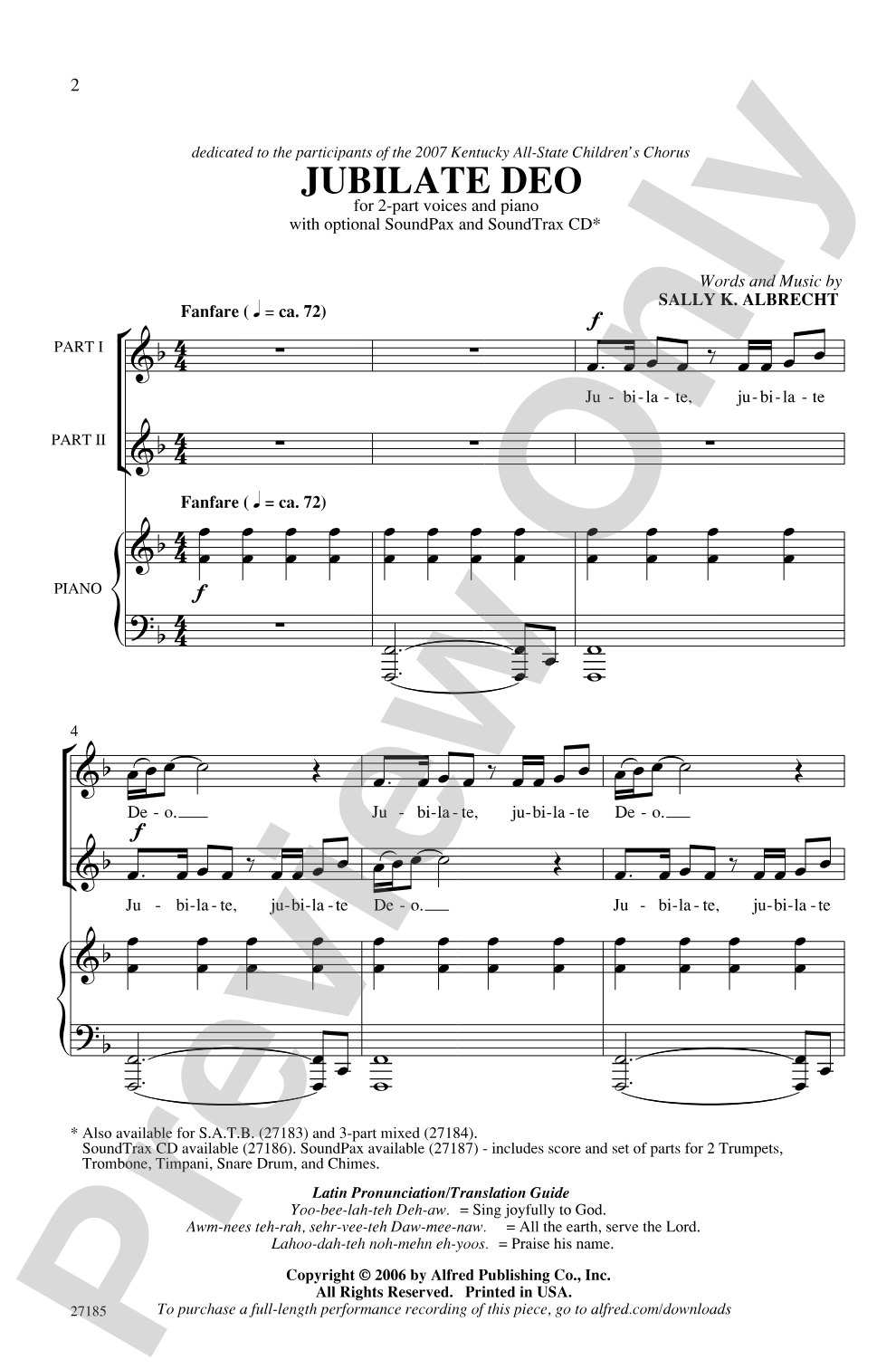
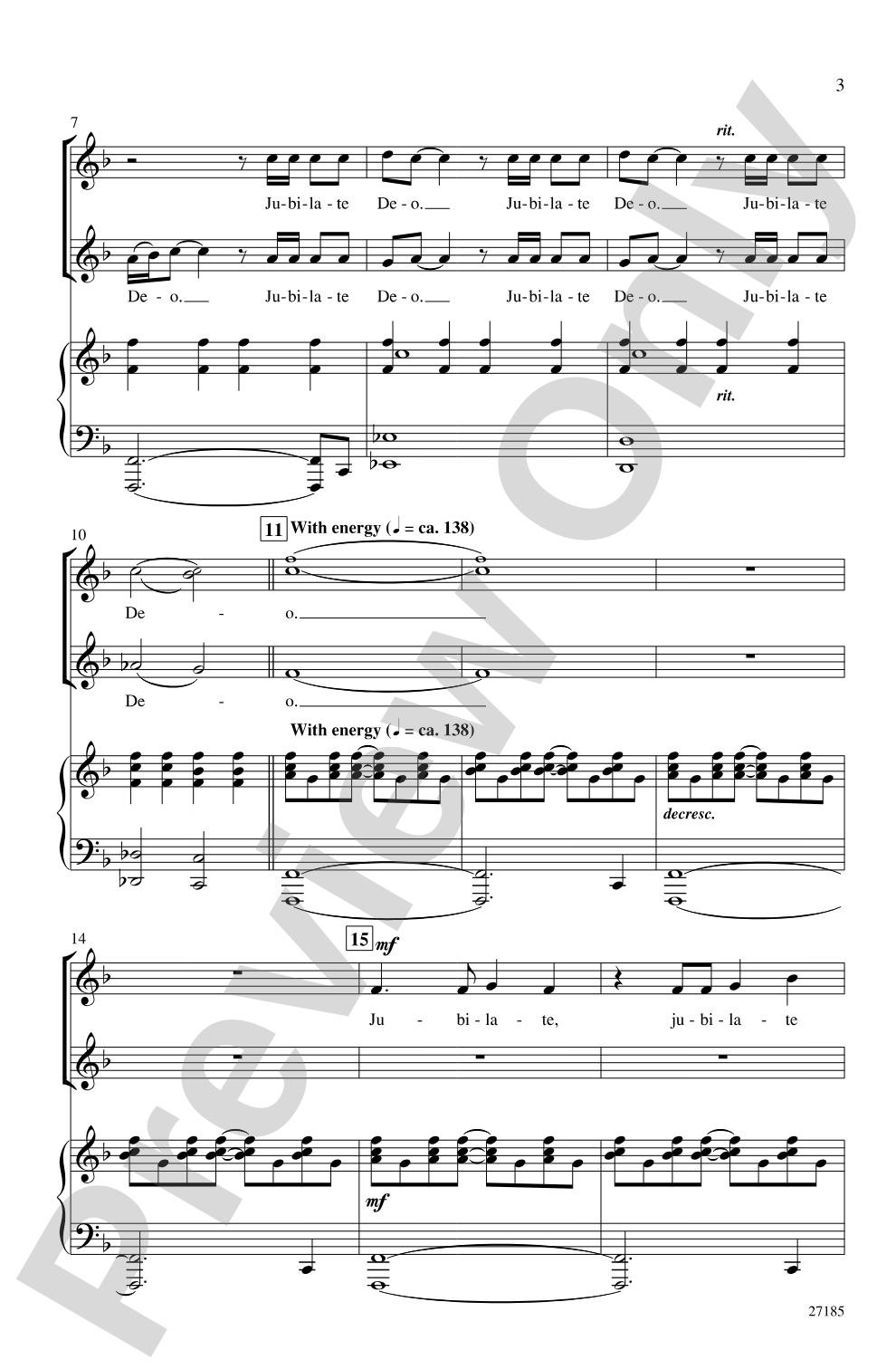
Expertly written by Sally K. Albrecht for today's choirs, this Latin-text piece opens with a fanfare and evolves into an energetic work. The choral writing is traditional and powerful, and the piano accompaniment adds excitement. An impressive work for any choir at contests, festivals, and concerts. Latin pronunciation guide/translation included in the publication.


Jubilate Deo: 2-Part Choral Octavo isn't in MakeMusic Cloud just yet...but it could be. Let us know you'd like to see it, and you'll help shape what comes next. In the meantime, start a free trial and dive into thousands of interactive titles your students can play along with today.
Request This Title
Tell us you want it.
Start Your Free Trial
Explore everything that's ready to play right now.
Sample Audio
1
Audio File
--:--
0:00
0:00
Sample Video
No sample videos found.
Additional Details
Series:
Alfred Choral Designs
Publisher:
Alfred Music
Page Count:
12
SKU:
00-PO-0000319
More about this title
About the Composer: Sally K. Albrecht

Sally K. Albrecht has shaped American choral music for more than three decades as a composer, conductor, and educator. She served as Director of School Choral, Vocal, and Elementary Publications at Alfred Music and has premiered her work at prestigious venues including Lincoln Center, Carnegie Hall, and The Kennedy Center. An ASCAP award recipient since 1987, she maintains over 600 published choral pieces in active use.
Albrecht's academic background spans performance and music theory. She earned a B.A. in Music and Theater from Rollins College and pursued graduate studies at the University of Miami, where she completed degrees in Drama and Accompanying. Her work has been recognized with the Distinguished Alumna Award from both institutions. She currently lives in North Carolina with her husband, composer and arranger Jay Althouse.
Why we love this
Albrecht's command of 2-part writing creates space for genuine choral sound without sacrificing sophistication. The Latin text paired with a dramatic opening and propulsive energy gives your singers material that feels substantial enough for festival adjudication yet remains accessible to developing choirs. The included pronunciation guide removes a common barrier, letting your ensemble focus on musicality rather than language anxiety.
What to expect
The work opens with architectural drama, a fanfare that commands attention and announces ceremony. As it unfolds, the energy builds into something propulsive and jubilant, with the piano accompaniment propelling rather than simply supporting. There is formality in the text and structure, yet the piece moves with momentum and joy rather than reverence or restraint.
Who it's for
Developing to intermediate choirs seeking a substantial Latin-text work for festivals and concerts. This octavo suits singers who have some musical maturity but do not yet need the complexity of three or four-part writing. Directors looking for a traditional sacred piece with genuine interpretive depth will find the balance between accessibility and musicality particularly useful.
How to get the most out of it
- Shape the opening fanfare with clear articulation and dynamic contrast so the energy propels naturally into the main section rather than feeling like two separate moments.
- Use the recorded accompaniment to lock in tempos during early rehearsals, then gradually move away from it as your singers internalize the harmonic foundation.
- Balance the two voice parts by rotating which group sings the primary melodic line; this keeps both sections engaged and ensures neither gets buried beneath the piano texture.
- Drill the Latin text syllable-by-syllable before adding pitch, using the pronunciation guide to model placement and resonance for your singers.
How to use it
Position this as a festival or competition entry where its professional polish and clear musical architecture serve your ensemble well. It also works effectively as a centerpiece for a sacred music concert, paired with pieces in English or different languages to showcase your choir's versatility. The fanfare opening and forward momentum make it memorable as an opener or closer, creating a strong impression with adjudicators and audiences alike.
Skills your students will build
- Latin diction and pronunciation with supported resonance
- Independent part singing in two-part harmonic writing
- Dynamic contrast and shaping across longer phrases
- Responding to piano accompaniment as a musical partner rather than a crutch