

Jubilate Deo: SATB Choral Octavo
Words and music by Sally K. Albrecht
Item: 00-PO-0000317
$1.75
Minimum order quantity: 20 copies
Pickup currently not available
Related Items
Jubilate Deo: SoundTrax Digital Audio Download |
$22.95
|
View | |
Jubilate Deo: 3-Part Mixed Choral Octavo |
$1.75
|
View | |
Jubilate Deo: 2-Part Choral Octavo |
$1.65
|
View | |
Jubilate Deo: Choral SoundPax |
$25.00
|
View | |
Jubilate Deo: SATB Choral Octavo |
$1.75
|
View | |
Jubilate Deo: 3-Part Mixed Choral Octavo |
$1.75
|
View | |
Jubilate Deo: 2-Part Choral Octavo |
$1.65
|
View | |
Jubilate Deo: Choral Octavo SoundTrax CD |
$22.95
|
View | |
Jubilate Deo: Choral SoundPax |
$25.00
|
View |
Description
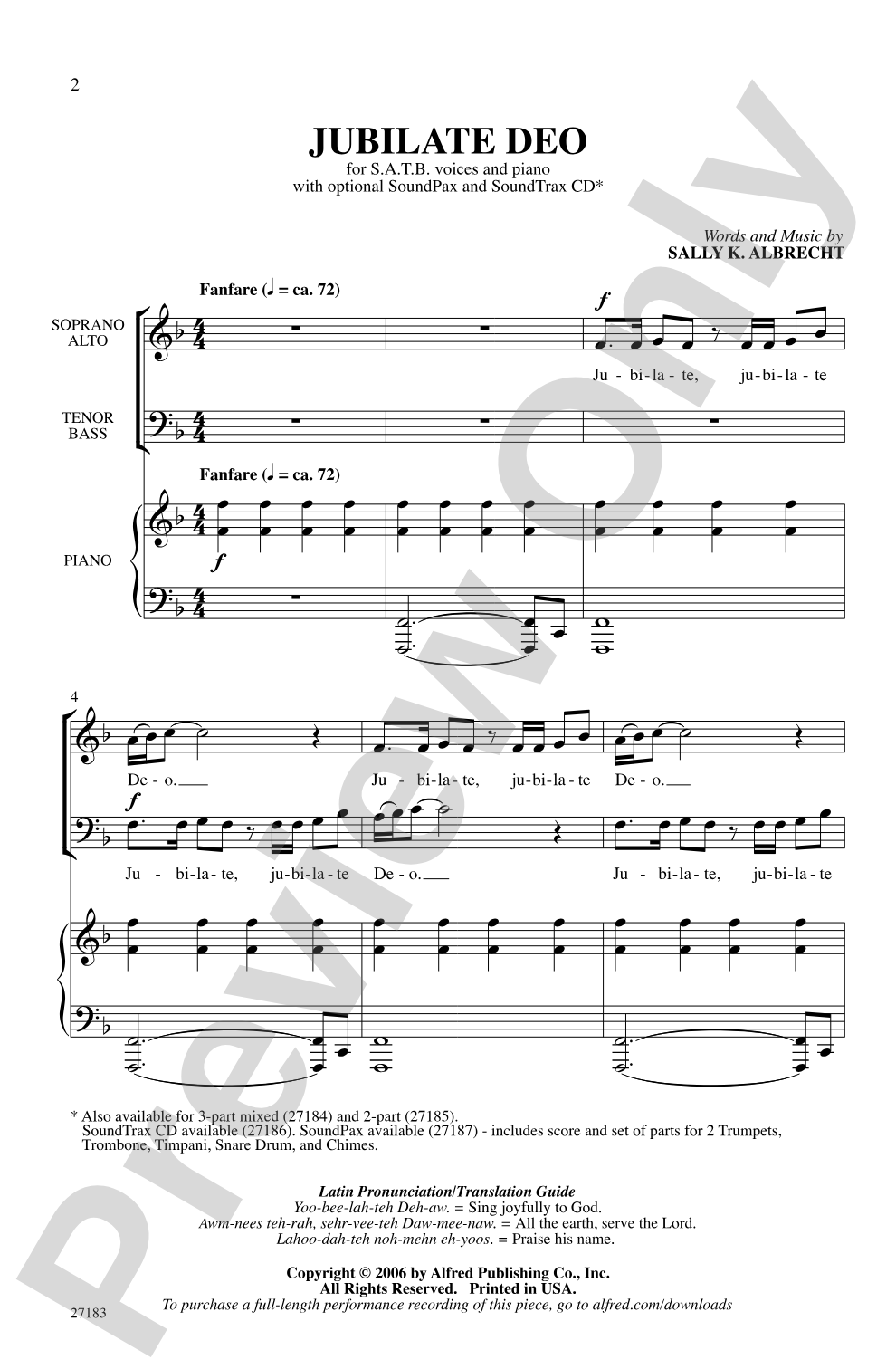
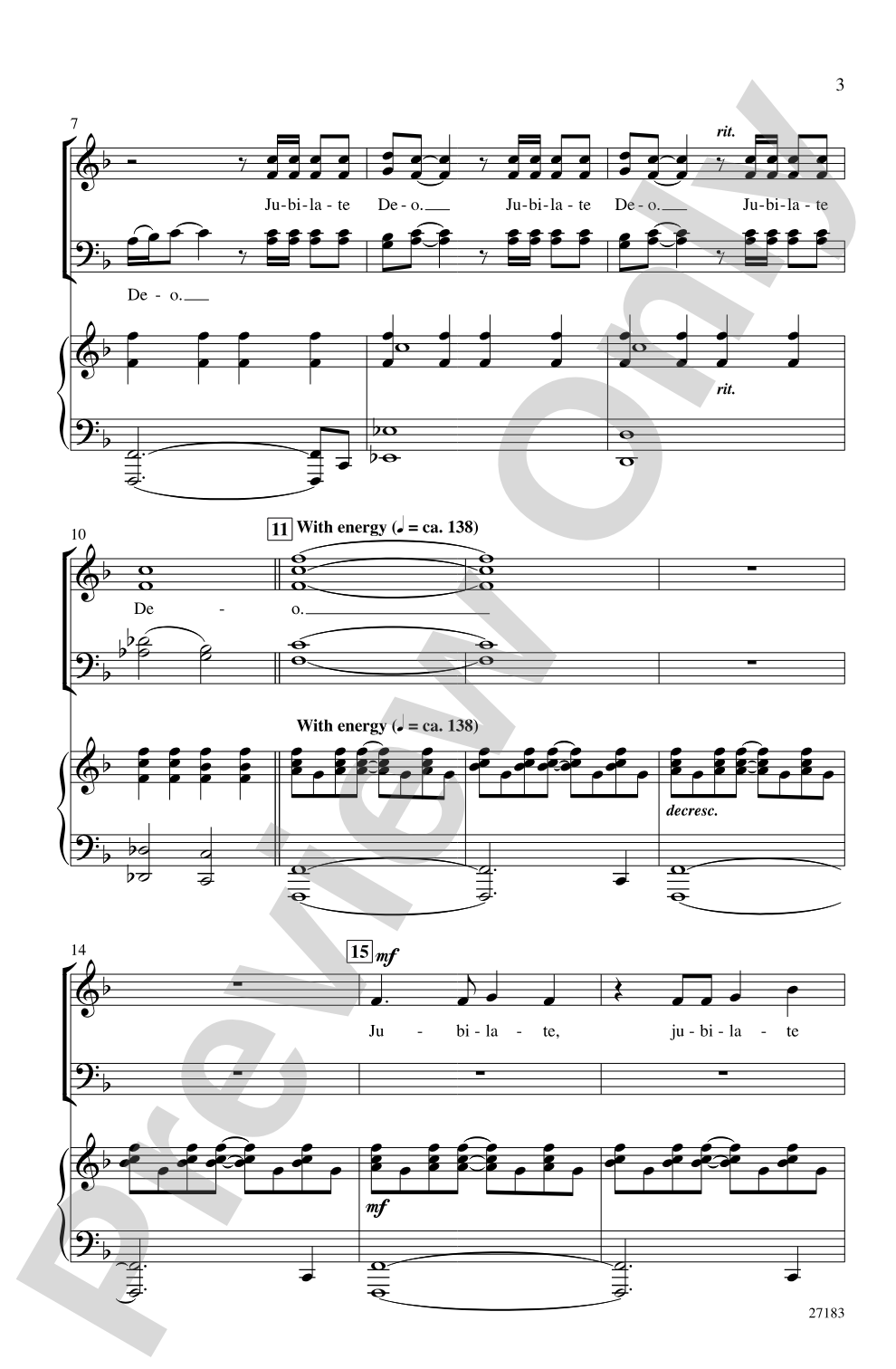
Expertly written by Sally K. Albrecht for today's choirs, this Latin-text piece opens with a fanfare and evolves into an energetic work. The choral writing is traditional and powerful, and the piano accompaniment adds excitement. An impressive work for any choir at contests, festivals, and concerts. Latin pronunciation guide/translation included in the publication.


Jubilate Deo: SATB Choral Octavo isn't in MakeMusic Cloud just yet...but it could be. Let us know you'd like to see it, and you'll help shape what comes next. In the meantime, start a free trial and dive into thousands of interactive titles your students can play along with today.
Request This Title
Tell us you want it.
Start Your Free Trial
Explore everything that's ready to play right now.
Sample Audio
1
Audio File
--:--
0:00
0:00
Sample Video
No sample videos found.
Additional Details
Series:
Alfred Choral Designs
Publisher:
Alfred Music
Page Count:
12
SKU:
00-PO-0000317
More about this title
About the Composer: Sally K. Albrecht
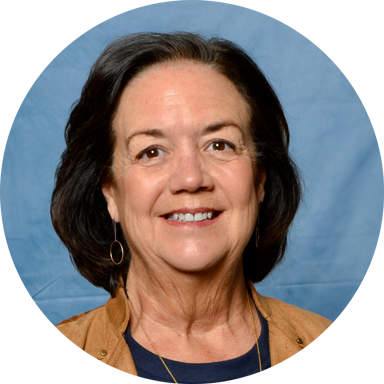
Sally K. Albrecht has shaped choral music education for over three decades, serving as Director of School Choral, Vocal, and Elementary Publications at Alfred Music and other major publishers. Her catalog includes more than 600 choral works and 75 larger musicals and songbooks, all while maintaining an active career as a conductor and clinician. She has led honor choirs at prestigious venues including Lincoln Center, Carnegie Hall, and The Kennedy Center, and has been recognized annually by ASCAP for her contributions to music since 1987.
A graduate of Rollins College (B.A. in Music and Theater, 1976) and the University of Miami Frost School of Music (M.A. in Drama, M.M. in Accompanying), Albrecht brings both compositional craft and performance expertise to her writing. Her work with choral movement and text-driven composition has earned her the Distinguished Alumna Award from both institutions. She resides in Wake Forest, North Carolina, and continues to influence choral pedagogy through her published works and leadership in music education.
Why we love this
Albrecht's gift for opening gesture shines here. The fanfare entrance immediately signals importance and draws audiences in, while the energetic arc that follows keeps momentum throughout without sacrificing the dignity Latin text demands. This piece balances the gravitas your festival judges expect with the satisfying, achievable writing that lets singers feel the power of ensemble work.
What to expect
This piece announces itself with confidence. The Latin text carries liturgical weight, but Albrecht's harmonic language and rhythmic energy feel contemporary and alive, not antiquated. As it develops, the work builds in intensity and unity, creating moments where singers feel the collective power of four voices singing together.
Who it's for
Choirs with solid four-part balance and secure reading skills will find this work rewarding at the competition and festival level. Directors seeking a sacred piece that impresses adjudicators while remaining musically and technically achievable will appreciate both the writing and the care Albrecht has taken with text setting and pronunciation support.
How to get the most out of it
- Shape the opening fanfare with a bright, unified attack in all four voices; this moment establishes the piece's character and sets the energy level for everything that follows.
- Balance the SATB texture by having lower voices anchor the harmonic foundation while treble voices carry clarity on top; the piano part will support but should not overshadow the choir.
- Emphasize diction clarity throughout, especially on Latin text; the pronunciation guide included in your octavos will help, but isolate consonant clusters in rehearsal so the text propels the piece forward.
- Use the recorded accompaniment to lock ensemble entrances and tempo initially, then gradually reduce reliance on it as internal rhythmic security develops.
How to use it
Program this as a centerpiece for a sacred or classical music set at spring festival season, where its polish and Latin credentials will stand out on a competitive slate. It also works beautifully as the anchor piece in a concert featuring motets or liturgical works, giving your choir a moment to showcase both technical security and interpretive maturity.
Skills your students will build
- Singing with accurate Latin pronunciation and diction clarity
- Balancing four-part SATB texture with secure harmonic awareness
- Building sustained energy and phrasing across longer melodic lines
- Ensemble precision with piano accompaniment while maintaining independence
- Music reading fluency in traditional choral notation