

Jitterbug: SAB Choral Octavo
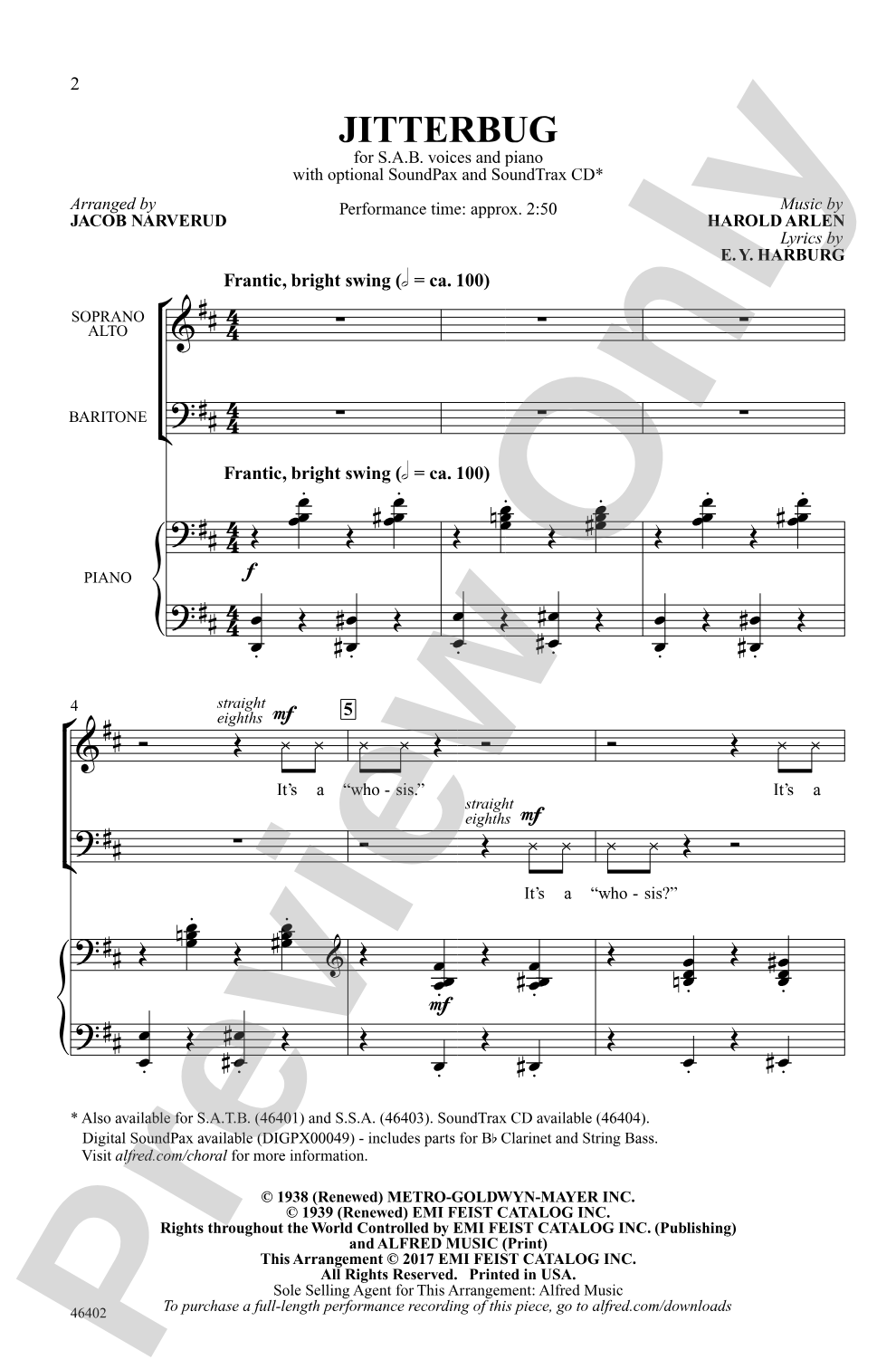
Music by Harold Arlen, lyrics by E. Y. Harburg / arr. Jacob Narverud
Item: 00-PO-0005644

$2.10
Minimum order quantity: 20 copies
One moment…
Related Items
Jitterbug: SoundTrax Digital Audio Download |
$29.99
|
View | |
Jitterbug: SATB Choral Octavo |
$2.10
|
View | |
Jitterbug: SSA Choral Octavo |
$2.10
|
View | |
Jitterbug: Choral SoundPax |
$10.00
|
View | |
Jitterbug: SATB Choral Octavo |
$2.10
|
View | |
Jitterbug: SAB Choral Octavo |
$2.10
|
View | |
Jitterbug: SSA Choral Octavo |
$2.10
|
View | |
Jitterbug: Choral Octavo SoundTrax CD |
$29.99
|
View | |
Jitterbug: Choral SoundPax |
$10.00
|
View |
Description
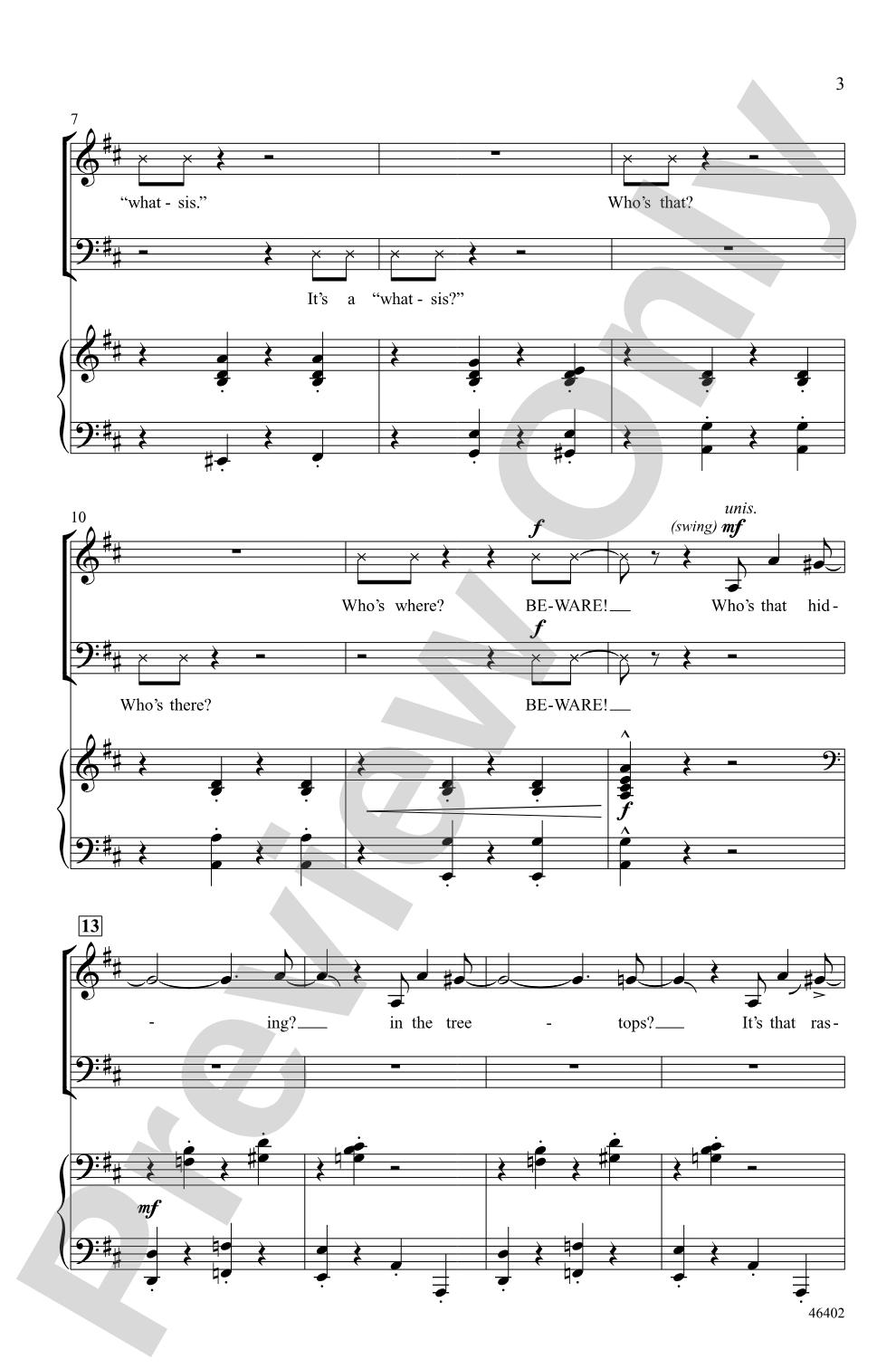
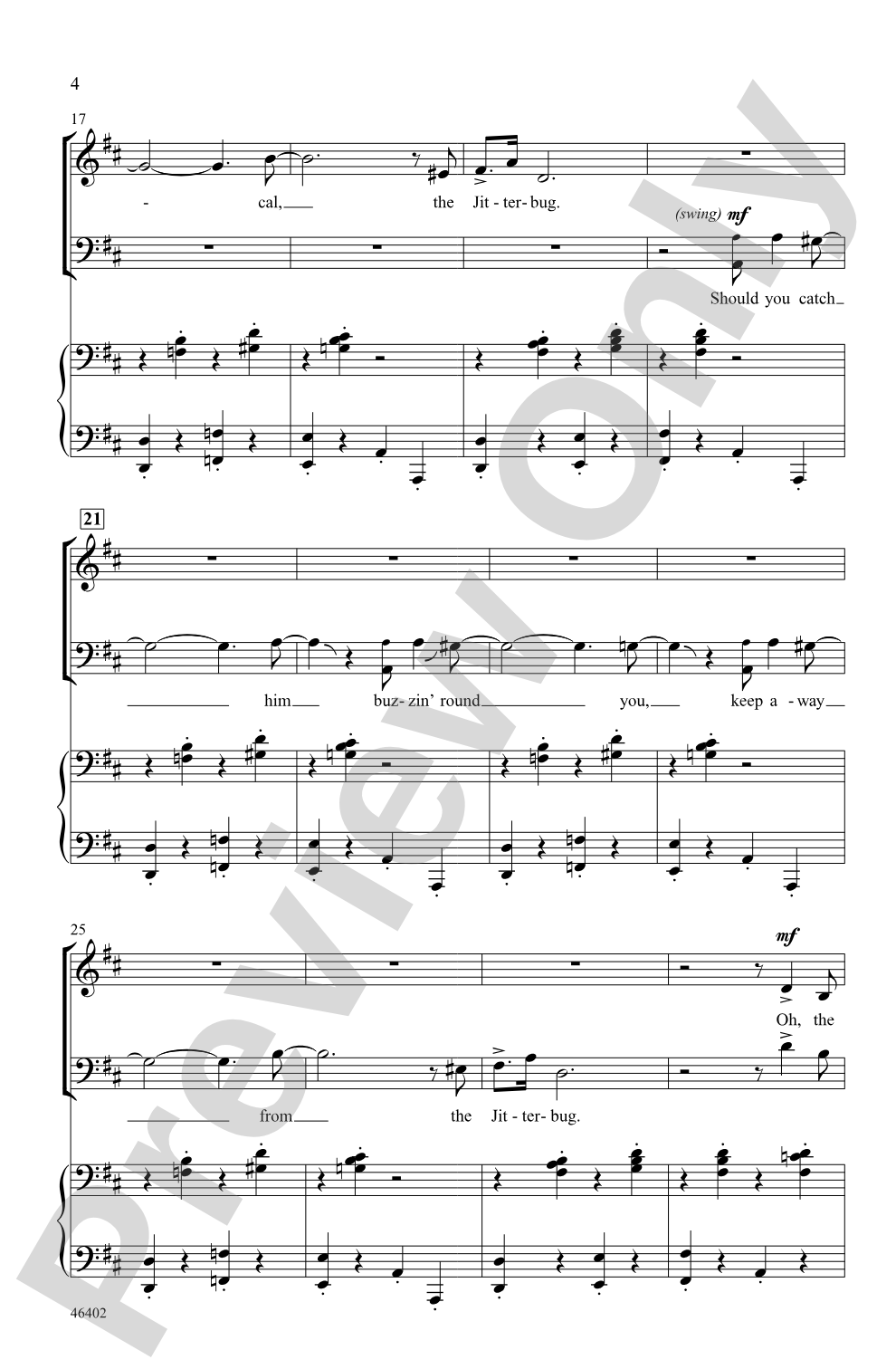
Although it was cut from the original 1939 film, this number from The Wizard of Oz is an energetic, swinging romp through one of the prominent dance crazes of the time period, and appears in many contemporary productions of the show. Rhythmic syncopation and chromatic jazz harmonies create a toe-tappin', finger-snappin' sensation that just begs for choreography!


Don't just read it, hear it, play along with it, and watch your students grow with it. In MakeMusic Cloud, Jitterbug: SAB Choral Octavo comes alive with professional accompaniment, adjustable tempo, and built-in practice tools that turn solo practice into real progress.
Open in the Player
Jump straight in and assign it today.
Start Your Free Trial
Open this title and explore the full library in minutes.
Sample Audio
1
Audio File
--:--
0:00
0:00
Sample Video
No sample videos found.
Additional Details
Series:
Alfred Pop Choral Series
Publisher:
Alfred Music
Page Count:
16
SKU:
00-PO-0005644
More about this title
About the Composer: Harold Arlen
Harold Arlen (1905-1986) composed some of the most recognizable melodies in American musical theater and film. His gift for writing singable, rhythmically inventive tunes made him a cornerstone of the Golden Age of Hollywood, and his songs remain staples in choral and vocal programs because they sit naturally in the voice while demanding genuine musicianship.
Arlen's partnership with lyricist E.Y. Harburg produced the score for The Wizard of Oz, including "Over the Rainbow," "If I Only Had a Brain," and this infectious dance number. His ability to blend popular idiom with sophisticated harmonic thinking made his work accessible to students while offering real interpretive depth.
Why we love this
This is pure joy to teach and perform. The syncopation demands precision, the chromatic jazz harmonies expose blend issues immediately (which means your singers will improve fast), and the energy is contagious enough that even reluctant singers want to nail it. It's the kind of arrangement that makes students actually care about rhythm section discipline and voice leading because they can hear how it serves the groove.
What to expect
Imagine a 1930s swing band distilled into choral writing. It swings, it snaps, it knows itself. The chromatic harmonies give it sophistication while the straightforward melody and rhythm keep it accessible, and the whole thing practically begs for movement, snapping, and joy.
Who it's for
Choirs with solid rhythmic foundation and singers comfortable with jazz harmony and syncopation. This works beautifully for mixed ensembles (SAB voices balance naturally in this range), community theater productions, and school choirs aiming for something with genuine character and fun factor.
How to get the most out of it
- Lock the rhythmic unison figures in the opening; even slight drag or rush will kill the swing. Record a quick rehearsal section and play it back so singers hear exactly what "together" sounds like.
- Keep the chromatic voice-leading lines singing through their own melodic integrity rather than drowning them in chord function. These aren't background harmonies; they're active musical lines.
- Shape the dynamics across phrases to maintain forward motion. The energy can flatten if every eight bars sits at the same volume level.
- Choreography is not required, but body awareness is. Have singers feel the swing in their posture and weight rather than dancing; it changes everything about the sound quality.
How to use it
Program this alongside other jazz-inflected pop or musical theater repertoire if you want thematic coherence, or place it as the energetic turning point in a set that needs a gear shift. It pairs especially well in concert with other Wizard of Oz selections or as the finale that leaves the audience smiling.
Skills your students will build
- Reading and performing rhythmic syncopation in SAB voicing
- Singing chromatic jazz harmony lines with independence and blend
- Maintaining swing feel and forward momentum across phrase boundaries
- Balancing rhythmic precision with interpretive flexibility in a dance-idiom arrangement