
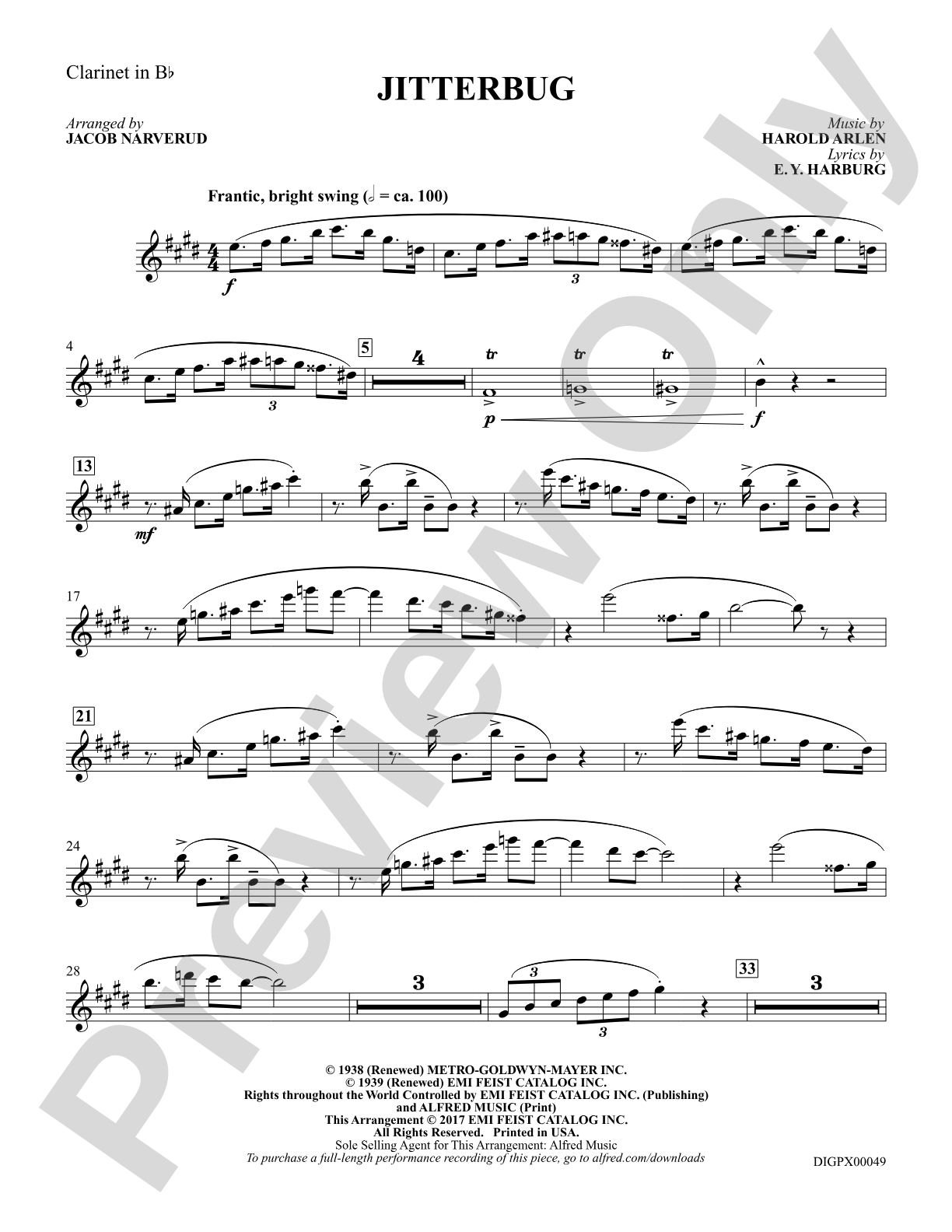
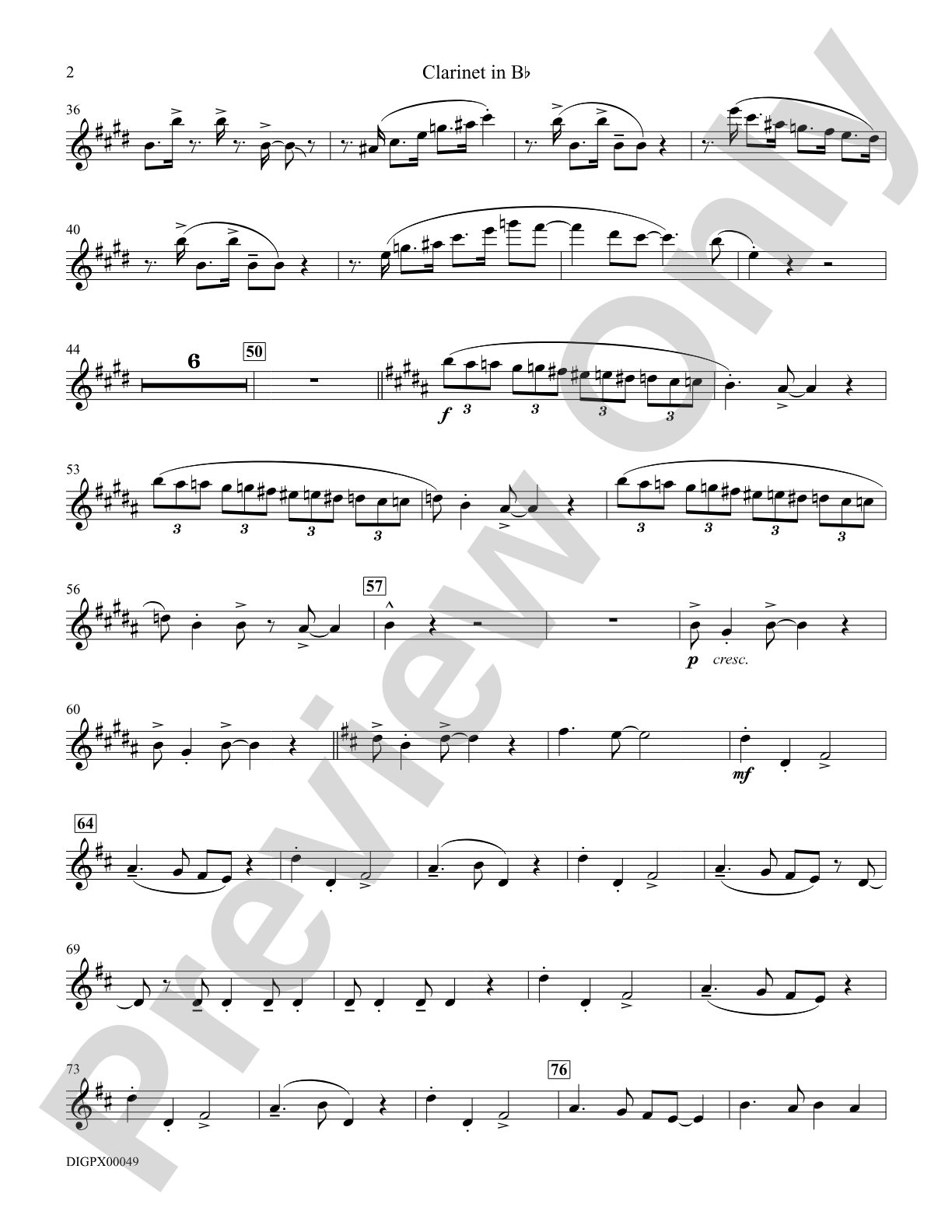
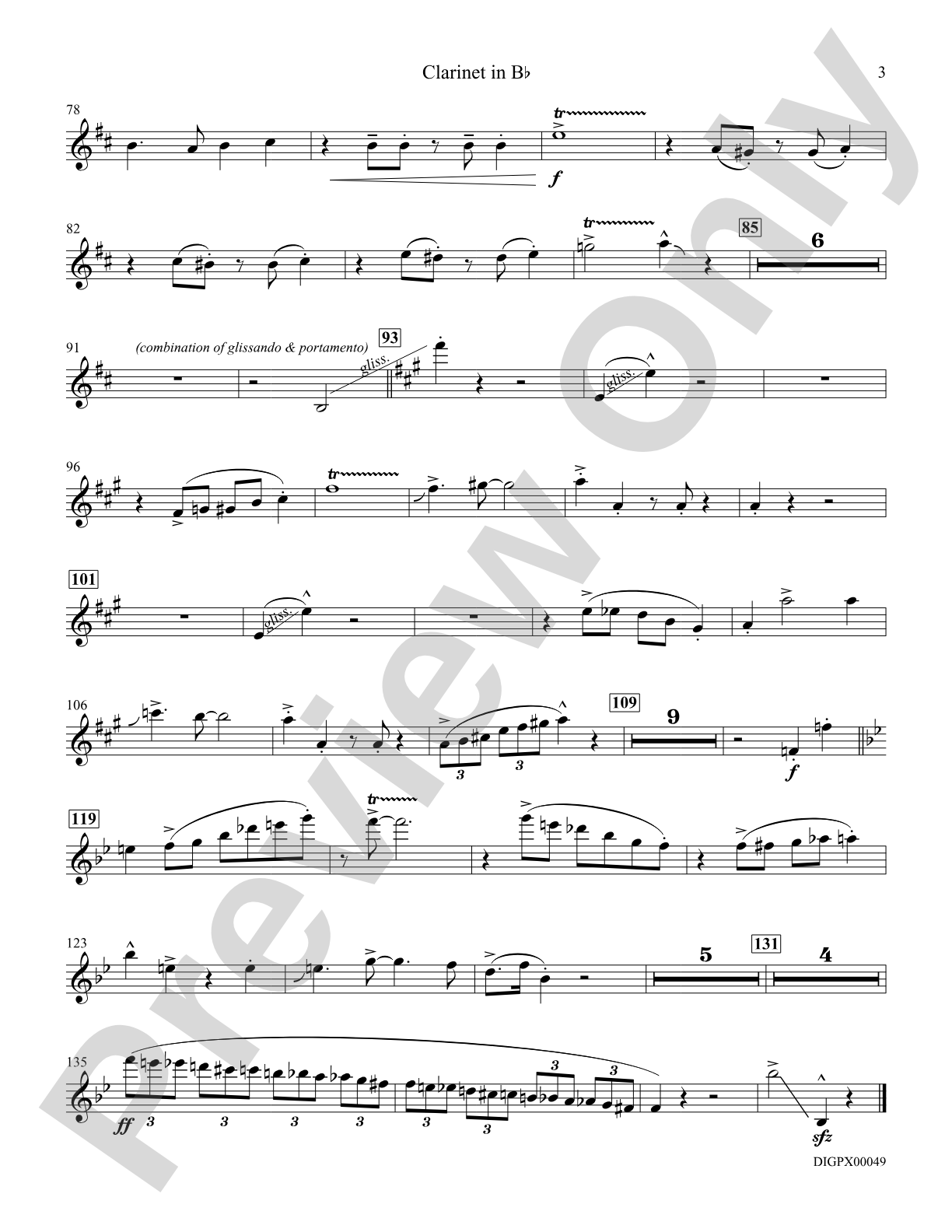

Jitterbug: Choral SoundPax
Music by Harold Arlen, lyrics by E. Y. Harburg / arr. Jacob Narverud
Item: 00-PK-0007490

$10.00
Pickup currently not available
Buy Extra Parts (Digital PDF Download)
| Product | Price | Quantity |
|---|---|---|
| Jitterbug: 1st B-flat Clarinet | $3.00 | |
| Jitterbug: String Bass | $3.00 |
Parts Added to Cart!
Related Items
Jitterbug: SoundTrax Digital Audio Download |
$29.99
|
View | |
Jitterbug: SATB Choral Octavo |
$2.10
|
View | |
Jitterbug: SAB Choral Octavo |
$2.10
|
View | |
Jitterbug: SSA Choral Octavo |
$2.10
|
View | |
Jitterbug: SATB Choral Octavo |
$2.10
|
View | |
Jitterbug: SAB Choral Octavo |
$2.10
|
View | |
Jitterbug: SSA Choral Octavo |
$2.10
|
View | |
Jitterbug: Choral Octavo SoundTrax CD |
$29.99
|
View | |
Jitterbug: Choral SoundPax |
$10.00
|
View |
Description
Although it was cut from the original 1939 film, this number from The Wizard of Oz is an energetic, swinging romp through one of the prominent dance crazes of the time period, and appears in many contemporary productions of the show. Rhythmic syncopation and chromatic jazz harmonies create a toe-tappin', finger-snappin' sensation that just begs for choreography!


Don't just read it, hear it, play along with it, and watch your students grow with it. In MakeMusic Cloud, Jitterbug: Choral SoundPax comes alive with professional accompaniment, adjustable tempo, and built-in practice tools that turn solo practice into real progress.
Open in the Player
Jump straight in and assign it today.
Start Your Free Trial
Open this title and explore the full library in minutes.
Sample Audio
1
Audio File
--:--
0:00
0:00
Sample Video
No sample videos found.
Additional Details
Series:
Alfred Pop Choral Series
Publisher:
Alfred Music
Page Count:
8
SKU:
00-PK-0007490
Instrumentation:
SoundPax
More about this title
About the Composer: Harold Arlen
Harold Arlen (1905-1986) composed some of the most recognizable melodies in American musical theater and film. His gift for writing singable, memorable lines paired with sophisticated harmonic language made him a sought-after collaborator for Broadway and Hollywood productions throughout the mid-20th century. Arlen's work with lyricist E.Y. Harburg on The Wizard of Oz produced songs that remain central to the American songbook and continue to engage singers across all levels.
Why we love this
This arrangement captures the infectious energy of a genuine 1930s-40s swing number without demanding advanced vocal technique or complex part writing. The syncopation and jazz harmonies teach contemporary harmonic language in a context that feels playful rather than academic, and the piece practically demands the choreography and staging that makes choral concerts memorable for audiences.
What to expect
From the first note, this piece swings. The bright, snappy rhythms and chromatic jazz harmonies evoke the carefree exuberance of 1930s dance halls, while the syncopation keeps singers and audiences on their toes. It's the kind of number that makes an audience want to move.
Who it's for
This arrangement works for intermediate to advanced choirs seeking contemporary material with theatrical flair and genuine historical roots. It suits ensembles with at least modest jazz experience or groups eager to develop swing feel and syncopated ensemble singing.
How to get the most out of it
- Anchor the rhythmic syncopation by having the rhythm section lock together first; once the groove is solid, the choir will follow naturally into the swing feel.
- Lean into the chromatic voice movements as compositional features, not obstacles. Isolate them by section and demonstrate how they create harmonic color rather than serving as passing tones.
- Schedule staging rehearsals early. The piece invites movement, and blocking out choreography alongside vocal rehearsal helps singers internalize the rhythmic energy.
How to use it
Place this midway through a concert to shift energy and mood, or pair it with other Golden Age musical theater selections to build a cohesive set. It works equally well as a showstopper in a pops concert or as a highlight in a spring choral festival program where staging is expected.
Skills your students will build
- Rhythmic syncopation and swing feel
- Jazz harmony recognition and intonation
- Chromatic voice leading and part independence
- Coordination of ensemble singing with choreography