

Jitterbug: SATB Choral Octavo
Music by Harold Arlen, lyrics by E. Y. Harburg / arr. Jacob Narverud
Item: 00-PO-0005643
$2.10
Minimum order quantity: 20 copies
One moment…
Related Items
Jitterbug: SoundTrax Digital Audio Download |
$29.99
|
View | |
Jitterbug: SAB Choral Octavo |
$2.10
|
View | |
Jitterbug: SSA Choral Octavo |
$2.10
|
View | |
Jitterbug: Choral SoundPax |
$10.00
|
View | |
Jitterbug: SATB Choral Octavo |
$2.10
|
View | |
Jitterbug: SAB Choral Octavo |
$2.10
|
View | |
Jitterbug: SSA Choral Octavo |
$2.10
|
View | |
Jitterbug: Choral Octavo SoundTrax CD |
$29.99
|
View | |
Jitterbug: Choral SoundPax |
$10.00
|
View |
Description
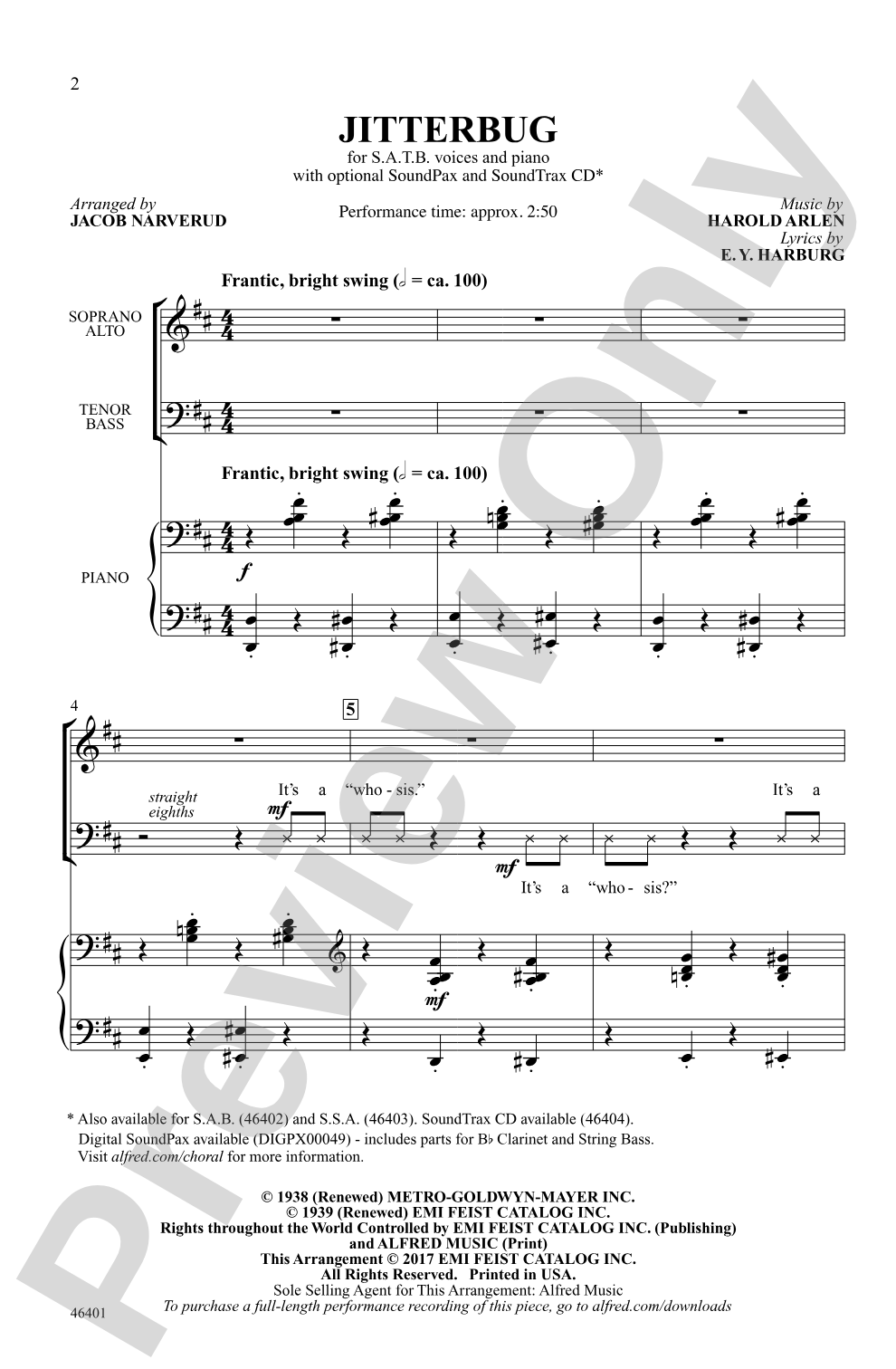
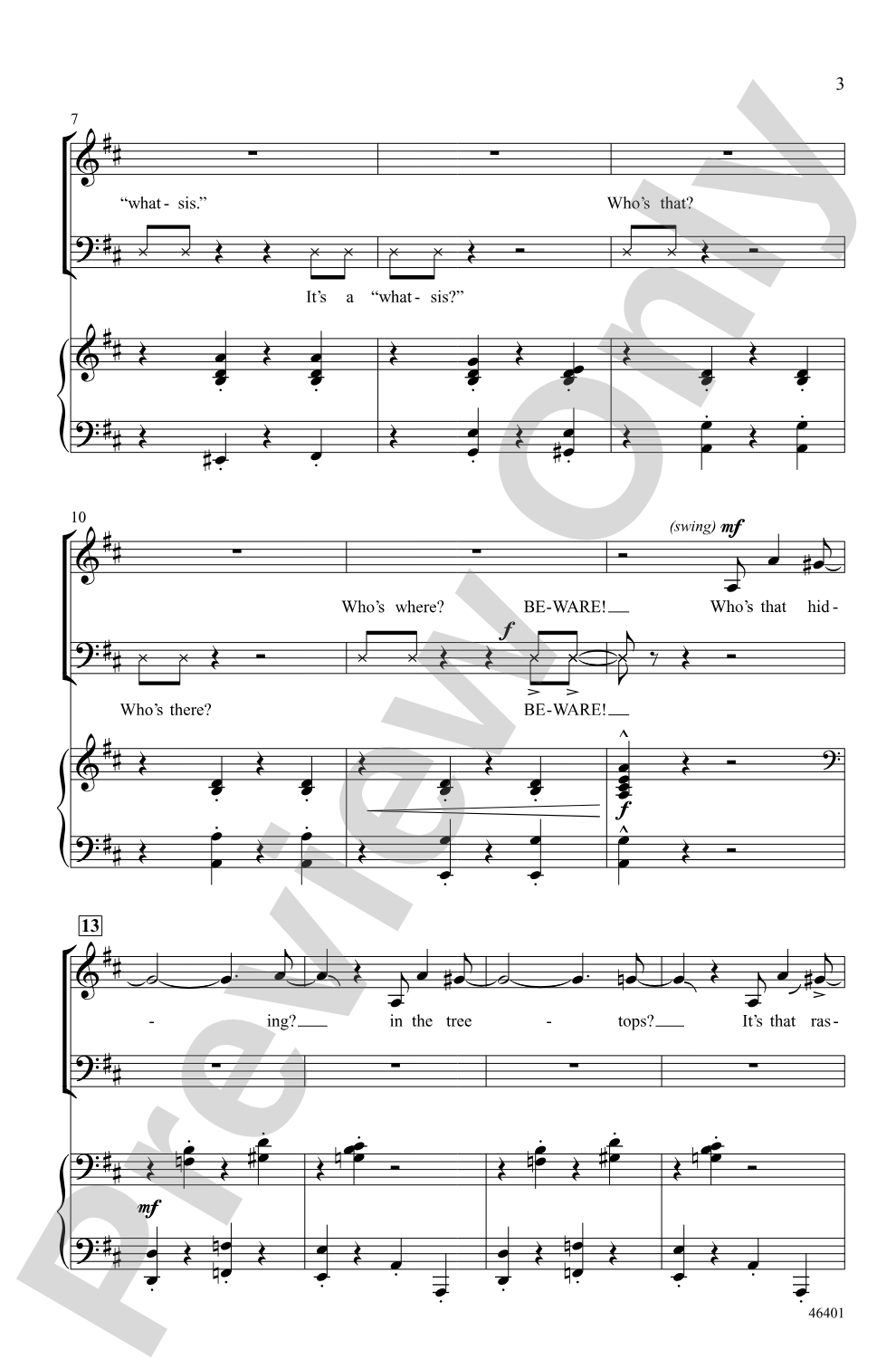
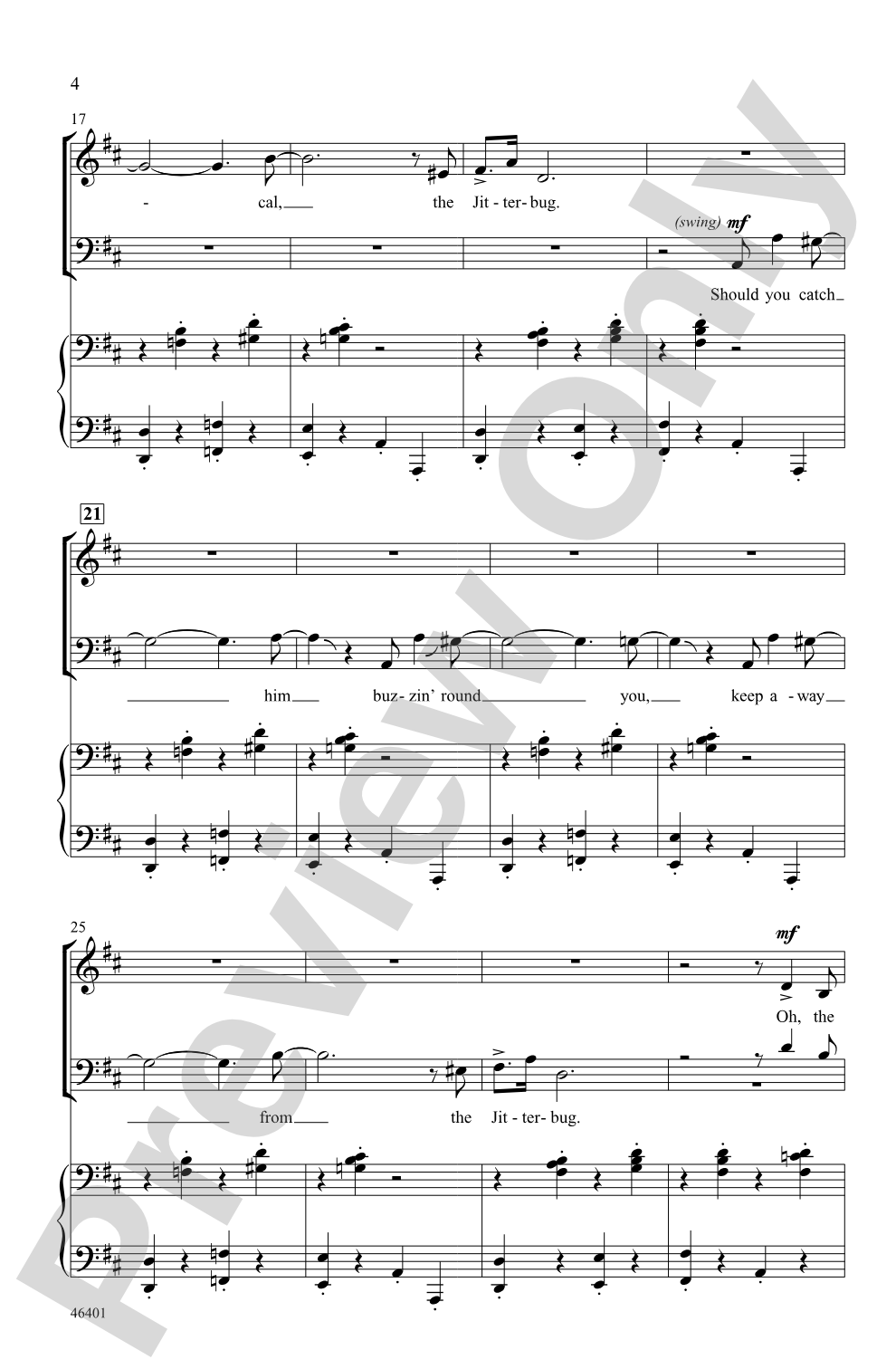
Although it was cut from the original 1939 film, this number from The Wizard of Oz is an energetic, swinging romp through one of the prominent dance crazes of the time period, and appears in many contemporary productions of the show. Rhythmic syncopation and chromatic jazz harmonies create a toe-tappin', finger-snappin' sensation that just begs for choreography!


Jitterbug: SATB Choral Octavo isn't in MakeMusic Cloud just yet...but it could be. Let us know you'd like to see it, and you'll help shape what comes next. In the meantime, start a free trial and dive into thousands of interactive titles your students can play along with today.
Request This Title
Tell us you want it.
Start Your Free Trial
Explore everything that's ready to play right now.
Sample Audio
1
Audio File
--:--
0:00
0:00
Sample Video
Additional Details
Series:
Alfred Pop Choral Series
Publisher:
Alfred Music
Page Count:
16
SKU:
00-PO-0005643
More about this title
About the Composer: Harold Arlen
Harold Arlen (1905-1986) composed some of the most enduring melodies in American musical theater, from The Wizard of Oz to Stormy Weather to Over the Rainbow. His gift for writing infectious, memorable tunes paired with sophisticated harmonies made him a favorite among lyricists and audiences alike. Arlen's work remains central to the choral and theatrical repertoire because his melodies sit naturally in the voice while his harmonic language challenges singers to expand their musicality.
Why we love this
This arrangement captures everything that made the 1939 swing era irresistible: syncopated rhythms, chromatic jazz harmonies, and an infectious energy that spreads through the entire choir section by section. Narverud's voicing sits comfortably across SATB ranges while keeping the harmonic sophistication that gives the piece its sophisticated swing feel. Programming this alongside other Golden Age standards or as a centerpiece of a jazz-influenced concert reminds audiences (and singers) why this music endures.
What to expect
Irresistible forward momentum. The moment the syncopation kicks in, the piece radiates the carefree joy of 1939 swing culture, with chromatic voice movement adding subtle sophistication beneath the toe-tapping surface. Your choir will feel the era come alive, and the audience will be fighting the urge to dance.
Who it's for
High school and collegiate choirs looking for repertoire that balances accessibility with harmonic and rhythmic sophistication. This piece works equally well for directors building a concert around musical theater standards or those seeking a stylistically informed treatment of swing-era material that showcases ensemble articulation and voice independence.
How to get the most out of it
- Anchor the rhythmic foundation by locking the alto and tenor lines first; these voice parts carry the syncopated jazz vocabulary that makes the tune bounce.
- Treat the chromatic voice movement as deliberate harmonic color, not something to rush through. Let each chromatic shift land clearly so the jazz quality emerges.
- Build in articulation variety across phrases. Crisp, short attacks on syncopated figures contrast beautifully with sustained, legato passages in the bridge sections.
- Lean on the recorded accompaniment to establish the swing feel in early rehearsals; once the choir locks into that groove, removing it reveals how much rhythmic independence your singers have developed.
How to use it
Feature this as the anchor of a Golden Age Hollywood concert, pairing it with other Arlen standards or nearby-era Broadway material for thematic coherence. Its theatrical DNA and built-in choreography appeal make it equally fitting as a concert finale that leaves audiences smiling, or as the opening number to a full Wizard of Oz production.
Skills your students will build
- Syncopated rhythm reading and ensemble alignment in swing style
- Voice independence within chromatic jazz harmonic progressions
- Stylistic articulation and phrasing appropriate to 1930s swing idiom
- Integration of choreography with choral singing
- Rhythmic precision in 4/4 with syncopated subdivisions