

Japanese Snow Song (Yuki): 3-Part Mixed Choral Octavo
Arr., with additional words, by Lois Brownsey and Marti Lunn Lantz
Item: 00-PO-0000378

$2.25
Minimum order quantity: 20 copies
Pickup currently not available
Related Items
Japanese Snow Song (Yuki): SoundTrax Digital Audio Download |
$27.99
|
View | |
Japanese Snow Song (Yuki): 2-Part Choral Octavo |
$2.25
|
View | |
Japanese Snow Song (Yuki): 3-Part Mixed Choral Octavo |
$2.25
|
View | |
Japanese Snow Song (Yuki): 2-Part Choral Octavo |
$2.25
|
View | |
Japanese Snow Song (Yuki): Choral Octavo SoundTrax CD |
$27.99
|
View |
Description
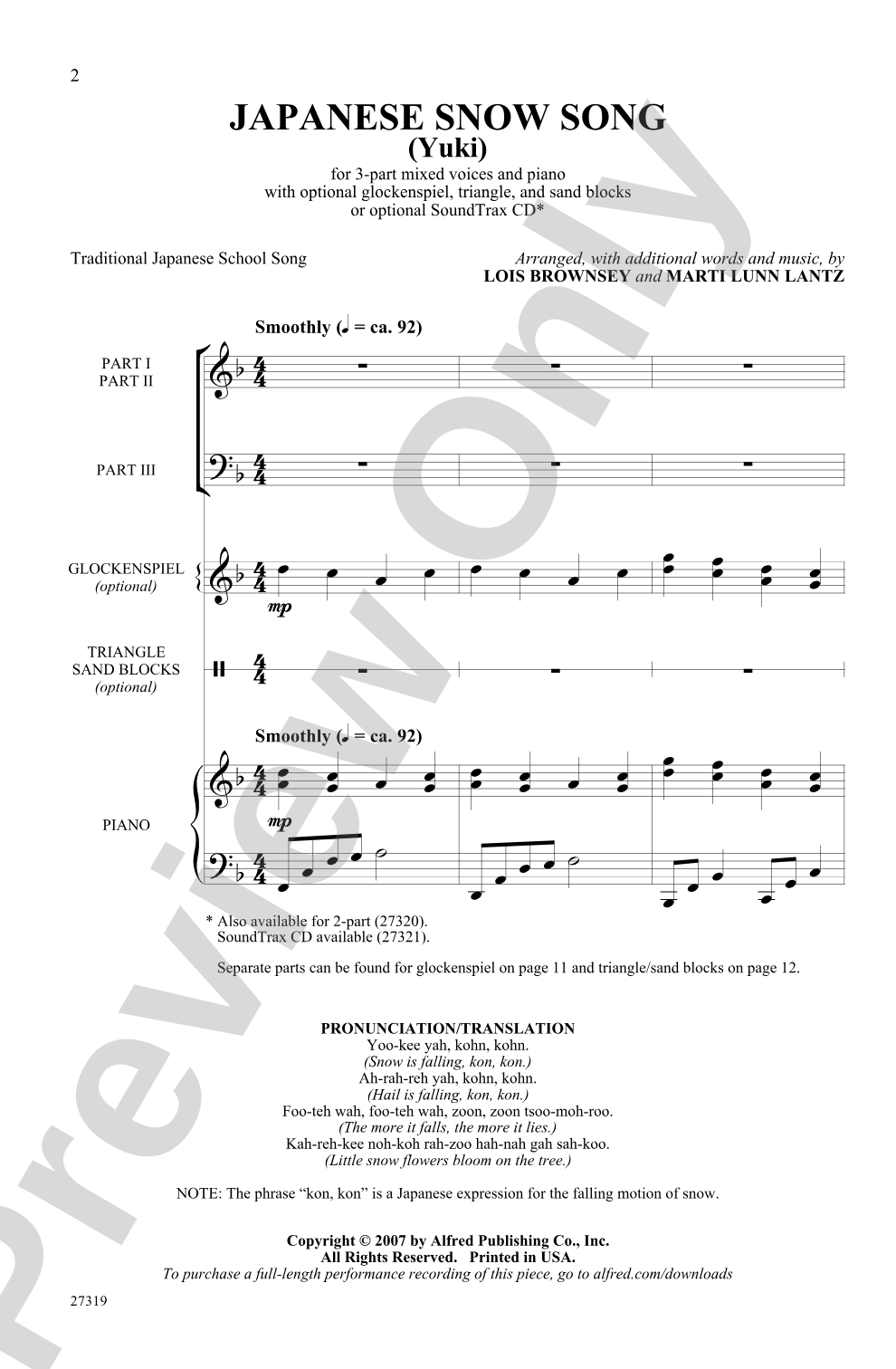
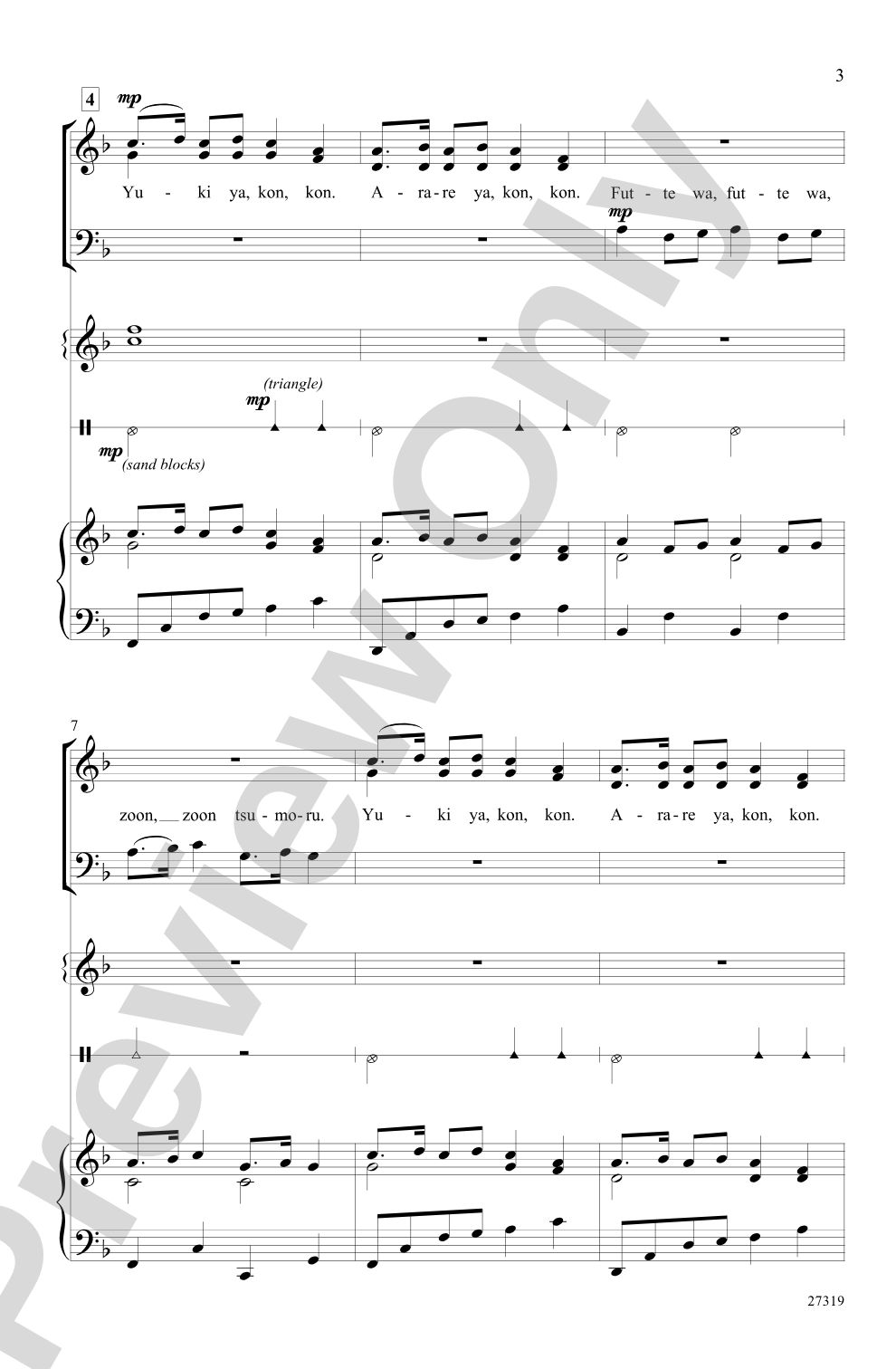
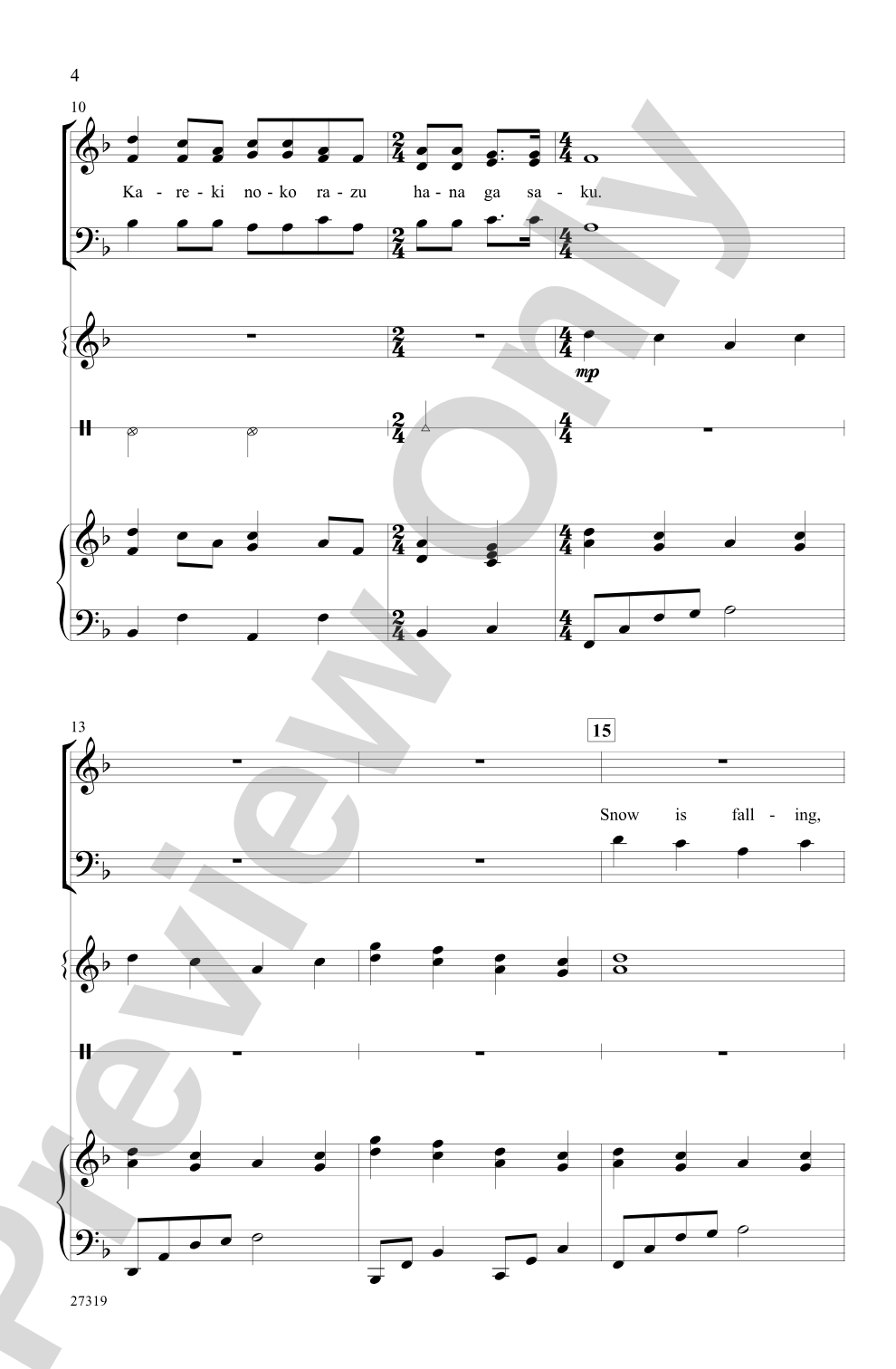
A delicate melody swirls and twirls like drifting snow in this tasteful arrangement of a traditional Japanese school song. The three short Japanese phrases (and several English words) are easy-to-learn and bring to mind icy images of wintertime. Simple parts for glockenspiel, triangle, and sand blocks can be heard on the Asian-inspired SoundTrax CD and are also included in the publication.


Don't just read it, hear it, play along with it, and watch your students grow with it. In MakeMusic Cloud, Japanese Snow Song (Yuki): 3-Part Mixed Choral Octavo comes alive with professional accompaniment, adjustable tempo, and built-in practice tools that turn solo practice into real progress.
Open in the Player
Jump straight in and assign it today.
Start Your Free Trial
Open this title and explore the full library in minutes.
Sample Audio
1
Audio File
--:--
0:00
0:00
Sample Video
No sample videos found.
Additional Details
Series:
Alfred Archive Edition: Alfred Choral Designs
Publisher:
Alfred Music
Page Count:
12
SKU:
00-PO-0000378
Instrumentation:
Opt. Percussion
More about this title
About the Arranger: Lois Brownsey

Lois Brownsey studied at Temple University in Philadelphia and trained at the Guitar Workshop while working extensively in musical theatre. She spent over two decades performing in pop, rock, and blues ensembles across the United States and internationally before transitioning to composition and arranging in the late 1990s. She has also composed commercial jingles for major clients including AT&T and GMC Truck Dealers.
Working alongside her long-time writing partner Marti Lunn Lantz, Brownsey has become known for choral works that draw on world music traditions and seasonal themes. Their collaborative catalog includes numerous Alfred publications and several thematic song collections. Brownsey currently resides in the Pocono Mountains of Pennsylvania, where she remains active in the arts community and co-operates Red Rock Recording Studios with her husband, recording engineer Kent Heckman.
Why we love this
The arrangement captures the quiet beauty of a traditional Japanese melody without demanding elaborate vocal technique, making it accessible to middle school choirs while still sounding refined. The optional percussion parts add textural sophistication and give students a chance to contribute instrumentally, and the mix of Japanese text with English lyrics creates a genuine multicultural moment rather than a superficial one.
What to expect
The melody drifts and spirals like snowflakes caught in a breeze, creating a sense of gentle motion and quiet wonder. The sparse orchestration and simple harmonic structure allow space for the imagery to bloom in the listener's mind, evoking the stillness and delicate beauty of winter.
Who it's for
Middle and high school choirs with three-part mixed voicing, including ensembles with mixed ability levels and those seeking accessible seasonal or multicultural repertoire. Community choirs and church music programs will also find this piece manageable while musically satisfying.
How to get the most out of it
- Balance the melody line across your SAB voicing so the tune remains audible even when all three parts are moving. The simplicity of the part writing means clarity of line matters more than blending.
- If using the recorded accompaniment, listen to how the percussion parts layer beneath the vocal line and rehearse with the recording early so singers can absorb the textural landscape.
- Take time teaching the Japanese phrases by ear first, then move to the printed text. This reverses the usual sight-reading approach and helps singers connect to the cultural context.
- The glockenspiel, triangle, and sand blocks should sit in the background; resist the urge to make them prominent. They're meant to evoke the shimmer of snow, not drive the rhythm.
How to use it
This works beautifully as a concert opener in a winter or holiday program, especially when paired with more substantial pieces. It also serves as an effective vehicle for introducing choirs to non-Western musical traditions and can anchor a thematic program exploring seasonal or world music repertoire.
Skills your students will build
- Reading and performing text in Japanese with accurate pronunciation
- Blending three-part SAB voicing with attention to line clarity over harmonic density
- Understanding orchestration and texture through optional percussion parts
- Connecting cultural context to musical interpretation