
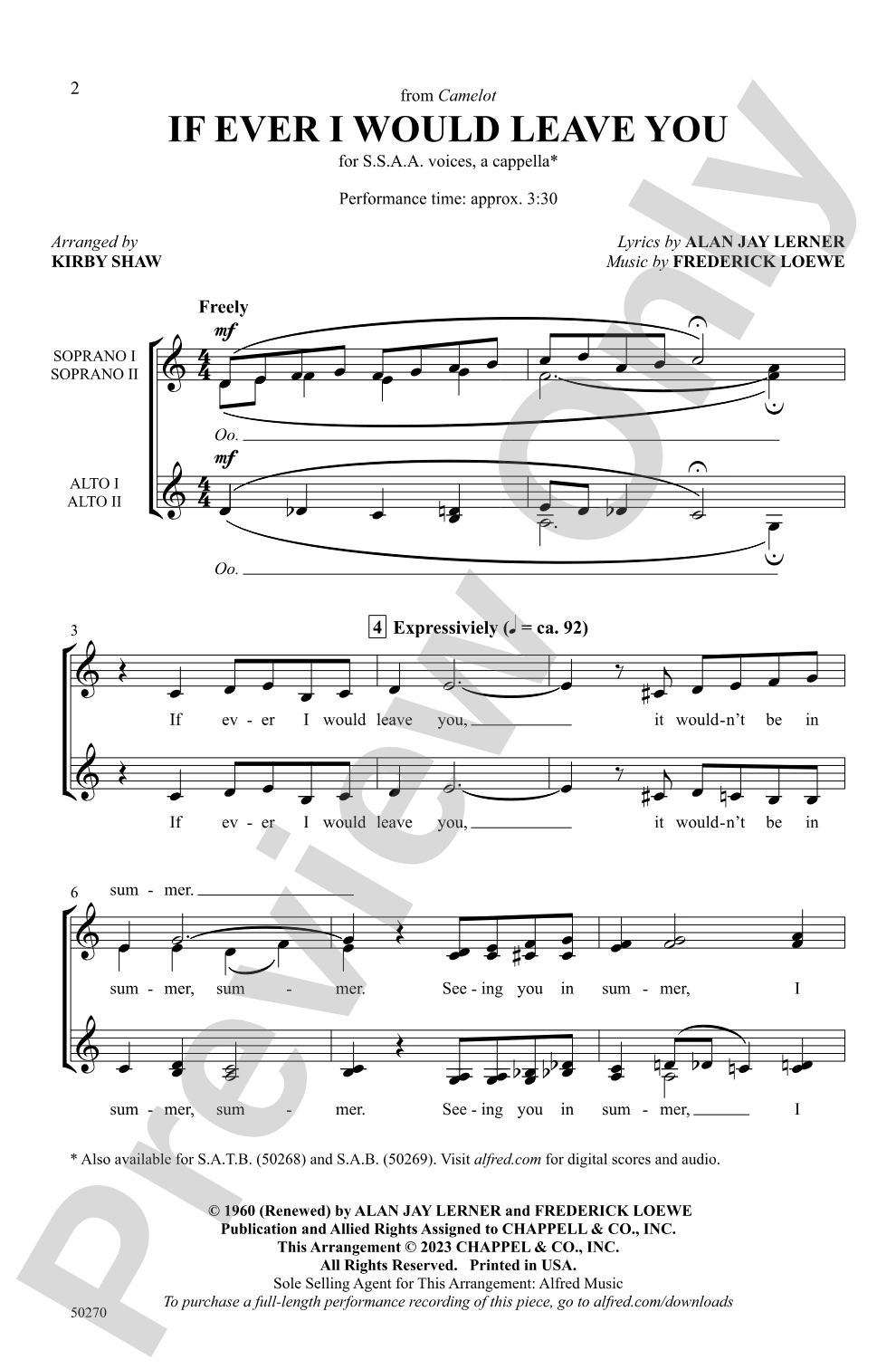
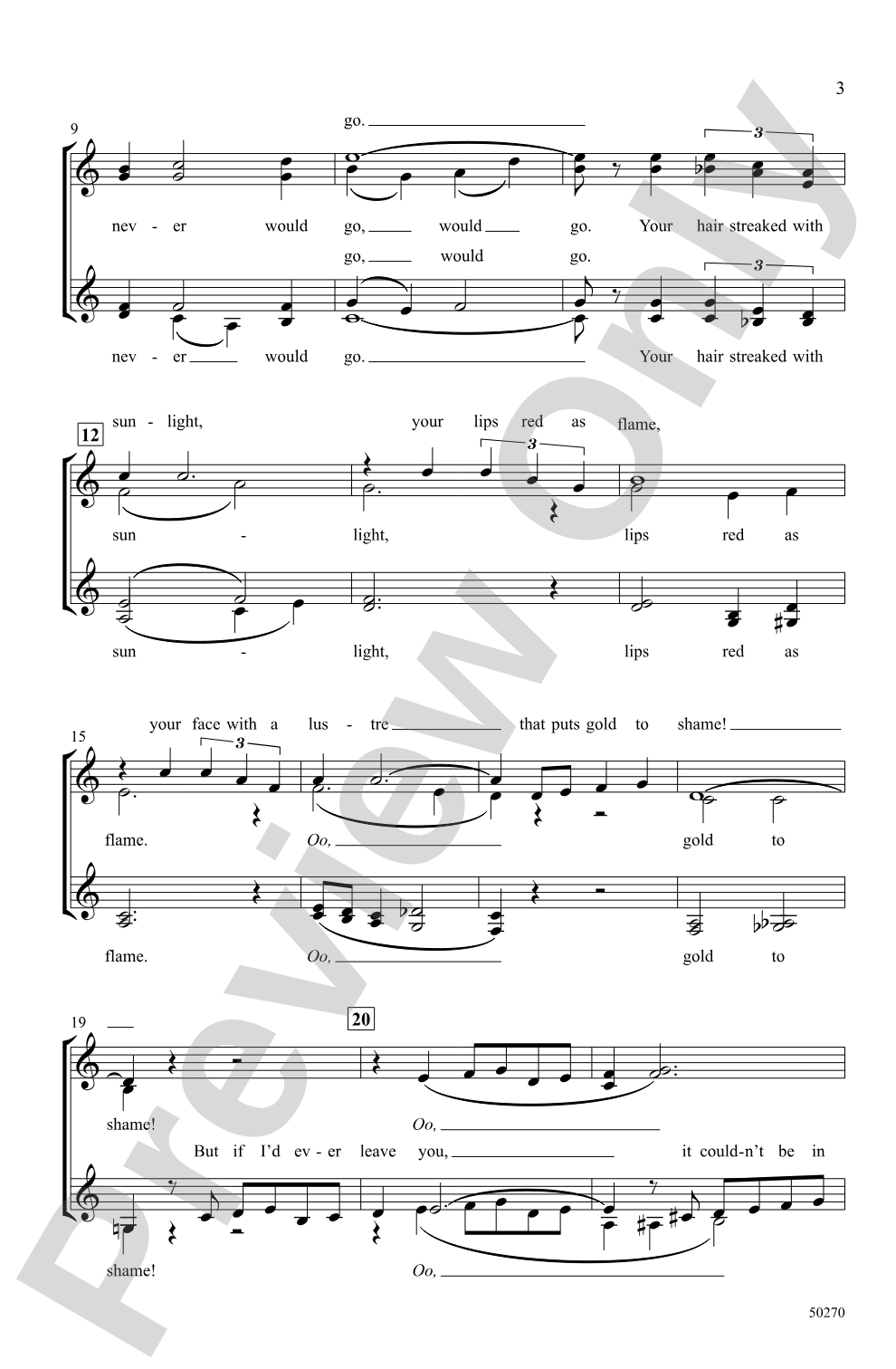

If Ever I Would Leave You: SSSA, a cappella Choral Octavo
Lyrics by Alan Jay Lerner, music by Frederick Loewe / arr. Kirby Shaw
Item: 00-PO-0007098
$2.10
Minimum order quantity: 20 copies
One moment…
Related Items
If Ever I Would Leave You: SATB, a cappella Choral Octavo |
$2.10
|
View | |
If Ever I Would Leave You: SAB a cappella Choral Octavo |
$2.10
|
View | |
If Ever I Would Leave You: SATB, a cappella Choral Octavo |
$2.10
|
View | |
If Ever I Would Leave You: SAB a cappella Choral Octavo |
$2.10
|
View | |
If Ever I Would Leave You: SSSA, a cappella Choral Octavo |
$2.10
|
View |
Description
The cherished love song from Camelot receives a classic choral treatment in this lush, a cappella setting. Equally suitable for large ensembles or small vocal jazz groups, Kirby Shaw's impressive arrangement presents Lerner and Loewe at their finest!


If Ever I Would Leave You: SSSA, a cappella Choral Octavo isn't in MakeMusic Cloud just yet...but it could be. Let us know you'd like to see it, and you'll help shape what comes next. In the meantime, start a free trial and dive into thousands of interactive titles your students can play along with today.
Request This Title
Tell us you want it.
Start Your Free Trial
Explore everything that's ready to play right now.
Sample Audio
1
Audio File
--:--
0:00
0:00
Sample Video
Additional Details
Series:
Alfred Pop Choral Series
Publisher:
Alfred Music
Page Count:
8
SKU:
00-PO-0007098
More about this title
About the Composer: Frederick Loewe
Frederick Loewe (1901–1988) shaped the sound of American musical theater through his sophisticated melodic gift and elegant harmonic language. His partnership with lyricist Alan Jay Lerner produced some of Broadway's most enduring scores, including My Fair Lady, Gigi, and Camelot, each demonstrating his gift for writing songs that feel both timeless and deeply theatrical.
Loewe's music has become a staple of choral and vocal jazz repertoire precisely because his melodies transcend their original context. Teachers and directors return to his work again and again because it combines accessibility with genuine harmonic substance, rewarding singers who dig into the details while remaining performable across a range of ensemble sizes and skill levels.
Why we love this
Kirby Shaw's arrangement captures the romantic sweep of this Lerner-Loewe classic while remaining entirely practical for mixed-voice ensembles. The writing avoids the vocal extremes that can limit repertoire selection, making it genuinely useful for concert programming at multiple levels while maintaining the lush, jazz-tinged sound that makes the arrangement distinctive.
What to expect
Warm, intimate, and gently swaying, the piece has the sophistication of a jazz ballad rendered in pure vocal blend. Loewe's melody glides over Shaw's lush harmonic backdrop, creating moments of genuine tenderness that reward both singer and listener with the particular magic of a cappella voices in close harmony.
Who it's for
This arrangement works for mixed choirs of any size, from small jazz ensembles to full concert groups. It's equally at home in a director seeking a sophisticated standard for a fall or spring concert or a vocal jazz ensemble looking for accessible yet musically substantial material.
How to get the most out of it
- Shape the phrase arcs carefully. The melody benefits from gentle rubato and dynamic shaping that mirrors the text's emotional arc; resist the urge to sing it straight through.
- Balance the inner voices with the soprano line. Jazz voicings like these require precise tuning of suspended chords and chromatic voice leading; isolate and sing the harmony parts separately to lock the sonorities.
- Approach the a cappella texture as an opportunity for blend work. Without instrumental support, vowel consistency and vibrato control become the foundation for the piece's harmonic impact.
- Treat silence as part of the arrangement. Breath placement and releases matter in a cappella writing; plan them as ensemble moments, not individual freedoms.
How to use it
Program this as a centerpiece for a romantic or standard-songs-themed concert set, or use it as a showcase for your ensemble's blend and tuning capabilities. The piece's moderate length and familiar tune make it an excellent choice for a spring concert or an end-of-year celebration program.
Skills your students will build
- Sustaining beautiful vowel sounds across long phrases without instrumental support
- Tuning jazz voicings and altered harmonies (suspended chords, chromatic movement)
- Blending inner voices and maintaining harmonic balance in a cappella settings
- Shaping melodic and harmonic phrases with subtle dynamic control and rubato
- Reading and performing jazz-influenced harmonic language in treble voicing