
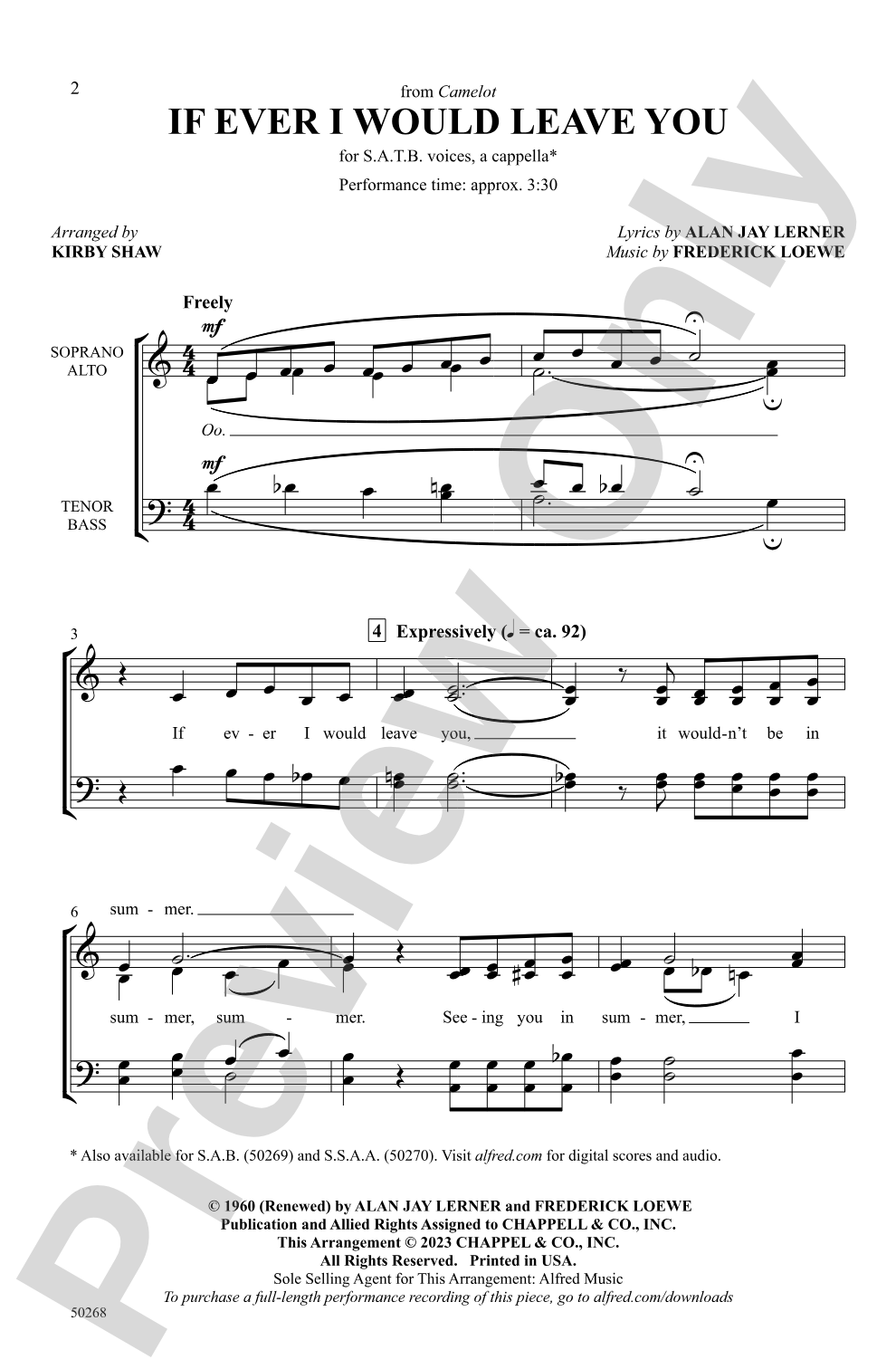
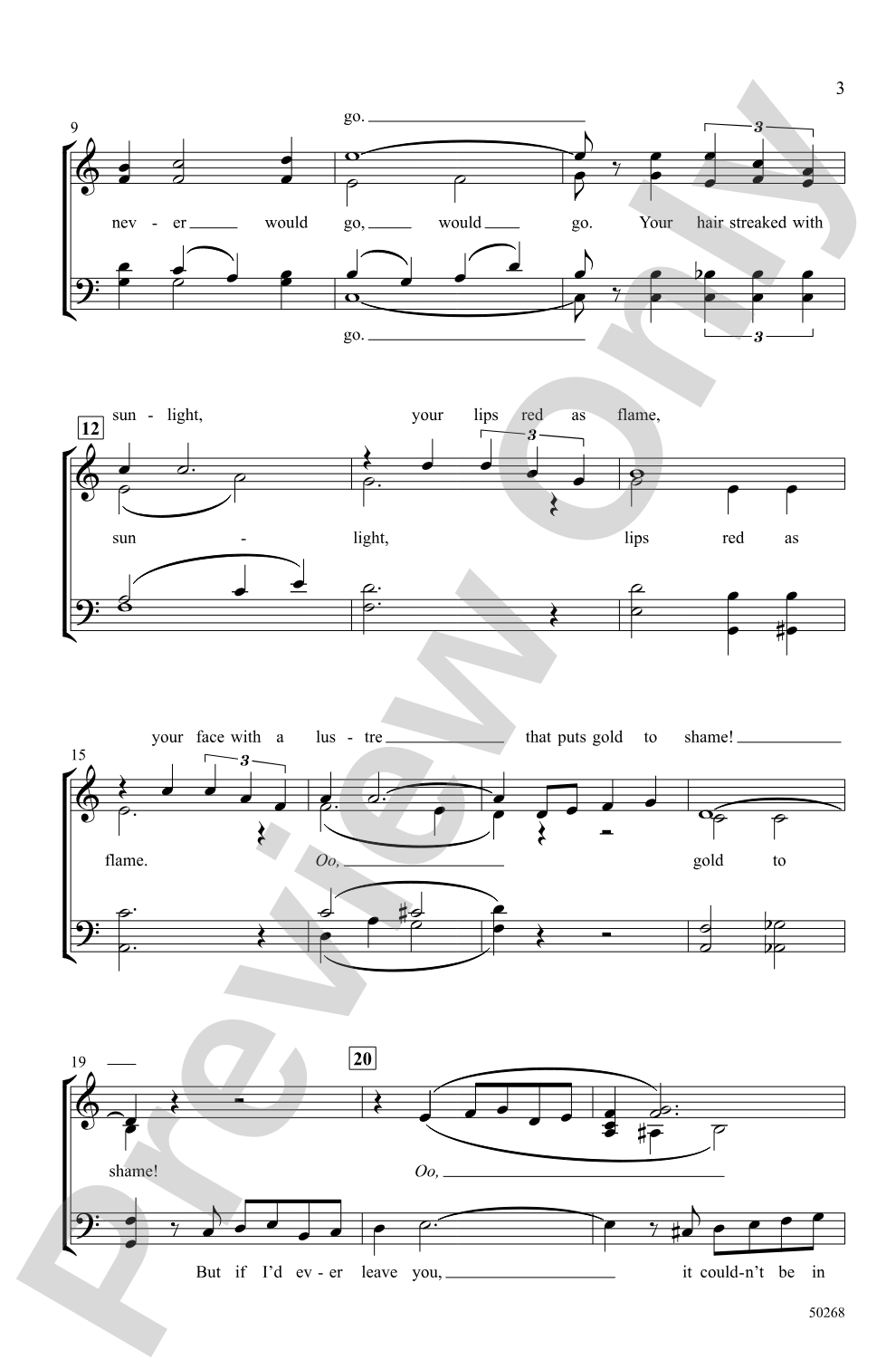

If Ever I Would Leave You: SATB, a cappella Choral Octavo
Lyrics by Alan Jay Lerner, music by Frederick Loewe / arr. Kirby Shaw
Item: 00-PO-0007096
$2.10
Minimum order quantity: 20 copies
One moment…
Related Items
If Ever I Would Leave You: SAB a cappella Choral Octavo |
$2.10
|
View | |
If Ever I Would Leave You: SSSA, a cappella Choral Octavo |
$2.10
|
View | |
If Ever I Would Leave You: SATB, a cappella Choral Octavo |
$2.10
|
View | |
If Ever I Would Leave You: SAB a cappella Choral Octavo |
$2.10
|
View | |
If Ever I Would Leave You: SSSA, a cappella Choral Octavo |
$2.10
|
View |
Description
The cherished love song from Camelot receives a classic choral treatment in this lush, a cappella setting. Equally suitable for large ensembles or small vocal jazz groups, Kirby Shaw's impressive arrangement presents Lerner and Loewe at their finest!


Discover MakeMusic Cloud: thousands of interactive titles your students can play along with today.
Sample Audio
1
Audio File
--:--
0:00
0:00
Sample Video
Additional Details
Series:
Alfred Pop Choral Series
Publisher:
Alfred Music
Page Count:
8
SKU:
00-PO-0007096
More about this title
About the Composer: Frederick Loewe
Frederick Loewe (1901-1988) was an Austrian-American composer whose partnership with lyricist Alan Jay Lerner created some of Broadway's most enduring musicals. Their collaborations, including My Fair Lady, Gigi, and Camelot, shaped the golden age of American musical theater and continue to dominate choral and vocal repertoire across all levels.
Loewe's gift for soaring melodies and sophisticated harmonies made his songs ideal for choral adaptation. His work demonstrates how strong melodic writing and harmonic elegance transcend their original context, allowing arrangers to reimagine Broadway standards as concert pieces that challenge and delight singers of varying experience.
Why we love this
Kirby Shaw's arrangement honors Loewe's lush harmonic language while making the piece accessible to ensembles ranging from chamber choirs to larger concert groups. The a cappella setting strips away orchestration and demands clean voice leading, tuning, and blend, making this an excellent vehicle for choirs seeking to develop fundamental vocal artistry alongside a beloved standard.
What to expect
The piece unfolds with the warmth and sincerity of Lerner and Loewe's original: a declaration of devotion that feels both intimate and grand. Shaw's voicing creates rich harmonic colors that shift between moments of lush fullness and transparent vulnerability, asking singers to inhabit the emotional generosity of a love song without pretense.
Who it's for
This arrangement suits both experienced choirs and strong jazz-oriented vocal groups who enjoy the blend of Broadway sophistication with contemporary choral writing. Directors seeking accessible yet artistically rewarding repertoire that showcases their singers' tuning and ensemble skill will find this a reliable choice for concerts, competitions, or community performances.
How to get the most out of it
- Balance the melody across voice parts carefully in passages where the tune passes between sections; mark lead voices clearly in rehearsal so the story always comes through.
- Take time establishing internal pitch before the first entrance; without instrumental support, even small intonation slips compound quickly across the ensemble.
- Shape the phrase contours with dynamic intention; this melody's beauty depends on singers understanding where each phrase breathes and how it connects to the next.
- Rehearse the jazz harmonies slowly at first, ensuring each voice hears its own line distinctly before bringing the full texture together.
How to use it
Program this alongside other Broadway standards or American songbook pieces to create a coherent concert segment that appeals to broad audiences. It works equally well as a showpiece for a choral concert, a finale to a set of secular works, or as a transition piece between contrasting program elements, given its familiar melody and emotional accessibility.
Skills your students will build
- Balancing multiple melodic lines in a cappella voicing to maintain clarity and blend
- Tuning jazz harmonies and extended chords without instrumental reference
- Shaping phrase contours and managing dynamic shape in sustained passages
- Ensemble intonation and ear training in four-part writing
- Interpreting Broadway vocal style within a choral context