

If Ever I Would Leave You: SAB a cappella Choral Octavo
Lyrics by Alan Jay Lerner, music by Frederick Loewe / arr. Kirby Shaw
Item: 00-PO-0007097
$2.10
Minimum order quantity: 20 copies
One moment…
Related Items
If Ever I Would Leave You: SATB, a cappella Choral Octavo |
$2.10
|
View | |
If Ever I Would Leave You: SSSA, a cappella Choral Octavo |
$2.10
|
View | |
If Ever I Would Leave You: SATB, a cappella Choral Octavo |
$2.10
|
View | |
If Ever I Would Leave You: SAB a cappella Choral Octavo |
$2.10
|
View | |
If Ever I Would Leave You: SSSA, a cappella Choral Octavo |
$2.10
|
View |
Description
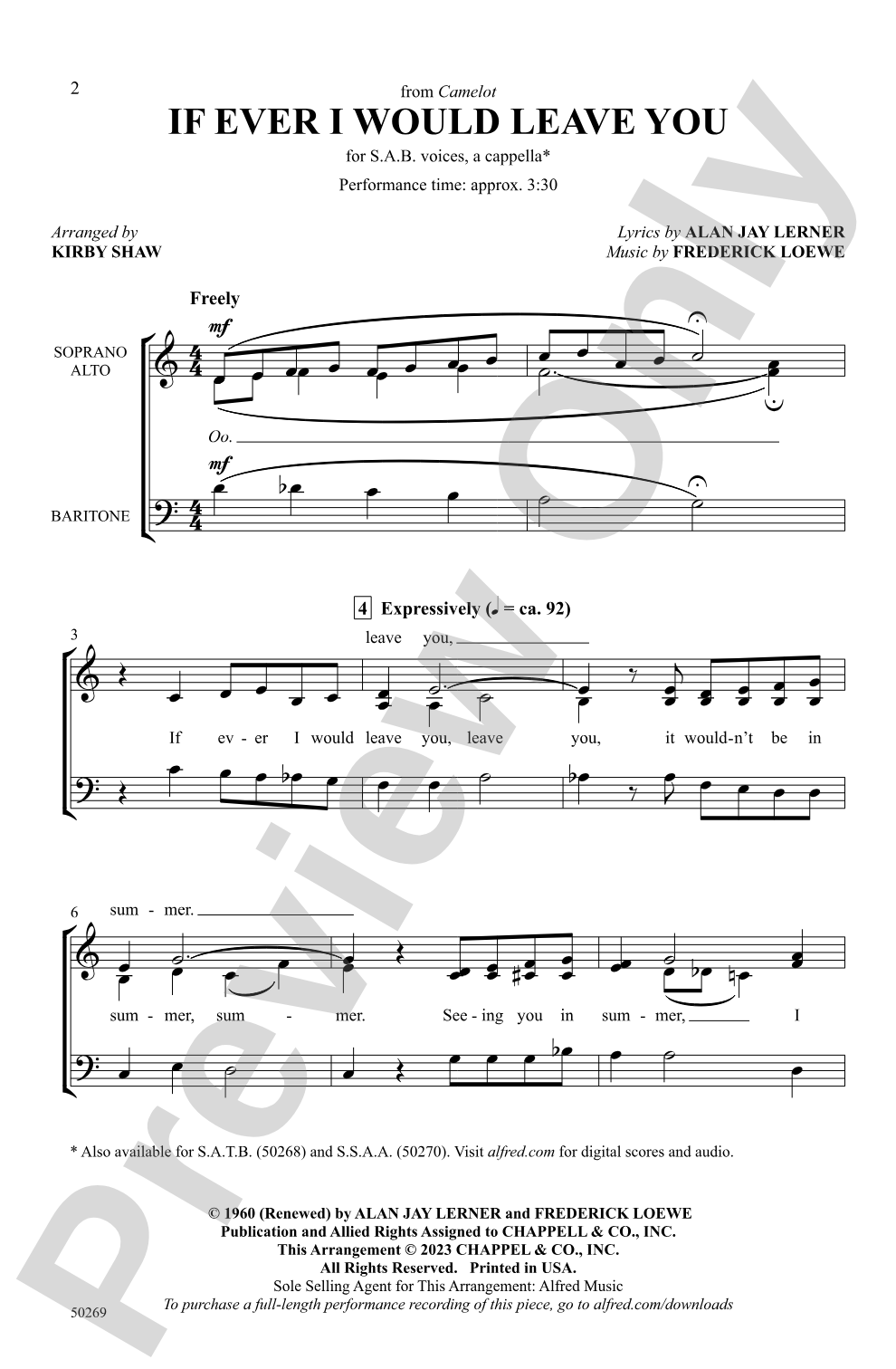
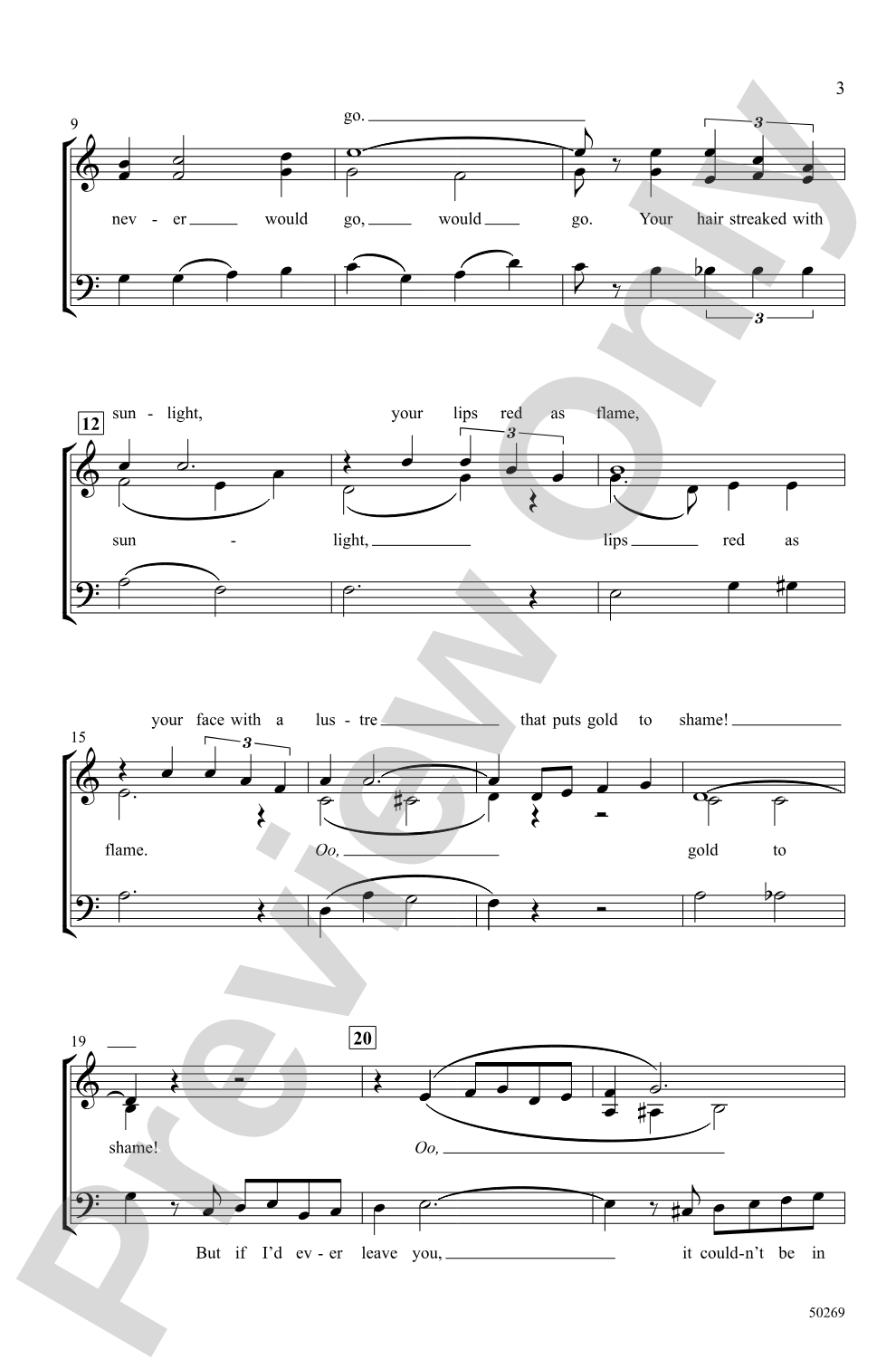
The cherished love song from Camelot receives a classic choral treatment in this lush, a cappella setting. Equally suitable for large ensembles or small vocal jazz groups, Kirby Shaw's impressive arrangement presents Lerner and Loewe at their finest!


If Ever I Would Leave You: SAB a cappella Choral Octavo isn't in MakeMusic Cloud just yet...but it could be. Let us know you'd like to see it, and you'll help shape what comes next. In the meantime, start a free trial and dive into thousands of interactive titles your students can play along with today.
Request This Title
Tell us you want it.
Start Your Free Trial
Explore everything that's ready to play right now.
Sample Audio
1
Audio File
--:--
0:00
0:00
Sample Video
Additional Details
Series:
Alfred Pop Choral Series
Publisher:
Alfred Music
Page Count:
8
SKU:
00-PO-0007097
More about this title
About the Composer: Frederick Loewe
Frederick Loewe (1901-1988) was an Austrian-American composer whose theatrical scores defined the golden age of Broadway musicals. Working in close partnership with lyricist Alan Jay Lerner, Loewe created some of the most enduring songs in American musical theater, including the score for Camelot, My Fair Lady, and Gigi. His gift for melody and harmonic richness made his work instantly singable yet sophisticated enough to reward close musical study.
Loewe's compositions remain staples of choral and vocal music education because they sit at the intersection of accessibility and artistry. Directors and singers are drawn to his melodies, and arrangers continue to reimagine his songs across styles and voicings because the underlying material is so strong. For school and community choirs, Loewe's songs offer a bridge between popular culture and classical musical sensibility.
Why we love this
Kirby Shaw's arrangement captures the tenderness of Loewe's melody while keeping the texture lean and singable. The SAB voicing sits comfortably for mixed ensembles without requiring soloists or instrumental support, making this a reliable choice for concerts where you need something substantial but manageable. The jazz harmonies add sophistication without obscuring the song's emotional core.
What to expect
The arrangement wraps the familiar Broadway melody in warm, sophisticated harmonies that feel both romantic and contemporary. Without instrumental support, the voices carry the full weight of the storytelling, creating an intimate quality even in larger ensembles. The jazz inflections add subtle color and maturity to Lerner and Loewe's original sentiment.
Who it's for
Directors working with mixed choirs of intermediate to advanced ability will find this arrangement accessible without feeling simplistic. It suits school choirs aiming for a concert ballad, community ensembles wanting a recognizable standard, and vocal jazz groups seeking repertoire that bridges pop choral and jazz idioms.
How to get the most out of it
- Shape the phrases with genuine rubato rather than keeping strict time throughout. The legit ballad style underlying the jazz arrangement benefits from breath and flexibility, especially in the opening phrase.
- Balance the three voices so the melodic line reads clearly even when moving through the chord. In SAB voicing, the alto part can get buried if the soprano and bass aren't listening to each other.
- Approach the harmonies with clean vowel sounds and minimal vibrato during block chords. Jazz-influenced choral music often calls for precise intonation in close voicings.
- Rehearse the piece a cappella from the start so singers internalize the pitch relationships without relying on an instrument.
How to use it
This works beautifully as a closing piece for a concert program or as the emotional centerpiece of a set featuring classic Broadway or jazz-influenced vocal music. Pair it with other Loewe material or other standards arranged in contrasting styles to show range and versatility within your choral season.
Skills your students will build
- Singing close jazz harmonies with accurate intonation in three-part writing
- Shaping a long lyrical phrase with appropriate rubato and breath phrasing
- Balancing melodic line clarity across SAB voicing while maintaining ensemble blend
- Interpreting style cues specific to jazz-influenced choral arranging (articulation, swing feel, harmonic color)