

I Ku Mau Mau: 3-Part Mixed/SAB Choral Octavo
(Stand Up Together)
Words from a Traditional Hawaiian Chant, music by Ruth Morris Gray
Item: 00-PO-0005903
$2.05
Minimum order quantity: 20 copies
Pickup currently not available
Related Items
I Ku Mau Mau: SoundTrax Digital Audio Download |
$27.99
|
View | |
I Ku Mau Mau: SSA Choral Octavo |
$2.05
|
View | |
I Ku Mau Mau: TBB Choral Octavo |
$2.05
|
View | |
I Ku Mau Mau: 2-Part Choral Octavo |
$2.05
|
View | |
I Ku Mau Mau: 3-Part Mixed/SAB Choral Octavo |
$2.05
|
View | |
I Ku Mau Mau: SSA Choral Octavo |
$2.05
|
View | |
I Ku Mau Mau: TBB Choral Octavo |
$2.05
|
View | |
I Ku Mau Mau: 2-Part Choral Octavo |
$2.05
|
View | |
I Ku Mau Mau: Choral Octavo SoundTrax CD |
$27.99
|
View |
Description
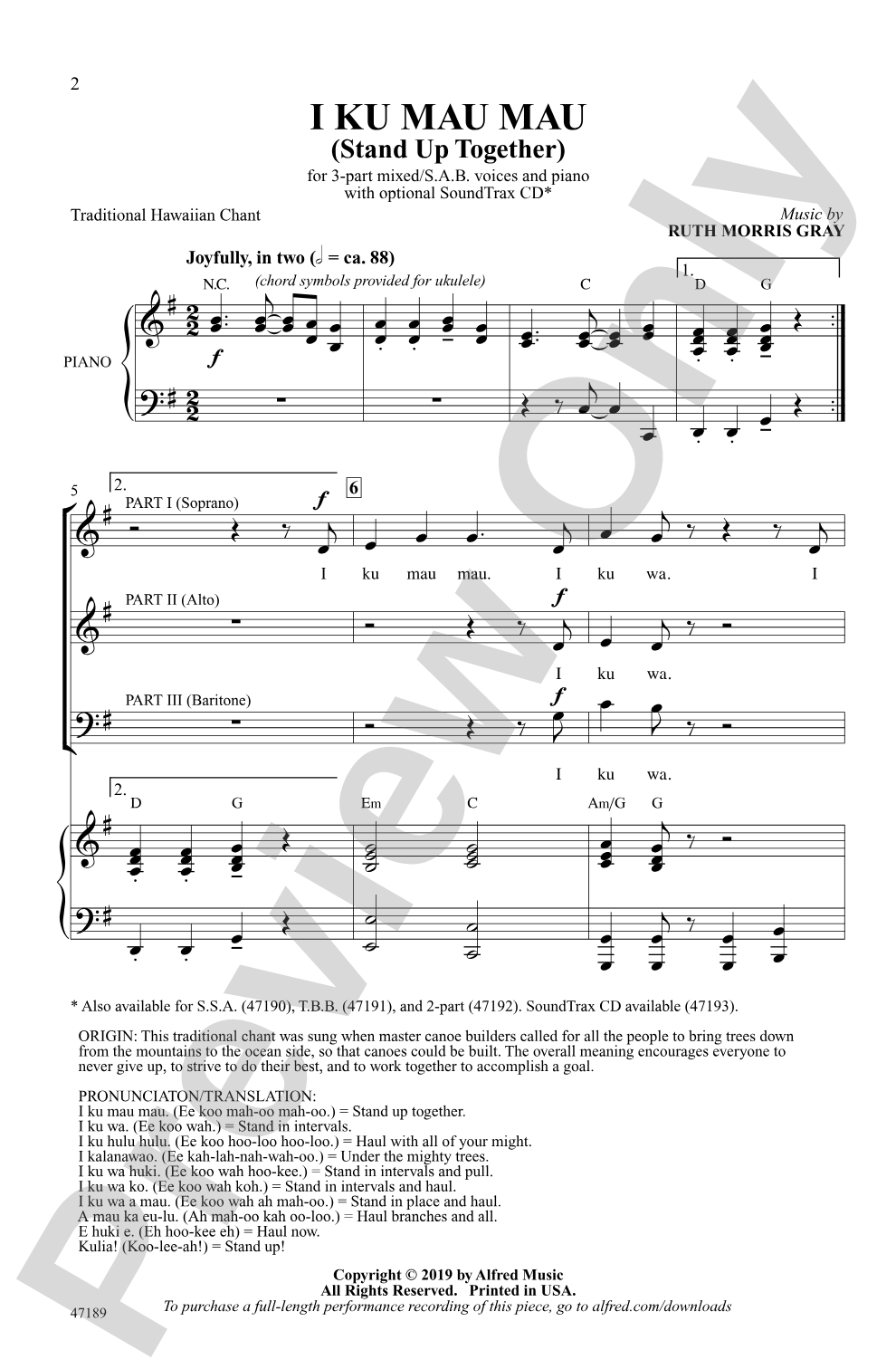
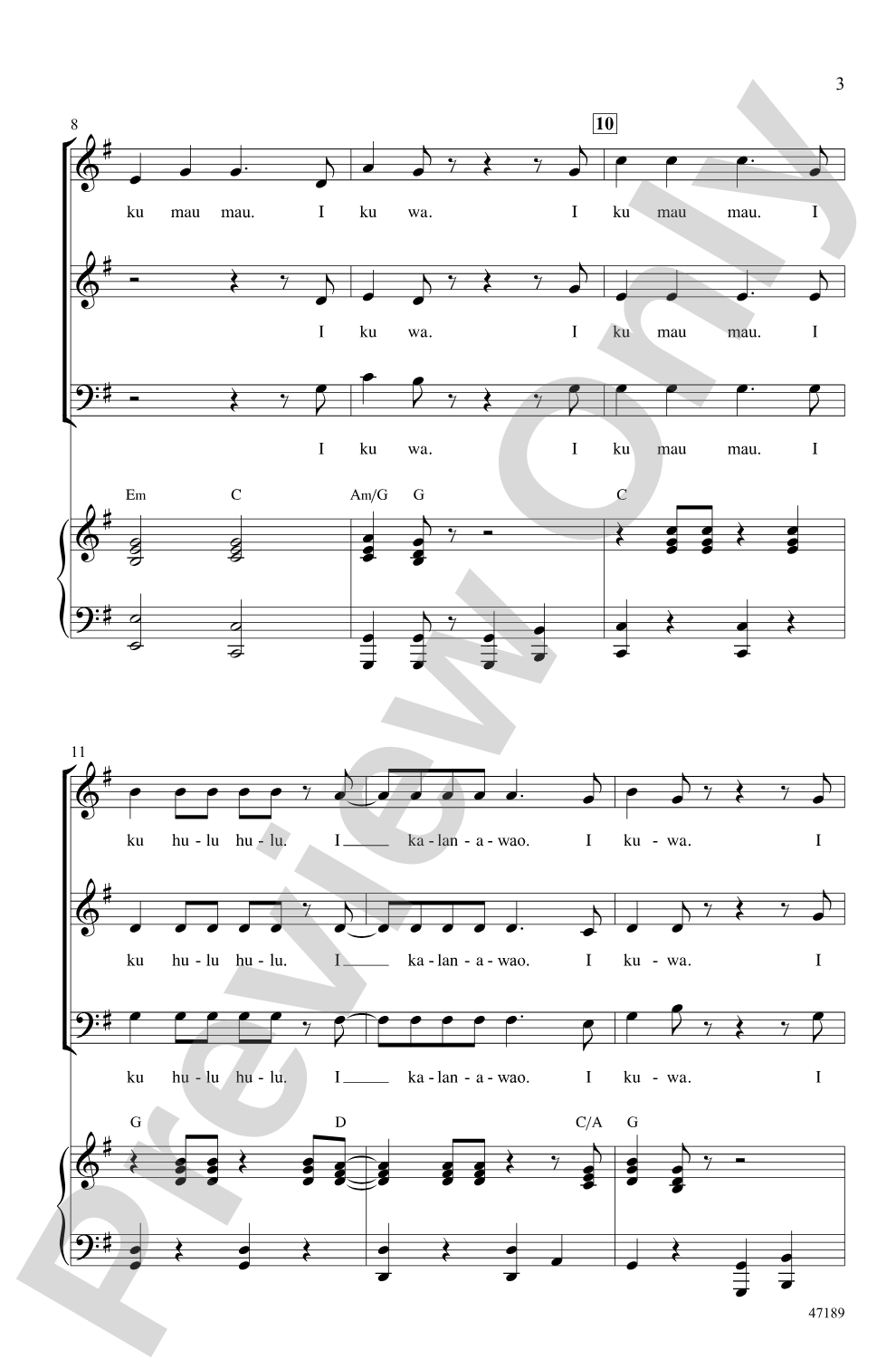
This traditional Hawaiian chant was used when master canoe builders called for people to bring trees down from the mountains to the ocean side so that canoes could be built. Now set to music, the words teach us to stand up together and work as a team. An upbeat hook, a spoken word section, and a contrasting countermelody combine at the end to create the ultimate multicultural experience. Download the digital ChoreoTrax for even more fun!


I Ku Mau Mau: 3-Part Mixed/SAB Choral Octavo isn't in MakeMusic Cloud just yet...but it could be. Let us know you'd like to see it, and you'll help shape what comes next. In the meantime, start a free trial and dive into thousands of interactive titles your students can play along with today.
Request This Title
Tell us you want it.
Start Your Free Trial
Explore everything that's ready to play right now.
Sample Audio
1
Audio File
--:--
0:00
0:00
Sample Video
Additional Details
Series:
Alfred Choral Designs
Publisher:
Alfred Music
Page Count:
12
SKU:
00-PO-0005903
More about this title
About the Composer: Ruth Morris Gray

Ruth Morris Gray has directed choirs at Rosemead High School in California since 2004, where she also teaches piano. She holds a Bachelor of Music in Piano Performance and Composition from Biola University and a Master of Arts in Music Composition from UC Santa Barbara, completing her California Single Subject Music Credential at Cal State Northridge.
With over 100 published choral compositions to her name, Gray brings both compositional depth and classroom experience to her work. Beyond music, she is an avid traveler, swimmer, and e-bike enthusiast who shares her passion for exploration with her husband, Douglas.
Why we love this
This piece hits the sweet spot between authentic cultural content and genuine fun in the rehearsal room. The combination of an infectious hook, spoken word section, and countermelody gives students multiple entry points into the material while the teamwork message lands naturally through both text and musical structure. Directors will appreciate how the movement and staging elements transform a three-part piece into something that energizes an entire concert.
What to expect
This arrangement pulses with purpose and movement. The traditional chant gains new life through a contemporary rhythmic hook and layered textures, creating moments of spirited unity alongside spaces for reflection and contrast. The spoken word section grounds the piece in its cultural roots while the final combination of melody, countermelody, and hook generates the kind of joyful momentum that resonates long after the last note.
Who it's for
Choirs with mixed or SAB voicing at the middle school, high school, or adult community level will find this piece accessible and immediately engaging. It works especially well for directors seeking repertoire that honors Hawaiian culture while building ensemble unity through a message of collective action.
How to get the most out of it
- Balance the spoken word section so the text lands clearly without overshadowing the singers who continue underneath; rehearse the rhythmic precision needed for that moment separately.
- Layer the countermelody gradually in rehearsals, introducing it only after the main melody and hook are solid, then blend them in sectional and full-group settings.
- Commit to the staging from early rehearsals; the movement is integral to the piece's energy, not an afterthought, so blocking decisions shape how singers phrase and project.
- Use the recorded accompaniment to lock the groove of the hook, which drives the entire performance and sets the upbeat character throughout.
How to use it
Program this as a concert highlight that energizes an entire set, particularly in multicultural or spring concert contexts where audience engagement matters. It pairs well alongside other world music selections and works beautifully as a finale or penultimate number that invites movement and audience connection. The piece also serves curricularly when exploring Hawaiian traditions, collective work themes, or world music in music history or ensemble studies.
Skills your students will build
- Singing in three-part SAB voicing with independent melodic lines
- Rhythmic precision in syncopated, hook-driven figures
- Layering and blending multiple melodic ideas simultaneously
- Spoken word integration and projection in a choral context
- Physical ensemble movement coordinated with singing
- Connecting cultural tradition to contemporary musical arrangement