
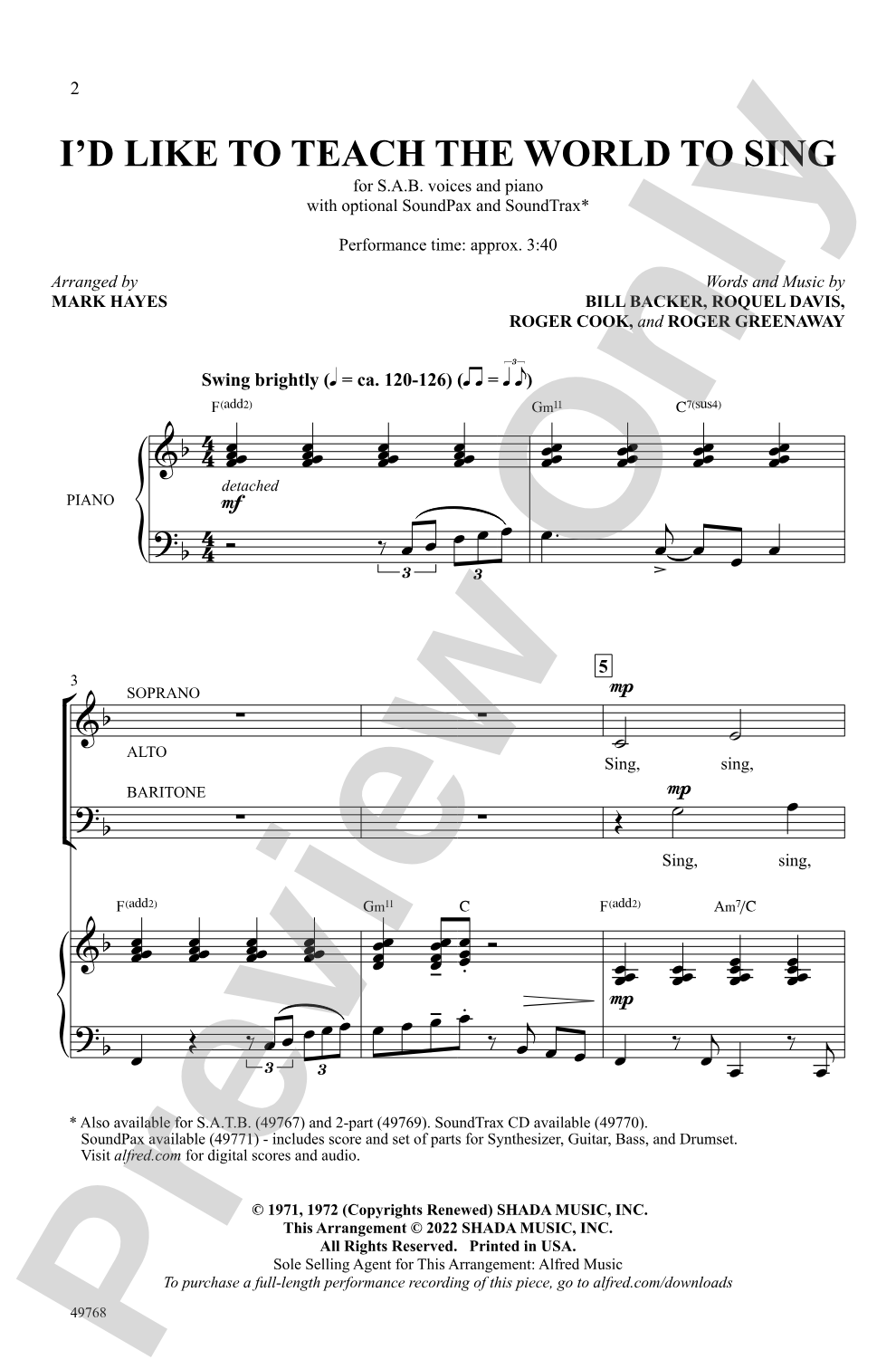

I'd Like to Teach the World to Sing: SAB Choral Octavo
Words and music by Bill Backer, Roquel Davis, Roger Cook, and Roger Greenaway / arr. Mark Hayes
Item: 00-PO-0006950
$2.25
Minimum order quantity: 20 copies
One moment…
Related Items
I'd Like to Teach the World to Sing: SoundTrax Digital Audio Download |
$29.99
|
View | |
I'd Like to Teach the World to Sing: SATB Choral Octavo |
$2.25
|
View | |
I'd Like to Teach the World to Sing: 2-Part Choral Octavo |
$2.25
|
View | |
I'd Like to Teach the World to Sing: Choral SoundPax |
$20.00
|
View | |
I'd Like to Teach the World to Sing: SATB Choral Octavo |
$2.25
|
View | |
I'd Like to Teach the World to Sing: SAB Choral Octavo |
$2.25
|
View | |
I'd Like to Teach the World to Sing: 2-Part Choral Octavo |
$2.25
|
View | |
I'd Like to Teach the World to Sing: Choral Octavo SoundTrax CD |
$29.99
|
View | |
I'd Like to Teach the World to Sing: Choral SoundPax |
$20.00
|
View |
Description
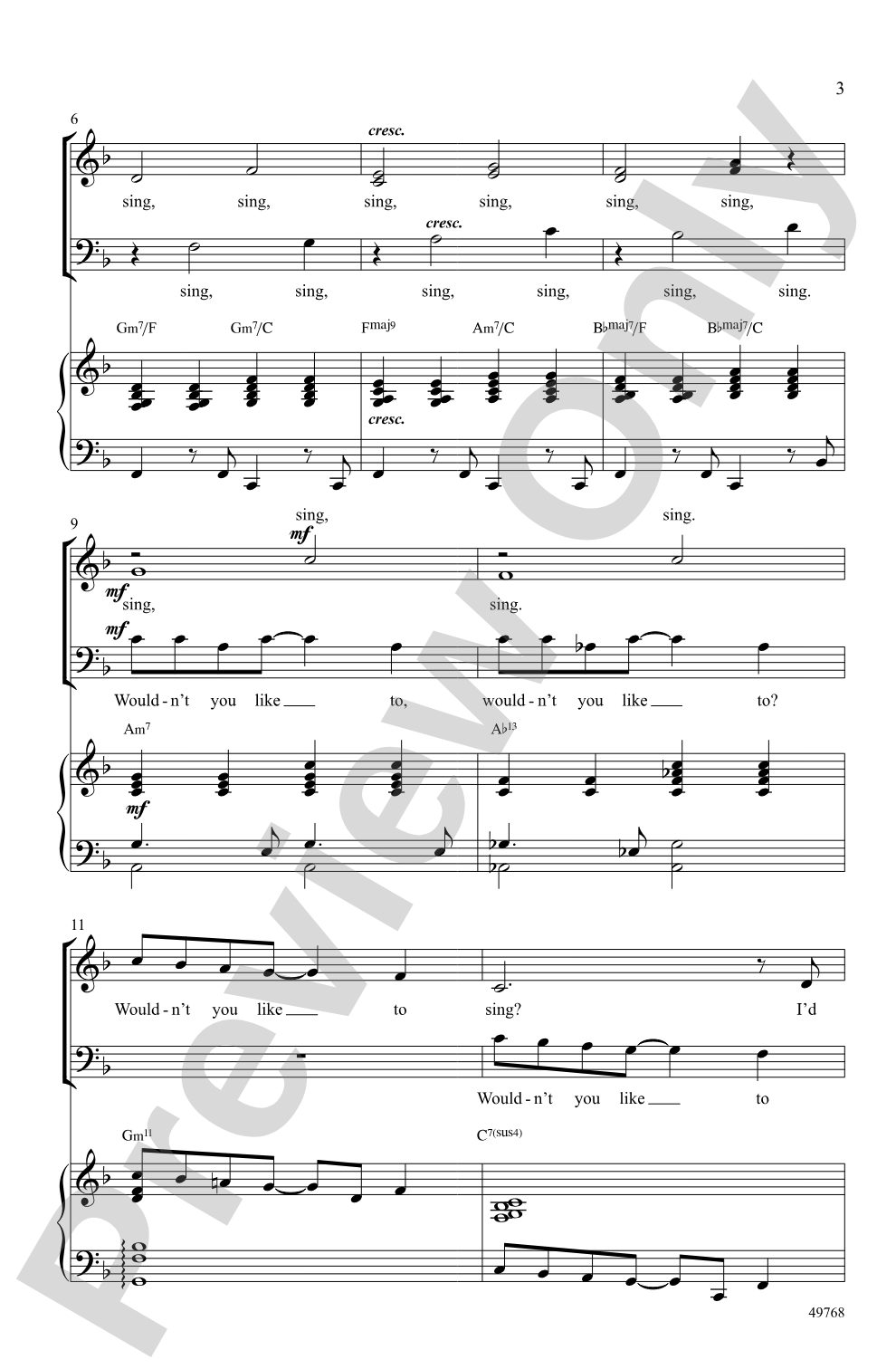
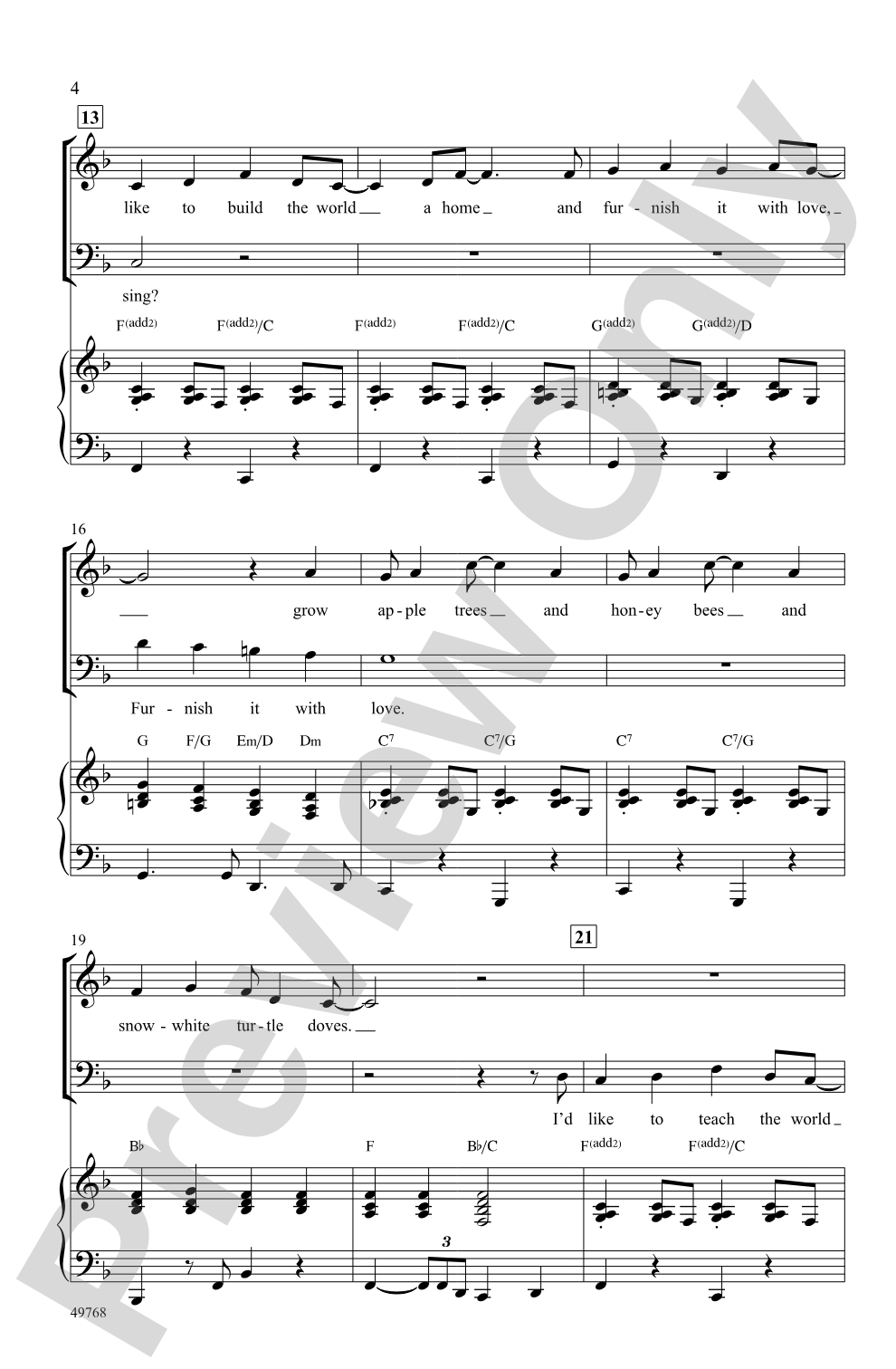
A blast from the past with a message built to last! This song of hope and love originated as the 1970s Coca-Cola jingle, considered one of the best-loved and most influential ads in TV history. It's a catchy anthem with a rock-side-to-side hook, a bubbly tune, and a few delightful counterlines. Universal themes of music and world harmony fit well on many programs---school, community, winter, spring, pop, pyramid, and more. SoundTrax and SoundPax accompaniment options are available.


I'd Like to Teach the World to Sing: SAB Choral Octavo isn't in MakeMusic Cloud just yet...but it could be. Let us know you'd like to see it, and you'll help shape what comes next. In the meantime, start a free trial and dive into thousands of interactive titles your students can play along with today.
Request This Title
Tell us you want it.
Start Your Free Trial
Explore everything that's ready to play right now.
Sample Audio
1
Audio File
--:--
0:00
0:00
Sample Video
1 / 2
Additional Details
Series:
Alfred Pop Choral Series
Publisher:
Alfred Music
Page Count:
16
SKU:
00-PO-0006950
More about this title
About the Composer: Bill Backer
Bill Backer co-wrote one of the most recognizable songs in advertising history. His work on the 1971 Coca-Cola campaign "I'd Like to Teach the World to Sing" reached millions of viewers and became a genuine cultural touchstone, demonstrating how popular songwriting could carry genuine emotional weight alongside commercial success.
Backer's ability to craft memorable melodies with universal appeal made him a significant figure in pop songwriting. The enduring popularity of this piece in educational and community settings speaks to the accessibility and sincerity embedded in his compositional approach.
Why we love this
Mark Hayes's arrangement captures the infectious optimism of the original while giving SAB singers a genuinely singable setting that doesn't sacrifice the song's character. The counterlines add texture without overwhelming younger or less experienced ensembles, and the rock-influenced rhythmic foundation keeps energy high while the message of unity and harmony remains front and center. Most importantly, audiences respond instantly to this title; it lands with genuine warmth regardless of whether they remember the 1970s or discover it for the first time.
What to expect
Bright and hopeful, with an irresistible rhythmic bounce that feels contemporary despite its 1970s origin. The arrangement strikes a balance between pop accessibility and choral substance, delivering a message of unity that feels earned rather than saccharine.
Who it's for
School choirs and community ensembles at intermediate level and beyond will find this accessible and rewarding. The SAB voicing works for mixed choirs without extensive soprano section depth, making it ideal for diverse community settings or middle school programs building toward more complex repertoire.
How to get the most out of it
- Lock the groove in the rhythm section early in rehearsal. The side-to-side rock feel is what makes this arrangement sparkle, so give your accompaniment players (or the recorded track) clear ownership of the pocket before layering in voice parts.
- Balance the counterlines carefully so they enhance rather than compete with the main melody. These lines should sit just behind the moment; spotlight the primary tune during verses and let supportive lines breathe during key sections.
- Lean into the bubbly, conversational tone. This isn't a heavy anthem; it's an invitation. Encourage singers to phrase naturally and let the optimism show through crisp articulation and genuine expression rather than dramatic intensity.
- Use the recorded accompaniment (SoundTrax or SoundPax) as a reference for tempo and style early on, then gradually build independence so singers feel the groove rather than follow it.
How to use it
This works beautifully as a feel-good anchor for spring or end-of-year concerts, or as a bridge between classical and pop repertoire that broadens your program's appeal. It also pairs well on benefit concerts or community programs where messages of togetherness matter, and its recognizable hook makes it an excellent choice for audience engagement or pyramid-style massed performances.
Skills your students will build
- Rock rhythm patterns and groove-based phrasing
- Balancing independent voice parts while maintaining ensemble cohesion
- Stylistic contrast between melody and counterline textures
- Sight-reading in SAB voicing with rhythmic complexity