
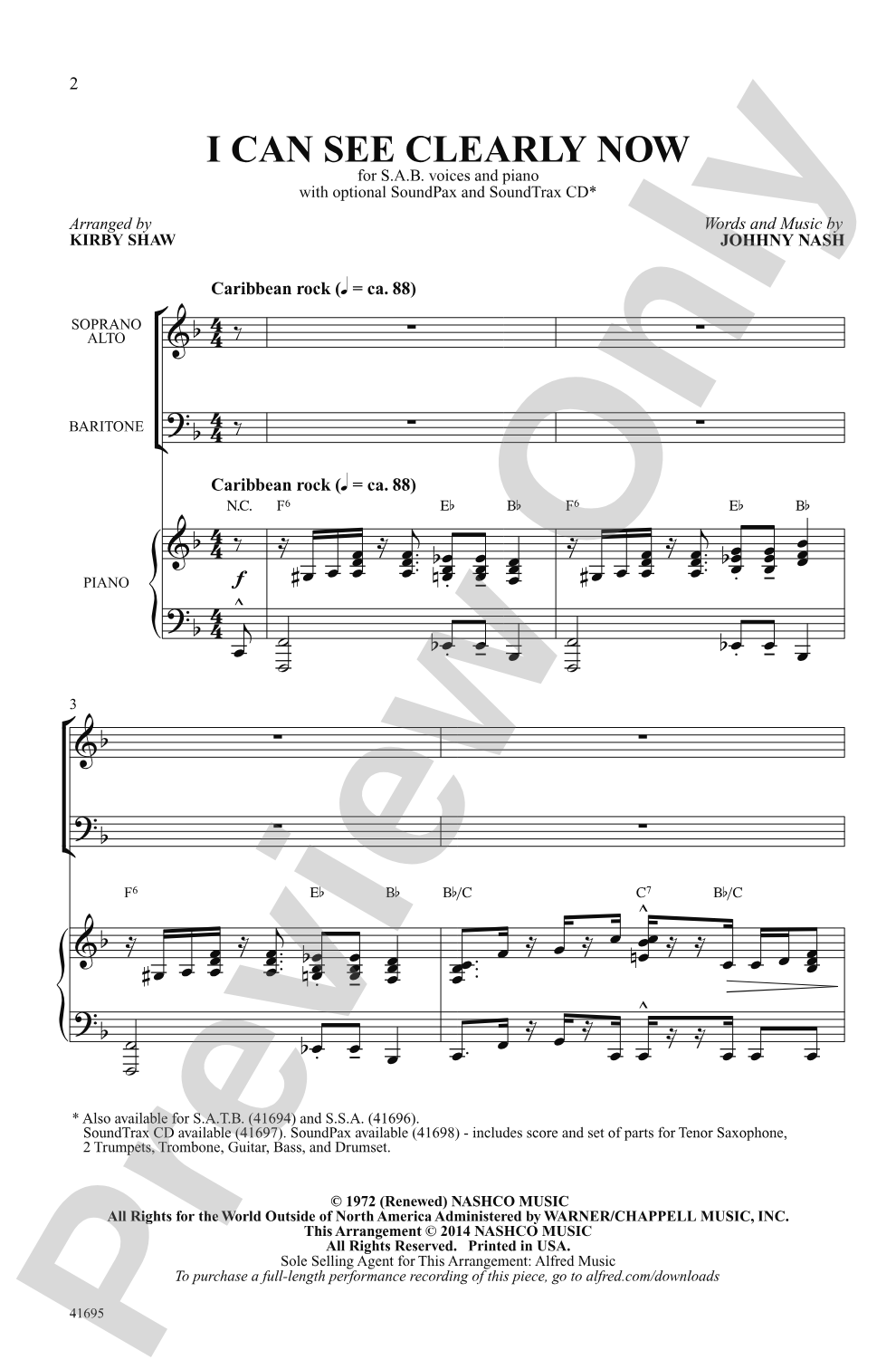

I Can See Clearly Now: SAB Choral Octavo
Words and music by Johnny Nash / arr. Kirby Shaw
Item: 00-PO-0001936
$1.95
Minimum order quantity: 20 copies
One moment…
Related Items
I Can See Clearly Now: SoundTrax Digital Audio Download |
$27.99
|
View | |
I Can See Clearly Now: SATB Choral Octavo |
$1.95
|
View | |
I Can See Clearly Now: SSA Choral Octavo |
$1.95
|
View | |
I Can See Clearly Now: SATB Choral Octavo |
$1.95
|
View | |
I Can See Clearly Now: SAB Choral Octavo |
$1.95
|
View | |
I Can See Clearly Now: SSA Choral Octavo |
$1.95
|
View |
Description
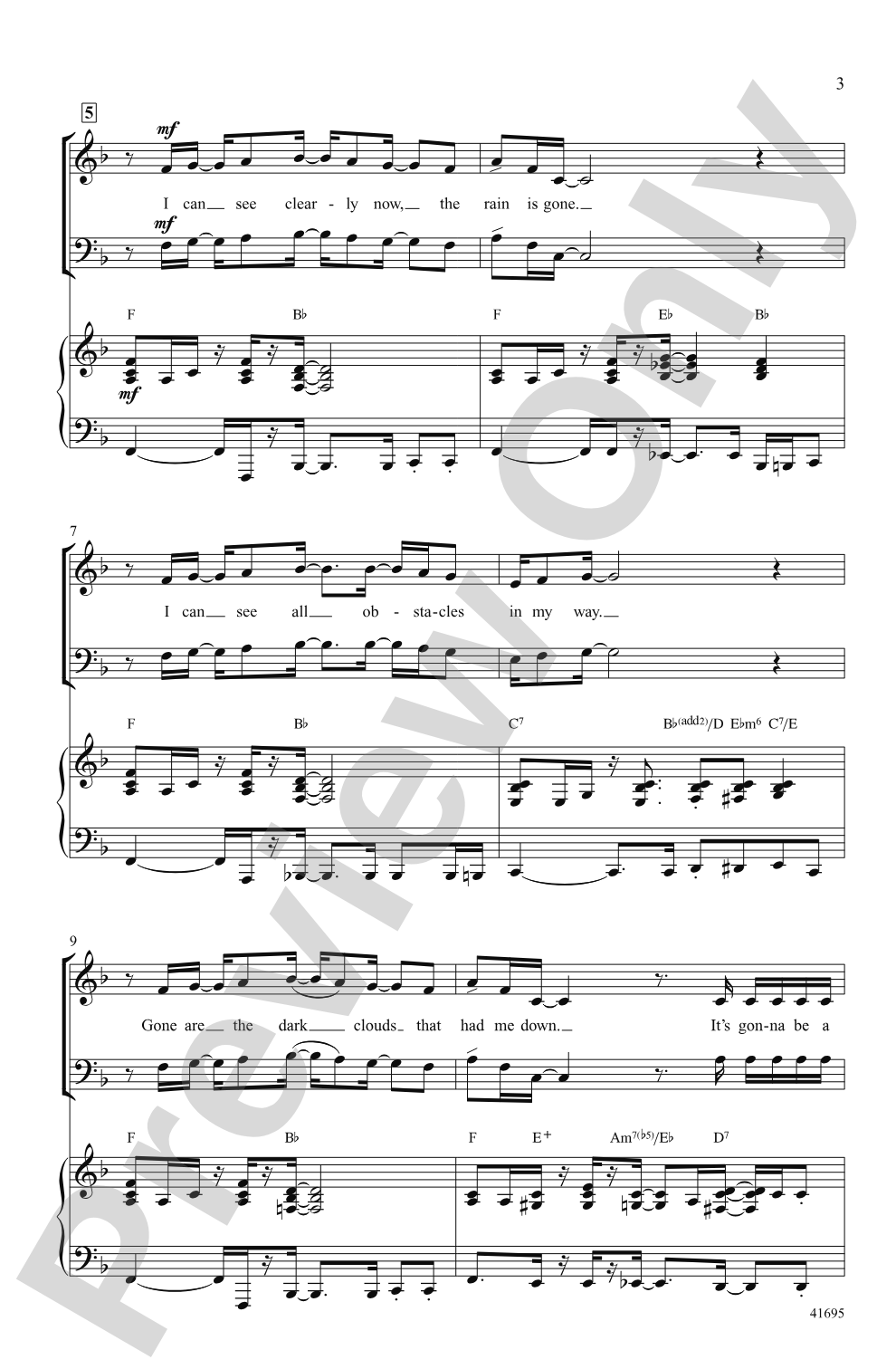
Hot horns and syncopated vocals drive this rhythmic arrangement of the Billboard number one hit. Kirby's signature vocal stack shines a spotlight on every section of your ensemble. "It's gonna be a bright, bright sunshiny day!"


I Can See Clearly Now: SAB Choral Octavo isn't in MakeMusic Cloud just yet...but it could be. Let us know you'd like to see it, and you'll help shape what comes next. In the meantime, start a free trial and dive into thousands of interactive titles your students can play along with today.
Request This Title
Tell us you want it.
Start Your Free Trial
Explore everything that's ready to play right now.
Sample Audio
1
Audio File
--:--
0:00
0:00
Sample Video
No sample videos found.
Additional Details
Series:
Alfred Pop Choral Series
Publisher:
Alfred Music
Page Count:
12
SKU:
00-PO-0001936
More about this title
About the Composer: Johnny Nash
Johnny Nash rose to international prominence in the early 1970s with his laid-back reggae-influenced pop sound. Born in Houston, Texas, he became known for his smooth vocal delivery and his ability to bridge reggae and mainstream pop audiences during a pivotal moment in music history. "I Can See Clearly Now" became his signature song and remains one of the defining hits of the decade, showcasing his gift for crafting uplifting, accessible melodies that resonate across generations.
Beyond his work as a performer, Nash demonstrated an ear for song construction that has made his compositions enduring staples in choral and educational settings. His contributions to popular music helped establish reggae's place in the American mainstream, and his songs continue to inspire arrangements across multiple musical contexts.
Why we love this
Kirby Shaw's arrangement captures the infectious energy of this chart-topper while making it genuinely singable for developing choirs. The vocal stacking creates transparency without sacrificing impact, and the syncopated rhythms give your singers something to lock into that feels contemporary and fun rather than dated. Programming this piece guarantees audience recognition and student enthusiasm in equal measure.
What to expect
Bright and optimistic, with a groove that sits somewhere between 1970s soul and contemporary pop. The syncopated rhythms give the piece forward momentum and swagger, while Nash's original melody remains warm and singable. This is music that makes both singers and audiences smile from the opening downbeat.
Who it's for
This arrangement works for developing choirs, community ensembles, and middle school groups looking for contemporary pop literature with real substance. SAB voicing makes it accessible while the rhythmic sophistication keeps singers engaged, and the recorded accompaniment removes the need for a separate pianist or band. Directors seeking repertoire that balances accessibility with actual musical challenge will find this particularly useful.
How to get the most out of it
- Shape the syncopated vocal lines as if they're rhythmic instruments; precision with the offbeats matters more than vibrato here.
- Let the recorded accompaniment's horn section define the groove, then have your singers sit slightly behind the beat to achieve that relaxed, confident pocket.
- Balance the vocal stacks so each part remains audible; avoid the temptation to let sopranos dominate the ensemble sound.
- Mark breath points carefully in the syncopated passages to avoid mid-phrase gasps that break the rhythmic flow.
How to use it
Program this as a spring or end-of-year concert closer; the triumphant, feel-good message and audience recognition make it an ideal final statement. It also works beautifully in a pop/contemporary set alongside other vernacular music, or as a morale-booster during festival or competition preparation. The recorded accompaniment makes it practical for concert contexts where instrumental support isn't available.
Skills your students will build
- Reading and executing syncopated rhythms in a pop context
- Maintaining ensemble cohesion while singing layered vocal parts
- Intonation in close harmonies (vocal stacks)
- Rhythmic independence from the accompaniment while locked into the groove