
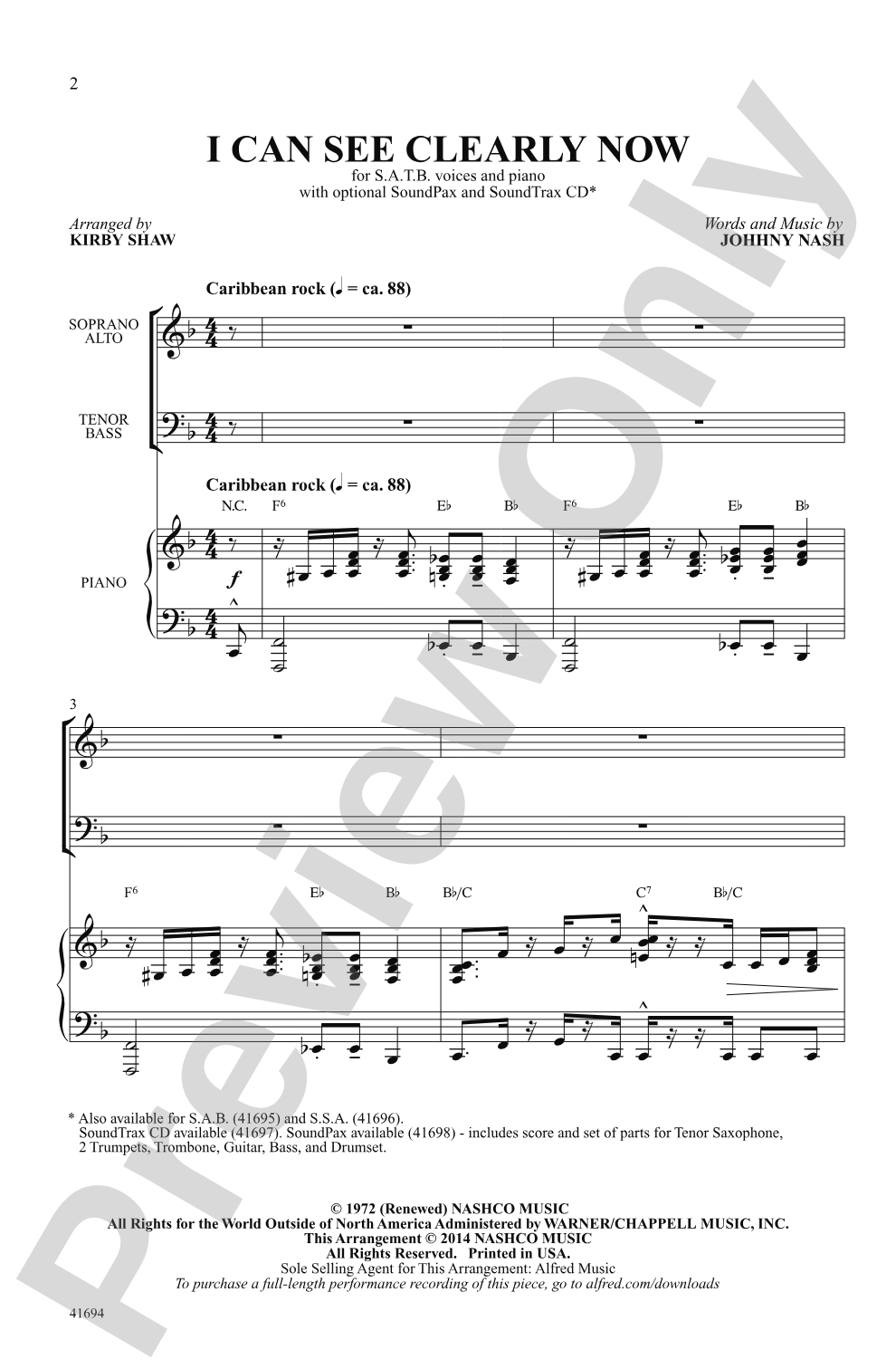

I Can See Clearly Now: SATB Choral Octavo
Words and music by Johnny Nash / arr. Kirby Shaw
Item: 00-PO-0001935
$1.95
Minimum order quantity: 20 copies
One moment…
Related Items
I Can See Clearly Now: SoundTrax Digital Audio Download |
$27.99
|
View | |
I Can See Clearly Now: SAB Choral Octavo |
$1.95
|
View | |
I Can See Clearly Now: SSA Choral Octavo |
$1.95
|
View | |
I Can See Clearly Now: SATB Choral Octavo |
$1.95
|
View | |
I Can See Clearly Now: SAB Choral Octavo |
$1.95
|
View | |
I Can See Clearly Now: SSA Choral Octavo |
$1.95
|
View |
Description
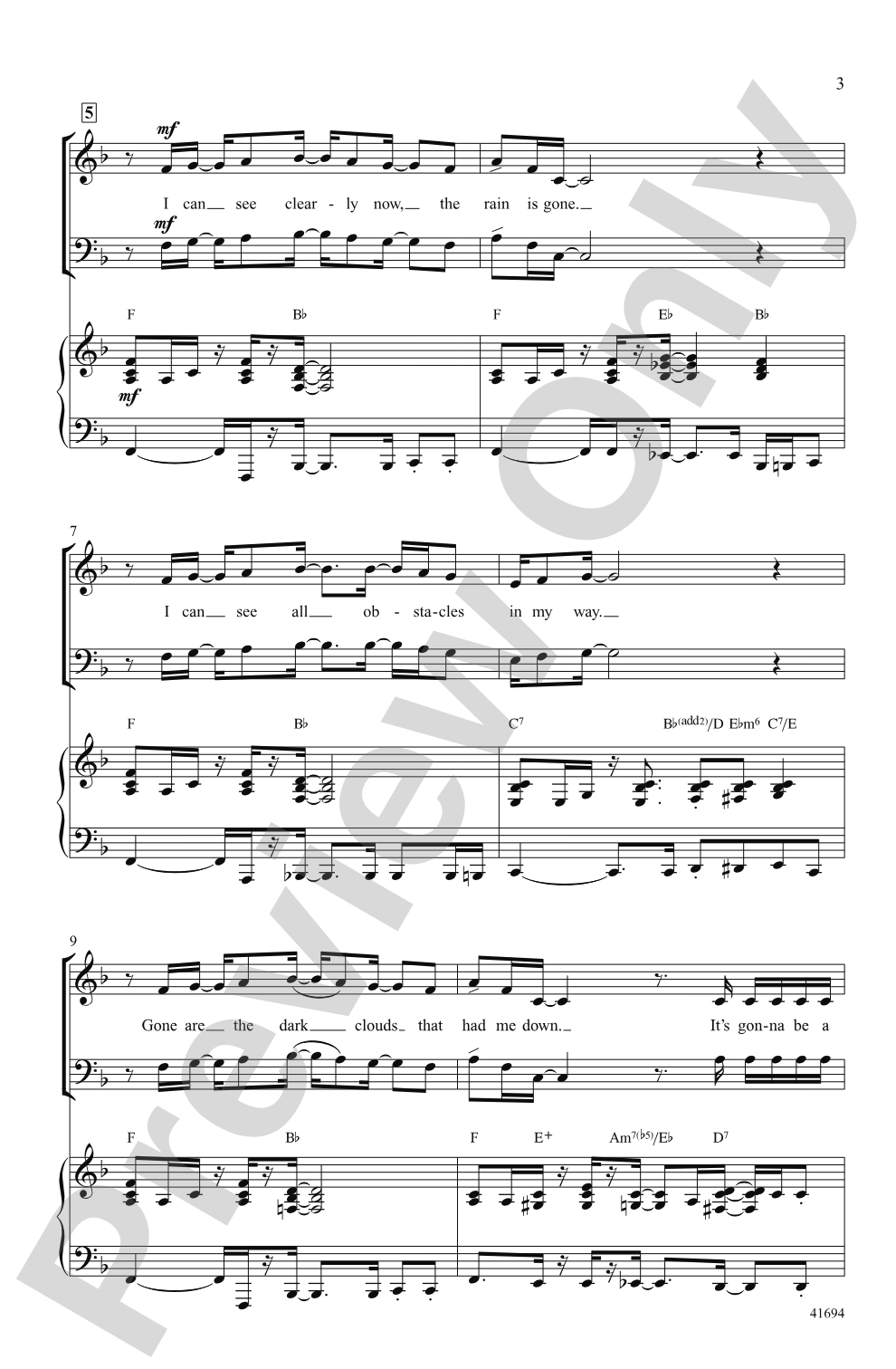
Hot horns and syncopated vocals drive this rhythmic arrangement of the Billboard number one hit. Kirby's signature vocal stack shines a spotlight on every section of your ensemble. "It's gonna be a bright, bright sunshiny day!"


I Can See Clearly Now: SATB Choral Octavo isn't in MakeMusic Cloud just yet...but it could be. Let us know you'd like to see it, and you'll help shape what comes next. In the meantime, start a free trial and dive into thousands of interactive titles your students can play along with today.
Request This Title
Tell us you want it.
Start Your Free Trial
Explore everything that's ready to play right now.
Sample Audio
1
Audio File
--:--
0:00
0:00
Sample Video
No sample videos found.
Additional Details
Series:
Alfred Pop Choral Series
Publisher:
Alfred Music
Page Count:
12
SKU:
00-PO-0001935
More about this title
About the Composer: Johnny Nash
Johnny Nash emerged as a distinctive voice in 1970s popular music, blending reggae influences with soul and pop sensibilities at a moment when mainstream radio was just beginning to embrace the genre. His 1972 hit "I Can See Clearly Now" became an enduring standard, reaching number one on the Billboard Hot 100 and showcasing his ability to craft songs with both infectious groove and genuine emotional warmth. Nash's work bridged musical worlds and demonstrated that accessible, feel-good songwriting could also carry depth and authenticity.
Why we love this
Kirby Shaw's arrangement captures the infectious energy of the original while tailoring the energy specifically for SATB voices. The syncopated vocal writing and hot horn textures give every section meaningful musical material rather than relegating anyone to filler parts. Your singers will love performing something they actually know and hear on the radio, and audiences respond immediately to this one.
What to expect
Sunlight and forward motion. The arrangement radiates optimism without veering into saccharine territory, driven by propulsive rhythms and the kind of horn colors that make you want to move. There's a built-in energy that feels effortless once your singers internalize the syncopation; the piece practically conducts itself once it's learned.
Who it's for
This arrangement works for intermediate to advanced high school choirs, college chamber choirs, and community ensembles with solid rhythm section skills. You need singers who can handle syncopated lines with precision and ensemble singers who won't get lost when the parts layer. It's equally suited to show choirs looking for a polished pop number or standard choral programs seeking contemporary repertoire with immediate appeal.
How to get the most out of it
- Nail the rhythmic precision in the vocal stack passages. The syncopation only lands when your parts lock together, so isolate those sections early and rehearse them without the recorded accompaniment to build ensemble awareness.
- Let the dynamic contrast between verse and refrain drive the arrangement. The "bright, bright sunshiny day" moments should feel like a real lift, which means the verse needs restraint and clarity to set them up.
- Balance the prominence of each voice part as they move through the vocal stack. Each section gets its spotlight, so make sure sopranos, altos, tenors, and basses each project their lines with confidence when they're featured.
How to use it
Program this as a second-half opener to lift the energy after a slower or more serious piece, or use it as your concert closer if you want audiences leaving with immediate joy. It pairs well with other contemporary pop arrangements or sits comfortably between lighter classical offerings and more substantive choral works. The 12-page length and recognizable melody make it accessible for concert season or festival programming.
Skills your students will build
- Reading and performing syncopated rhythmic lines with ensemble precision
- Layering vocal parts (stacked harmonies) while maintaining individual line clarity
- Responding to recorded accompaniment with rhythmic accuracy
- Balancing ensemble tone across four voice parts with contrasting rhythmic duties