
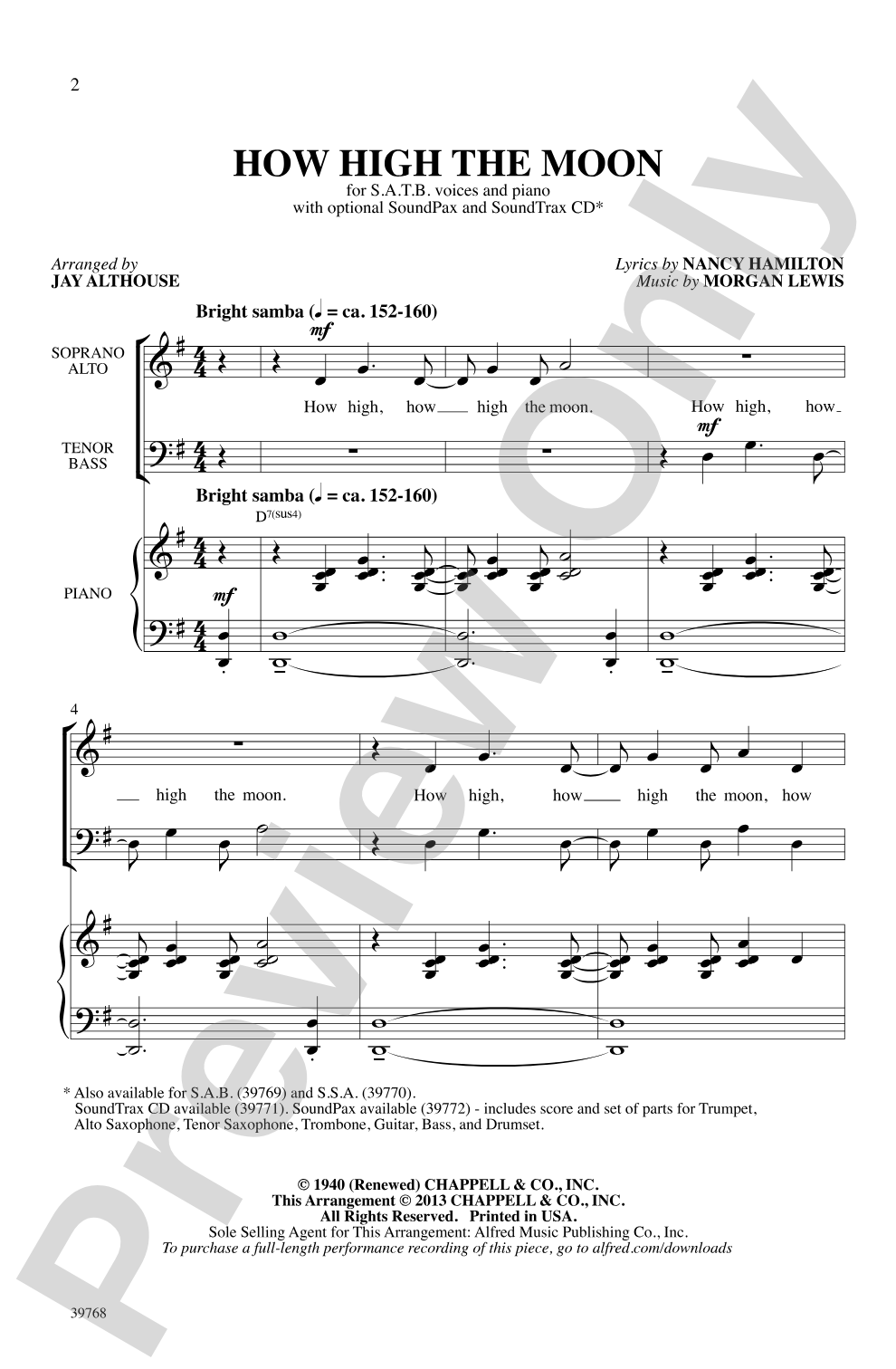
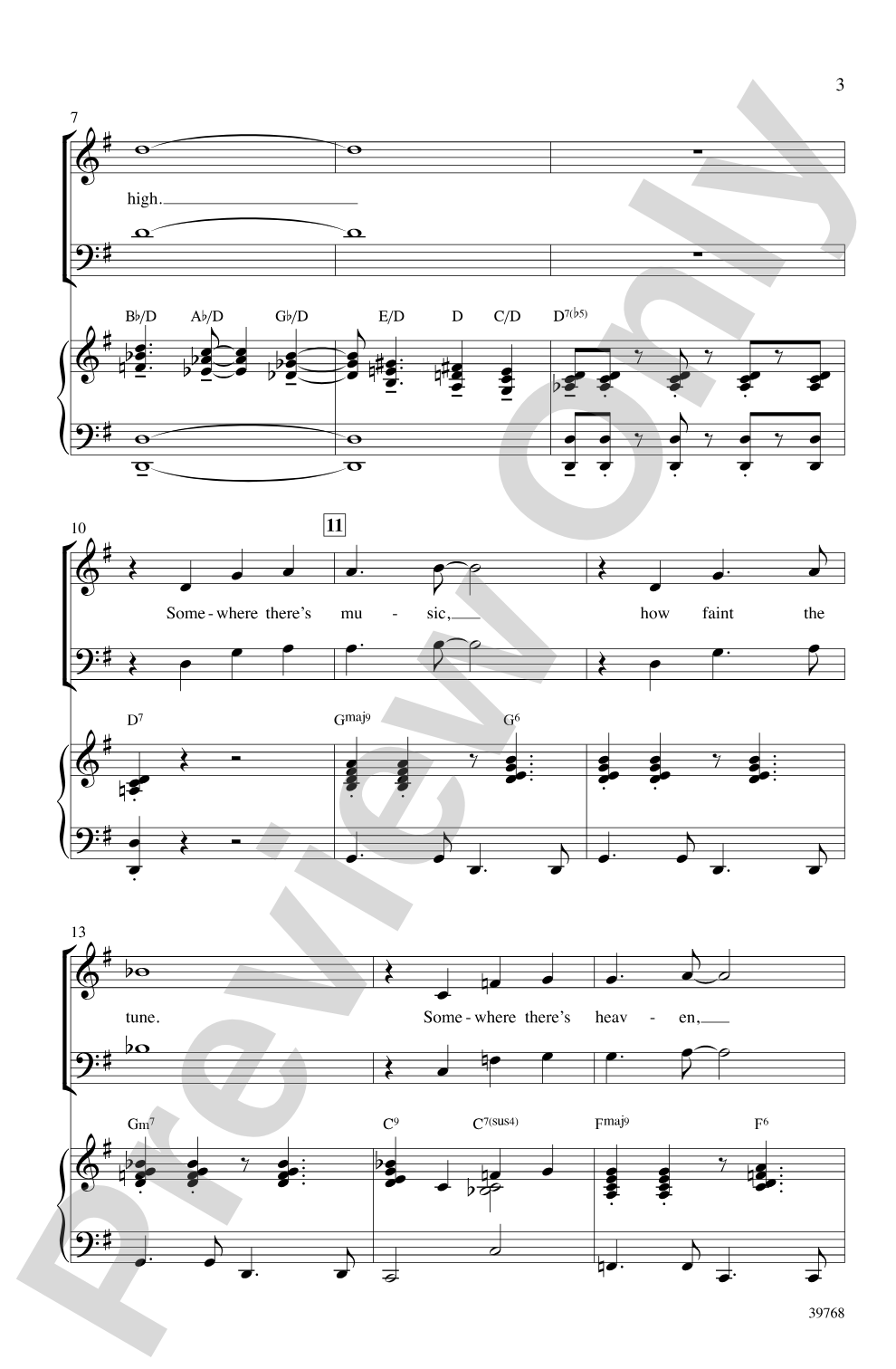

How High the Moon: SATB Choral Octavo
Lyrics by Nancy Hamilton, music by Morgan Lewis / arr. Jay Althouse
Item: 00-PO-0002368
$2.10
Minimum order quantity: 20 copies
One moment…
Related Items
How High the Moon: SoundTrax Digital Audio Download |
$27.99
|
View | |
How High the Moon: SAB Choral Octavo |
$1.90
|
View | |
How High the Moon: SSA Choral Octavo |
$1.90
|
View | |
How High the Moon: Choral SoundPax |
$35.00
|
View | |
How High the Moon: SATB Choral Octavo |
$2.10
|
View | |
How High the Moon: SAB Choral Octavo |
$1.90
|
View | |
How High the Moon: SSA Choral Octavo |
$1.90
|
View | |
How High the Moon: Choral Octavo SoundTrax CD |
$27.99
|
View | |
How High the Moon: Choral SoundPax |
$35.00
|
View |
Description
A multitude of artists have recorded this iconic jazz tune, presented here in a fresh, samba style with tight harmonies and a stellar scat section.


How High the Moon: SATB Choral Octavo isn't in MakeMusic Cloud just yet...but it could be. Let us know you'd like to see it, and you'll help shape what comes next. In the meantime, start a free trial and dive into thousands of interactive titles your students can play along with today.
Request This Title
Tell us you want it.
Start Your Free Trial
Explore everything that's ready to play right now.
Sample Audio
1
Audio File
--:--
0:00
0:00
Sample Video
No sample videos found.
Additional Details
Series:
Alfred Pop Choral Series
Publisher:
Alfred Music
Page Count:
12
SKU:
00-PO-0002368
More about this title
About the Composer: Morgan Lewis
Morgan Lewis (1906-1968) composed some of the most enduring American popular songs of the swing era. His gift for memorable melody and sophisticated harmonic language made him a sought-after composer for film and stage throughout the 1940s and 1950s. "How High the Moon," written with lyricist Nancy Hamilton for the 1940 Broadway musical "Two for the Show," became a jazz standard almost immediately and remains one of the most recorded songs in American popular music.
Why we love this
Jay Althouse's samba reimagining brings genuine rhythmic energy and contemporary flair to a jazz evergreen, transforming it from a ballad into a groove-driven celebration without losing the harmonic sophistication that made the original a standard. The scat section gives your ensemble a chance to swing with personality, and the tight SATB writing creates the kind of blend that makes your choir sound polished and professional.
What to expect
Energetic and celebratory, with the warm, syncopated lift of samba underneath a melody that swings naturally. The tight harmonies create moments of lush blend, while the scat section breaks into playful, rhythmic independence that feels both fun and sophisticated.
Who it's for
Choirs seeking accessible, high-energy jazz arrangements that work equally well in concert or community settings. The SATB voicing is flexible enough for advanced high school ensembles and college choirs, while the straightforward part writing and recorded accompaniment make it manageable for community and adult choirs with solid musicianship.
How to get the most out of it
- Lock the samba groove early in rehearsal by having the section leaders establish the rhythmic feel independently before bringing it to the full choir; this prevents the ensemble from rushing or dragging the Latin pulse.
- Address the scat section with articulation precision. These passages need crisp, unified diction to cut through the groove and land with the impact Lewis's melody deserves.
- Balance the recorded accompaniment so it supports rather than masks your singers. The rhythm section is thick enough that you'll need clear dynamics in your parts to maintain textural clarity.
- Mark the harmonic transitions between phrases in pencil during early rehearsals so singers can anticipate voice leading changes without losing the groove.
How to use it
Program this as a concert centerpiece that bridges jazz and pop contexts, or pair it alongside other standards in a pops or cabaret-style concert where the samba arrangement becomes a stylistic statement. It's also a strong mid-set energy boost that audiences recognize immediately, making it useful for building momentum in longer programs.
Skills your students will build
- singing in syncopated jazz rhythms with accuracy
- blending tight SATB harmonies at fast tempos
- articulation and diction for scat singing
- maintaining Latin rhythmic groove while singing sustained phrases
- balancing individual voice independence with ensemble blend