

How High the Moon: SSA Choral Octavo
Lyrics by Nancy Hamilton, music by Morgan Lewis / arr. Jay Althouse
Item: 00-PO-0001595
$1.90
Minimum order quantity: 20 copies
One moment…
Related Items
How High the Moon: SoundTrax Digital Audio Download |
$27.99
|
View | |
How High the Moon: SATB Choral Octavo |
$2.10
|
View | |
How High the Moon: SAB Choral Octavo |
$1.90
|
View | |
How High the Moon: Choral SoundPax |
$35.00
|
View | |
How High the Moon: SATB Choral Octavo |
$2.10
|
View | |
How High the Moon: SAB Choral Octavo |
$1.90
|
View | |
How High the Moon: SSA Choral Octavo |
$1.90
|
View | |
How High the Moon: Choral Octavo SoundTrax CD |
$27.99
|
View | |
How High the Moon: Choral SoundPax |
$35.00
|
View |
Description
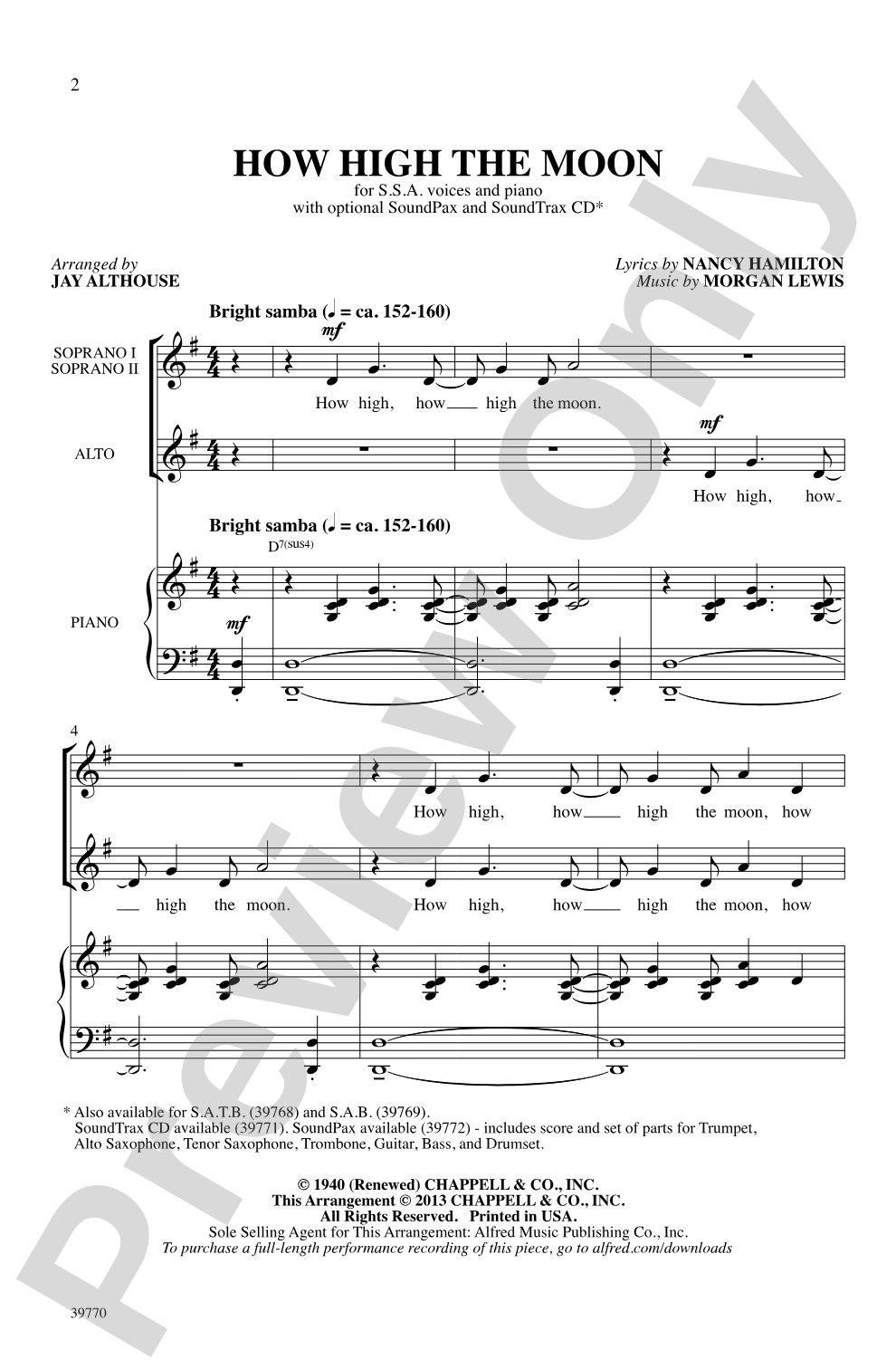
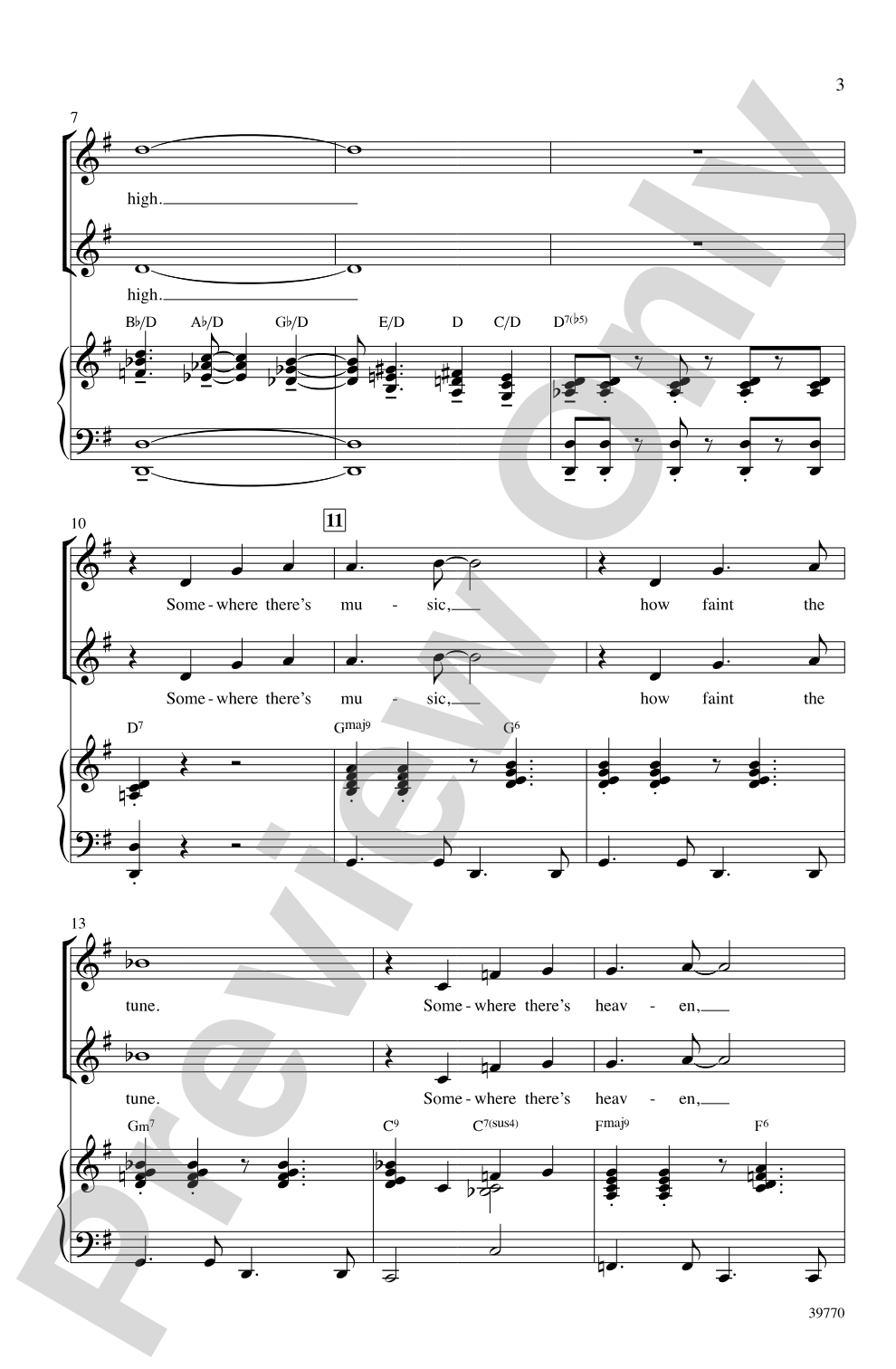
A multitude of artists have recorded this iconic jazz tune, presented here in a fresh, samba style with tight harmonies and a stellar scat section.


How High the Moon: SSA Choral Octavo isn't in MakeMusic Cloud just yet...but it could be. Let us know you'd like to see it, and you'll help shape what comes next. In the meantime, start a free trial and dive into thousands of interactive titles your students can play along with today.
Request This Title
Tell us you want it.
Start Your Free Trial
Explore everything that's ready to play right now.
Sample Audio
1
Audio File
--:--
0:00
0:00
Sample Video
No sample videos found.
Additional Details
Series:
Alfred Pop Choral Series
Publisher:
Alfred Music
Page Count:
12
SKU:
00-PO-0001595
More about this title
About the Composer: Morgan Lewis
Morgan Lewis (1906-1990) was an American composer and songwriter who created some of the most enduring standards of the American songbook. Working primarily in film and theater during Hollywood's golden age, Lewis crafted melodies that balanced sophistication with accessibility, earning him collaborations with lyricists including Alan Jay Lerner. His compositions have become foundational repertoire for jazz musicians and choral arrangers alike.
Lewis's gift for writing singable, memorable lines made his work particularly attractive to vocalists across genres. "How High the Moon," co-written with lyricist Nancy Hamilton, became a jazz standard precisely because its melody invites interpretation while remaining grounded in clear harmonic structure. For music educators, Lewis represents a bridge between pop songwriting and legitimate choral literature.
Why we love this
Jay Althouse's samba-inflected arrangement transforms a jazz standard into a rhythmically engaging choral vehicle without sacrificing the tune's iconic melody. The tight, jazz-informed harmonies sit naturally for SSA voices, and the included scat section gives singers a chance to step outside conventional choral writing and inhabit the jazz idiom directly. This is the kind of arrangement that energizes a concert program and reminds audiences why great songwriting transcends its original context.
What to expect
Warm, uplifting, and rhythmically alive. The samba arrangement brings a tropical lightness to the familiar melody while the tight harmonies create moments of sophisticated vocal blend. There's joy in the writing, particularly in the scat section, where singers get to play with the music rather than simply present it.
Who it's for
SSA choirs seeking a contemporary jazz arrangement with authentic style and pedagogical depth. This works equally well for intermediate to advanced high school choirs, college vocal ensembles, and adult community choirs comfortable with syncopated rhythms and jazz vocabulary.
How to get the most out of it
- Establish the samba groove early in rehearsals using body percussion and counting. The rhythmic precision of the Latin feel will make the tight harmonies land cleanly.
- Treat the scat section as a jazz conversation, not a technical hurdle. Encourage singers to listen to recorded interpretations of the tune by artists like Ella Fitzgerald and Carmen McRae to absorb phrasing and flexibility.
- Balance the soprano lead with harmonic support from the other voices. The arrangement's strength lies in its unified sound, so avoid letting the melody line pull away from the ensemble.
- Use the recorded accompaniment in sectional rehearsals to lock in rhythmic details, especially the syncopations that make the samba feel authentic.
How to use it
Program this as a concert centerpiece that bridges jazz and choral traditions, or pair it with other pop standards to create a thematic set. The samba styling and scat section make it especially effective on programs that celebrate diverse musical genres, and its 12-page length makes it manageable alongside larger classical works.
Skills your students will build
- Syncopated rhythm reading and performance in a Latin jazz context
- Jazz vocal technique including improvisation and scat singing
- Blend and balance in close jazz harmonies
- Stylistic interpretation of a standard jazz composition
- Rhythmic independence while maintaining ensemble cohesion