
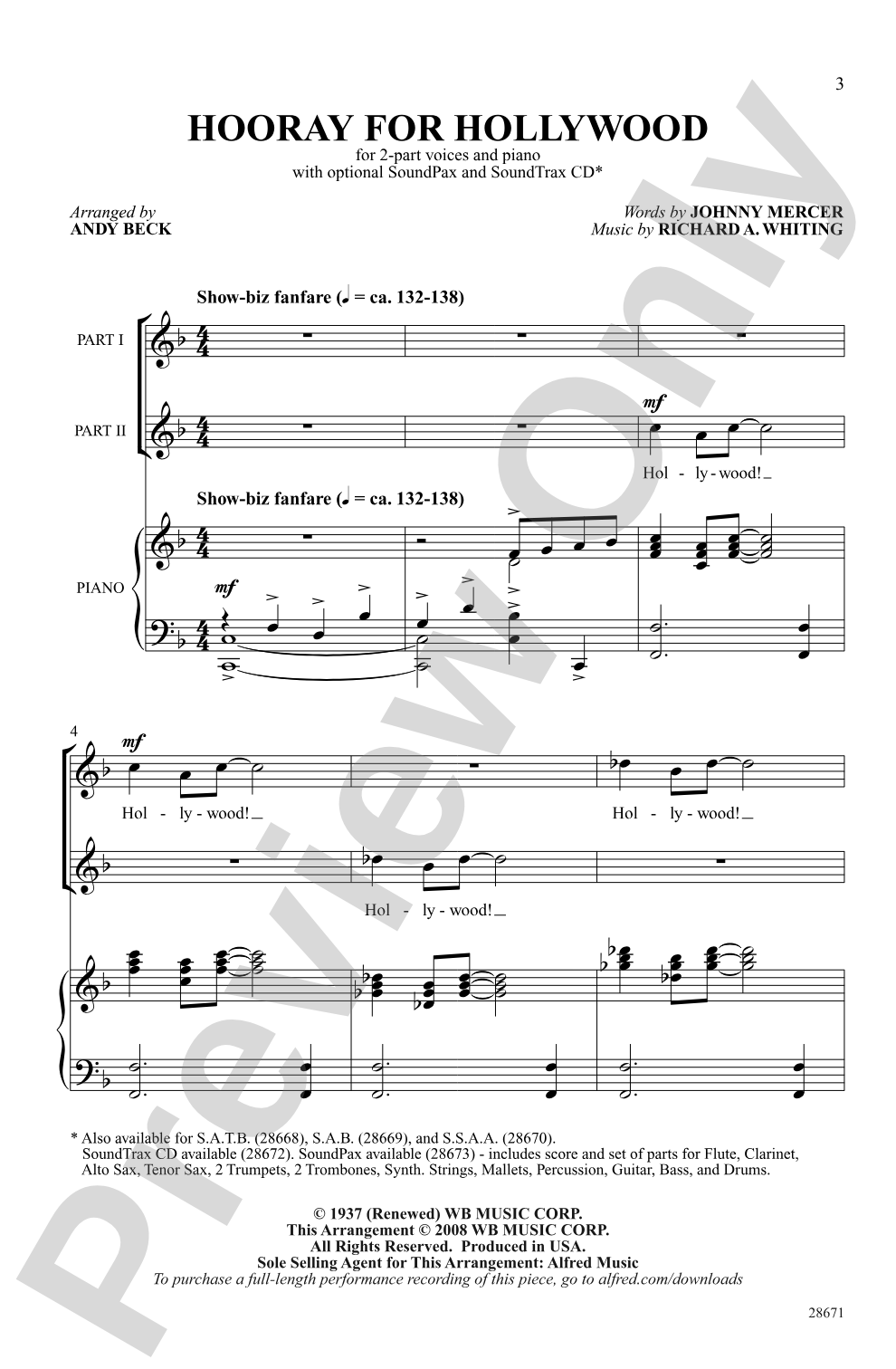

Hooray for Hollywood: 2-Part Choral Octavo
Words by Johnny Mercer, music by Richard A. Whiting / arr. Andy Beck
Item: 00-PO-0006579
$2.95
Minimum order quantity: 20 copies
One moment…
Related Items
Hooray for Hollywood: SoundTrax Digital Audio Download |
$27.99
|
View | |
Hooray for Hollywood: SATB Choral Octavo |
$2.25
|
View | |
Hooray for Hollywood: SAB Choral Octavo |
$2.95
|
View | |
Hooray for Hollywood: Choral SoundPax |
$40.00
|
View | |
Hooray for Hollywood: SATB Choral Octavo |
$2.25
|
View | |
Hooray for Hollywood: SAB Choral Octavo |
$2.95
|
View | |
Hooray for Hollywood: SSAA Choral Octavo |
$1.95
|
View | |
Hooray for Hollywood: 2-Part Choral Octavo |
$2.95
|
View | |
Hooray for Hollywood: Choral Octavo SoundTrax CD |
$27.99
|
View | |
Hooray for Hollywood: Choral SoundPax |
$40.00
|
View |
Description
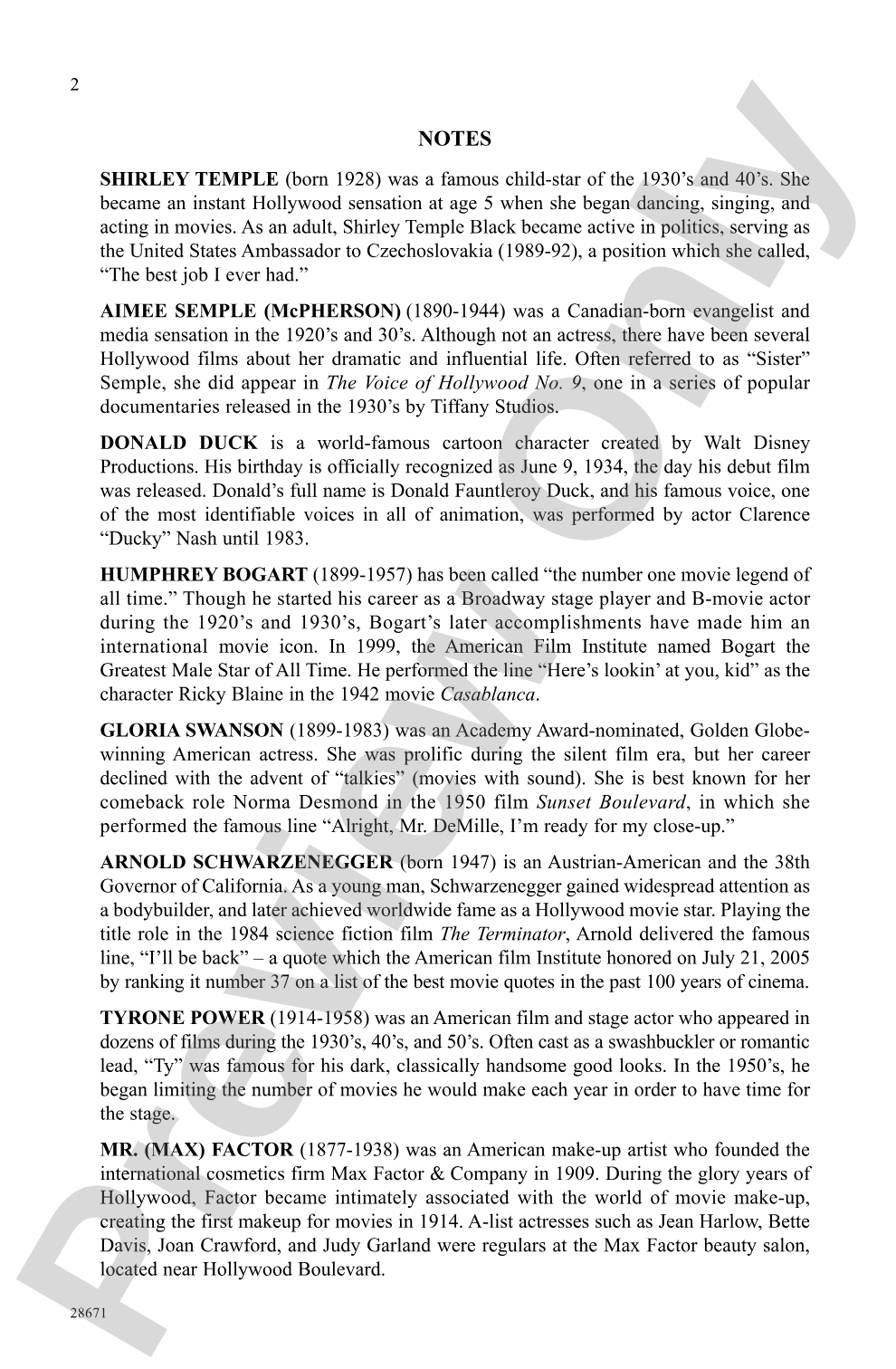
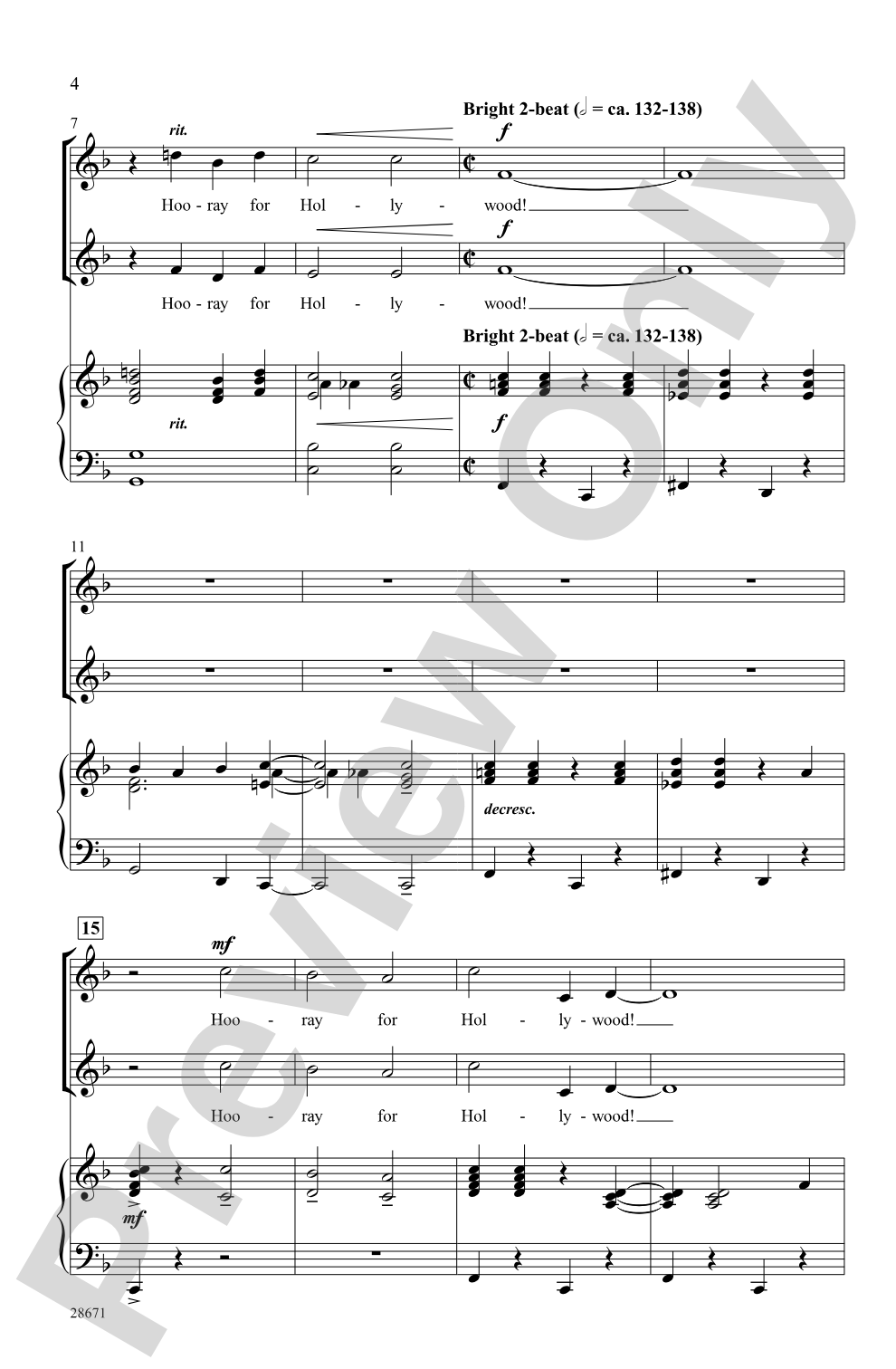
Set the stage for a movie themed concert with this flashy arrangement that pays homage to the golden days of Hollywood. The bouncy 2-beat opens and closes with a show biz fanfare, features three celebrity impersonators, and includes a stylish kick-line at its glitzy height. A blockbuster! Featured on the "Hooray for Hollywood!" movement DVD #28868.


Discover MakeMusic Cloud: thousands of interactive titles your students can play along with today.
Sample Audio
1
Audio File
--:--
0:00
0:00
Sample Video
No sample videos found.
Additional Details
Series:
Alfred Pop Choral Series
Publisher:
Alfred Music
Page Count:
16
SKU:
00-PO-0006579
More about this title
About the Composer: Richard A. Whiting
Richard A. Whiting was a prolific composer and songwriter of the early twentieth century, best known for his work in musical theater and film. He created some of Hollywood's most memorable standards during the 1920s and 1930s, establishing himself as a go-to voice for catchy, sophisticated melodies that captured the glamour of the era.
Whiting's gift for writing instantly singable, rhythmically engaging music made his songs naturals for both stage and screen. His catalog includes numerous standards that remain teaching staples, chosen by educators for their combination of musical substance and immediate accessibility.
Why we love this
Andy Beck's arrangement captures the theatrical energy of the original without overshooting the technical demands of a developing 2-part choir. The built-in staging opportunities (celebrity impersonators and kick-line) give students genuine reasons to commit to their parts and projection, transforming a rehearsal space into something resembling an actual show. It's the kind of fun that also teaches musicianship.
What to expect
A time machine to the glamorous 1930s, complete with spotlights and a sense of occasion. The bouncy 2-beat rhythm keeps the energy perpetually high, while the fanfare bookends and theatrical staging give the piece the feeling of a real cabaret production rather than a school concert number.
Who it's for
Middle school and high school choirs looking for programming material with genuine entertainment value and built-in audience engagement. Works equally well for concert choirs that want to prove they can do more than serious art music.
How to get the most out of it
- Nail the opening fanfare crisply and with rhythmic precision. That 2-beat sets the tone for the entire performance and telegraphs to the audience that they're in for a polished show.
- Emphasize the stylistic contrasts between sections. Let the kick-line moment feel genuinely different in texture and energy from the impersonator segments so each one lands its own punch.
- Use the recorded accompaniment as your rehearsal anchor. Once your choir is confident in their parts, perform live with it to ensure the recorded backing doesn't expose any rhythmic slippage.
- Coach your impersonators on personality first, notes second. Exaggeration and character work will hide minor ensemble wobbles and give the audience permission to have fun alongside you.
How to use it
Anchor a movie or Broadway-themed concert with this as a show-stopping finale, or use it mid-program to break up a sequence of heavier repertoire and shift the emotional tone. Its accessibility and fun factor make it an excellent piece for engaging families and younger siblings who might not otherwise stay attentive at a full choral concert.
Skills your students will build
- Rhythmic precision in cut time (2-beat) signatures
- Maintaining forward energy and bounce across multiple repetitions
- Synchronizing movement with vocal lines for stage presence
- Balancing character and personality work with accurate note reading
- Responding to recorded accompaniment without losing ensemble unity