

Hooray for Hollywood: SAB Choral Octavo
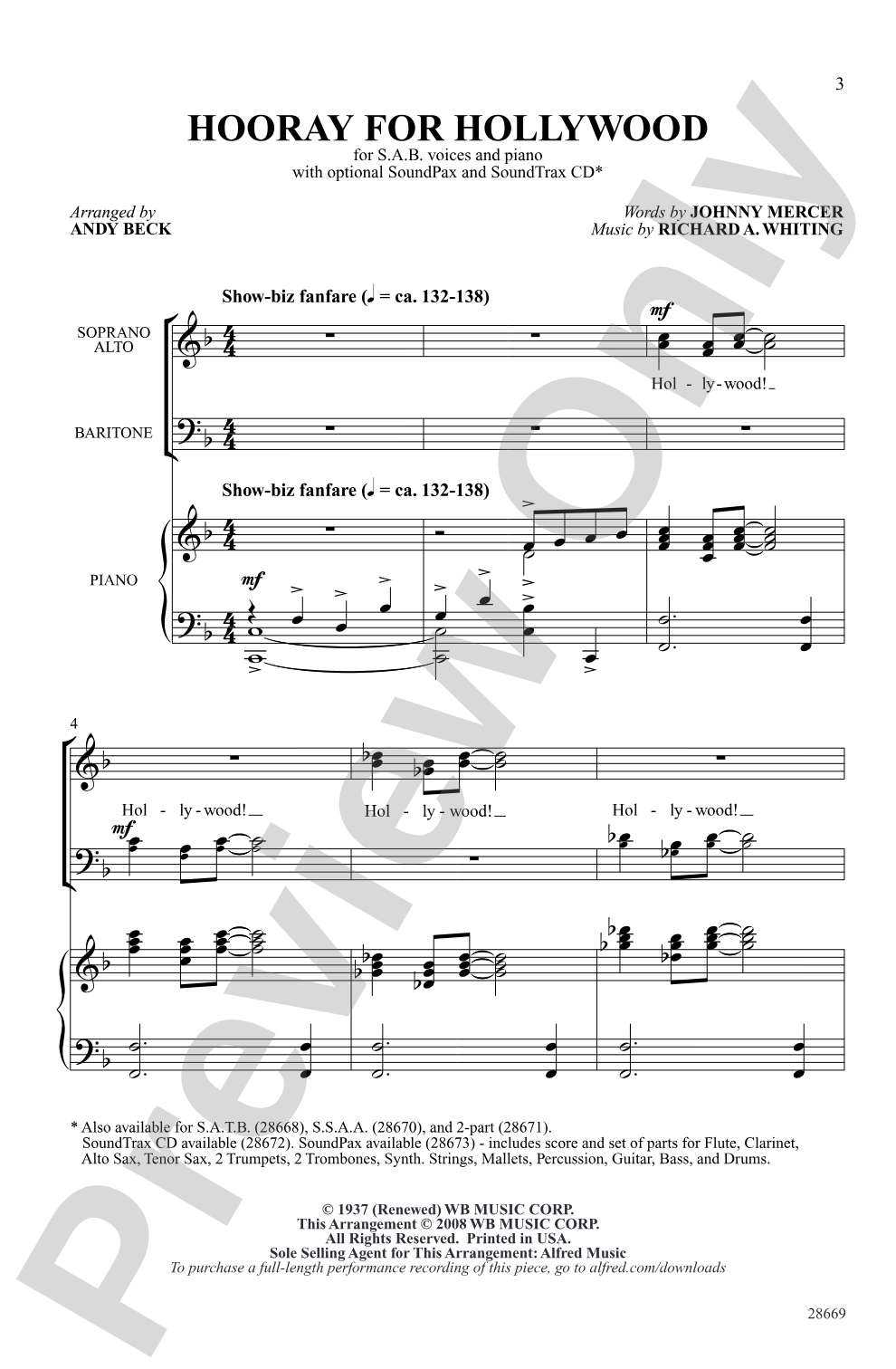
Words by Johnny Mercer, music by Richard A. Whiting / arr. Andy Beck
Item: 00-PO-0006578
$2.95
Minimum order quantity: 20 copies
One moment…
Related Items
Hooray for Hollywood: SoundTrax Digital Audio Download |
$27.99
|
View | |
Hooray for Hollywood: SATB Choral Octavo |
$2.25
|
View | |
Hooray for Hollywood: 2-Part Choral Octavo |
$2.95
|
View | |
Hooray for Hollywood: Choral SoundPax |
$40.00
|
View | |
Hooray for Hollywood: SATB Choral Octavo |
$2.25
|
View | |
Hooray for Hollywood: SAB Choral Octavo |
$2.95
|
View | |
Hooray for Hollywood: SSAA Choral Octavo |
$1.95
|
View | |
Hooray for Hollywood: 2-Part Choral Octavo |
$2.95
|
View | |
Hooray for Hollywood: Choral Octavo SoundTrax CD |
$27.99
|
View | |
Hooray for Hollywood: Choral SoundPax |
$40.00
|
View |
Description
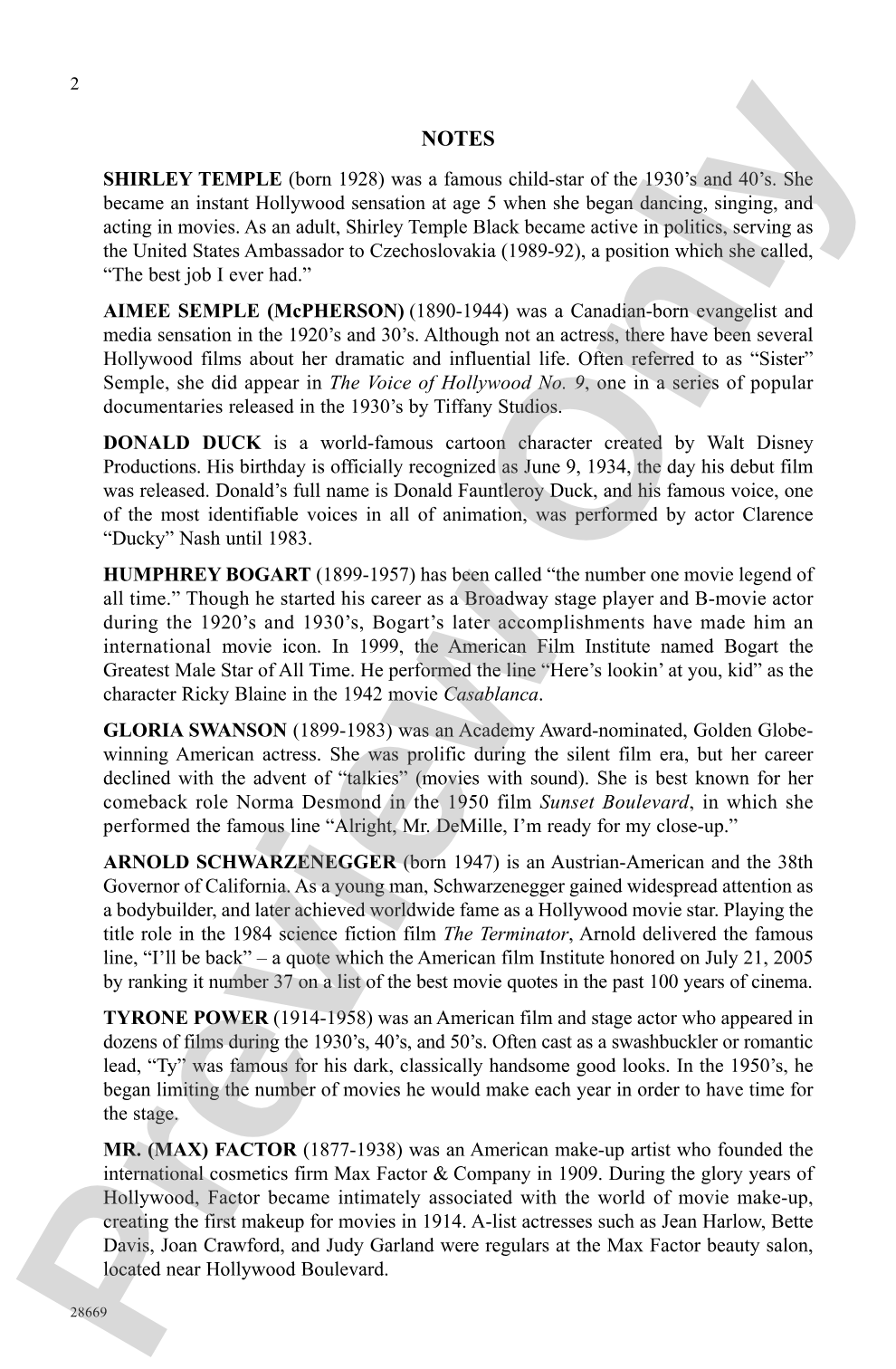
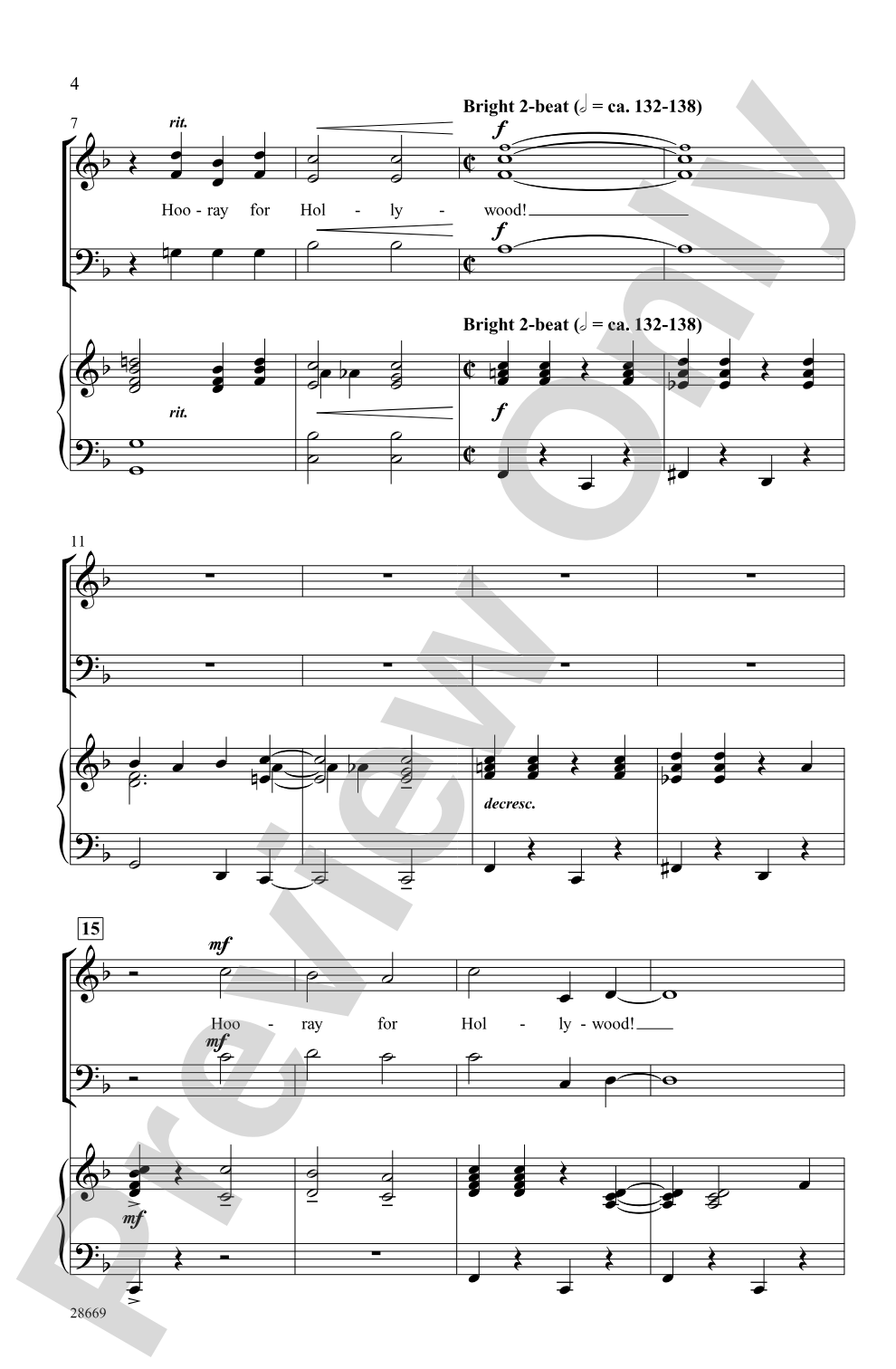
Set the stage for a movie themed concert with this flashy arrangement that pays homage to the golden days of Hollywood. The bouncy 2-beat opens and closes with a show biz fanfare, features three celebrity impersonators, and includes a stylish kick-line at its glitzy height. A blockbuster! Featured on the "Hooray for Hollywood!" movement DVD #28868.


Discover MakeMusic Cloud: thousands of interactive titles your students can play along with today.
Sample Audio
1
Audio File
--:--
0:00
0:00
Sample Video
No sample videos found.
Additional Details
Series:
Alfred Pop Choral Series
Publisher:
Alfred Music
Page Count:
16
SKU:
00-PO-0006578
More about this title
About the Composer: Richard A. Whiting
Richard A. Whiting was a prolific composer and songwriter who helped define the sound of early Hollywood musicals. Working primarily in the 1920s and 1930s, he crafted infectious melodies that became standards, with "Hooray for Hollywood" standing as one of his most enduring creations. His gift for writing songs that were both sophisticated and immediately accessible made him a favorite among studios and performers alike.
Whiting's compositions remain staples in music education because they combine genuine artistic merit with accessibility. Teachers value his work for its clear melodic content, rhythmic vitality, and theatrical spirit, all of which engage singers while teaching them the foundations of American popular song.
Why we love this
Andy Beck's arrangement captures the theatrical DNA of this classic without requiring elaborate production values. The built-in comedy of the celebrity impersonators and the visual anchor of the kick-line give students something concrete to perform beyond the notes, making this a genuine crowd-pleaser that directors can trust to deliver laughs and applause.
What to expect
Walking onto a sound stage in the 1930s. The music sparkles with optimism and theatrical flair, built on rock-solid melodies that sit naturally in the voice. There's real joy in the writing, and the arrangement's smartness (the fanfare bookends, the impersonator bits, the ensemble payoff) makes singers feel like they're part of something slick.
Who it's for
Choirs looking for a vehicle that entertains both singers and audiences without demanding a full orchestra or elaborate sets. Strong SAB arrangements are particularly valuable for groups with limited tenor depth, and this one gives all three voice parts meaningful material.
How to get the most out of it
- Plant the fanfare opening firmly in the audience's ears with precise rhythmic unison. The show-biz energy hinges on that snappy attack.
- Coach the impersonators to commit fully to their characters during their sections. Half-hearted impressions flatten the humor; students leaning into the bit will carry the whole group's confidence.
- Keep the kick-line section crisp and synchronized. Even modest choreography (simple leg lifts or arm patterns) transforms this moment from a musical interlude into the spectacle it's designed to be.
- The recorded accompaniment locks the 2-beat groove; rehearse with it early so the rhythm section internalizes the bounce and can execute it cleanly live.
How to use it
This anchors a musical theatre or Hollywood-themed concert as the opener or closer. Its energy and built-in visual storytelling make it ideal for spring pops shows, fundraisers, or any program where you want an immediate connection with the audience. It pairs well alongside other standards from the same era or modern pop arrangements that share its theatrical confidence.
Skills your students will build
- Executing a steady 2-beat feel with consistent rhythmic precision
- Balancing solo lines (impersonator sections) with ensemble entrances
- Coordinating music with basic choreography and staging
- Sustaining energy and character through a complete 16-page arrangement
- Reading and performing three-part mixed voicing with clear voice independence