
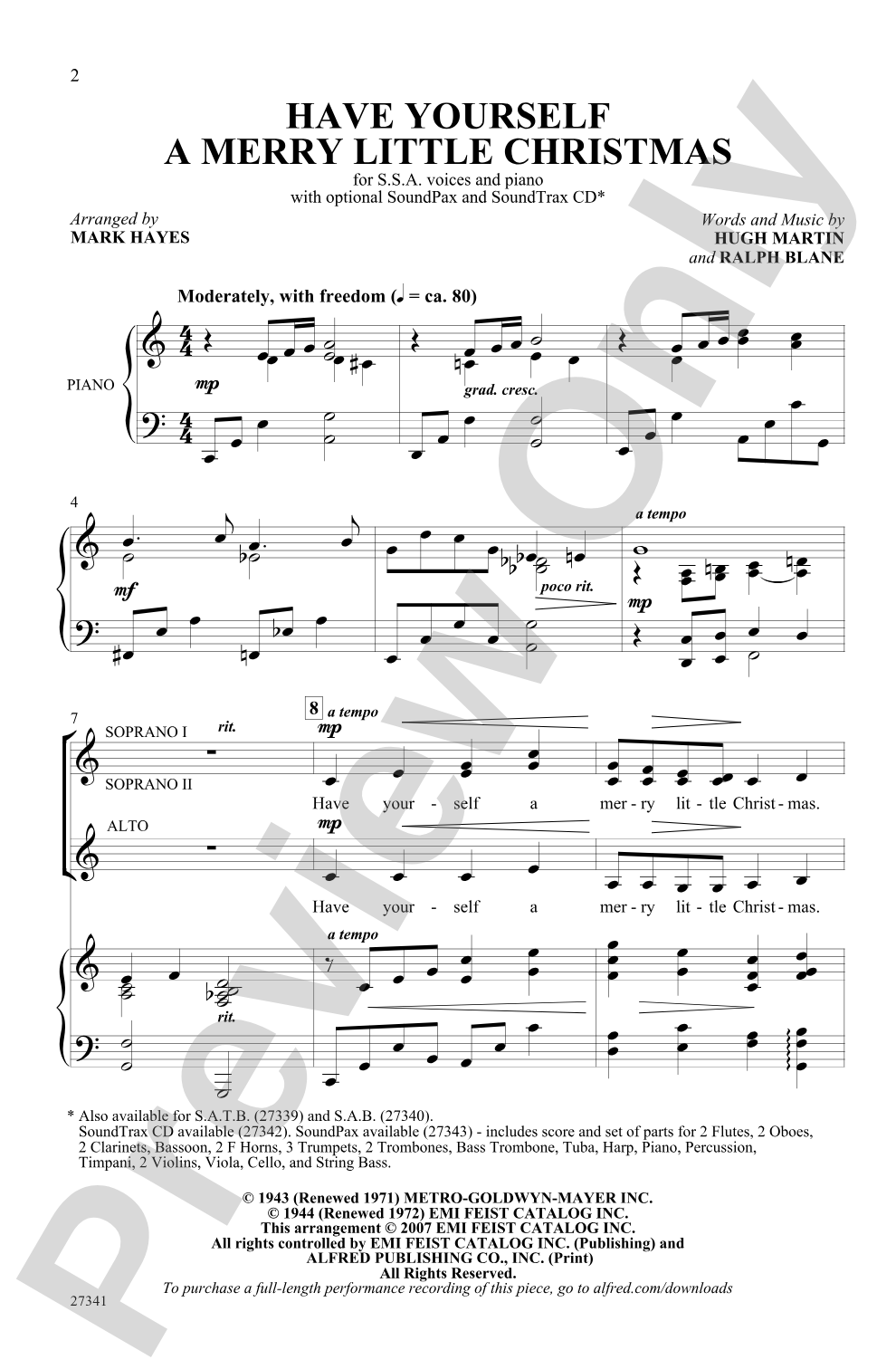
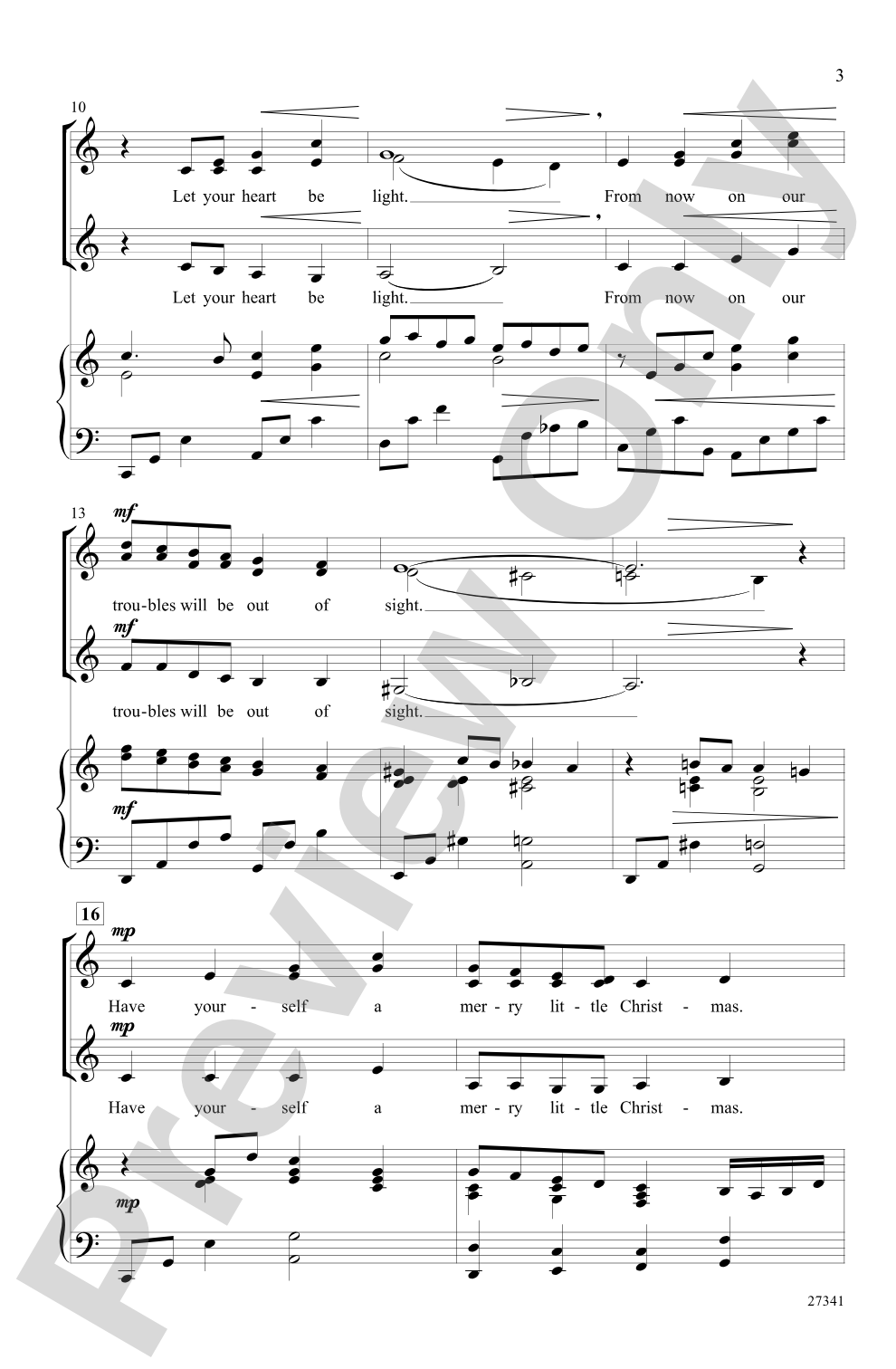

Have Yourself a Merry Little Christmas: SSA Choral Octavo
Words and music by Hugh Martin and Ralph Blane / arr. Mark Hayes
Item: 00-PO-0002272

$2.10
Minimum order quantity: 20 copies
One moment…
Related Items
Have Yourself a Merry Little Christmas: SoundTrax Digital Audio Download |
$27.99
|
View | |
Have Yourself a Merry Little Christmas: SATB Choral Octavo |
$2.10
|
View | |
Have Yourself a Merry Little Christmas: SAB Choral Octavo |
$2.10
|
View | |
Have Yourself a Merry Little Christmas: TTBB Choral Octavo |
$2.10
|
View | |
Have Yourself a Merry Little Christmas: Choral SoundPax |
$60.00
|
View | |
Have Yourself a Merry Little Christmas: SATB Choral Octavo |
$2.10
|
View | |
Have Yourself a Merry Little Christmas: SAB Choral Octavo |
$2.10
|
View | |
Have Yourself a Merry Little Christmas: SSA Choral Octavo |
$2.65
|
View | |
Have Yourself a Merry Little Christmas: TTBB Choral Octavo |
$2.10
|
View | |
Have Yourself a Merry Little Christmas: Choral Octavo SoundTrax CD |
$27.99
|
View | |
Have Yourself a Merry Little Christmas: Choral SoundPax |
$60.00
|
View |
Description
One of the best and most popular Christmas songs has been expertly arranged by Mark Hayes. The choral voicing is beautiful, and is designed to showcase your singers. The piano accompaniment is flowing and supportive, and the Trax/Pax are stunning. Also available for SATB (00-27339), SAB (00-27340), and TTBB (00-35780).


Don't just read it, hear it, play along with it, and watch your students grow with it. In MakeMusic Cloud, Have Yourself a Merry Little Christmas: SSA Choral Octavo comes alive with professional accompaniment, adjustable tempo, and built-in practice tools that turn solo practice into real progress.
Open in the Player
Jump straight in and assign it today.
Start Your Free Trial
Open this title and explore the full library in minutes.
Sample Audio
1
Audio File
--:--
0:00
0:00
Sample Video
No sample videos found.
Additional Details
Series:
Alfred Pop Choral Series
Publisher:
Alfred Music
Page Count:
12
SKU:
00-PO-0002272
More about this title
About the Composer: Hugh Martin
Hugh Martin (1914-2011) composed the music for some of Hollywood's most enduring standards during the Golden Age of film musicals. Working frequently with lyricist Ralph Blane, Martin created songs that balanced sophisticated harmonic writing with immediate melodic appeal, a combination that allowed his work to transcend its theatrical origins and enter the American popular songbook. His ability to write for singers of varying abilities made his music a staple in choral and vocal programs for decades after its creation.
Why we love this
Mark Hayes understands the SSA voicing on a profound level, and this arrangement proves it. The writing is vocally idiomatic without being simplistic; your singers will feel supported by the harmony while still being asked to sing with musicality and presence. The arrangement strikes the rare balance of sounding genuinely beautiful in rehearsal and even more polished in performance, which means your group will stay engaged through both.
What to expect
Warm, nostalgic, and genuinely festive without becoming saccharine. The arrangement honors the song's classic elegance while the jazz-influenced harmonies and flowing piano accompaniment give it a contemporary sheen that feels both timeless and alive.
Who it's for
SSA choirs looking for a sophisticated yet approachable holiday selection that respects the maturity of singers while remaining accessible to groups of varying experience levels. This works equally well for school choirs, church ensembles, and community groups seeking a polished arrangement that goes beyond the obvious.
How to get the most out of it
- Balance the soprano line in the verse sections where it carries the primary melody; the alto and second soprano parts are harmonic support and should sit underneath without becoming inaudible.
- Use the recorded accompaniment during rehearsal to establish the jazz-inflected rhythmic feel, particularly in passages where the piano syncopation might initially feel unfamiliar to your singers.
- Shape the phrasing through vowel and consonant clarity rather than dynamic overdoing; the arrangement's beauty lives in its flowing quality, which means precision of articulation matters more than volume.
- Pay attention to the sustained sections where upper voices hold long notes; these require steady breath support and blend, so anchor them with confident middle voices underneath.
How to use it
Position this as a centerpiece in a holiday concert's lighter section, or use it as the emotional anchor in a set of diverse Christmas selections. Its familiar melody and sophisticated treatment make it effective as either a showcase piece midway through a program or as part of a larger arrangement of standards from the Great American Songbook.
Skills your students will build
- Singing with vibrato control in sustained upper voice lines
- Balancing individual vocal line identity with harmonic blend
- Interpreting jazz-influenced rhythmic notation and syncopation
- Responding to and interpreting piano accompaniment that drives musical phrasing
- Managing breath support during flowing, legato passages