
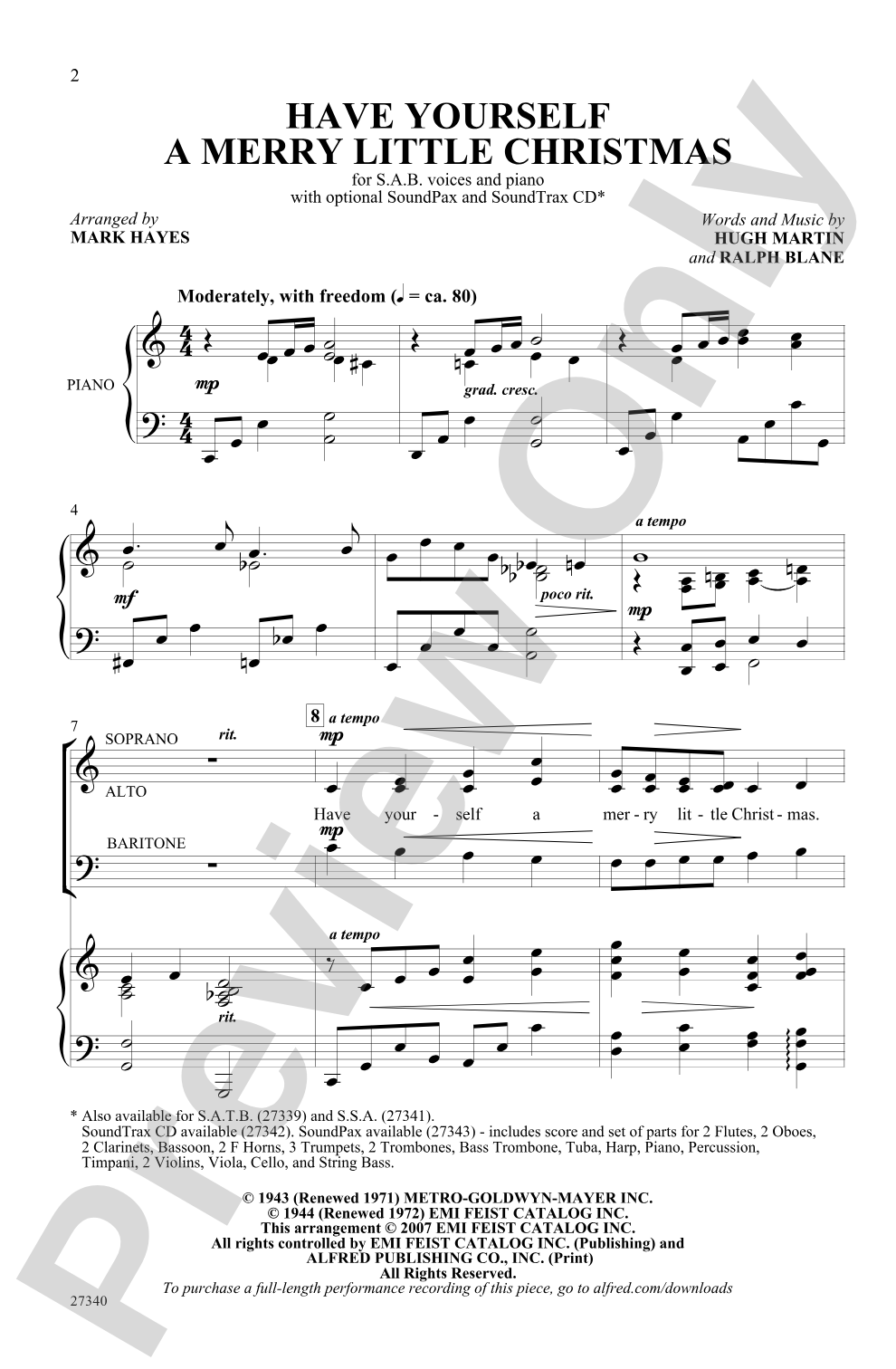
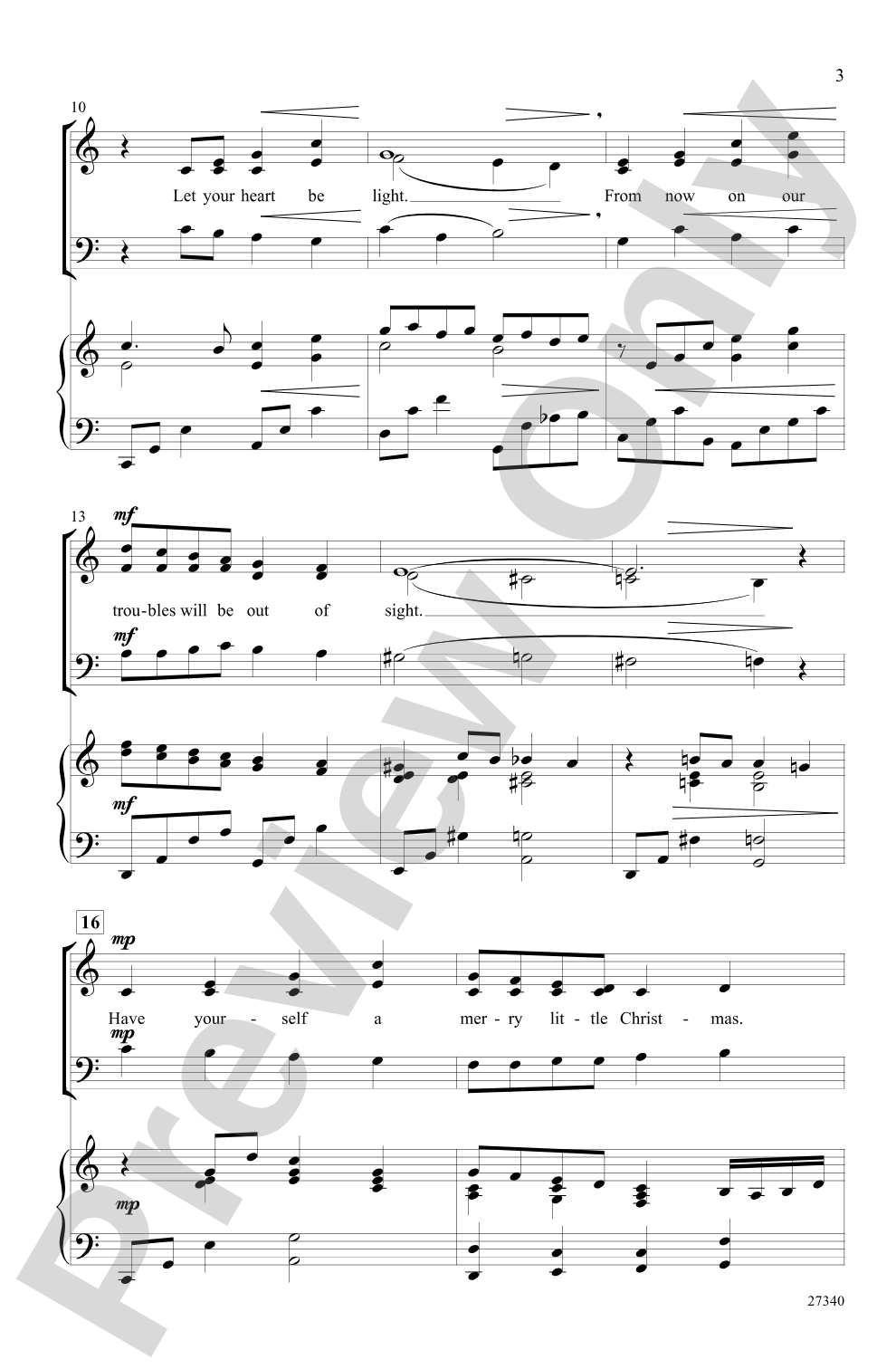

Have Yourself a Merry Little Christmas: SAB Choral Octavo
Words and music by Hugh Martin and Ralph Blane / arr. Mark Hayes
Item: 00-PO-0002271
$2.10
Minimum order quantity: 20 copies
One moment…
Related Items
Have Yourself a Merry Little Christmas: SoundTrax Digital Audio Download |
$27.99
|
View | |
Have Yourself a Merry Little Christmas: SATB Choral Octavo |
$2.10
|
View | |
Have Yourself a Merry Little Christmas: SSA Choral Octavo |
$2.10
|
View | |
Have Yourself a Merry Little Christmas: TTBB Choral Octavo |
$2.10
|
View | |
Have Yourself a Merry Little Christmas: Choral SoundPax |
$60.00
|
View | |
Have Yourself a Merry Little Christmas: SATB Choral Octavo |
$2.10
|
View | |
Have Yourself a Merry Little Christmas: SAB Choral Octavo |
$2.10
|
View | |
Have Yourself a Merry Little Christmas: SSA Choral Octavo |
$2.65
|
View | |
Have Yourself a Merry Little Christmas: TTBB Choral Octavo |
$2.10
|
View | |
Have Yourself a Merry Little Christmas: Choral Octavo SoundTrax CD |
$27.99
|
View | |
Have Yourself a Merry Little Christmas: Choral SoundPax |
$60.00
|
View |
Description
One of the best and most popular Christmas songs has been expertly arranged by Mark Hayes. The choral voicing is beautiful, and is designed to showcase your singers. The piano accompaniment is flowing and supportive, and the Trax/Pax are stunning. Also available for SATB (00-27339), SSA (00-27341), and TTBB (00-35780).


Have Yourself a Merry Little Christmas: SAB Choral Octavo isn't in MakeMusic Cloud just yet...but it could be. Let us know you'd like to see it, and you'll help shape what comes next. In the meantime, start a free trial and dive into thousands of interactive titles your students can play along with today.
Request This Title
Tell us you want it.
Start Your Free Trial
Explore everything that's ready to play right now.
Sample Audio
1
Audio File
--:--
0:00
0:00
Sample Video
No sample videos found.
Additional Details
Series:
Alfred Pop Choral Series
Publisher:
Alfred Music
Page Count:
12
SKU:
00-PO-0002271
More about this title
About the Composer: Hugh Martin
Hugh Martin composed "Have Yourself a Merry Little Christmas" with lyricist Ralph Blane for the 1944 film Meet Me in St. Louis, where it became one of Hollywood's most enduring holiday standards. Martin's gift for melody and his ability to craft songs that balance sophistication with accessibility made him a central figure in American musical theater and film composition throughout the mid-20th century.
Why we love this
Mark Hayes' SAB arrangement preserves everything that makes this song resonate while opening it up for mixed choirs without requiring a second soprano line. The voicing sits naturally across the range, the jazz-inflected piano part has genuine character, and the recorded accompaniment quality means even groups without strong instrumental resources can deliver a polished performance.
What to expect
Warm, reflective, and genuinely jazzy. The song balances nostalgia with quiet optimism, and Hayes' arrangement honors both the melodic beauty and the underlying harmonic richness that made the original so memorable. It feels like a real song, not a simplified novelty.
Who it's for
Intermediate to advanced mixed choirs looking for a holiday standard that sounds sophisticated without requiring advanced vocal technique. Groups performing concert-style holiday programs, not just festive collections, will find this arrangement elevates the musical level of their setlist.
How to get the most out of it
- Balance the melody between sopranos and altos on key phrases; the arrangement's design means both parts carry important material, so resist the urge to weight everything toward the sopranos.
- Let the jazz harmonies in the piano speak clearly without pushing the choir's dynamics to cover them. The accompaniment is a partner, not background.
- Shape the lyrical phrases with gentle rubato rather than strict time; this song breathes, especially on the reflective second verse.
- Use the recorded accompaniment to lock the ensemble's cohesion, but rehearse the piece independently first so singers understand the harmonic movement beneath their parts.
How to use it
Pair this with other standards in a holiday concert segment to anchor a more sophisticated portion of your program. Its moderate length and elegant voicing also make it ideal for smaller ensemble performances or as a feature for a select chamber choir within a larger ensemble.
Skills your students will build
- Singing jazz harmonies and understanding voice leading in contemporary choral writing
- Maintaining stylistic consistency across multiple voice parts in a swing-influenced arrangement
- Interpreting rubato and phrasing in a song-centered context rather than choral blast approach
- Blending SAB voicing so all three parts sound equally valued and essential