
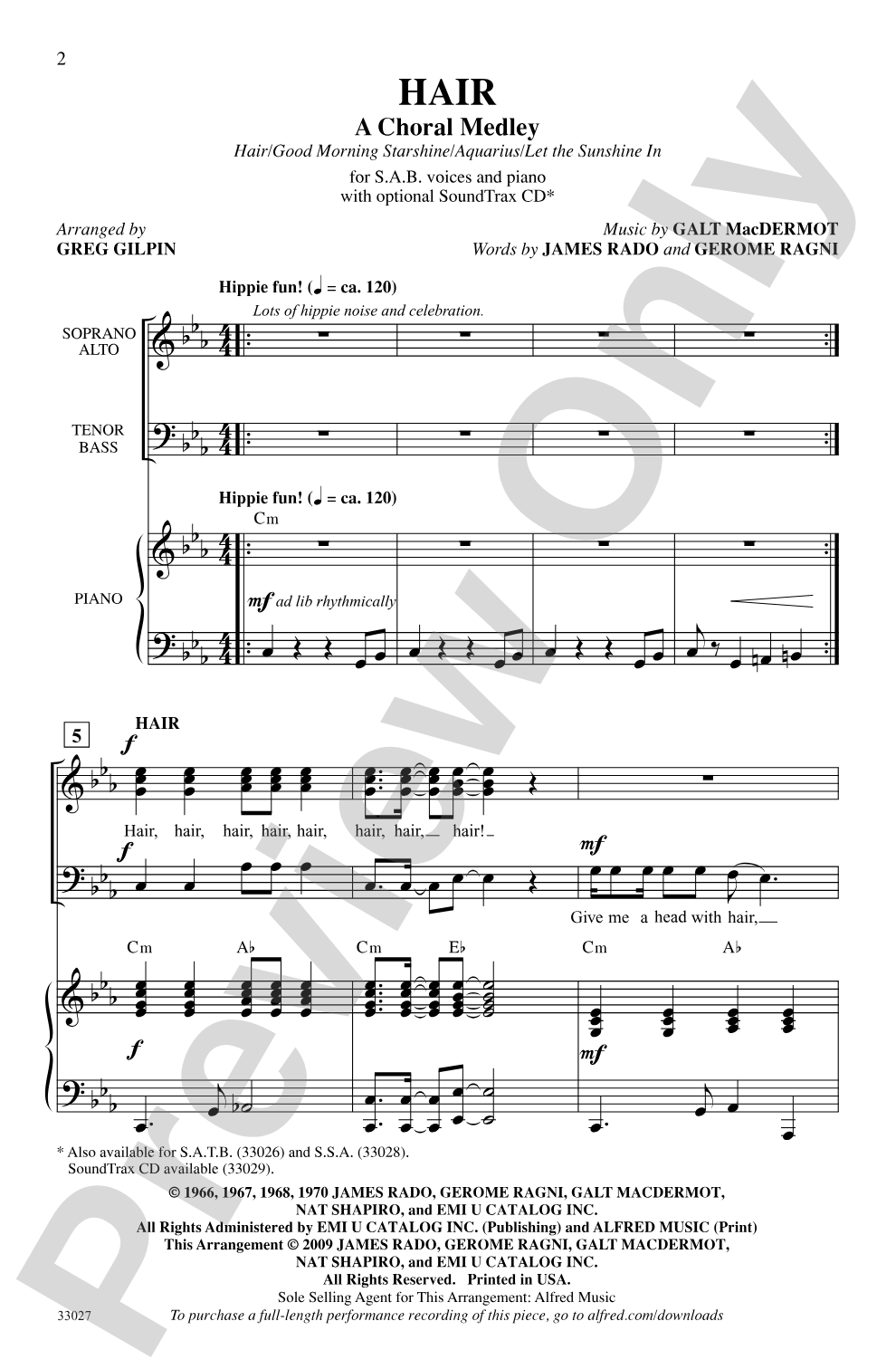
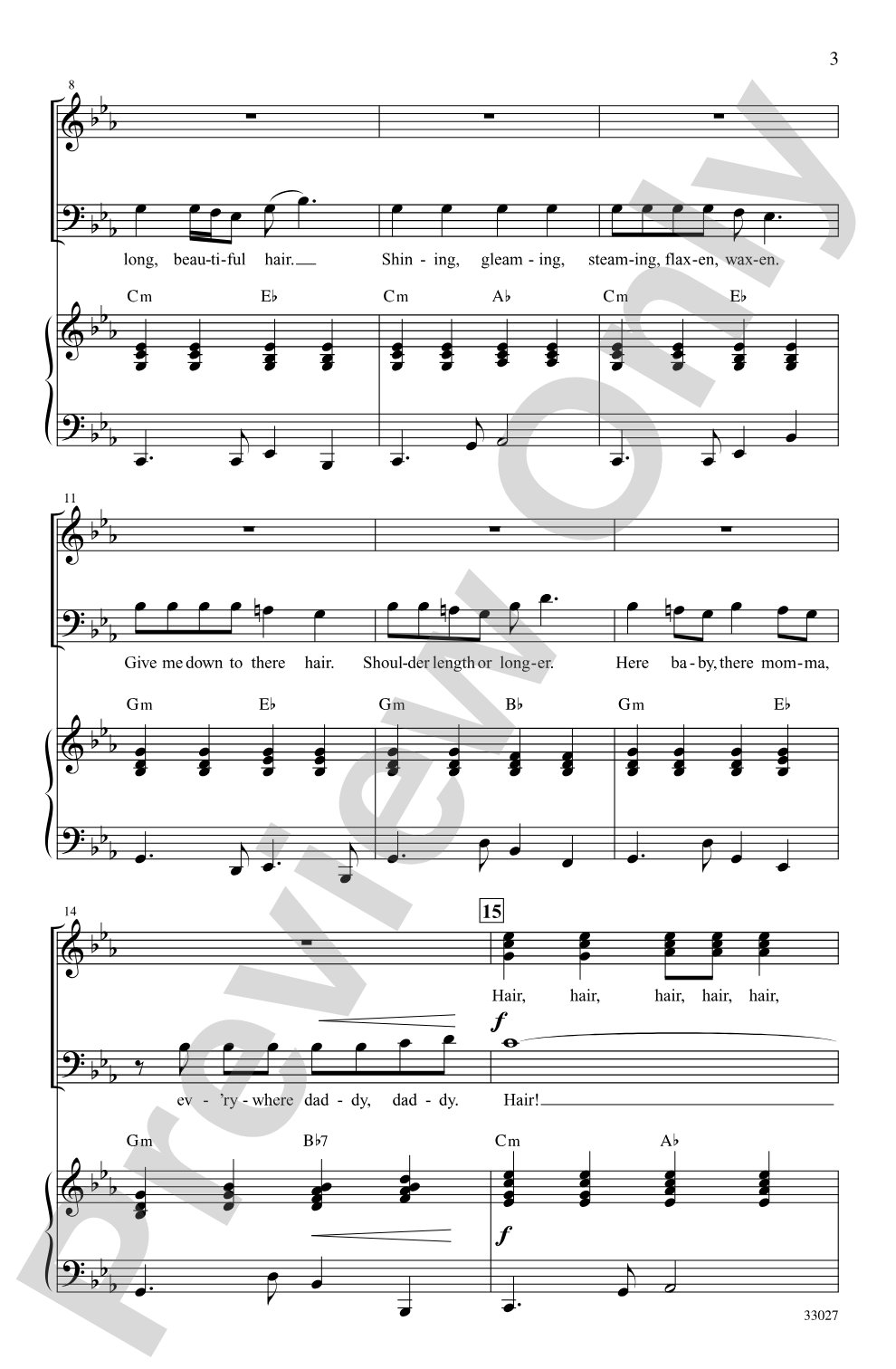
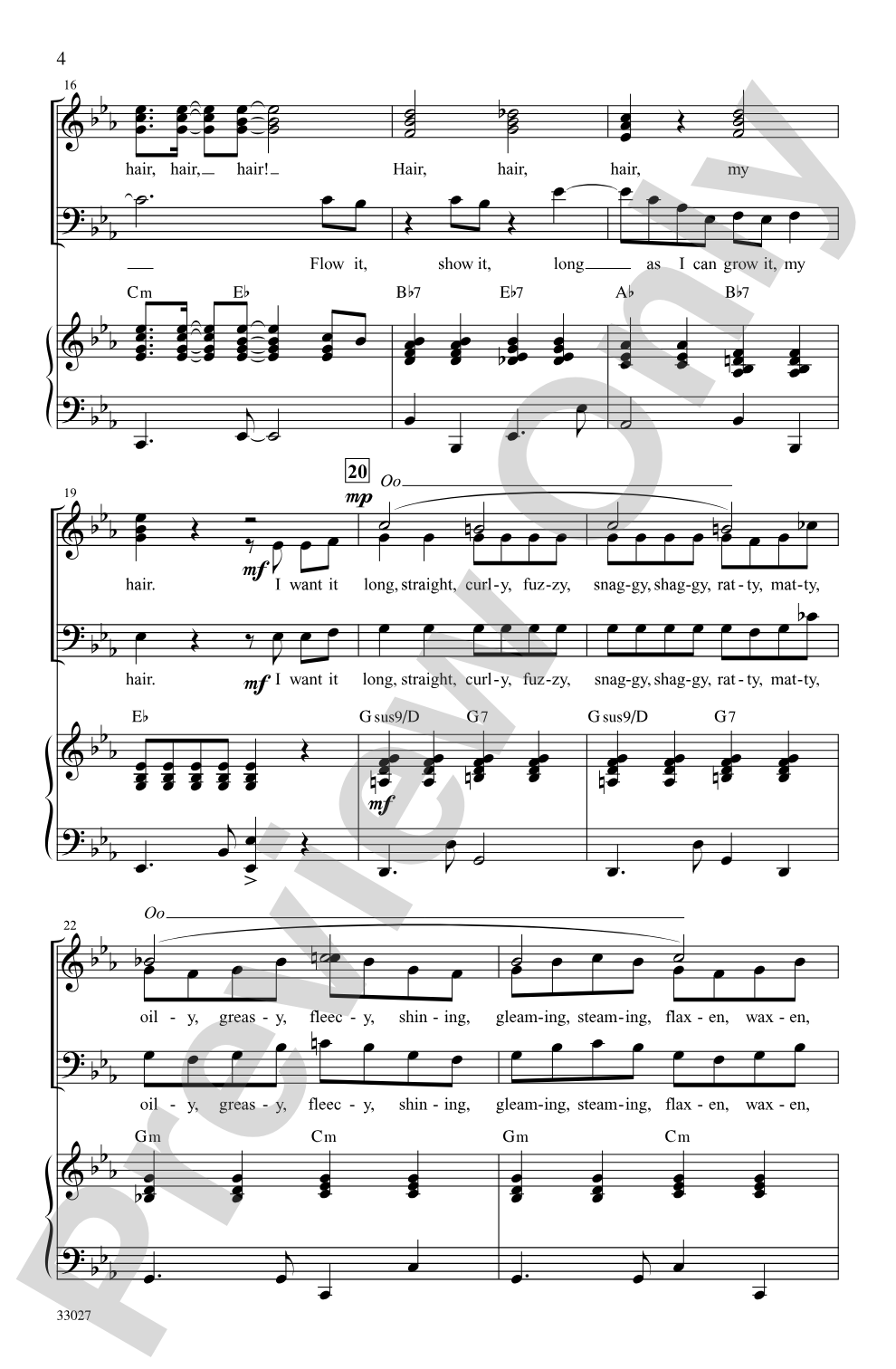
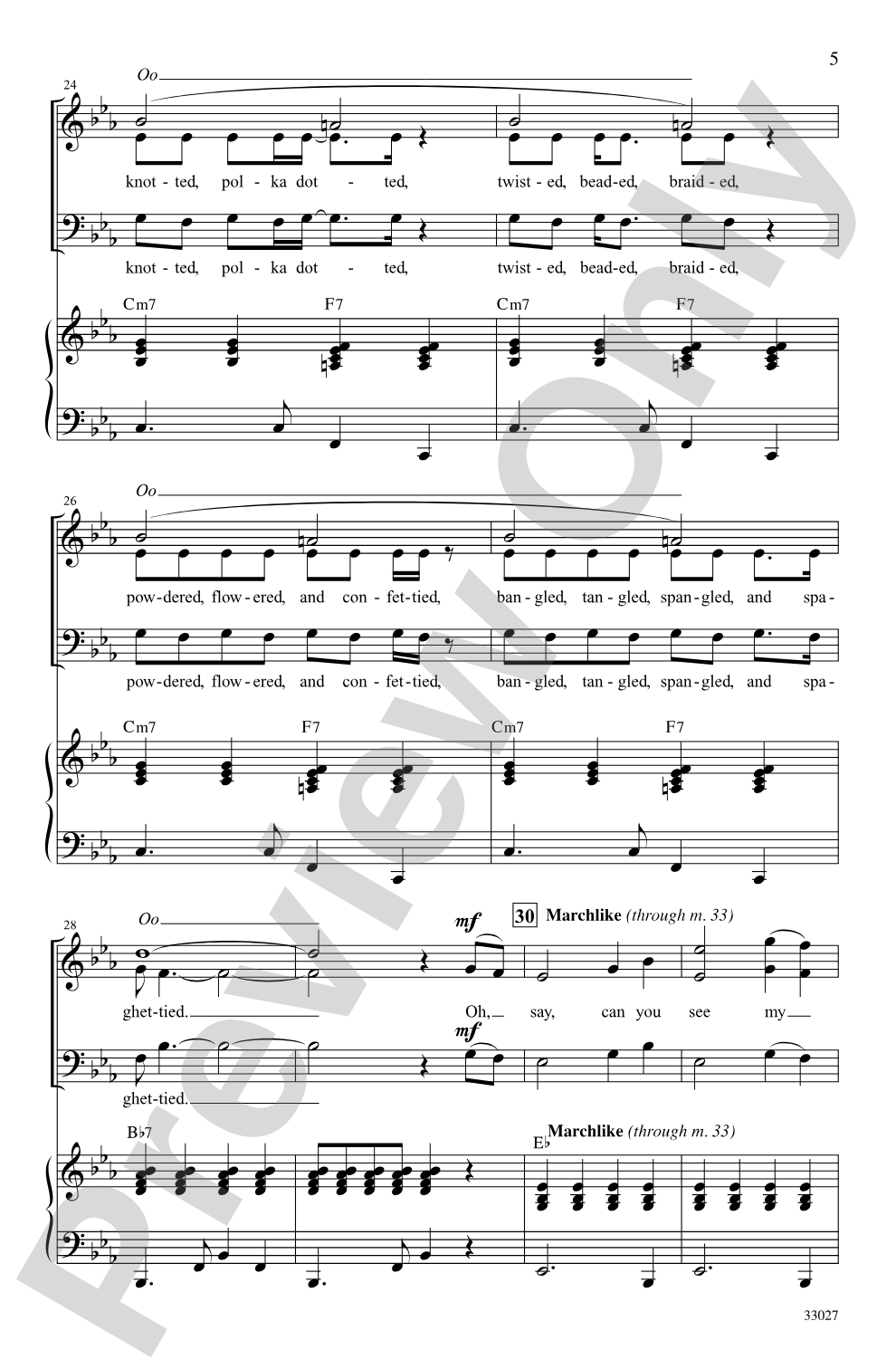

Hair: A Choral Medley: SAB Choral Octavo
Hair / Good Morning Starshine / Aquarius / Let the Sunshine In
Music by Galt MacDermot, words by James Rado and Gerome Ragni / arr. Greg Gilpin
Item: 00-PO-0006604
$3.50
Minimum order quantity: 20 copies
One moment…
Related Items
Hair: A Choral Medley: SoundTrax Digital Audio Download |
$39.99
|
View | |
Hair: A Choral Medley: SATB Choral Octavo |
$2.50
|
View | |
Hair: A Choral Medley: SSA Choral Octavo |
$2.50
|
View | |
Hair: A Choral Medley: SATB Choral Octavo |
$2.50
|
View | |
Hair: A Choral Medley: SAB Choral Octavo |
$3.50
|
View | |
Hair: A Choral Medley: SSA Choral Octavo |
$2.50
|
View | |
Hair: A Choral Medley: Choral Octavo SoundTrax CD |
$39.99
|
View |
Description
It's the 60s, the Age of Aquarius, of hippies, and of the surprise Broadway smash Hair. Winner of the Tony Award® for Best Revival of a Musical, this "tribal love-rock musical" returned to Broadway in 2009. Greg's wonderful new 6-minute medley captures all of the fresh flower-power!


Hair: A Choral Medley: SAB Choral Octavo isn't in MakeMusic Cloud just yet...but it could be. Let us know you'd like to see it, and you'll help shape what comes next. In the meantime, start a free trial and dive into thousands of interactive titles your students can play along with today.
Request This Title
Tell us you want it.
Start Your Free Trial
Explore everything that's ready to play right now.
Sample Audio
1
Audio File
--:--
0:00
0:00
Sample Video
No sample videos found.
Additional Details
Series:
Alfred Pop Choral Series
Publisher:
Alfred Music
Page Count:
20
SKU:
00-PO-0006604
More about this title
About the Composer: Galt MacDermot
Galt MacDermot composed the score for Hair in 1967, creating a landmark moment in Broadway history by fully embracing rock and pop idioms on the musical theater stage. His willingness to break from the Rodgers and Hammerstein tradition made Hair a watershed work, and the score's infectious melodies have endured for over five decades in concert halls, school choirs, and recording studios.
Why we love this
Greg Gilpin's arrangement distills the musical's most memorable moments into a cohesive six-minute arc that captures the theatrical energy without demanding a pit orchestra. The SAB voicing opens this landmark score to more choirs while the recorded accompaniment makes staging the piece accessible to any budget. A medley this well-constructed gives students immediate access to songs they've heard, making the cultural and historical context of 1960s musical theater tangible.
What to expect
Bright, optimistic, and unapologetically fun. The medley pulses with the energy of a generation, from the iconic opening to moments of genuine warmth and hope. Your singers will feel the freedom and joy that Hair celebrated, delivered through melodies designed to stick in listeners' heads long after the final note.
Who it's for
Directors seeking a high-energy pop medley for middle and high school choirs, particularly those wanting to include contemporary musical theater repertoire without the complexity of a full production. Choirs comfortable with SAB voicing and rock-influenced rhythms will find immediate success here.
How to get the most out of it
- Establish the rock groove early in rehearsal by having the choir lock into the rhythm section's pulse; the recorded accompaniment provides that foundation, so use it from day one to anchor ensemble feel.
- Layer the SAB parts strategically during full-choir moments. The sopranos should cut through on the melody line, but don't let altos and baritones drop back; they carry harmonic color that brings the 60s sound to life.
- Treat costume and visual presentation as essential to the spirit of the piece. Even simple choices (headbands, tie-dye, flowers) signal that your choir understands the cultural moment Hair celebrates.
- Balance humor with sincerity. These songs are fun and buoyant, but they also carry genuine passion about social change. Let that duality breathe in your interpretation.
How to use it
Pair this with classic Broadway repertoire to create a program that traces musical theater's evolution, or program it as a standalone set for a spring concert focused on contemporary works. The six-minute length makes it ideal for opening a concert, resetting the mood, or anchoring a thematic program around 20th-century American music.
Skills your students will build
- Rock and pop rhythmic phrasing in a choral context
- Ensemble cohesion with recorded accompaniment tracks
- Melodic independence within three-part harmony
- Historical context of 1960s Broadway and musical theater
- Dynamic contrast between solo spotlight moments and full-choir unison