

Gloria in Excelsis Deo: SSA Choral Octavo
Words and music by Sally K. Albrecht
Item: 00-PO-0000472
$1.75
Minimum order quantity: 20 copies
Pickup currently not available
Related Items
Gloria in Excelsis Deo: SoundTrax Digital Audio Download |
$24.95
|
View | |
Gloria in Excelsis Deo: SATB Choral Octavo |
$1.75
|
View | |
Gloria in Excelsis Deo: 3-Part Mixed Choral Octavo |
$1.75
|
View | |
Gloria in Excelsis Deo: Choral SoundPax |
$30.00
|
View | |
Gloria in Excelsis Deo: SATB Choral Octavo |
$1.75
|
View | |
Gloria in Excelsis Deo: 3-Part Mixed Choral Octavo |
$1.75
|
View | |
Gloria in Excelsis Deo: SSA Choral Octavo |
$1.75
|
View | |
Gloria in Excelsis Deo: Choral Octavo SoundTrax CD |
$24.95
|
View | |
Gloria in Excelsis Deo: Choral SoundPax |
$30.00
|
View |
Description
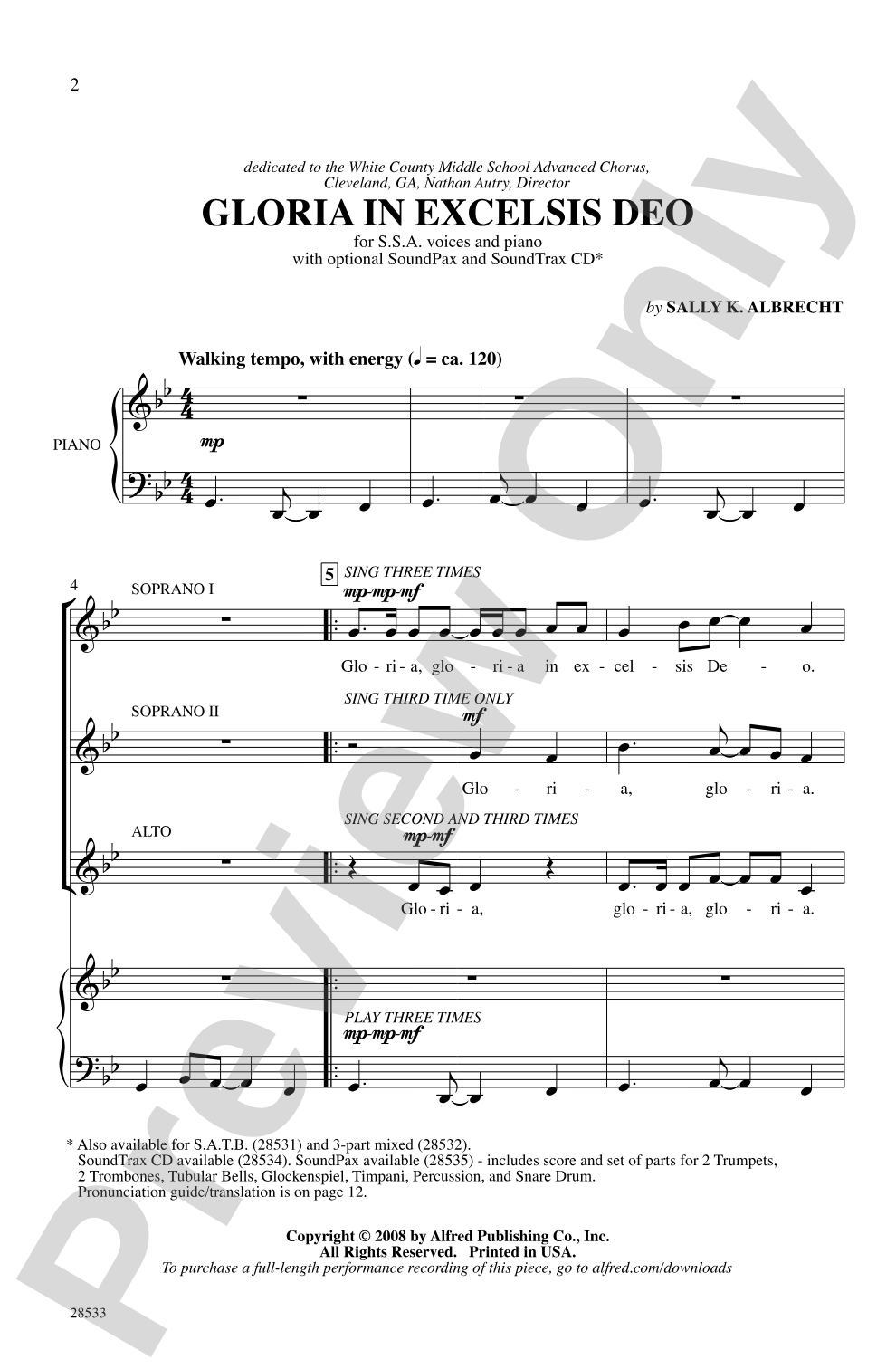
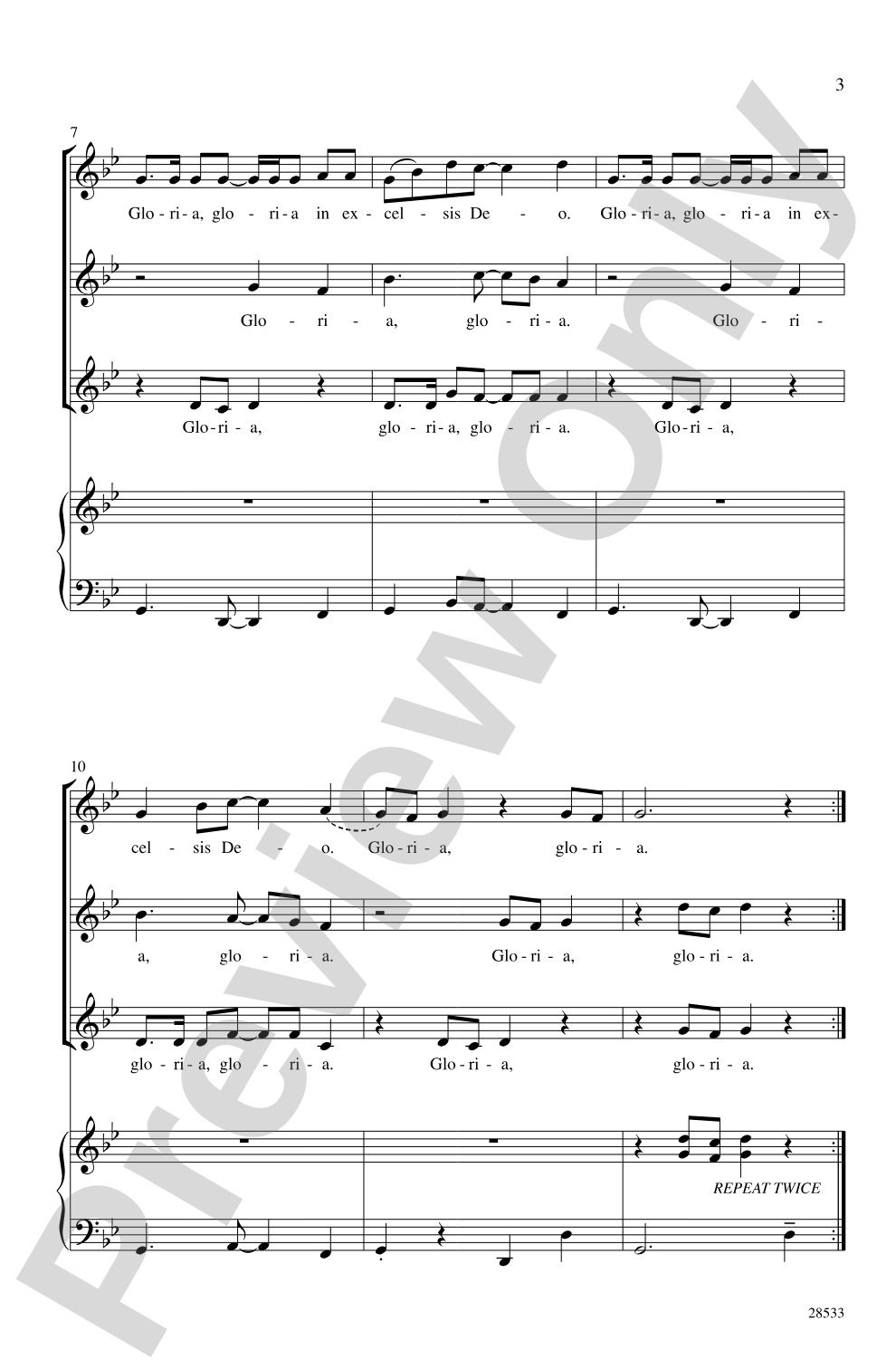
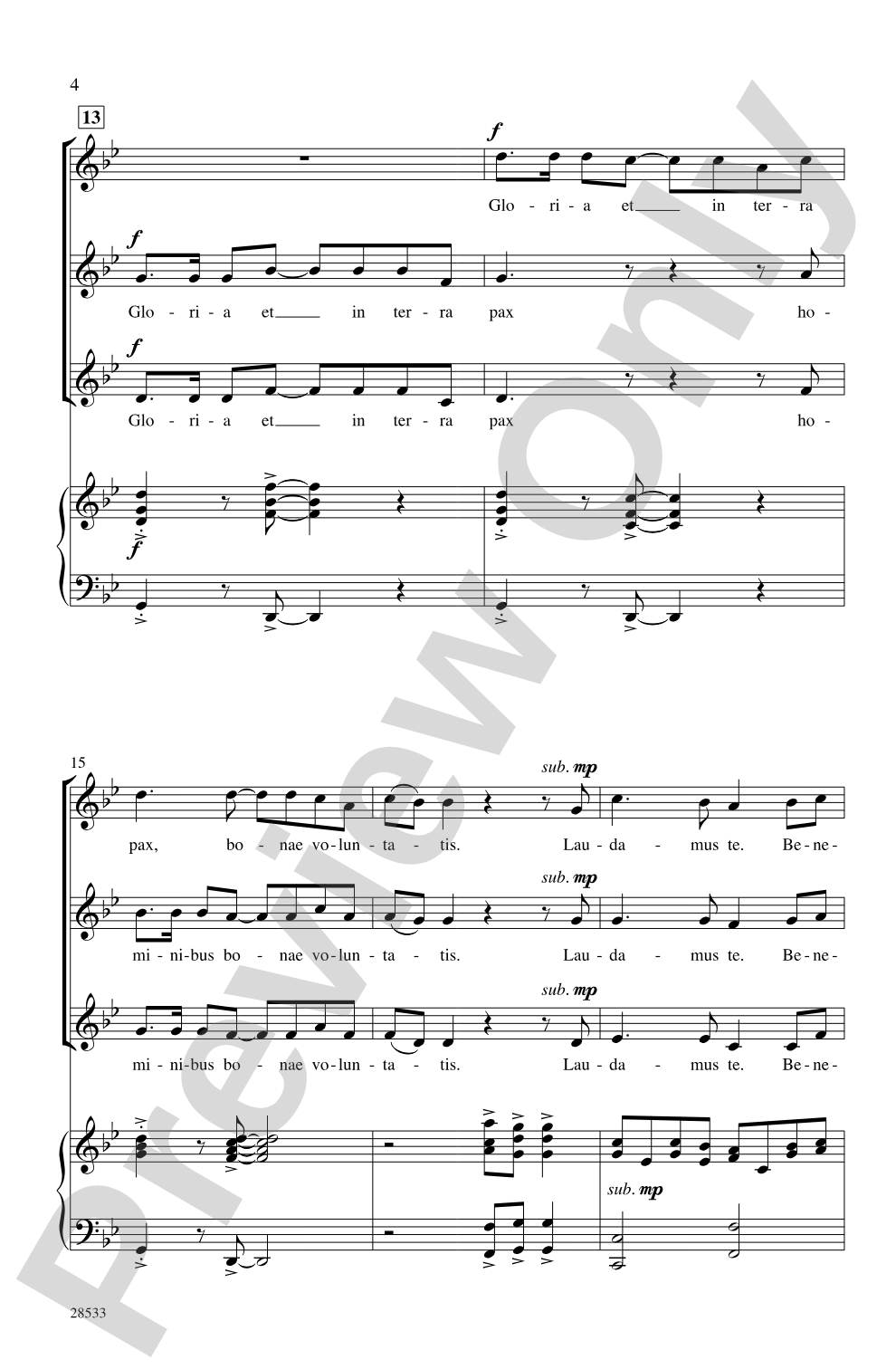
An artful setting of the familiar "Gloria" text, which features infections rhythms, layered melody lines, and fantastic optional percussion parts . . . all in a minor key. Effective as a processional, or perfect for a dynamic change of pace in your program. Impressive for concerts or contests any time of year.


Gloria in Excelsis Deo: SSA Choral Octavo isn't in MakeMusic Cloud just yet...but it could be. Let us know you'd like to see it, and you'll help shape what comes next. In the meantime, start a free trial and dive into thousands of interactive titles your students can play along with today.
Request This Title
Tell us you want it.
Start Your Free Trial
Explore everything that's ready to play right now.
Sample Audio
1
Audio File
--:--
0:00
0:00
Sample Video
No sample videos found.
Additional Details
Series:
Alfred Choral Designs
Publisher:
Alfred Music
Page Count:
12
SKU:
00-PO-0000472
More about this title
About the Composer: Sally K. Albrecht

Sally K. Albrecht has shaped American choral music for over three decades, both as a prolific composer and as a shaping force in educational publishing. Since 1987, she has received annual ASCAP Special Music Awards and maintains more than 600 published choral works alongside 75 larger musicals and songbooks. Her conducting has brought her to prestigious venues including Lincoln Center, Carnegie Hall, and The Kennedy Center, where she has led honor choirs and festival ensembles. She served as Director of School Choral, Vocal, and Elementary Publications at Alfred Music and two other major publishers, bringing her deep understanding of what works in the classroom and concert hall directly into her compositional practice.
Educated at Rollins College (B.A., 1976) and the University of Miami (M.A. in Drama, M.M. in Accompanying), Albrecht's background spans music, theater, and collaborative accompaniment. Her work with choral movement has become a signature element of her style. She has taught at Oakland University, Jersey City State College, and Meredith College, and serves on the Board of Trustees at Rollins College. A 2021 Distinguished Alumna Award recipient from both the University of Miami Frost School of Music and Rollins College, she currently resides in Wake Forest, North Carolina.
Why we love this
The minor key setting immediately distinguishes this from countless major-key "Gloria" arrangements, creating a rich, unexpected sonic landscape that still honors the text's celebratory nature. Albrecht's layered melodic writing gives each voice part genuine independence and interest, while the optional percussion parts add flexibility: they elevate the sound for concert performances without being essential, so your ensemble can scale to your resources. The infectious rhythmic energy makes this equally at home as a stirring processional or as a program moment that catches an audience's attention mid-concert.
What to expect
The minor key lends a contemplative undercurrent despite the text's joyful message, creating an affecting tension that feels both reverent and energized. Layered rhythms and interlocking melodic lines give the music a propulsive, modern sensibility while the familiar Latin text grounds it in tradition. With optional percussion, it gains an almost processional grandeur; without, it remains intimate and focused.
Who it's for
SSA choirs (and SSAA groups, which can easily sing the arrangement as written) looking for a sacred setting with harmonic sophistication and rhythmic drive. The piece works for developing upper-level choirs and for experienced ensembles seeking a short work with strong concert or contest appeal.
How to get the most out of it
- Bring out the rhythmic interlocking between parts by listening across all three voice lines during rehearsal; the syncopation gains clarity and momentum when singers hear how their rhythm relates to the whole.
- If you're using the optional percussion, introduce those parts early so the ensemble gets comfortable with the pulse they're reinforcing; percussionists lock in faster when vocalists are singing the underlying pattern confidently.
- Shape the minor-key harmony with awareness of tension and release; avoid making it sound dark or melancholic by keeping the tempo buoyant and the diction crisp through the rhythmic figures.
- Use the recorded accompaniment during early rehearsals to establish the harmonic context and tempo, then gradually shift to unaccompanied singing so the ensemble develops independent intonation in this less-familiar harmonic language.
How to use it
Open a concert with this as an impressive processional, allowing the piece to unfold with visual and sonic presence, or slot it mid-program as a change-of-pace moment that jolts an audience awake with fresh harmonic color and rhythmic energy. Its 12-page length and contest-ready polish make it ideal for festival performances or as a powerful shorter work bookended by larger sacred selections.
Skills your students will build
- Reading layered, independent melodic lines across three parts
- Maintaining rhythmic precision in syncopated, interlocking patterns
- Singing securely in minor-key harmony and resolving chromatic movement
- Blending optional percussion parts with vocal texture while preserving clarity
- Sustaining energy and presence in a shorter, high-impact work