
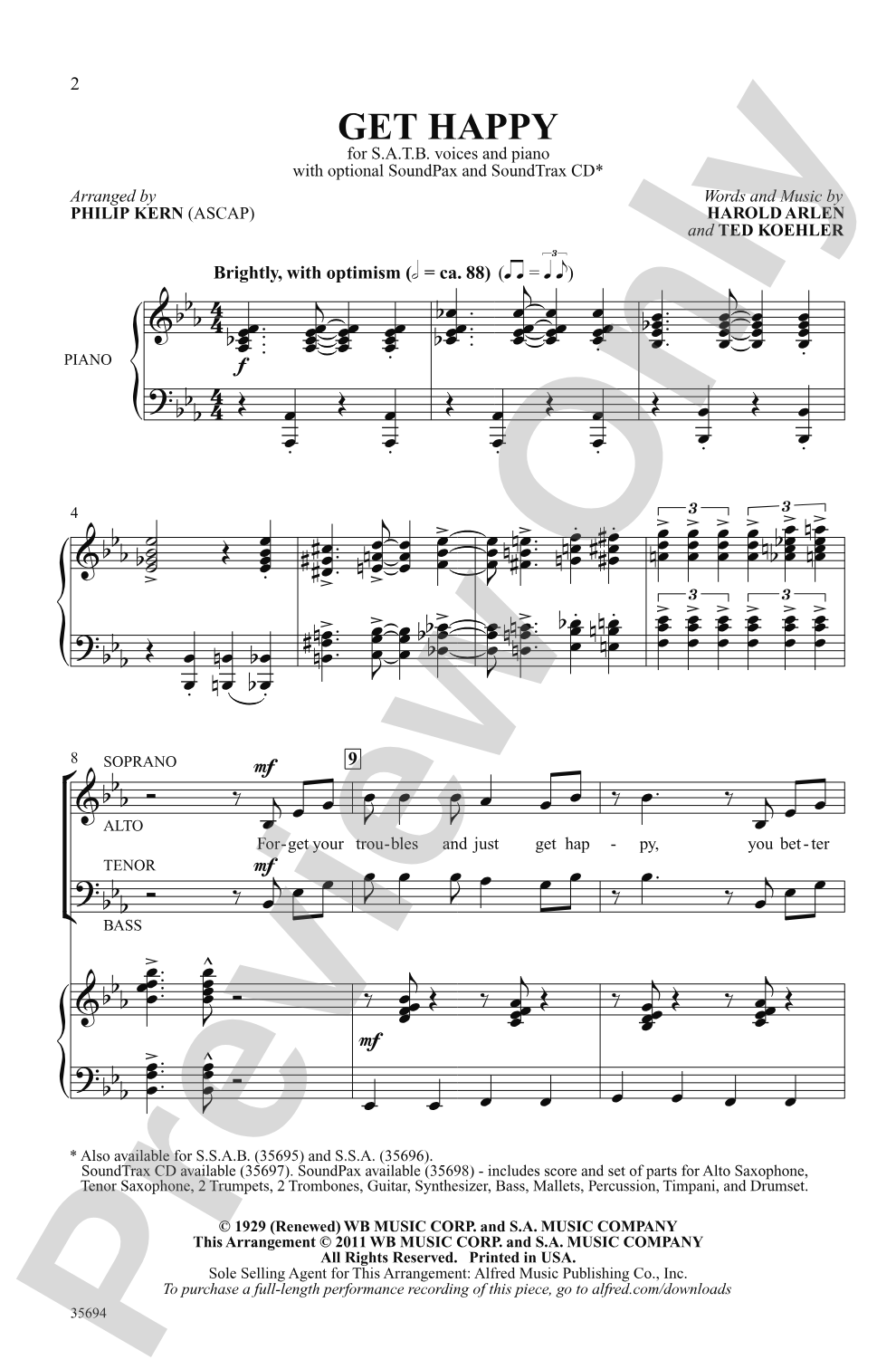
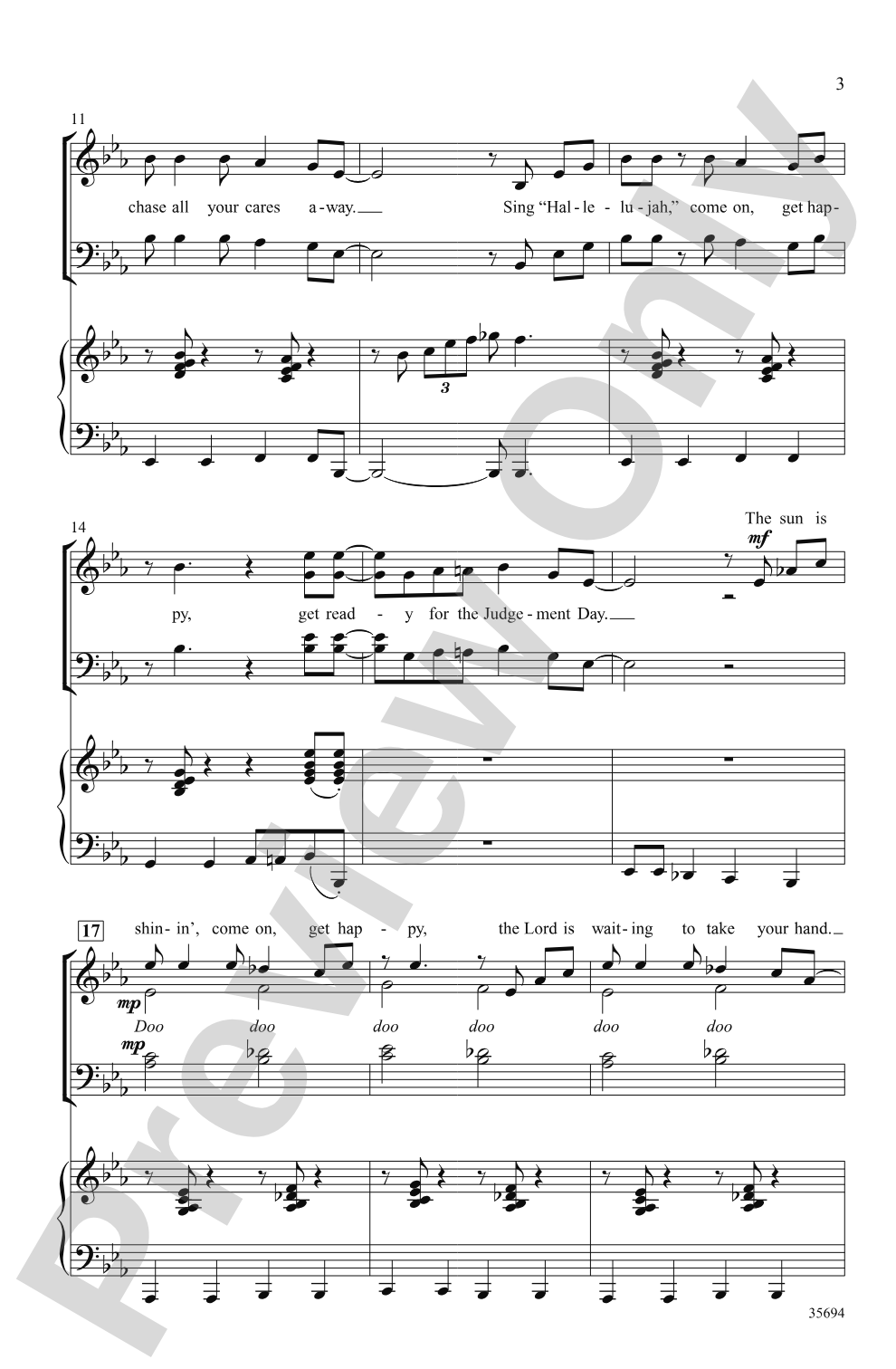
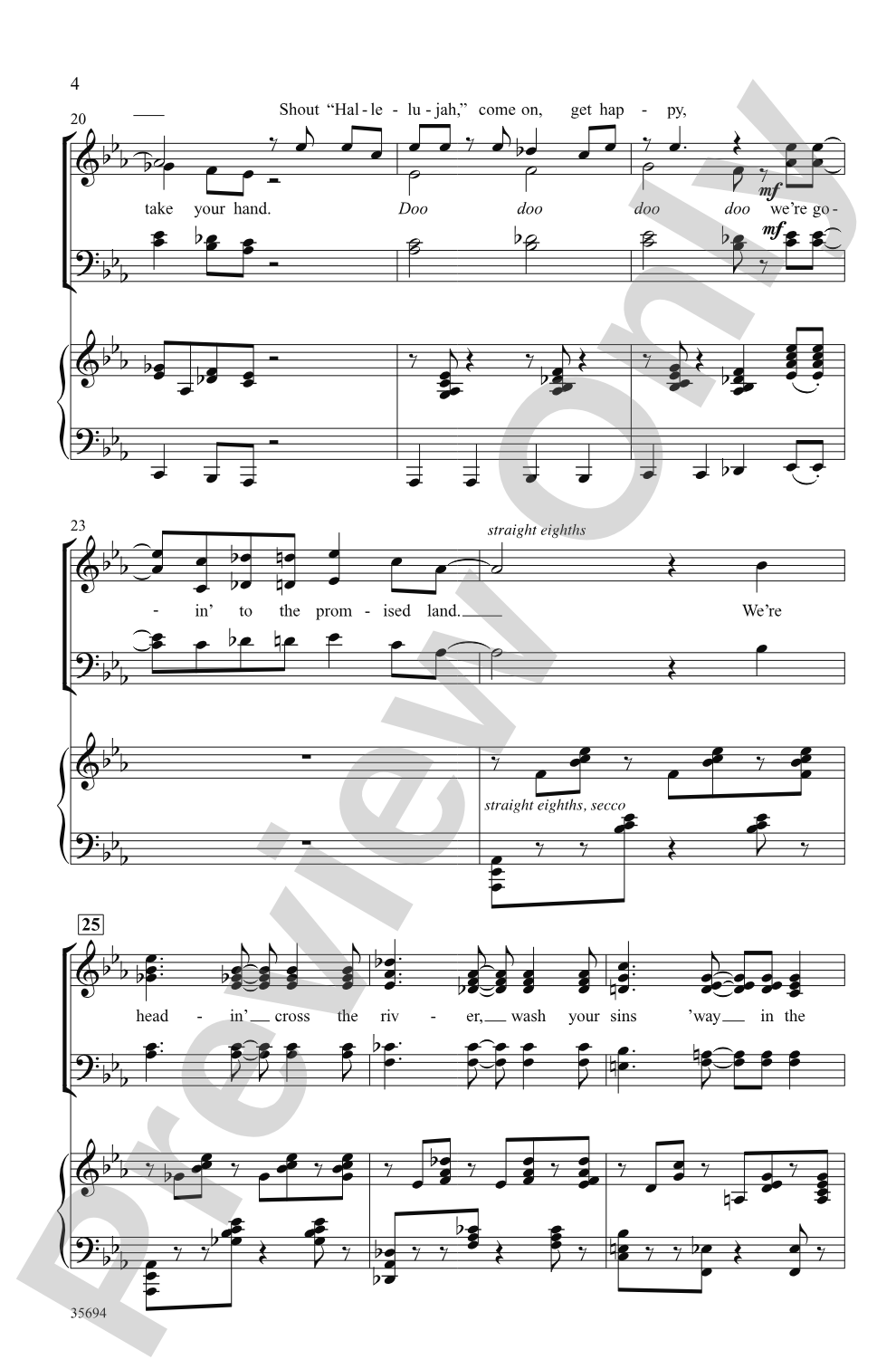

Get Happy: SATB Choral Octavo
Words and music by Harold Arlen and Ted Koehler / arr. Philip Kern
Item: 00-PO-0001039

$1.95
Minimum order quantity: 20 copies
One moment…
Related Items
Get Happy: SoundTrax Digital Audio Download |
$26.99
|
View | |
Get Happy: SSAB Choral Octavo |
$1.95
|
View | |
Get Happy: SSA Choral Octavo |
$1.95
|
View | |
Get Happy: Choral SoundPax |
$50.00
|
View | |
Get Happy: SATB Choral Octavo |
$1.95
|
View | |
Get Happy: SSAB Choral Octavo |
$1.95
|
View | |
Get Happy: SSA Choral Octavo |
$1.95
|
View | |
Get Happy: Choral Octavo SoundTrax CD |
$26.99
|
View | |
Get Happy: Choral SoundPax |
$50.00
|
View |
Description
This was the first of many hits that Harold Arlen and Ted Koehler wrote together. It's most associated with Judy Garland, who performed "Get Happy" in her last MGM film Summer Stock. This incredible hot and jazzy arrangement really cooks from beginning to end! Featured on Showbiz! choral movement DVD (00-35858).


Don't just read it, hear it, play along with it, and watch your students grow with it. In MakeMusic Cloud, Get Happy: SATB Choral Octavo comes alive with professional accompaniment, adjustable tempo, and built-in practice tools that turn solo practice into real progress.
Open in the Player
Jump straight in and assign it today.
Start Your Free Trial
Open this title and explore the full library in minutes.
Sample Audio
1
Audio File
--:--
0:00
0:00
Sample Video
No sample videos found.
Additional Details
Series:
Alfred Pop Choral Series
Publisher:
Alfred Music
Page Count:
16
SKU:
00-PO-0001039
More about this title
About the Composer: Harold Arlen
Harold Arlen (1905-1986) shaped the sound of American musical theater and film through his gift for melody and harmonic sophistication. Working primarily in the 1930s and 1940s, Arlen composed for Broadway and Hollywood, creating standards that remain central to the American songbook. His ability to blend popular idioms with jazz harmonies made him a favorite among arrangers and performers seeking depth beneath accessibility.
Arlen's partnership with lyricist Ted Koehler produced some of the era's most enduring songs. For choral directors, Arlen's compositions offer a bridge between classical musicality and the rhythmic drive of jazz and popular music, making them ideal for choirs exploring styles beyond traditional repertoire.
Why we love this
Philip Kern's arrangement captures the swagger and momentum that made this Judy Garland classic irresistible. The piece swings throughout with clear sectional writing that keeps energy high without sacrificing the harmonic richness that gives the tune its character. Programming this demonstrates your choir's ability to handle jazz-inflected popular music with sophistication and style.
What to expect
The piece crackles with the optimism of 1930s dance music, built on a groove that wants to move. Harmonies are warm and bluesy beneath the energetic surface, giving singers moments of harmonic color to shape while the rhythm drives forward relentlessly.
Who it's for
This arrangement serves choirs at the secondary and early collegiate level who are developing jazz and popular music literacy. Your singers need secure rhythm reading and the flexibility to handle syncopation, but the part writing is clear enough that individual voice independence isn't yet required.
How to get the most out of it
- Lock the rhythm section (piano and any available bass/drums) to the recorded accompaniment early in rehearsal so singers can rely on a steady groove while learning their parts.
- Shape the phrase contours by treating each section as a complete musical idea rather than stopping at the bar line, letting the jazz phrasing breathe naturally.
- Balance the parts so the soprano line reads clearly during passages where it carries the melody, but support lower voices when they establish harmonic foundation.
- Articulate consonants crisply to match the rhythmic precision of the accompaniment and maintain the piece's propulsive energy.
How to use it
Pair this with other jazz-influenced choral arrangements to create a "Showbiz" or "Hollywood" themed concert section. Its 16-page length makes it substantial enough for a standalone feature or strong second piece in a medley program. The recorded accompaniment availability also makes it ideal when instrumentalists are unavailable.
Skills your students will build
- Reading and performing syncopated rhythms in a jazz context
- Maintaining rhythmic independence while blending with a groove-based accompaniment
- Singing jazz articulation and phrasing distinct from classical legit technique
- Balancing choral tone with the brightness required by jazz-inflected popular music