
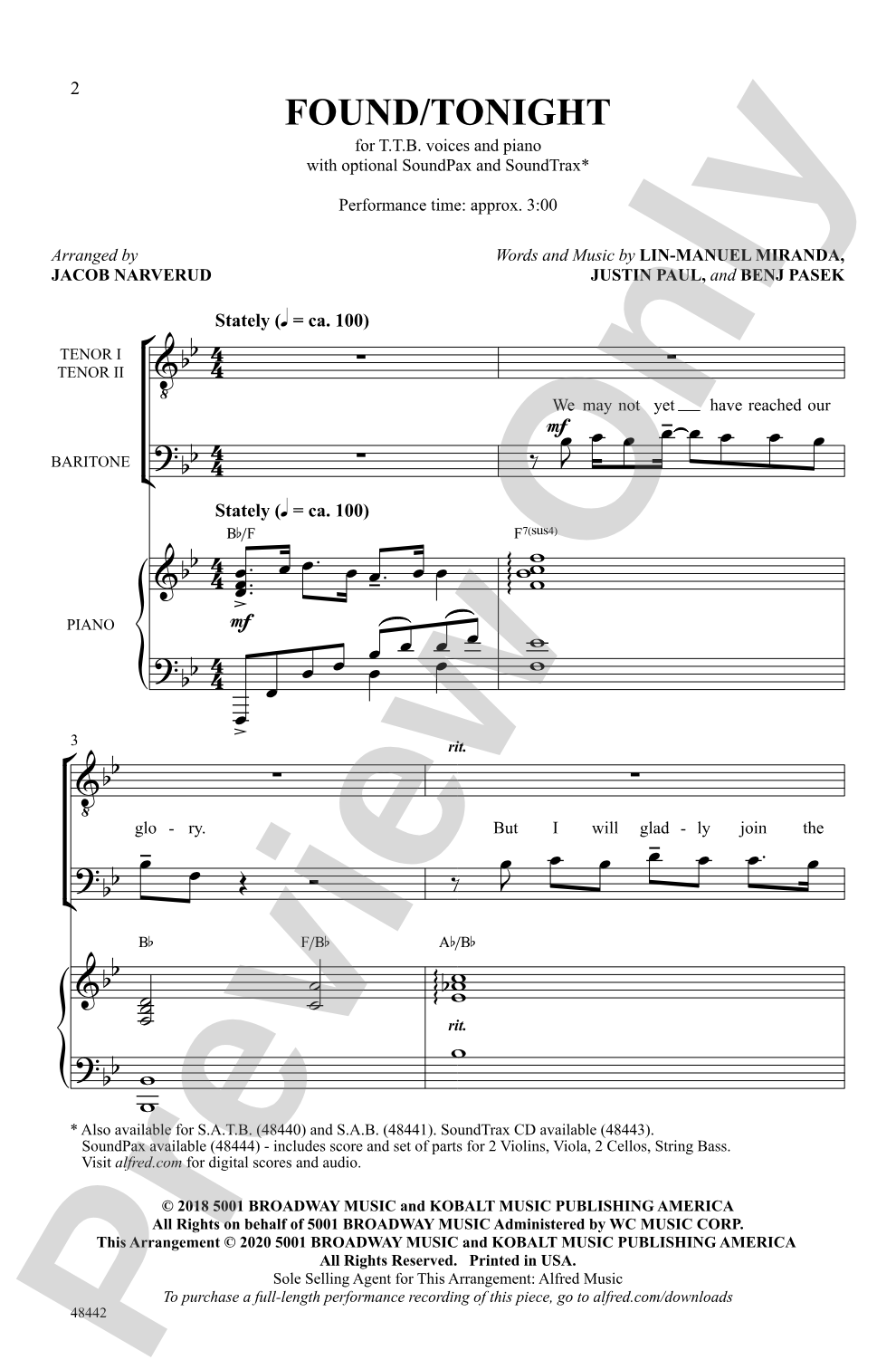
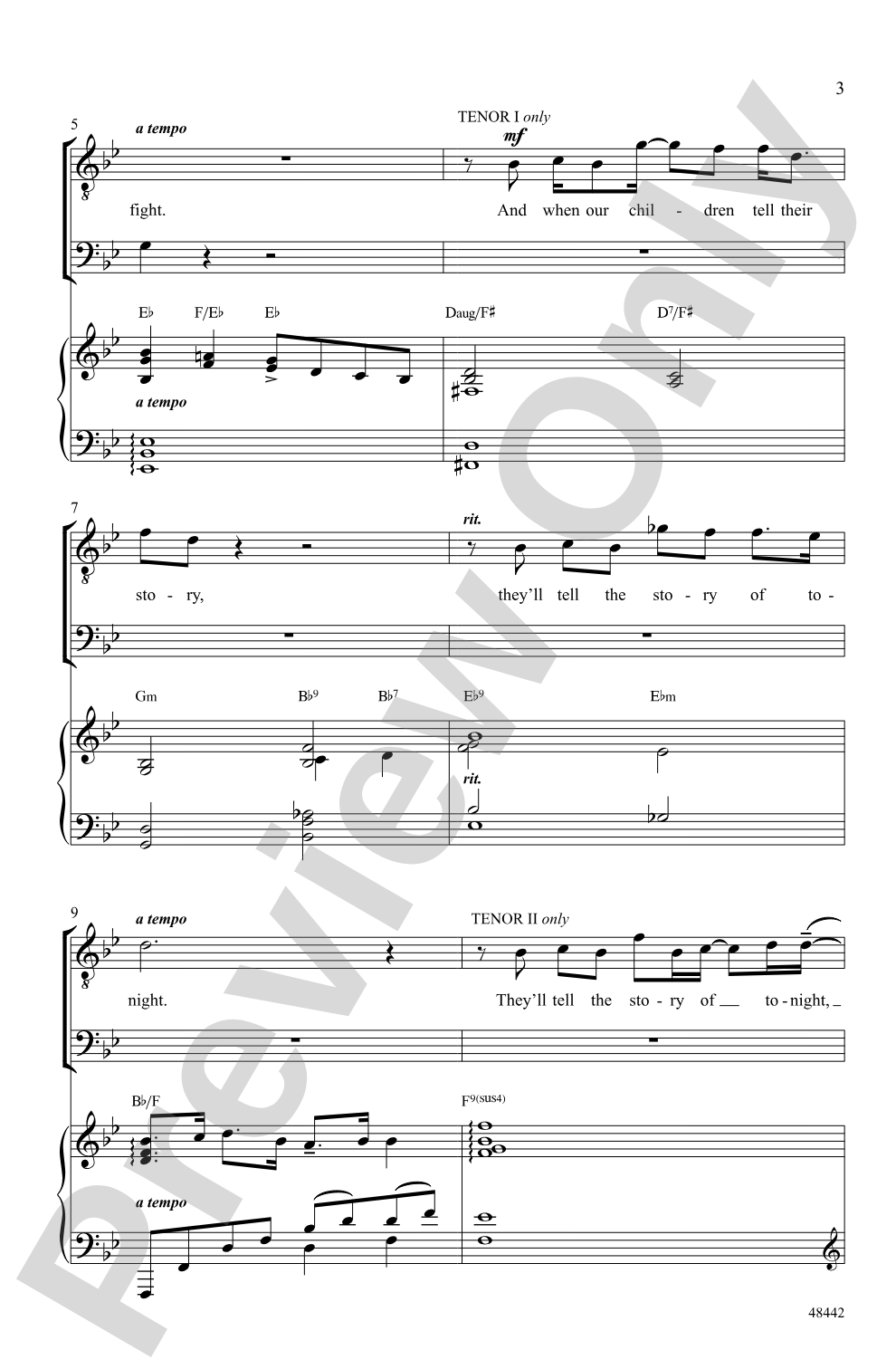
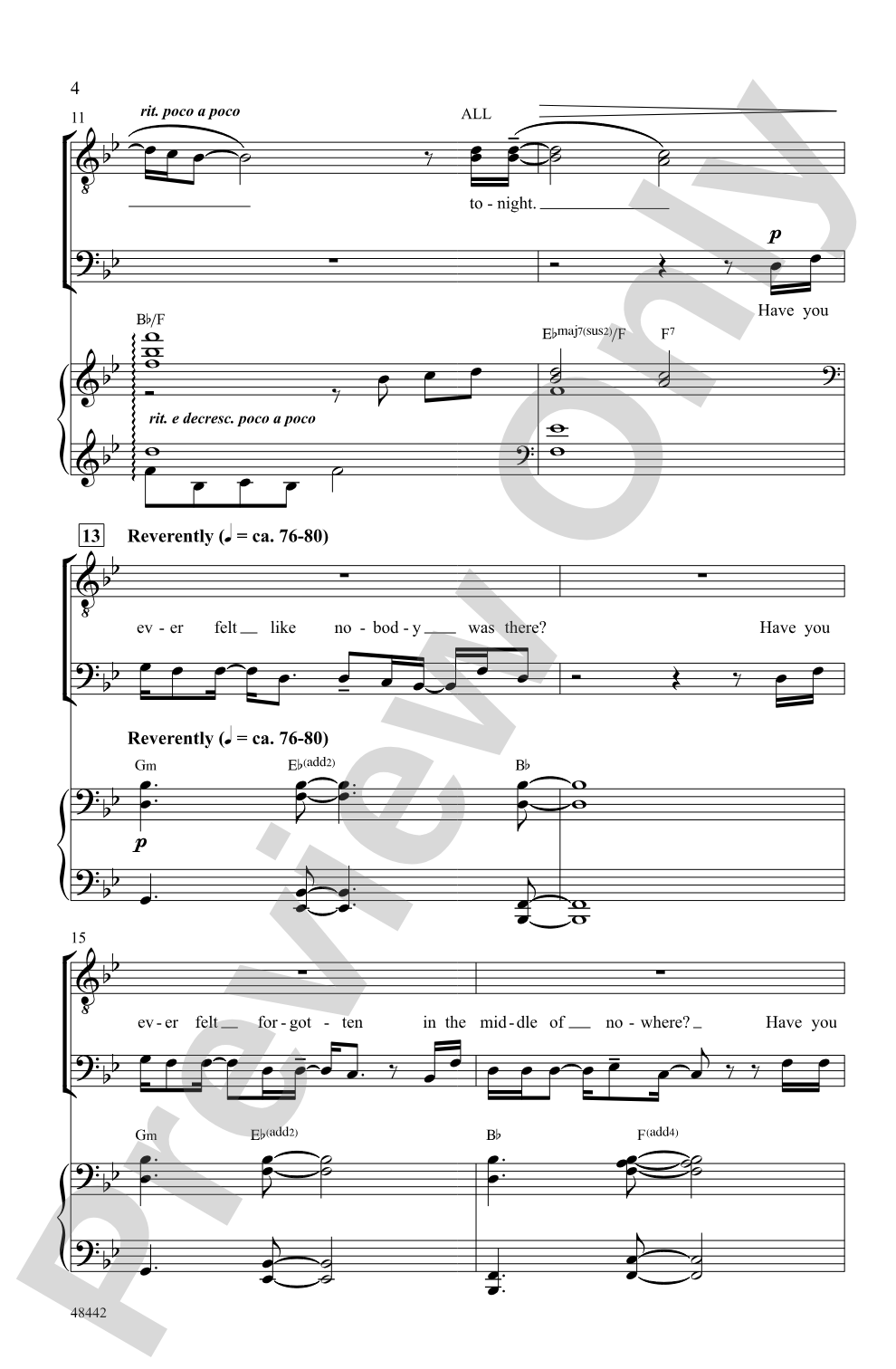

Found/Tonight: TTB Choral Octavo
from Dear Evan Hansen and Hamilton
Words and music by Lin-Manuel Miranda, Justin Paul, and Benj Pasek / arr. Jacob Narverud
Item: 00-PO-0006429

$2.25
Minimum order quantity: 20 copies
One moment…
Related Items
Found/Tonight: SATB Choral Octavo |
$2.75
|
View | |
Found/Tonight: SAB Choral Octavo |
$2.25
|
View | |
Found/Tonight: 2-Part/SSA Choral Octavo |
$2.35
|
View | |
Found/Tonight: SoundTrax Digital Audio Download |
$29.99
|
View | |
Found/Tonight: Choral SoundPax |
$30.00
|
View | |
Found/Tonight: SATB Choral Octavo |
$2.75
|
View | |
Found/Tonight: SAB Choral Octavo |
$2.75
|
View | |
Found/Tonight: TTB Choral Octavo |
$2.25
|
View | |
Found/Tonight: 2-Part/SSA Choral Octavo |
$2.65
|
View | |
Found/Tonight: Choral SoundTrax CD |
$29.99
|
View | |
Found/Tonight: Choral SoundPax |
$30.00
|
View |
Description
Dear Evan Hansen. Hamilton. Lin-Manuel Miranda. Ben Platt. Pasek and Paul. What more can be said? This incredible mash-up combines hits from two smash Broadway musicals, written by contemporary powerhouse composers of stage and screen. You've sung "You Will Be Found," and you know "The Story of Tonight"; now perform them together in an emotional arrangement that shares a message of hope and encouragement.


Don't just read it, hear it, play along with it, and watch your students grow with it. In MakeMusic Cloud, Found/Tonight: TTB Choral Octavo comes alive with professional accompaniment, adjustable tempo, and built-in practice tools that turn solo practice into real progress.
Open in the Player
Jump straight in and assign it today.
Start Your Free Trial
Open this title and explore the full library in minutes.
Sample Audio
1
Audio File
--:--
0:00
0:00
Sample Video
Additional Details
Series:
Alfred Pop Choral Series
Publisher:
Alfred Music
Page Count:
16
SKU:
00-PO-0006429
More about this title
About the Composer: Lin Manuel Miranda
Lin-Manuel Miranda has reshaped contemporary musical theater by grounding hip-hop, R&B, and traditional show music within deeply personal, socially conscious narratives. His work on Hamilton and Dear Evan Hansen represents a generational shift in how Broadway tells American stories, combining virtuosic wordplay with music that appeals across ages and backgrounds.
Miranda's influence on music education extends beyond the stage. His scores have become classroom staples, introducing young singers to contemporary compositional techniques, rhythmic complexity, and the integration of popular music idioms with classical choral traditions. Teachers and directors recognize his work as a gateway to engaging reluctant singers and building ensemble literacy around modern theatrical music.
Why we love this
This arrangement captures what makes both source shows remarkable: the emotional urgency of "You Will Be Found" paired with the infectious optimism of "The Story of Tonight" creates a program piece that speaks directly to young singers. The mash-up isn't a novelty; it's a genuine artistic statement that explores how hope and connection sustain us, giving your ensemble material with real theatrical weight and contemporary relevance.
What to expect
The arrangement moves between moments of intimate vulnerability and surging hope, capturing the emotional honesty of Dear Evan Hansen before lifting into Hamilton's declarative joy and ambition. You'll feel the contemporary soul and energy of modern Broadway: rhythmically precise, harmonically rich, and rooted in a genuine message about belonging and possibility.
Who it's for
This octavo works for choral programs that want to program contemporary Broadway alongside more traditional repertoire. It's particularly effective for ensembles with singers ages 14 and up who connect emotionally with musical theater and appreciate the accessibility of hits they may already know.
How to get the most out of it
- Balance the blend of two distinct musical identities by rehearsing the "Dear Evan Hansen" and "Hamilton" sections separately first, then layer them to hear where harmonic colors shift and where clarity is most critical.
- The recorded accompaniment can anchor ensemble confidence, but use it strategically in early rehearsals and gradually remove it as singers internalize their parts; this builds independence and prevents over-reliance on the track.
- Shape the dynamic arc across the entire arrangement to emphasize the emotional trajectory from vulnerability to affirmation; resist the urge to sing loudly throughout and instead use dynamics to highlight the lyrical and harmonic turning points.
- Pay close attention to text clarity in the rap/rhythmic sections, which may feel unfamiliar to traditional choral singers; isolate these rhythms separately and connect them to natural speech patterns before demanding musical polish.
How to use it
Program this as the centerpiece of a spring concert celebrating contemporary musical theater, or use it as a standalone statement about resilience and community in any concert context. The piece's emotional power and theatrical appeal make it ideal for audiences that include families and younger listeners who recognize these shows.
Skills your students will build
- Reading and performing syncopated rhythmic patterns common to contemporary musical theater
- Balancing independent melodic and harmonic lines across multiple voice parts with equal clarity
- Interpreting dynamic and textual contrast across contrasting sections and musical styles
- Sustaining ensemble focus through rapid harmonic movement and key relationships