
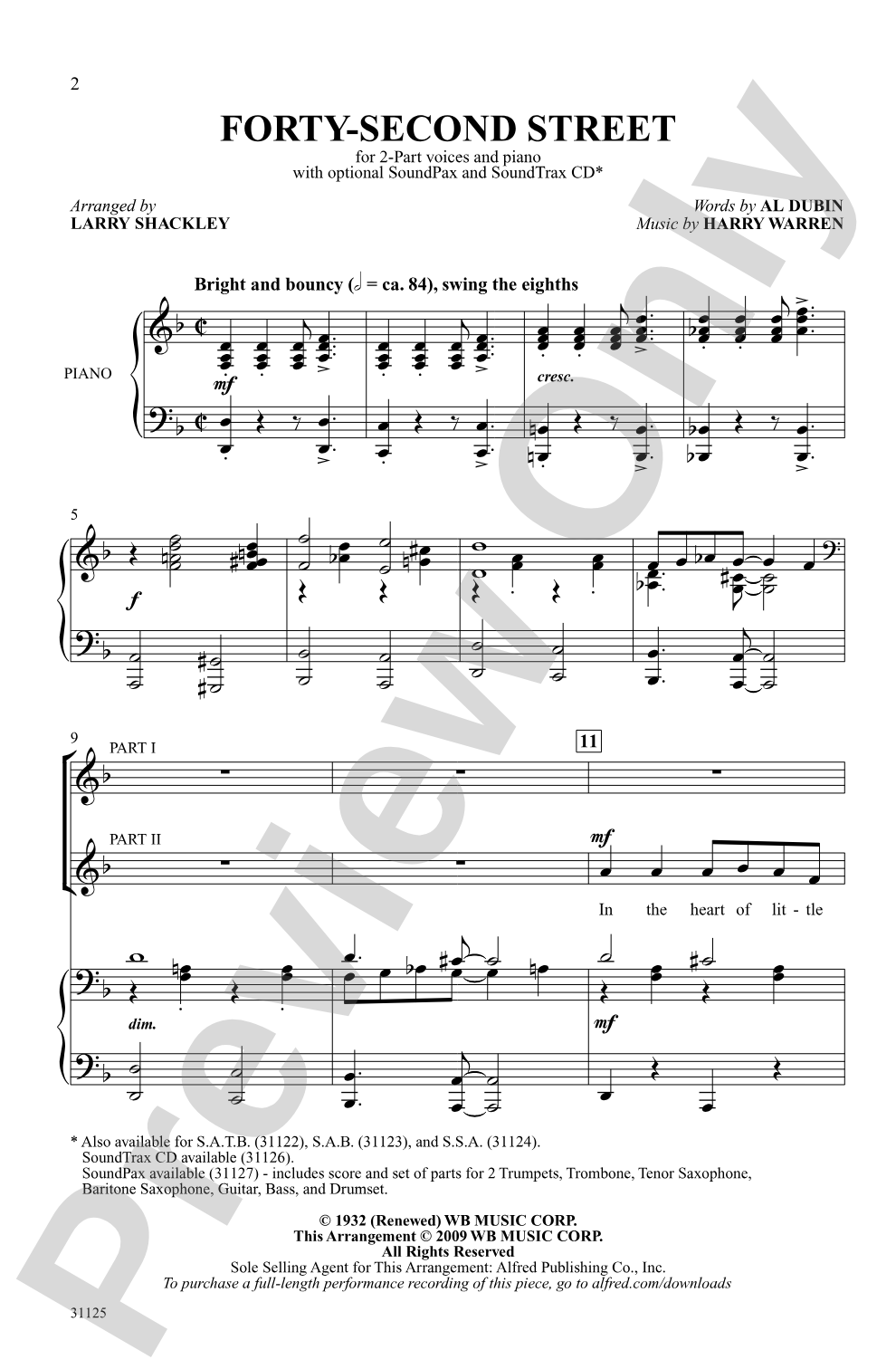
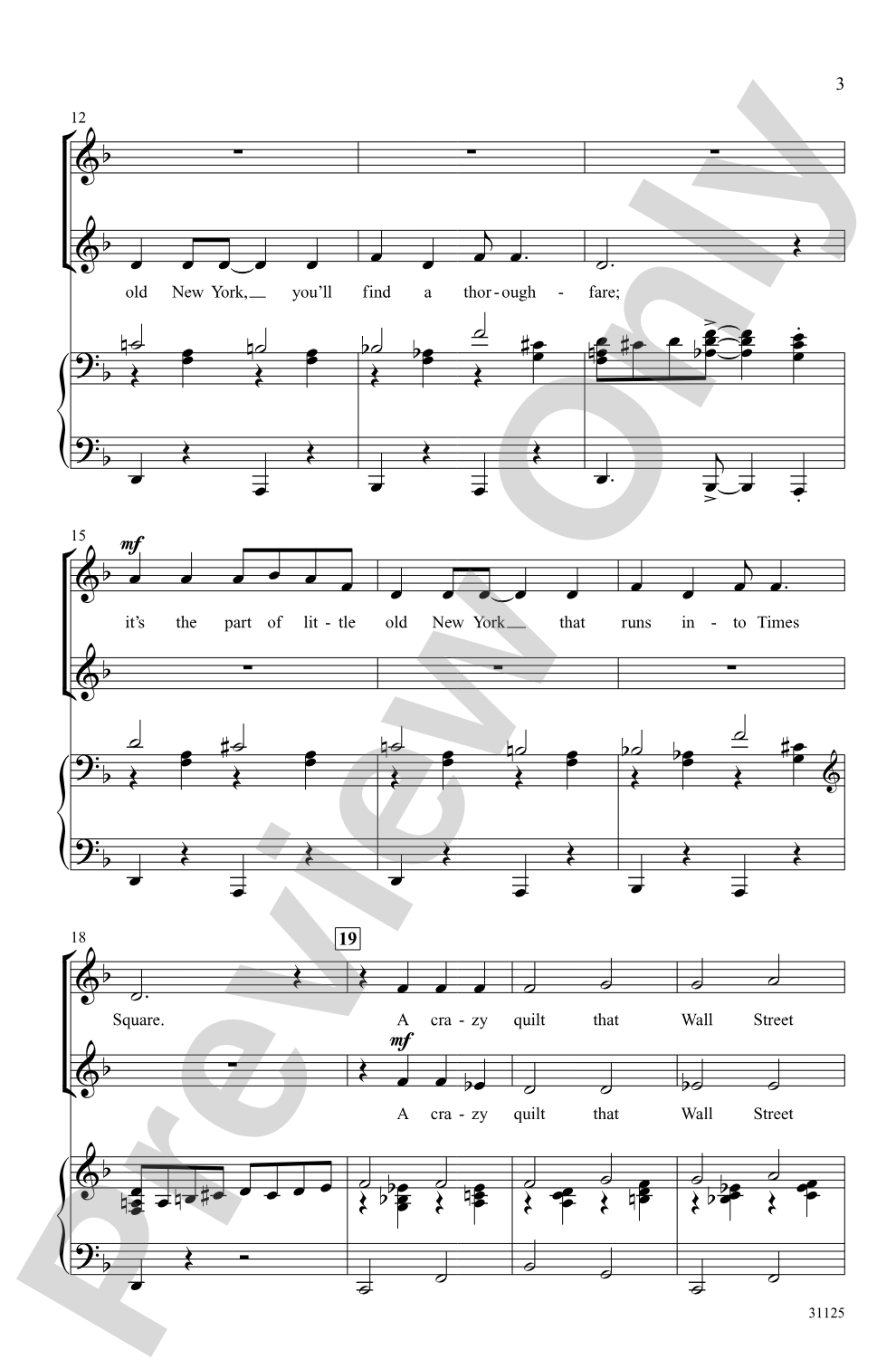
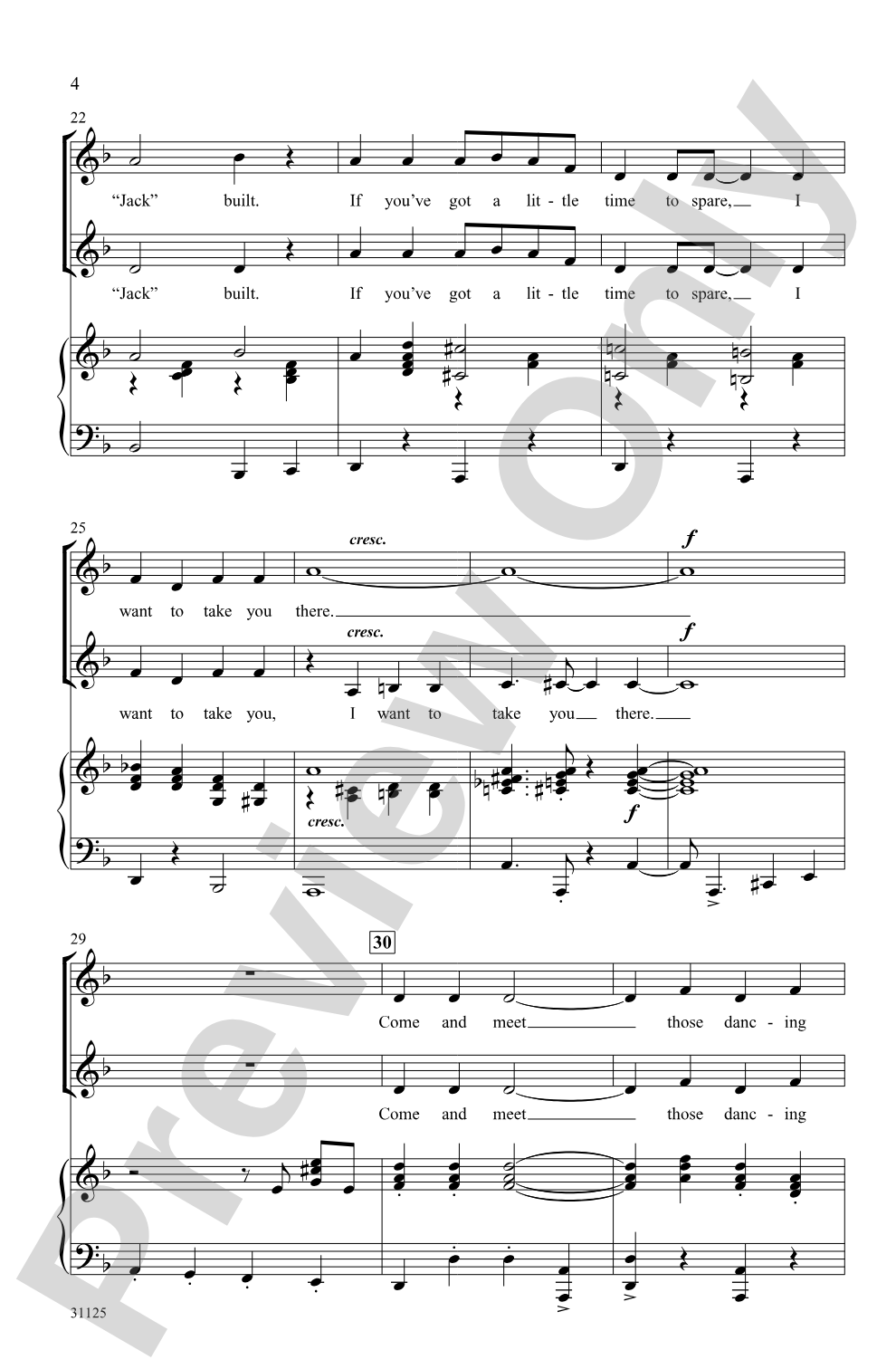

Forty-Second Street: 2-Part Choral Octavo
From the Musical 42nd Street)
Words by Al Dubin, music by Harry Warren / arr. Larry Shackley
Item: 00-PO-0008005
$1.85
Minimum order quantity: 20 copies
Pickup currently not available
Related Items
Forty-Second Street: SoundTrax Digital Audio Download |
$27.99
|
View | |
Forty-Second Street (from the musical Forty-Second Street): SATB Choral Octavo |
$2.10
|
View | |
Forty-Second Street: SAB Choral Octavo |
$2.25
|
View | |
Forty-Second Street: SSA Choral Octavo |
$2.25
|
View | |
Forty-Second Street (from the musical Forty-Second Street): Choral SoundPax |
$35.00
|
View | |
Forty-Second Street: SATB Choral Octavo |
$2.10
|
View | |
Forty-Second Street: SAB Choral Octavo |
$2.25
|
View | |
Forty-Second Street: SSA Choral Octavo |
$2.25
|
View | |
Forty-Second Street: 2-Part Choral Octavo |
$1.85
|
View | |
Forty-Second Street: Choral Octavo SoundTrax CD |
$27.99
|
View | |
Forty-Second Street: Choral SoundPax |
$35.00
|
View |
Description
Here's a dynamic new arrangement of the title song from the often revived musical hit, 42nd Street. Offered in true-to-form Broadway style, just the way you want to sing it---and hear it!


Forty-Second Street: 2-Part Choral Octavo isn't in MakeMusic Cloud just yet...but it could be. Let us know you'd like to see it, and you'll help shape what comes next. In the meantime, start a free trial and dive into thousands of interactive titles your students can play along with today.
Request This Title
Tell us you want it.
Start Your Free Trial
Explore everything that's ready to play right now.
Sample Audio
1
Audio File
--:--
0:00
0:00
Sample Video
No sample videos found.
Additional Details
Series:
Alfred Pop Choral Series
Publisher:
Alfred Music
Page Count:
12
SKU:
00-PO-0008005
More about this title
About the Composer: Harry Warren
Harry Warren (1893-1981) was one of Broadway's most prolific songwriters, composing over 800 songs during a career that spanned vaudeville, film, and the musical theater stage. His melodies possess an infectious quality that makes them immediately singable yet sophisticated enough to reward careful interpretation. Warren's work defined the sound of American musical theater in the 1930s and 1940s, and his songs remain standards in the jazz and pop repertoire because they balance commercial appeal with genuine musical substance.
Why we love this
Larry Shackley's arrangement captures the brassy energy and rhythmic snap of the original without demanding vocal acrobatics or jazz chops beyond a 2-part choir. The orchestration stays true to the Broadway style while keeping the focus on what makes this tune irresistible: a hook that your singers will be humming for weeks. It's the kind of piece that reminds students why people fell in love with American musical theater.
What to expect
Stepping out onto 42nd Street itself. The energy is bright and propulsive, with a jazz sensibility that feels modern even though the song is nearly a century old. There's an infectious optimism here, grounded in the kind of rhythmic precision that makes the best pop music move.
Who it's for
This works for choirs that want a genuine Broadway sound without the complexity of larger ensemble pieces. It suits programs ranging from middle school through community choirs, as long as singers can handle light syncopation and sustain the rhythmic clarity the piece demands.
How to get the most out of it
- Keep the rhythm section sharp and confident. The groove drives everything else, so lock in your pianists and percussionists before layering in the vocal parts.
- Treat the syncopations as natural speech patterns rather than technical challenges. These rhythms should feel like conversation, not precision counting.
- Use the recorded accompaniment strategically during early rehearsals to establish the style and tempo; then gradually move toward live rehearsal piano to develop independence.
- Shape the melodic phrases with the energy of a jazz singer, allowing slight breath flexibility to support the lyrical storyline rather than mechanical phrasing.
How to use it
Pair this with other standards from the Broadway golden age for a concert celebrating American musical theater, or use it as an upbeat closer that leaves audiences smiling. It also works beautifully in programs exploring the history of popular song or as a palate cleanser between more serious choral works.
Skills your students will build
- Rhythmic precision in syncopated passages
- Jazz phrasing and articulation
- Maintaining ensemble groove across multiple vocal lines
- Stylistic flexibility between classical and popular music traditions
- Breath management for sustained rhythmic phrases