

Figgy Pudding!: 2-Part Choral Octavo
(Incorporating "We Wish You a Merry Christmas")
Additional words and music by Ruth Morris Gray
Item: 00-PO-0007029
$2.05
Minimum order quantity: 20 copies
Pickup currently not available
Related Items
Figgy Pudding!: SoundTrax Digital Audio Download |
$29.99
|
View | |
Figgy Pudding!: SAB Choral Octavo |
$2.05
|
View | |
Figgy Pudding!: SSA Choral Octavo |
$2.05
|
View | |
Figgy Pudding!: TTB Choral Octavo |
$2.05
|
View | |
Figgy Pudding!: SAB Choral Octavo |
$2.05
|
View | |
Figgy Pudding!: SSA Choral Octavo |
$2.05
|
View | |
Figgy Pudding!: TTB Choral Octavo |
$2.05
|
View | |
Figgy Pudding!: 2-Part Choral Octavo |
$2.05
|
View | |
Figgy Pudding!: Choral SoundTrax CD |
$29.99
|
View |
Description
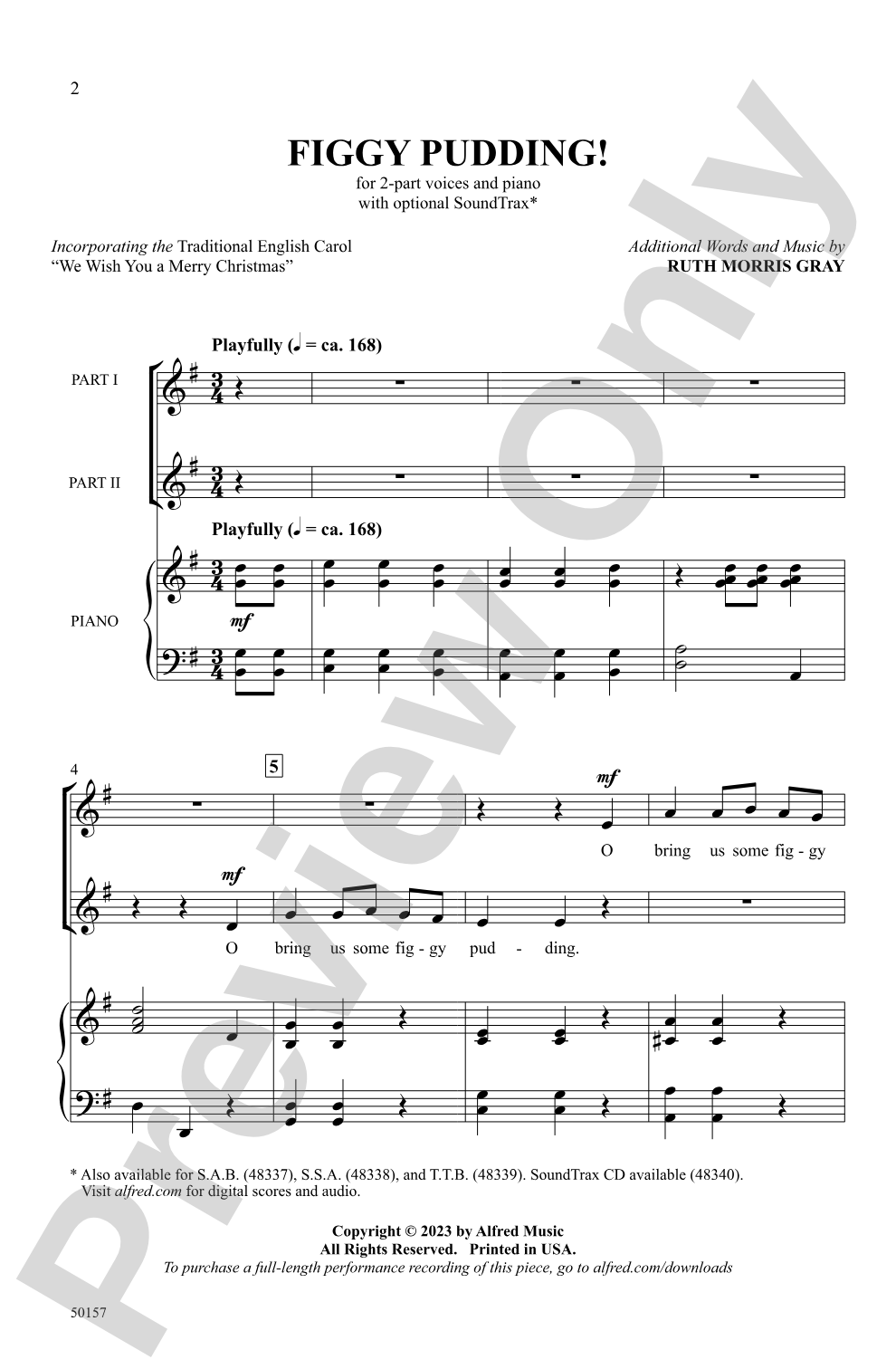
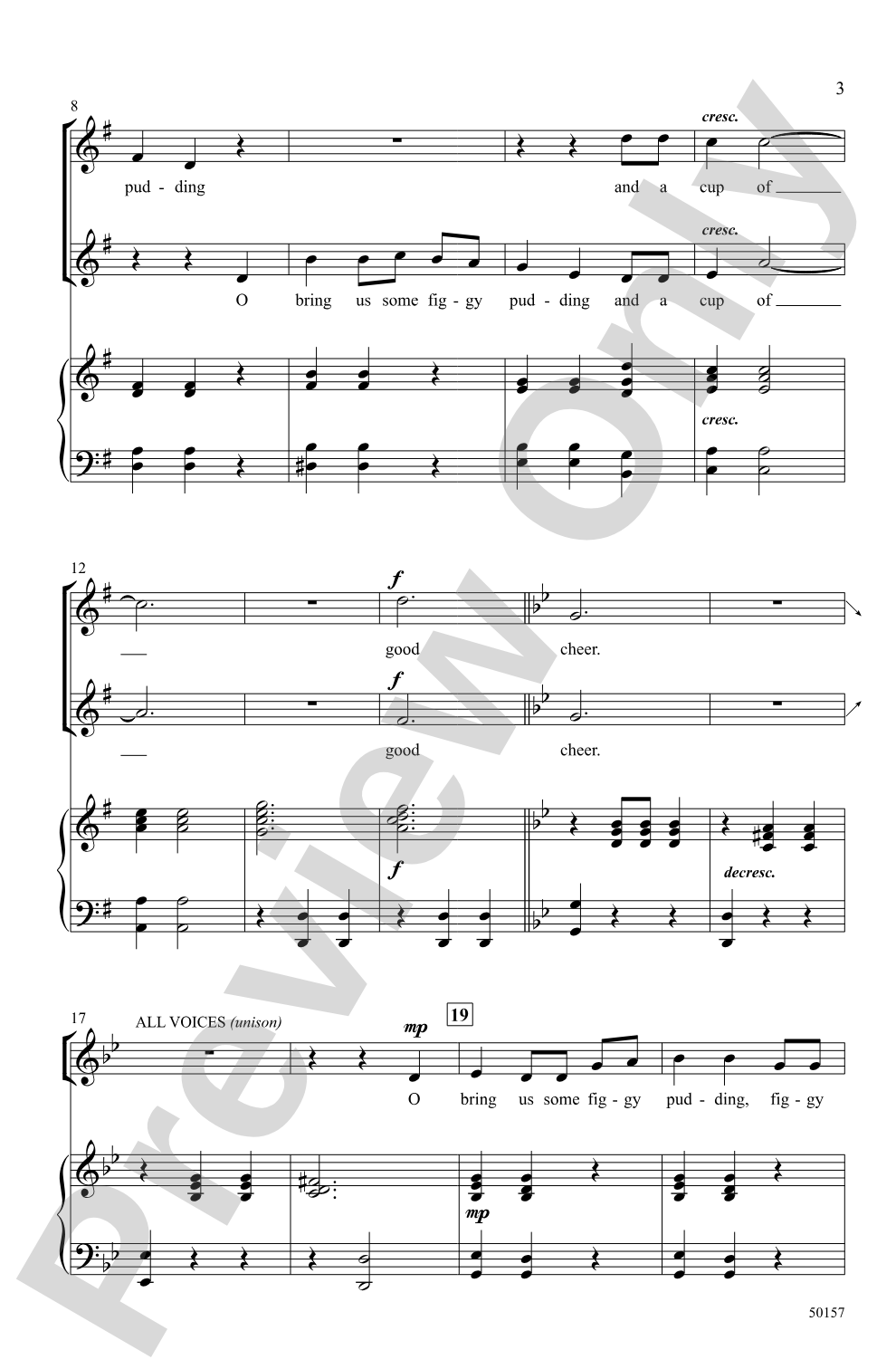
We won't go until we get some---but how exactly do you make that holiday confection, anyway? Find the answer in this playful, original (and completely secular) holiday canon loosely based on a fragment from "We Wish You a Merry Christmas." Prepared with old English Dickensian flair, the round stacks in three, a perfect recipe for building harmony skills.


Figgy Pudding!: 2-Part Choral Octavo isn't in MakeMusic Cloud just yet...but it could be. Let us know you'd like to see it, and you'll help shape what comes next. In the meantime, start a free trial and dive into thousands of interactive titles your students can play along with today.
Request This Title
Tell us you want it.
Start Your Free Trial
Explore everything that's ready to play right now.
Sample Audio
1
Audio File
--:--
0:00
0:00
Sample Video
Additional Details
Series:
Alfred Choral Designs
Publisher:
Alfred Music
Page Count:
12
SKU:
00-PO-0007029
More about this title
About the Composer: Ruth Morris Gray

Ruth Morris Gray brings both compositional sophistication and classroom experience to her work as Director of Choirs at Rosemead High School, where she has shaped the choral program since 2004. She holds degrees in Piano Performance and Composition from Biola University and a Master of Arts in Music Composition from UC Santa Barbara, complemented by credentials earned at California State University, Northridge. With over 100 published choral compositions to her name, Gray writes with a deep understanding of what works in rehearsal and on stage.
Beyond the score, Gray is an active performer and lifelong learner who finds inspiration in travel, outdoor pursuits, and collaborative music-making with her husband, Douglas. This blend of rigorous training, teaching wisdom, and creative curiosity shapes her distinctive voice in choral writing.
Why we love this
This piece solves the real challenge of finding secular holiday material that's genuinely clever and musically substantive rather than merely festive window dressing. Gray's gift for humor and harmonic interest shines through every stanza, making it equally fun to perform and refreshingly engaging for audiences tired of the standard canon of December concerts.
What to expect
A warm, slightly mischievous holiday moment rendered in part-song form. The piece captures the playful absurdity of the original carol's central question while maintaining genuine musicality and charm that rewards both singers and listeners.
Who it's for
Middle school through early high school choirs seeking holiday repertoire with both accessibility and musical substance. This works beautifully for choirs comfortable with part-singing fundamentals but still developing harmonic independence and canon technique.
How to get the most out of it
- Establish a steady pulse before introducing the canon; the three-part stacking depends on precise rhythmic confidence from all singers.
- Emphasize the Dickinsian language and whimsical character through articulation and phrasing rather than overloading the dynamic range.
- Build the middle section where voices overlap deliberately, letting each group hear their own line before layering in the other parts.
- Use the recorded accompaniment to anchor timing during rehearsal, then gradually reduce reliance on it as singers internalize their entries.
How to use it
Program this as a centerpiece of your winter concert's lighter half, perhaps pairing it with one traditional carol and one other original secular selection to create a themed set. It also works as an excellent rehearsal pedagogical tool earlier in the season when building canonical thinking and voice independence before tackling more complex arrangements.
Skills your students will build
- Canon and round technique with attention to precise entries and overlapping phrases
- Part independence in a 2-part texture moving toward three-part stacking
- Harmonic listening and balance when multiple melodic lines occur simultaneously
- Stylistic interpretation of text-driven secular choral music
- Rhythmic security and timing confidence in ensemble singing