
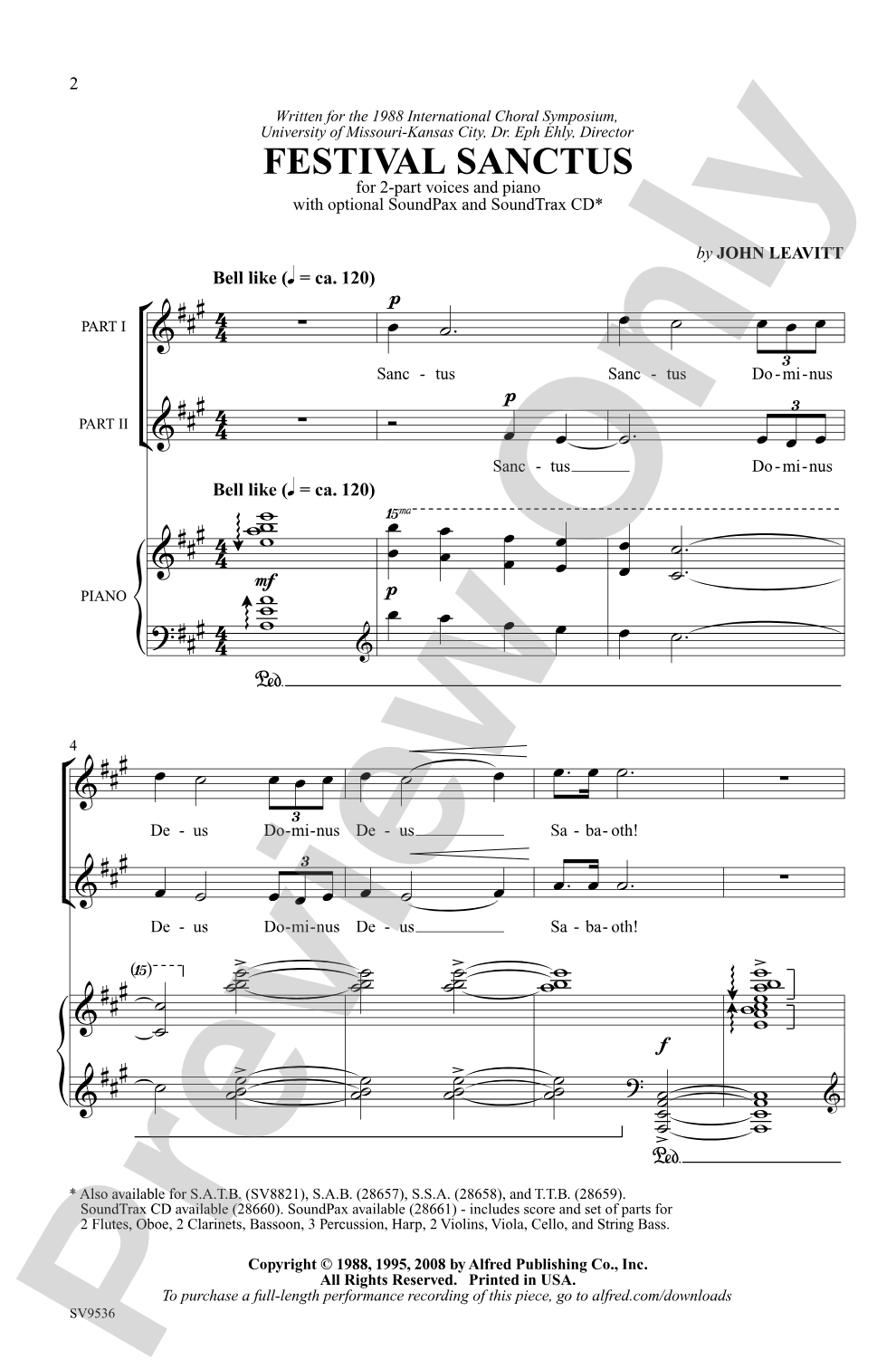
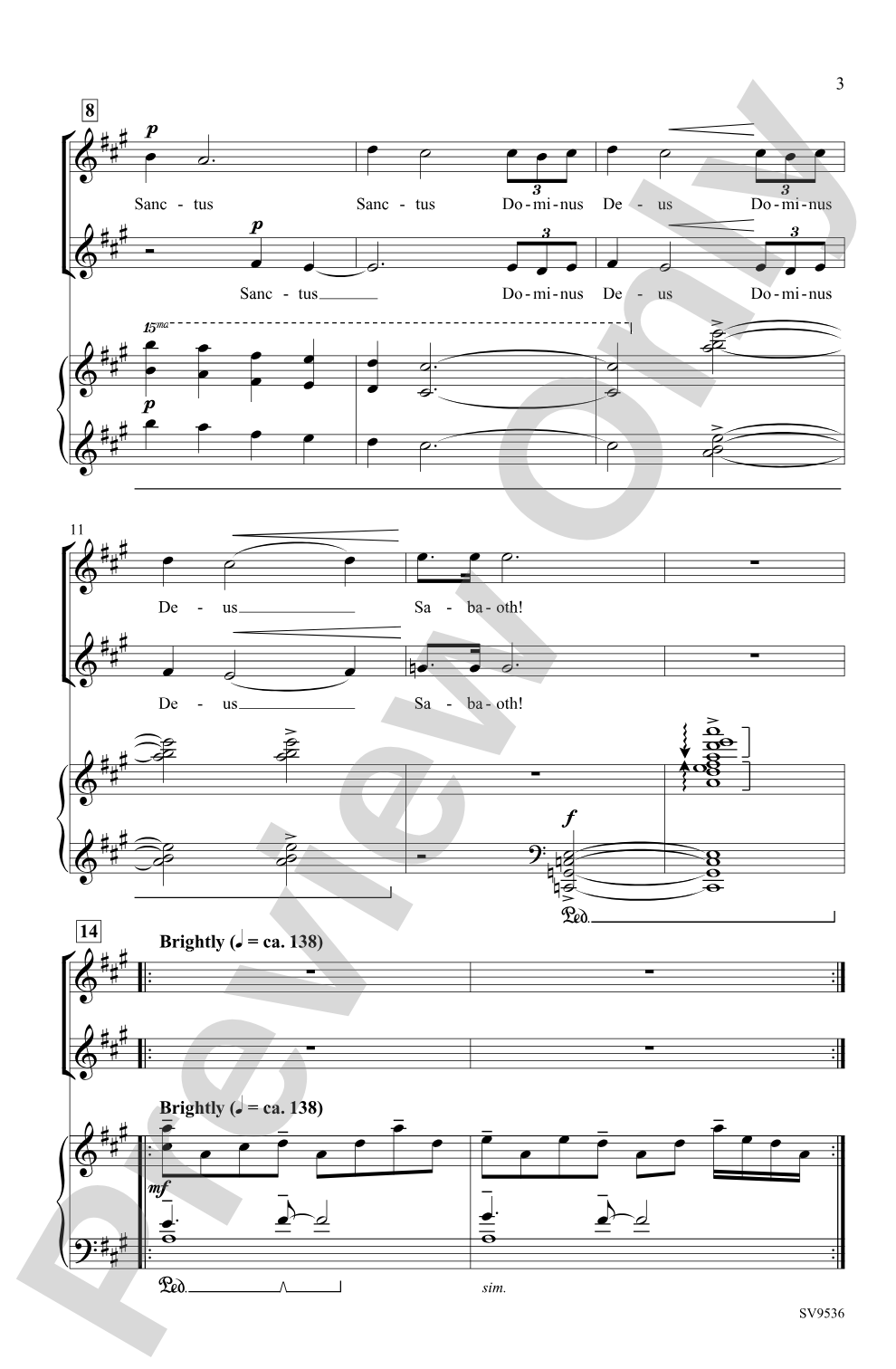

Festival Sanctus: 2-Part Choral Octavo
By John Leavitt
Item: 00-PO-0002752

$2.05
Minimum order quantity: 20 copies
Pickup currently not available
Related Items
Festival Sanctus: SoundTrax Digital Audio Download |
$27.99
|
View | |
Festival Sanctus: SATB Choral Octavo |
$2.05
|
View | |
Festival Sanctus: SAB Choral Octavo |
$2.05
|
View | |
Festival Sanctus: SSA Choral Octavo |
$2.05
|
View | |
Festival Sanctus: TTB Choral Octavo |
$2.25
|
View | |
Festival Sanctus: Choral SoundPax |
$40.00
|
View | |
Festival Sanctus: SATB Choral Octavo |
$2.05
|
View | |
Festival Sanctus: SAB Choral Octavo |
$2.05
|
View | |
Festival Sanctus: SSA Choral Octavo |
$2.05
|
View | |
Festival Sanctus: TTB Choral Octavo |
$2.25
|
View | |
Festival Sanctus: 2-Part Choral Octavo |
$2.05
|
View | |
Festival Sanctus: Choral Octavo SoundTrax CD |
$27.99
|
View | |
Festival Sanctus: Choral SoundPax |
$40.00
|
View |
Description
A long-time favorite on the festival circuit for SATB ensembles, "Festival Sanctus" is now available for two-part treble ensembles. It is driving, rhythmic and up-tempo--all the ingredients that create a sure winner. Dynamic and exciting, this joyous selection surpasses the ordinary!


Don't just read it, hear it, play along with it, and watch your students grow with it. In MakeMusic Cloud, Festival Sanctus: 2-Part Choral Octavo comes alive with professional accompaniment, adjustable tempo, and built-in practice tools that turn solo practice into real progress.
Open in the Player
Jump straight in and assign it today.
Start Your Free Trial
Open this title and explore the full library in minutes.
Sample Audio
1
Audio File
--:--
0:00
0:00
Sample Video
No sample videos found.
Additional Details
Series:
Alfred Choral Designs
Publisher:
Alfred Music
Page Count:
12
SKU:
00-PO-0002752
More about this title
About the Composer: John Leavitt
John Leavitt has composed and arranged choral music for decades, building a catalog that spans sacred works, secular pieces, and settings for ensembles of all sizes. His writing is known for clarity, accessibility, and genuine musical substance—he creates pieces that sound impressive without demanding impossible technical feats, a quality that has made his work a mainstay in school and church choirs across North America.
Leavitt's approach to choral composition prioritizes singability and joy. Whether writing for professional choirs or student ensembles, he understands how to craft parts that feel rewarding to sing while maintaining musical integrity. His works for Alfred have become standards in the festival and contest circuits, chosen repeatedly because they engage singers and audiences alike.
Why we love this
This arrangement proves that two-part writing doesn't mean thinning out Leavitt's signature energy. The piece retains the driving rhythmic character that made the SATB version a festival favorite, but the streamlined voicing makes it accessible to younger choirs or ensembles with limited resources. You get a piece with real impact and conviction, not a watered-down adaptation.
What to expect
Joyous and propulsive. The piece moves forward with rhythmic certainty and a clear sense of purpose, delivering the kind of musical satisfaction that comes from singing something strong and well-crafted. There's a celebratory quality throughout that makes singers feel genuinely good about what they're performing.
Who it's for
Two-part choirs preparing for festivals, competitions, or concert performances where a strong, confident selection is needed. This works for middle school treble choirs, high school ensembles building their repertoire, and community choirs seeking sacred music that energizes rather than softens.
How to get the most out of it
- Establish the rhythmic drive early in rehearsals. Mark the pulse clearly and have singers feel the forward motion in their bodies; this piece thrives on momentum rather than lyricism.
- Balance the two parts so neither disappears. Even though the writing is straightforward, the piece gains its impact when both lines have presence and definition.
- Keep the tempo honest. The up-tempo marking is part of the piece's identity; resist the urge to slow it down for clarity, since clarity comes from rhythmic precision and confident singing.
- Use the recorded accompaniment to lock in the groove during early rehearsals, then work toward independence so singers can lead the sound rather than follow it.
How to use it
Program this as an opener or early piece in a concert when you want to grab attention and establish energy. Its festival-circuit credentials also make it ideal for competition sets where you need something that sounds accomplished and confident without requiring advanced vocal technique.
Skills your students will build
- Rhythmic precision and forward momentum in ensemble singing
- Two-part harmonic awareness and balanced blending
- Confidence performing sacred music in a contemporary, energetic style
- Intonation and blend in fast-moving, rhythmically driven material