
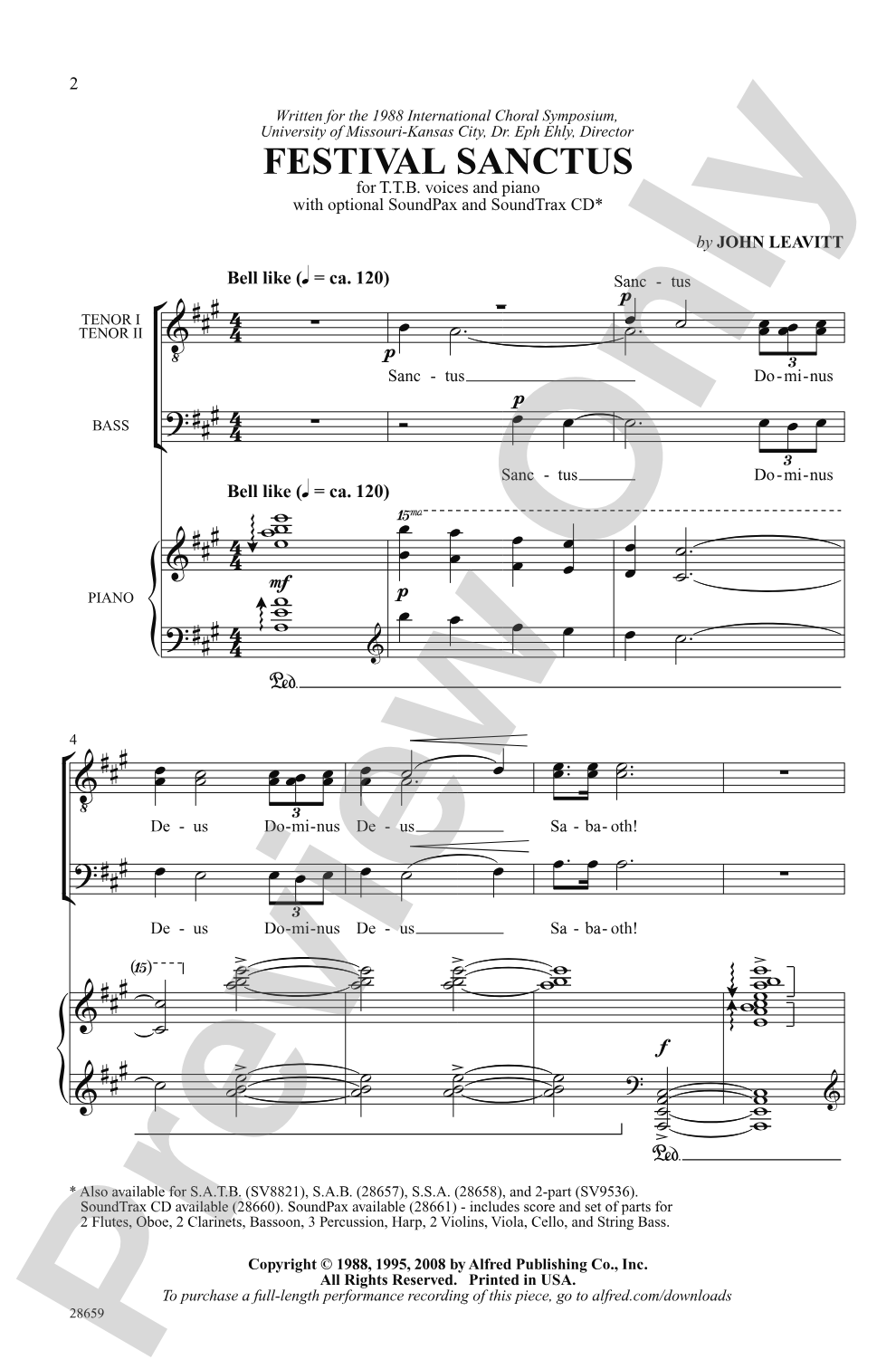
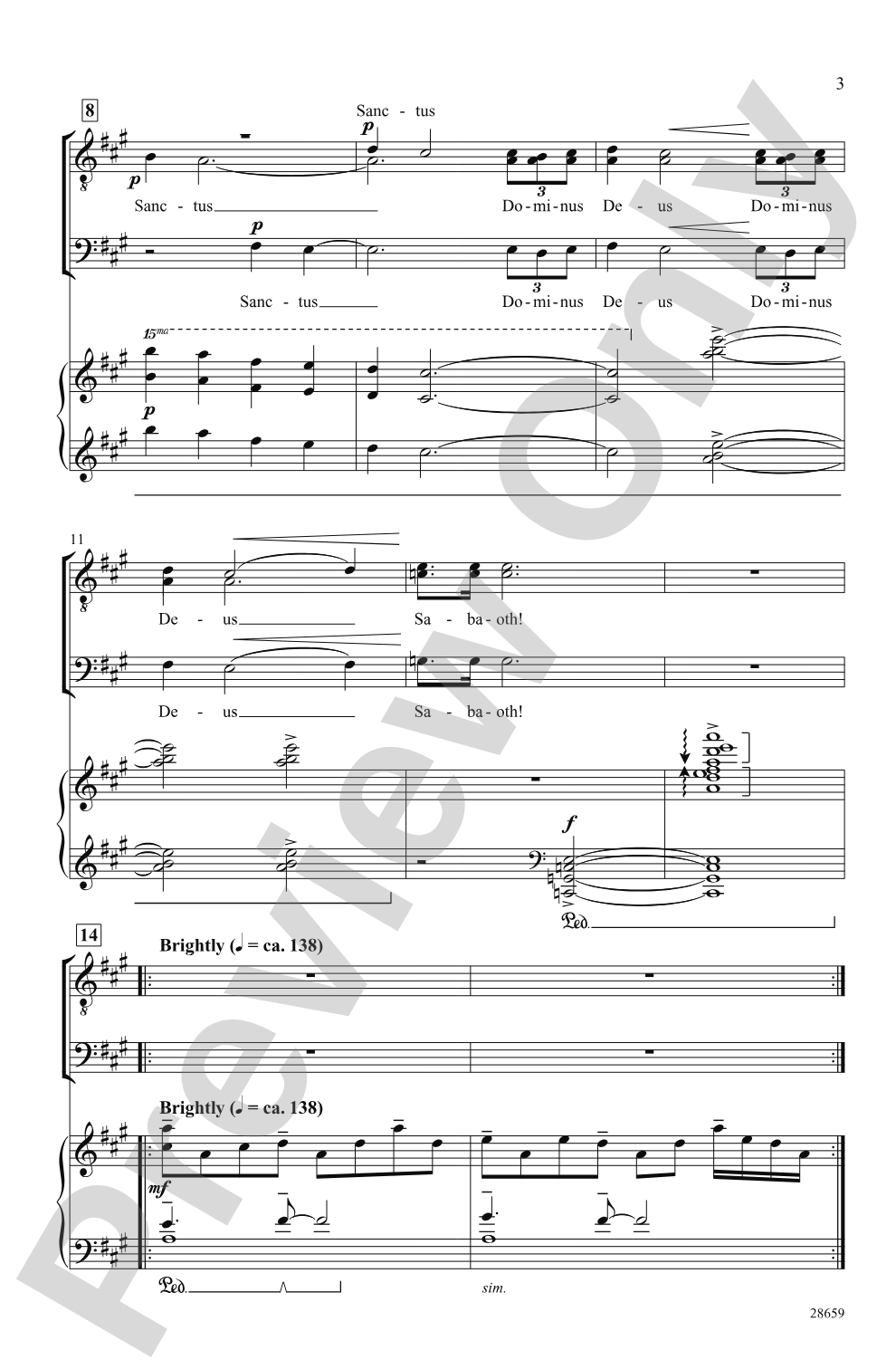

Festival Sanctus: TTB Choral Octavo
By John Leavitt
Item: 00-PO-0000522

$2.25
Minimum order quantity: 20 copies
Pickup currently not available
Related Items
Festival Sanctus: SoundTrax Digital Audio Download |
$27.99
|
View | |
Festival Sanctus: SATB Choral Octavo |
$2.05
|
View | |
Festival Sanctus: SAB Choral Octavo |
$2.05
|
View | |
Festival Sanctus: SSA Choral Octavo |
$2.05
|
View | |
Festival Sanctus: 2-Part Choral Octavo |
$2.05
|
View | |
Festival Sanctus: Choral SoundPax |
$40.00
|
View | |
Festival Sanctus: SATB Choral Octavo |
$2.05
|
View | |
Festival Sanctus: SAB Choral Octavo |
$2.05
|
View | |
Festival Sanctus: SSA Choral Octavo |
$2.05
|
View | |
Festival Sanctus: TTB Choral Octavo |
$2.25
|
View | |
Festival Sanctus: 2-Part Choral Octavo |
$2.05
|
View | |
Festival Sanctus: Choral Octavo SoundTrax CD |
$27.99
|
View | |
Festival Sanctus: Choral SoundPax |
$40.00
|
View |
Description
A long-time favorite on the festival circuit for SATB ensembles, "Festival Sanctus" is now available for two-part treble ensembles. It is driving, rhythmic and up-tempo--all the ingredients that create a sure winner. Dynamic and exciting, this joyous selection surpasses the ordinary! This title is available in Music Prodigy.


Don't just read it, hear it, play along with it, and watch your students grow with it. In MakeMusic Cloud, Festival Sanctus: TTB Choral Octavo comes alive with professional accompaniment, adjustable tempo, and built-in practice tools that turn solo practice into real progress.
Open in the Player
Jump straight in and assign it today.
Start Your Free Trial
Open this title and explore the full library in minutes.
Sample Audio
1
Audio File
--:--
0:00
0:00
Sample Video
No sample videos found.
Additional Details
Series:
Alfred Archive Edition: Alfred Choral Designs
Publisher:
Alfred Music
Page Count:
12
SKU:
00-PO-0000522
More about this title
About the Composer: John Leavitt
John Leavitt is a prolific composer whose choral works have become staples in high school and college choirs across North America. His pieces balance accessibility with musical substance, earning him a reputation for writing music that challenges singers while remaining genuinely rewarding to perform.
Leavitt's output spans sacred and secular repertoire, concert and festival settings, and a wide range of voicings. His understanding of what makes choral music work in a competitive or concert context—clear harmonic writing, rhythmic drive, and singable lines—has made his catalog a go-to resource for directors building festival and concert programs.
Why we love this
This adaptation captures everything that made the SATB original a festival favorite and translates it faithfully for smaller ensembles. The driving rhythmic energy and straightforward harmonic language mean your TTB singers can focus on performing with confidence rather than untangling complex part-writing, and that accessibility doesn't compromise the piece's impact or polish.
What to expect
Joyful and propulsive. The piece charges forward with rhythmic momentum and bright harmonic color, creating a sense of celebration and affirmation. It feels modern enough to hold listener attention without alienating singers accustomed to more traditional sacred writing.
Who it's for
TTB ensembles preparing for festival or concert performance, including middle school and high school choirs with limited higher voices. This arrangement works well for groups seeking sacred repertoire with energy and rhythmic drive rather than introspection.
How to get the most out of it
- Maintain steady pulse and crisp articulation in the rhythmic sections; the momentum of this piece depends on clean attacks and releases rather than legato singing.
- Balance the harmonic blend between your two parts by having singers listen across the chord rather than locking into their own line; the sanctus works best when it sounds unified rather than doubled.
- Shape the dynamic arc across longer phrases to avoid a static fortissimo; find places to pull back slightly before building again so the excitement builds rather than plateaus.
- Let the recorded accompaniment anchor tempo and harmonic foundation in early rehearsals, then gradually reduce reliance on it as singers internalize their parts and gain confidence.
How to use it
Open a festival set or concert with this piece to establish energy and confidence in your singers' performance. Its upbeat character makes it an ideal counterweight to slower sacred music elsewhere on the program, and its proven track record on the festival circuit means judges and audiences already know its appeal.
Skills your students will build
- Maintaining steady tempo and rhythmic precision in syncopated passages
- Blending two independent vocal lines into unified harmonic sonority
- Responding dynamically to emotional arc while singing in a secular music context
- Building confidence in sacred repertoire without extensive harmonic analysis