
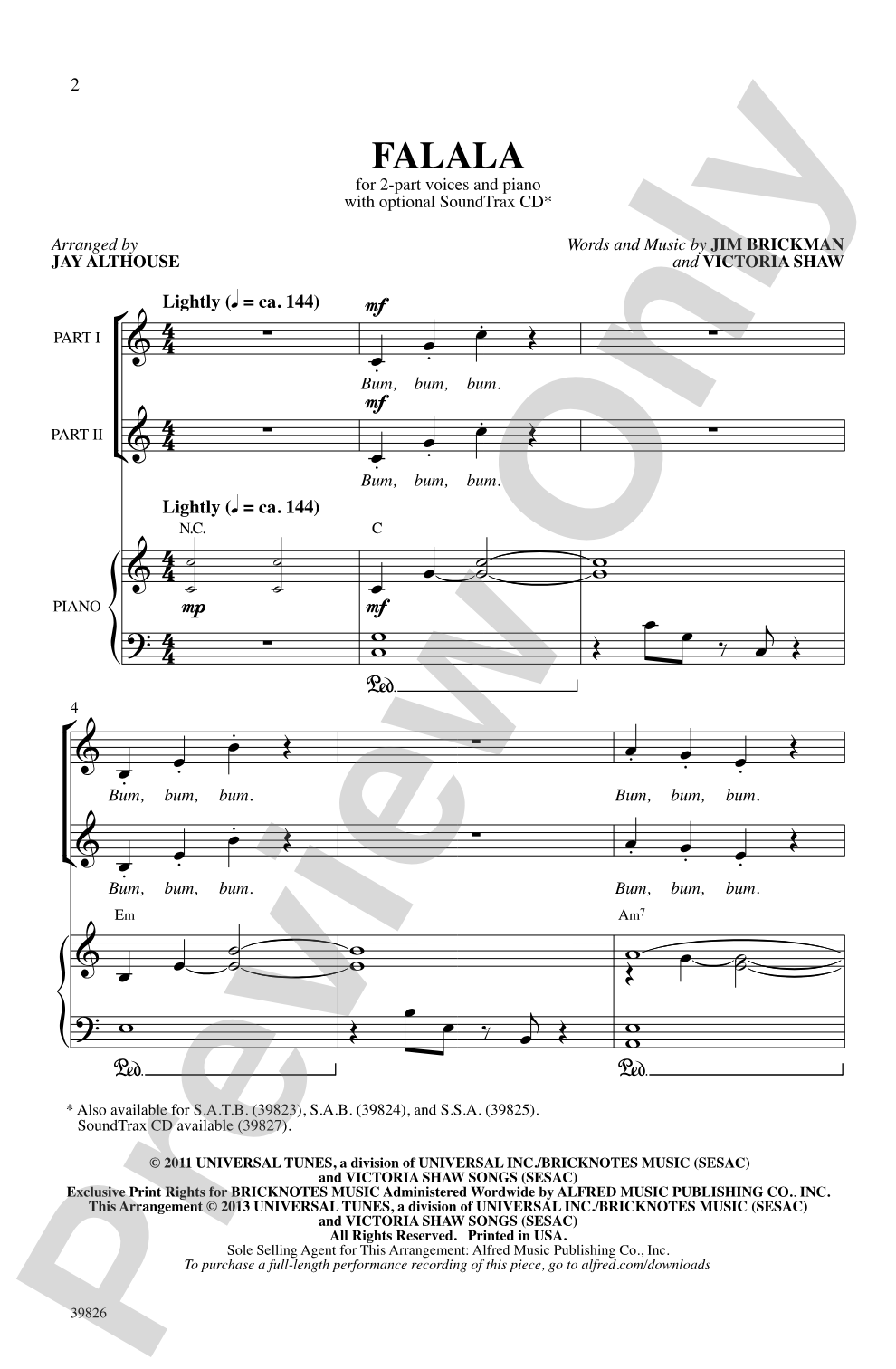
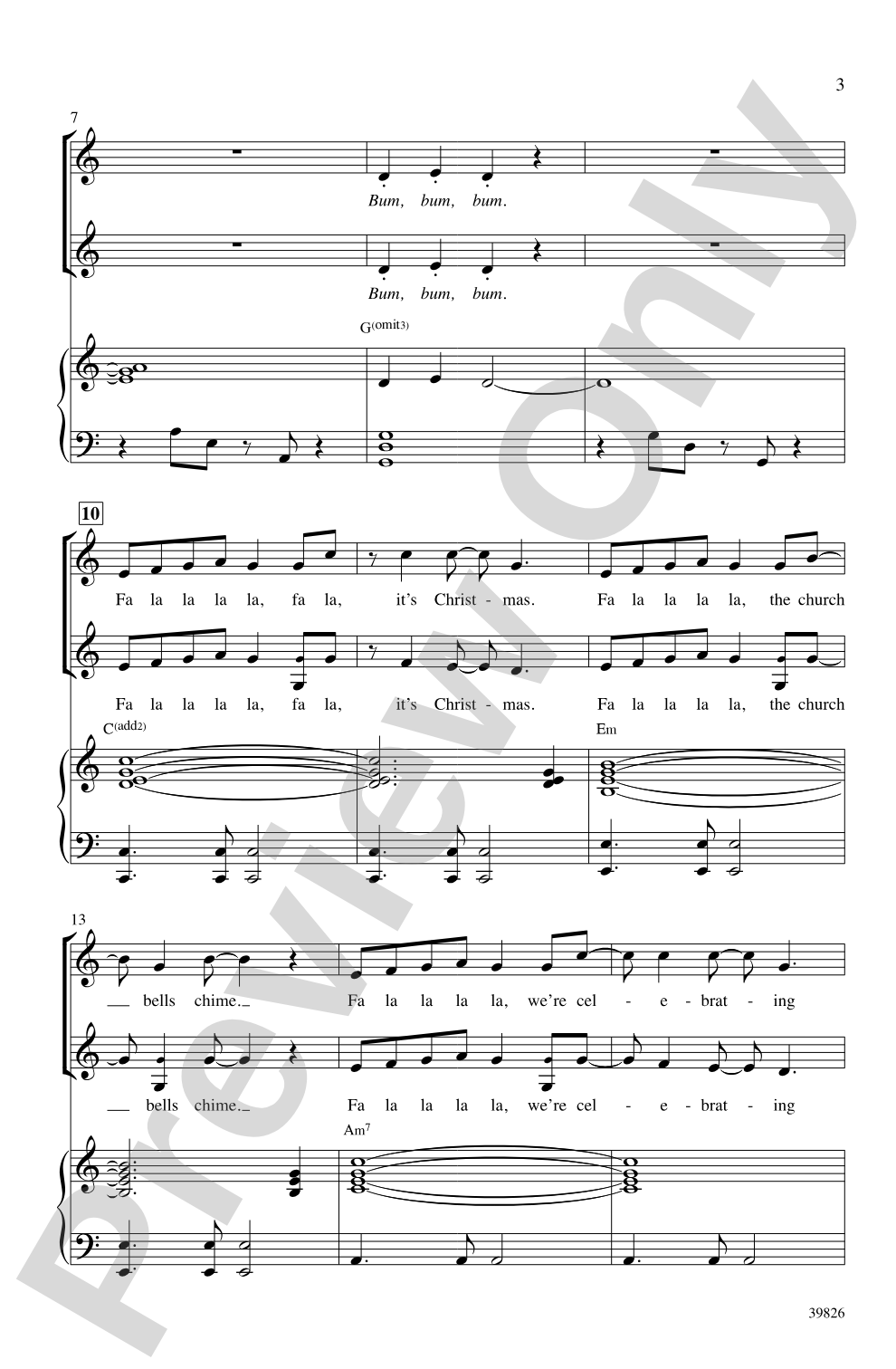
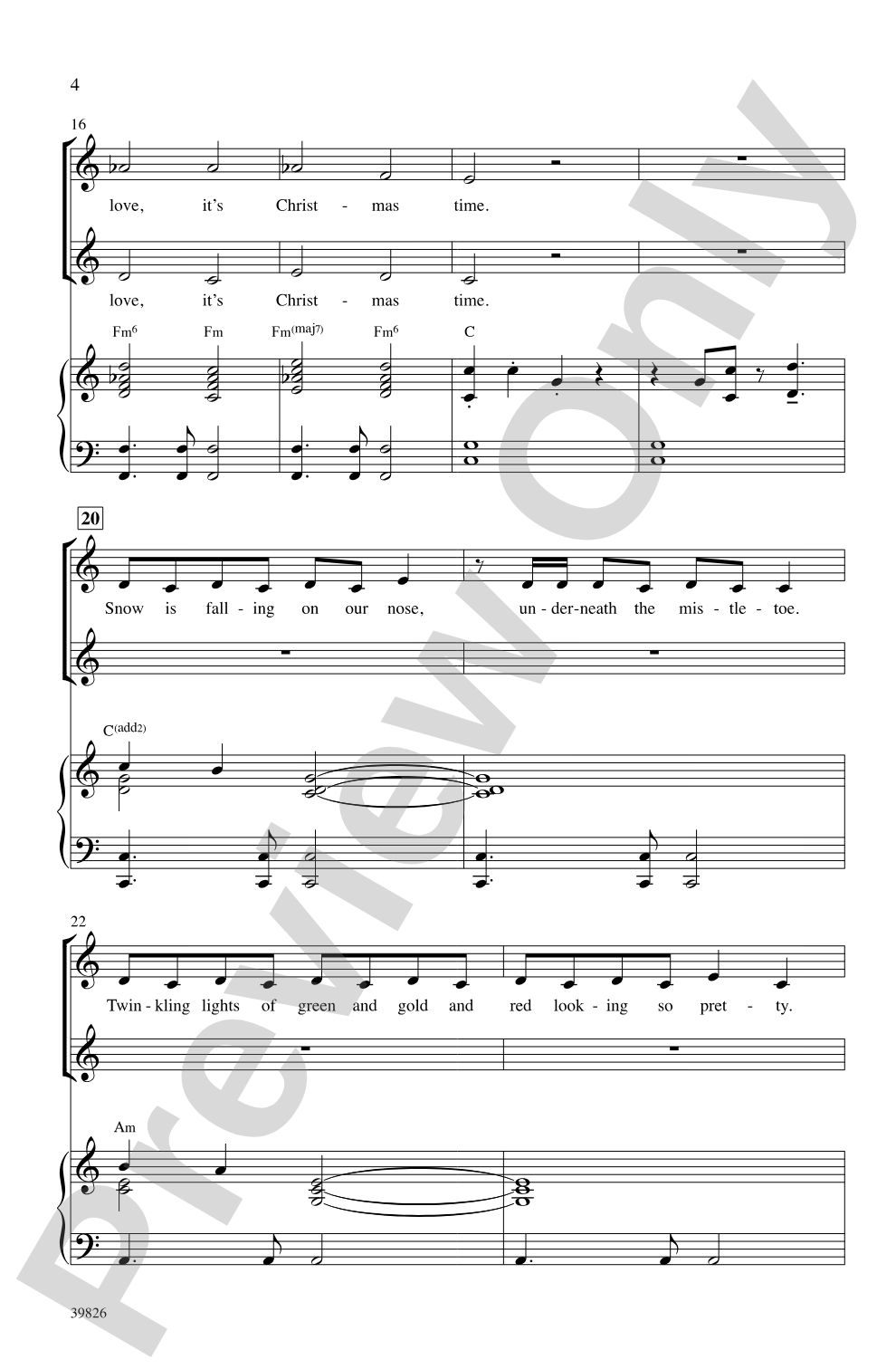

Falala: 2-Part Choral Octavo
Words and music by Jim Brickman and Victoria Shaw / arr. Jay Althouse
Item: 00-PO-0001639
$1.95
Minimum order quantity: 20 copies
Pickup currently not available
Related Items
Falala: SoundTrax Digital Audio Download |
$27.99
|
View | |
Falala: SATB Choral Octavo |
$1.95
|
View | |
Falala: SAB Choral Octavo |
$1.95
|
View | |
Falala: SSA Choral Octavo |
$1.95
|
View | |
Falala: SATB Choral Octavo |
$1.95
|
View | |
Falala: SAB Choral Octavo |
$1.95
|
View | |
Falala: SSA Choral Octavo |
$1.95
|
View | |
Falala: 2-Part Choral Octavo |
$1.95
|
View | |
Falala: Choral Octavo SoundTrax CD |
$27.99
|
View |
Description
This jolly holiday song went to #2 on the Adult Contemporary Charts in a recording by co-writer and recording artist Jim Brickman and British teen singer Olivia Jade Archbold, who appeared on Britain's Got Talent in 2010. It's a light, bouncy Christmas choral with a pop feel that perfectly captures the spirit of the season.


Falala: 2-Part Choral Octavo isn't in MakeMusic Cloud just yet...but it could be. Let us know you'd like to see it, and you'll help shape what comes next. In the meantime, start a free trial and dive into thousands of interactive titles your students can play along with today.
Request This Title
Tell us you want it.
Start Your Free Trial
Explore everything that's ready to play right now.
Sample Audio
1
Audio File
--:--
0:00
0:00
Sample Video
No sample videos found.
Additional Details
Series:
Alfred Pop Choral Series
Publisher:
Alfred Music
Page Count:
12
SKU:
00-PO-0001639
More about this title
About the Composer: Jim Brickman

Jim Brickman has built a career on crafting piano-driven songs that connect emotionally with listeners. As both a songwriter and recording artist, he pioneered a style that blends classical piano technique with contemporary songwriting, becoming one of the best-selling solo pianists in history. His gift for melodic storytelling has made him a central figure in modern instrumental music.
Brickman approaches composition with a clear purpose: to write music that marks life's significant moments. His collaborations span genres and audiences, from pop radio to concert halls, and his live performances have consistently demonstrated that instrumental and piano-based music can command mainstream attention and emotional resonance.
Why we love this
This arrangement by Jay Althouse captures the infectious energy of a chart-topping recording while remaining accessible for 2-part choirs of varying experience levels. The pop sensibility keeps singers engaged without demanding extensive vocal range or technical complexity, making it ideal for holiday concerts that need contemporary appeal alongside traditional repertoire. Directors will appreciate how the bouncy rhythm and singable melody energize rehearsals while the secular focus works for any audience.
What to expect
Bright, approachable, and infectious. The melody sits comfortably in an accessible range while the arrangement keeps things light and rhythmically engaging. There's genuine joy in the performance without any sense of strain or vocal demand.
Who it's for
Choirs seeking contemporary holiday music that appeals to modern audiences without sacrificing musicality. It works equally well for middle school through adult choirs, school concerts, community performances, and churches looking to balance traditional and pop-influenced seasonal repertoire.
How to get the most out of it
- Keep the tempo light and energized; resist dragging despite the festive character. The pop feel demands rhythmic precision and forward momentum.
- Balance the two parts carefully so neither voice dominates. The interplay between parts is what creates the song's charm.
- Bring out the text clearly; enunciation of 'falala' and the melodic phrases makes the performance fun rather than precious.
- If using the recorded accompaniment, rehearse with it early and often so singers lock into the pop groove rather than fighting it.
How to use it
Program this early in a holiday concert to set an upbeat, contemporary tone, or use it alongside more traditional carols to demonstrate your choir's versatility. Its chart-topping pedigree makes it a conversation starter for audiences familiar with the original recording, and the short length (12 pages) fits neatly between longer choral works.
Skills your students will build
- Maintaining rhythmic precision in pop-influenced meters and groove patterns
- Balancing two independent vocal lines with equal clarity
- Interpreting contemporary musical style in a choral setting
- Ensemble diction and text projection in a secular, pop context