

Dream a Little Dream of Me: 2-Part Choral Octavo
(with Debussy's "Clair de Lune")
Lyrics by Gus Kahn, music by Fabian Andre and Wilbur Schwandt / arr. Andy Beck
Item: 00-PO-0007091
$2.10
Minimum order quantity: 20 copies
One moment…
Related Items
Dream a Little Dream of Me: SATB Choral Octavo |
$2.10
|
View | |
Dream a Little Dream of Me: SAB/3-Part Mixed Choral Octavo |
$2.10
|
View | |
Dream a Little Dream of Me: Choral SoundPax |
$15.00
|
View | |
Dream a Little Dream of Me: SoundTrax Digital Audio Download |
$29.98
|
View | |
Dream a Little Dream of Me: SATB Choral Octavo |
$2.65
|
View | |
Dream a Little Dream of Me: SAB/3-Part Mixed Choral Octavo |
$2.10
|
View | |
Dream a Little Dream of Me: 2-Part Choral Octavo |
$2.10
|
View | |
Dream a Little Dream of Me: Choral Octavo SoundTrax CD |
$29.99
|
View | |
Dream a Little Dream of Me: Choral SoundPax |
$15.00
|
View |
Description
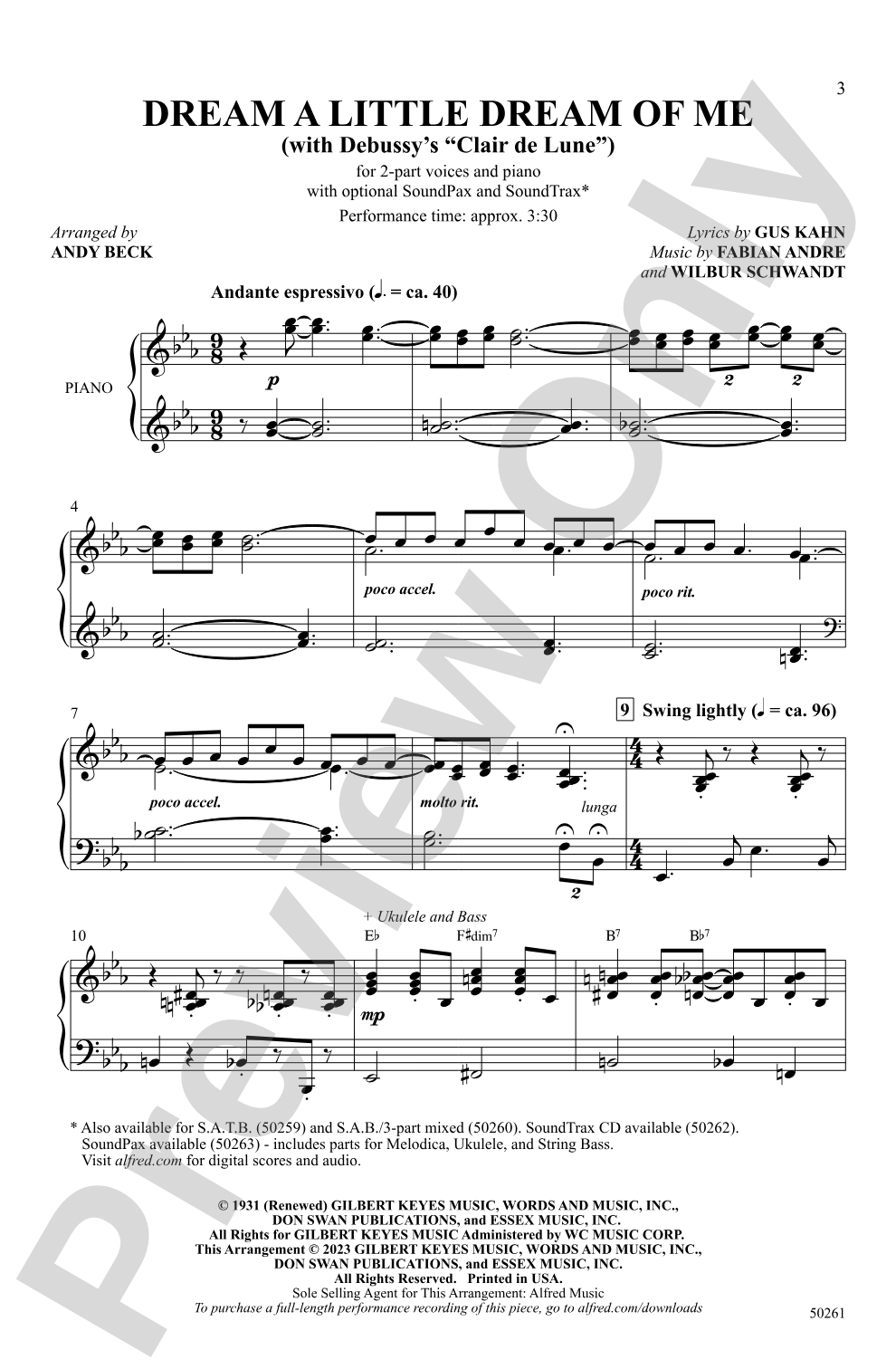
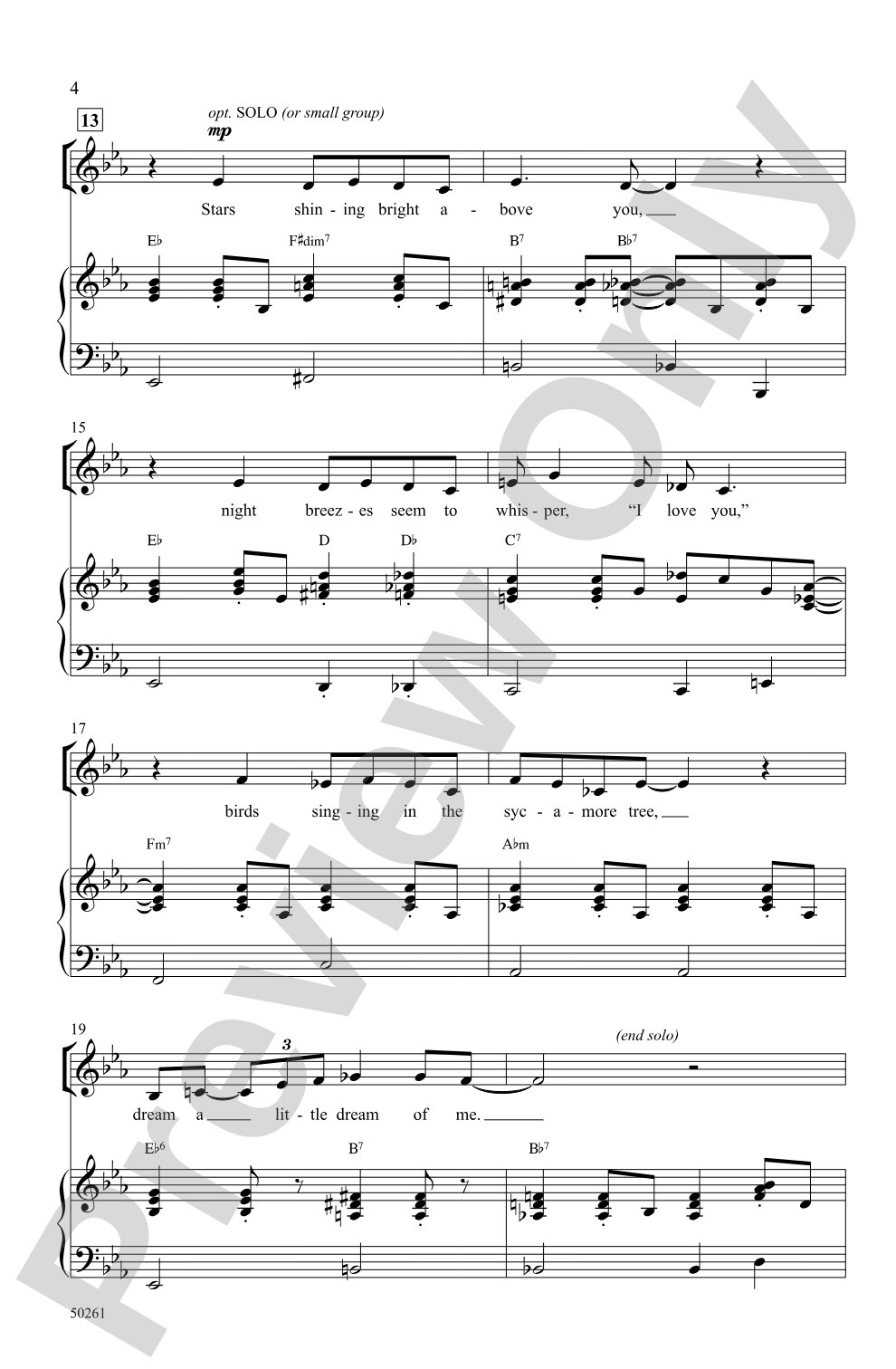
Pink Martini and The von Trapps put a new spin on this old standard, which Nicole Kidman sings as the opening theme for HBO's The Undoing.The dreamy piano intro quotes Debussy's "Clair de Lune" before melting into a relaxed rendition of the familiar tune. Fashion a unique performance with the ukulele, string bass, and melodica SoundPax.


Dream a Little Dream of Me: 2-Part Choral Octavo isn't in MakeMusic Cloud just yet...but it could be. Let us know you'd like to see it, and you'll help shape what comes next. In the meantime, start a free trial and dive into thousands of interactive titles your students can play along with today.
Request This Title
Tell us you want it.
Start Your Free Trial
Explore everything that's ready to play right now.
Sample Audio
1
Audio File
--:--
0:00
0:00
Sample Video
Additional Details
Series:
Alfred Pop Choral Series
Publisher:
Alfred Music
Page Count:
12
SKU:
00-PO-0007091
More about this title
About the Composer: Fabian Andre
Fabian Andre composed "Dream a Little Dream of Me" in 1931, creating one of the Jazz Age's most enduring melodies. His gift for accessible, singable lines made him a prolific contributor to American popular music during its golden era, and his work continues to appear in films, television, and concert halls worldwide.
Why we love this
Andy Beck's arrangement captures something magical about this tune: it honors the original melody while making room for contemporary voices and instruments. The Debussy-inspired piano introduction gives you a distinctive musical moment that sets the piece apart from other standard arrangements, and the optional SoundPax instrumentation (ukulele, string bass, melodica) means you can shape the performance to match your ensemble's strengths.
What to expect
The piece unfolds like a musical daydream. Piano and voice drift together with unhurried ease, suggesting late-night intimacy rather than grand gesturing. Even as the familiar melody takes shape, the arrangement maintains that gentle, almost impressionistic quality that makes the song feel both timeless and fresh.
Who it's for
This arrangement works for developing choirs ready to explore jazz-influenced repertoire and for advanced elementary through middle school ensembles seeking accessible material with contemporary appeal. Directors looking for a concert opener or finale that connects to popular culture will find this especially useful.
How to get the most out of it
- Let the piano introduction breathe. The Debussy quotation works best when you resist rushing into the main melody; give accompanists space to establish that dreamy quality before voices enter.
- Balance the vocal line against the recorded accompaniment by finding the right monitor mix during rehearsal. This piece lives in the intimate space between singer and piano, so clarity matters more than volume.
- If adding the optional instrumental parts, rehearse them separately first so the string bass and ukulele lock rhythmically before layering them with the choir.
- Approach the lyrical content with genuine warmth rather than nostalgia. Your singers should connect to the message of the text, not perform it as a period piece.
How to use it
Program this as an opening number to establish an evening's relaxed, sophisticated mood, or use it as a palate-cleanser between heavier works. The HBO connection and Nicole Kidman performance also give you natural talking points when promoting a concert to audiences less familiar with jazz standards.
Skills your students will build
- Singing jazz-influenced phrasing and rubato over a recorded accompaniment
- Blending two-part harmony while maintaining an intimate, conversational tone
- Balancing vocal tone in the upper register without pushing for volume
- Reading and performing with optional instrumental parts (ukulele, string bass, melodica)
- Interpreting impressionistic harmonic language influenced by 20th-century classical music