

Dream a Little Dream of Me: Choral SoundPax
(with Debussy's "Clair de Lune")
Lyrics by Gus Kahn, music by Fabian Andre and Wilbur Schwandt / arr. Andy Beck
Item: 00-PK-0008806
$15.00
One moment…
Related Items
Dream a Little Dream of Me: SATB Choral Octavo |
$2.10
|
View | |
Dream a Little Dream of Me: SAB/3-Part Mixed Choral Octavo |
$2.10
|
View | |
Dream a Little Dream of Me: 2-Part Choral Octavo |
$2.10
|
View | |
Dream a Little Dream of Me: SoundTrax Digital Audio Download |
$29.98
|
View | |
Dream a Little Dream of Me: SATB Choral Octavo |
$2.65
|
View | |
Dream a Little Dream of Me: SAB/3-Part Mixed Choral Octavo |
$2.10
|
View | |
Dream a Little Dream of Me: 2-Part Choral Octavo |
$2.10
|
View | |
Dream a Little Dream of Me: Choral Octavo SoundTrax CD |
$29.99
|
View | |
Dream a Little Dream of Me: Choral SoundPax |
$15.00
|
View |
Description
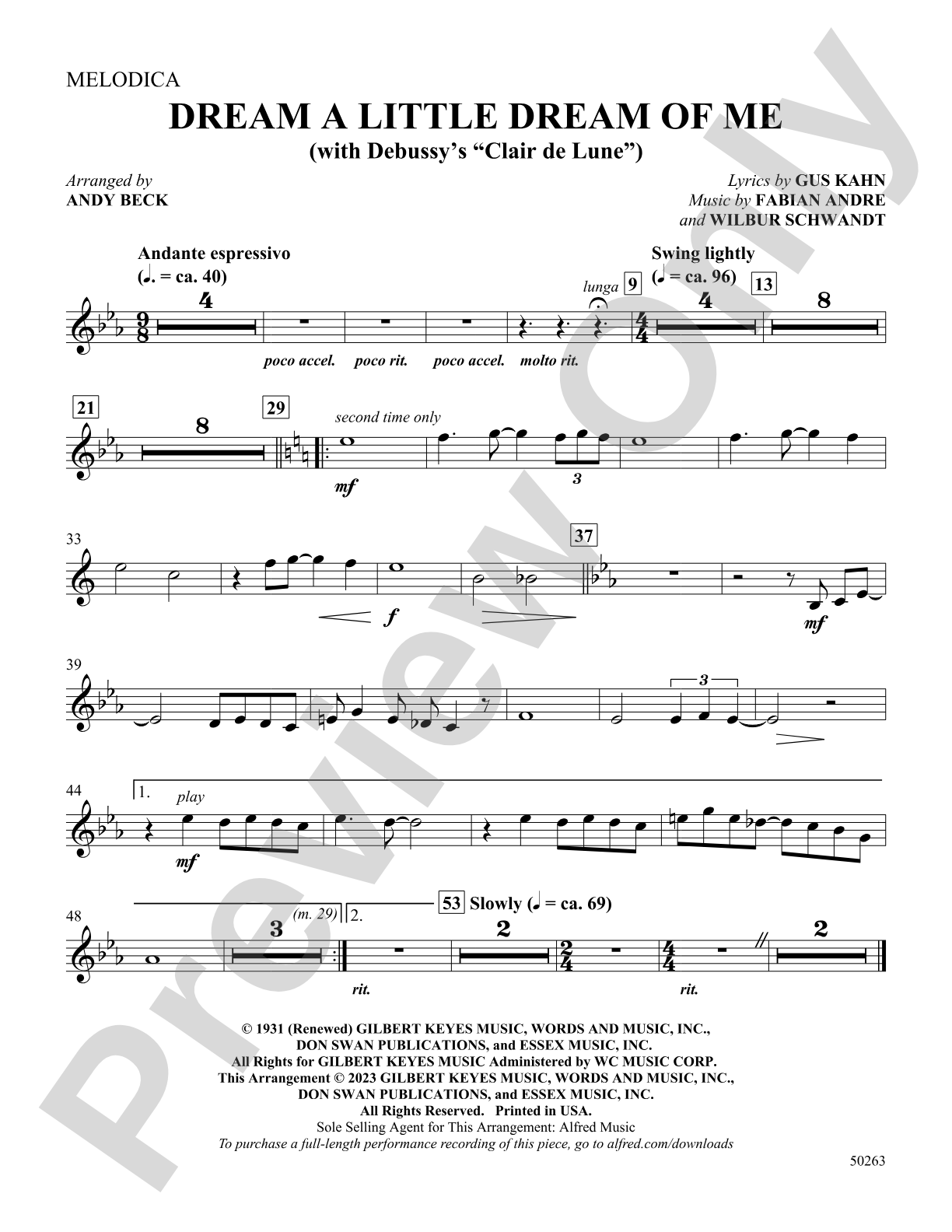
Pink Martini and The von Trapps put a new spin on this old standard, which Nicole Kidman sings as the opening theme for HBO's The Undoing.The dreamy piano intro quotes Debussy's "Clair de Lune" before melting into a relaxed rendition of the familiar tune. Fashion a unique performance with the ukulele, string bass, and melodica SoundPax.


Dream a Little Dream of Me: Choral SoundPax isn't in MakeMusic Cloud just yet...but it could be. Let us know you'd like to see it, and you'll help shape what comes next. In the meantime, start a free trial and dive into thousands of interactive titles your students can play along with today.
Request This Title
Tell us you want it.
Start Your Free Trial
Explore everything that's ready to play right now.
Sample Audio
1
Audio File
--:--
0:00
0:00
Sample Video
No sample videos found.
Additional Details
Series:
Alfred Pop Choral Series
Publisher:
Alfred Music
SKU:
00-PK-0008806
More about this title
About the Composer: Fabian Andre
Fabian Andre was a French composer and songwriter who helped define the popular song tradition of the early 20th century. Working primarily in the 1920s and 1930s, Andre crafted melodies that balanced sophistication with accessibility, creating standards that have endured through multiple generations of reinterpretation.
For music educators, Andre's catalog represents a bridge between classical harmonic thinking and the emerging language of American popular song. His compositions reward careful attention to melodic shape and lyrical phrasing, making them valuable teaching tools for singers learning to balance technical precision with emotional storytelling.
Why we love this
Andy Beck's arrangement captures something genuinely sophisticated here. The Debussy reference in the piano intro signals that this isn't just another nostalgic revisit of an old tune; it's a deliberate conversation between classical and popular idioms. The addition of ukulele, string bass, and melodica creates a chamber-like intimacy that works beautifully in concert settings where you want to showcase your singers' ability to blend into a cohesive ensemble sound.
What to expect
Gentle and introspective, like overhearing someone singing softly in the next room. The dreamy quality persists throughout, enhanced by the interplay of acoustic textures and the familiar melody treated with understated affection rather than dramatic flair.
Who it's for
Choirs ready to program repertoire that appeals to contemporary audiences without sacrificing musical substance. The piece works for groups with singers who can handle legit jazz phrasing and blend comfortably with acoustic instruments.
How to get the most out of it
- Let the piano introduction breathe. The Debussy quotation needs space to register with listeners before the familiar melody emerges; resist the urge to rush into the vocal entrance.
- Blend the melodica carefully into the harmonic texture rather than letting it cut through. This arrangement thrives on warmth and blending, not prominence.
- Support the relaxed rhythmic feel by resisting any tightness in the ensemble's attacks and releases. Singers should feel like they're settling into the groove rather than locking onto it.
- Use the recorded accompaniment to establish the intended sonic palette early in rehearsals. Hearing the ukulele and string bass reference points helps singers understand the informal, intimate character you're aiming for.
How to use it
This makes an ideal opening number for a concert focused on standards or a program exploring how composers revisit familiar material. Its accessibility and sophisticated arrangement balance beautifully in a setlist; it can follow something more energetic or precede a heavier choral work.
Skills your students will build
- Blending jazz phrasing with lyrical legit singing
- Singing expressively with minimal vibrato in intimate settings
- Listening to and balancing against non-traditional harmonic instruments
- Sustaining a relaxed, consistent groove without metric tension