
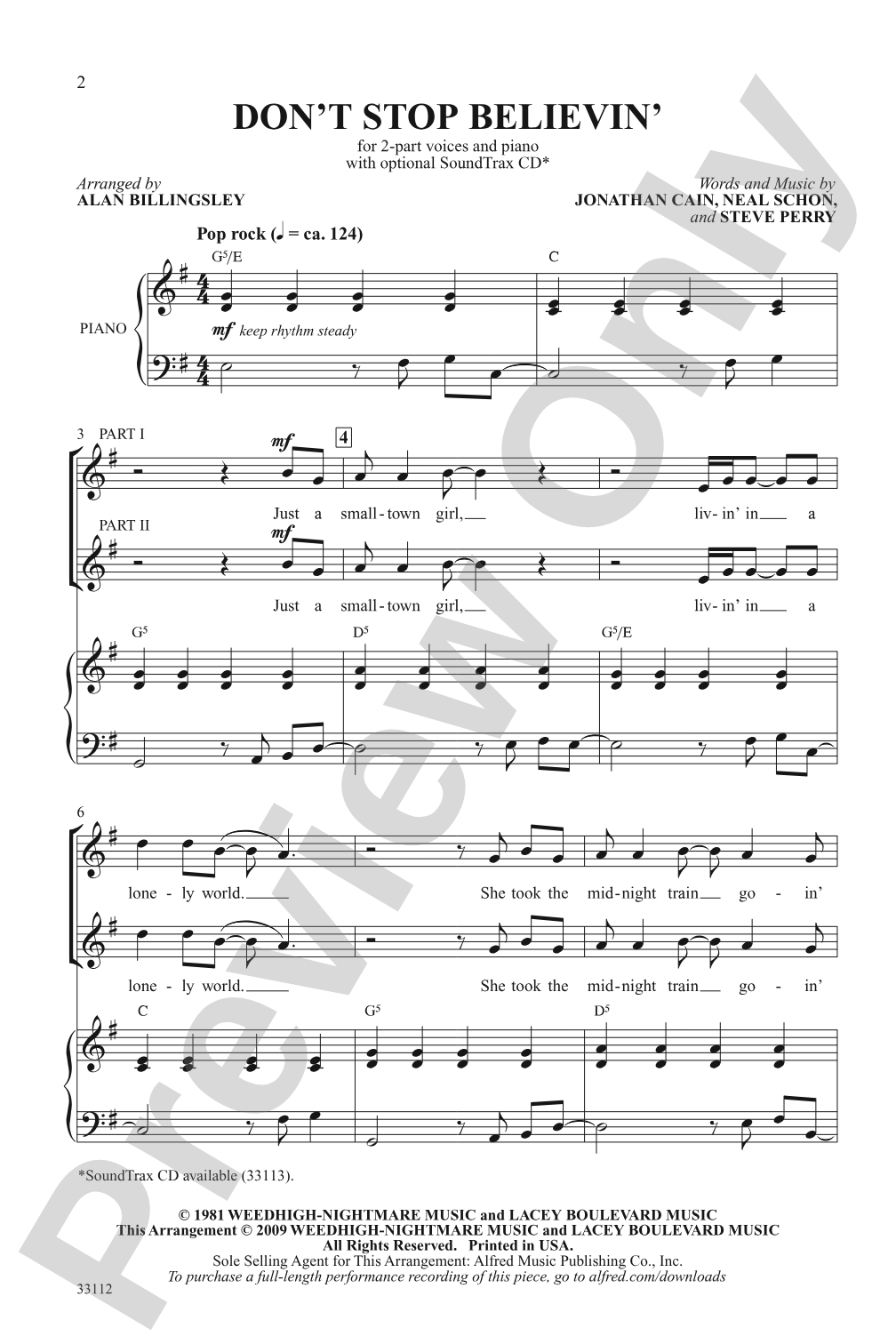
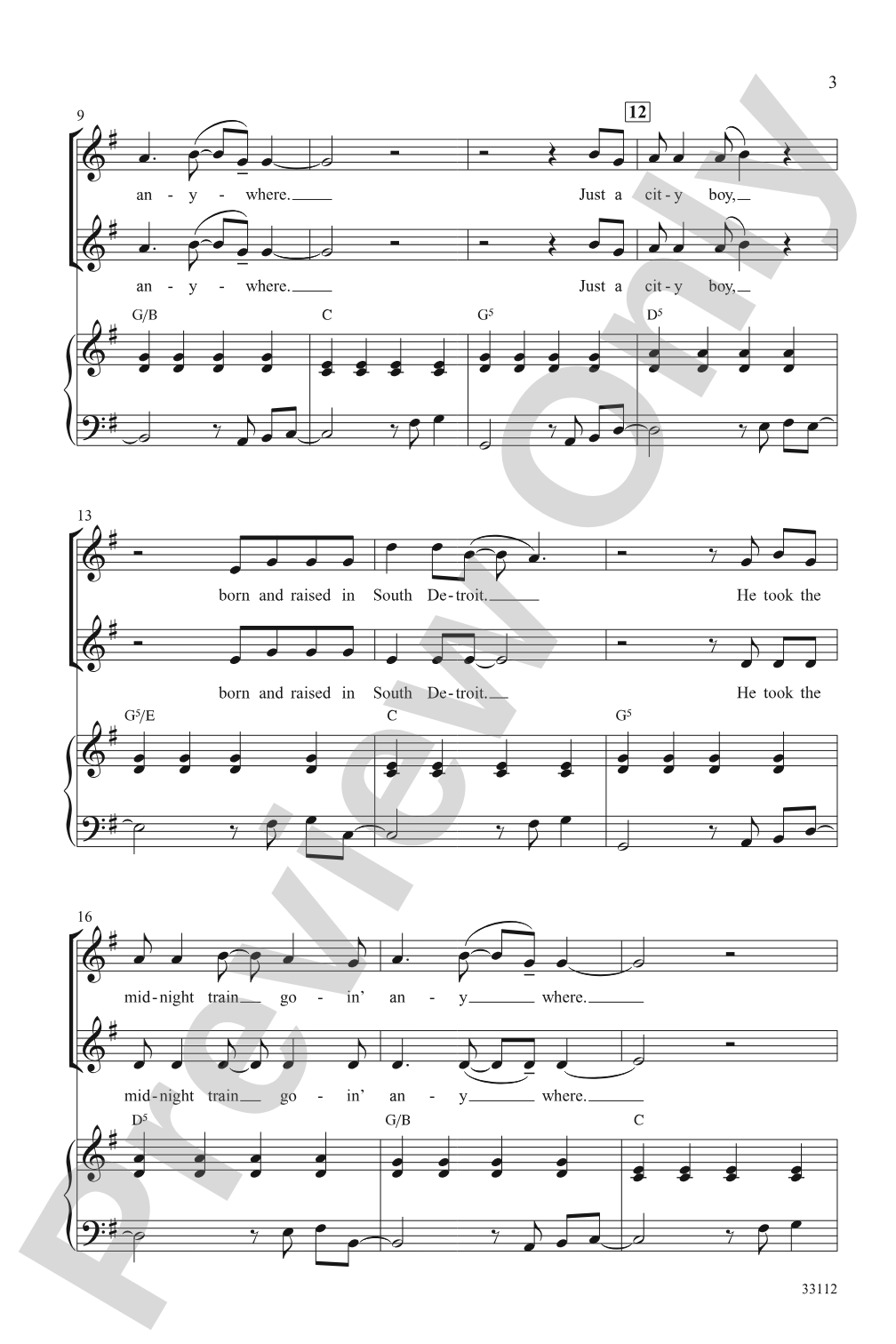

Don't Stop Believin': 2-Part Choral Octavo
Words and music by Jonathan Cain, Neal Schon, and Steve Perry [Journey] / arr. Alan Billingsley
Item: 00-PO-0008137
$2.10
Minimum order quantity: 20 copies
Pickup currently not available
Related Items
Don't Stop Believin': SoundTrax Digital Audio Download |
$27.99
|
View | |
Don't Stop Believin': SoundTrax Digital Audio Download |
$29.99
|
View | |
Don't Stop Believin': SATB Choral Octavo |
$2.50
|
View | |
Don't Stop Believin': SAB Choral Octavo |
$2.50
|
View | |
Don't Stop Believin': SSA Choral Octavo |
$2.50
|
View | |
Don't Stop Believin': SSA Choral Octavo |
$2.50
|
View | |
Don't Stop Believin': TTB Choral Octavo |
$2.95
|
View | |
Don't Stop Believin': Choral SoundPax |
$30.00
|
View | |
Don't Stop Believin': 2-Part Choral Octavo |
$2.10
|
View | |
Don't Stop Believin': SATB Choral Octavo |
$2.85
|
View | |
Don't Stop Believin': SAB Choral Octavo |
$2.50
|
View | |
Don't Stop Believin': TTB Choral Octavo |
$2.95
|
View | |
Don't Stop Believin': Choral Octavo SoundTrax CD |
$29.99
|
View | |
Don't Stop Believin': Choral SoundPax |
$30.00
|
View | |
Don't Stop Believin': 2-Part Choral Octavo |
$2.10
|
View | |
Don't Stop Believin': Choral Octavo SoundTrax CD |
$27.99
|
View |
Description
Developing 2-part choirs will have a blast performing this shortened and kid-friendly version of Journey's monster hit from the pilot episode of Glee.


Discover MakeMusic Cloud: thousands of interactive titles your students can play along with today.
Sample Audio
1
Audio File
--:--
0:00
0:00
Sample Video
No sample videos found.
Additional Details
Series:
Alfred Pop Choral Series
Publisher:
Alfred Music
Page Count:
8
SKU:
00-PO-0008137
More about this title
About the Composer: Jonathan Cain
Jonathan Cain joined Journey in 1980 as keyboardist and became one of the band's primary songwriters, co-composing many of their biggest anthems. His ability to craft memorable melodies and accessible harmonic structures has made his work a staple in pop music education for decades.
Why we love this
Alan Billingsley's arrangement captures the infectious energy of the original while respecting the capabilities of developing singers. The shortened format keeps momentum high without sacrificing the song's essential character, making it genuinely fun to rehearse and perform rather than a diluted novelty.
What to expect
Energy and optimism radiate from every moment. The song pulses with a contemporary rock groove that feels immediate and alive, creating the kind of performance that audiences genuinely enjoy rather than politely tolerate.
Who it's for
This arrangement works beautifully for middle school choirs and developing high school ensembles looking to build confidence through accessible, current repertoire. The two-part voicing allows you to program singers at different reading levels while maintaining performance unity.
How to get the most out of it
- Establish the groove early in rehearsals by having students internalize the iconic keyboard riff through body percussion or vocal rhythm patterns before adding text.
- Balance clarity of text with the song's natural phrasing; students sometimes sacrifice syllable shapes in pursuit of belt, so model how to project without distorting vowels.
- Use the recorded accompaniment during early rehearsals to lock the ensemble into the tempo and pocket, then gradually introduce live accompaniment or a cappella sections to build independence.
How to use it
Pair this with other pop arrangements for a concert that celebrates the music students already love, or slot it into a spring show where you want to end on an uplifting note. Its familiarity also makes it ideal for community engagement events or assemblies where you want to connect with listeners outside traditional concert audiences.
Skills your students will build
- Two-part harmonic independence with active listening between lines
- Pop and rock style interpretation including rhythmic pocket and contemporary phrasing
- Reading and performing with recorded accompaniment
- Text clarity and projection in a contemporary idiom